
Running a small business means dealing with unpredictable expenses, seasonal slowdowns, and unexpected growth opportunities — often all at once. That's where a business line of credit can make a real difference. Unlike a traditional term loan that delivers a lump sum upfront, a business line of credit gives you access to a pool of funds you can draw from as needed, repay, and use again. It's one of the most flexible financing tools available to small business owners and entrepreneurs. In this guide, we'll break down exactly how it works, who typically qualifies, and how you can make the most of this type of revolving credit facility.
Understanding How a Business Line of Credit Works
A business line of credit is a revolving credit facility that allows your business to borrow up to a set credit limit, repay the balance, and borrow again — much like a credit card but typically with higher limits and more structured terms. You only pay interest on the amount you've actually drawn, not on the full credit limit. This makes it a cost-efficient tool for managing working capital without taking on unnecessary debt.
For example, if your business has a $100,000 line of credit and you draw $30,000 to cover payroll during a slow season, you'll only owe interest on that $30,000. Once you repay it, the full $100,000 becomes available again. This revolving structure is what sets it apart from a standard term loan, where you borrow once, make fixed payments, and start over if you need more funds.
Business lines of credit may be either secured or unsecured. A secured line requires collateral — such as business assets, accounts receivable, or inventory — which can help you access higher limits or more favorable rates. An unsecured line doesn't require collateral but may come with stricter qualification criteria and potentially higher interest rates to offset the lender's risk.
Common Uses That Make This Financing Option So Valuable
One of the biggest advantages of a business line of credit is its flexibility. Unlike an equipment loan or a commercial real estate loan that's tied to a specific purchase, a line of credit can be used for a wide variety of business needs. This versatility is a major reason why so many small business owners and entrepreneurs rely on it as a core part of their financial strategy.
- Managing cash flow gaps: Seasonal businesses often experience periods where revenue dips but expenses don't. A line of credit can bridge that gap without disrupting operations.
- Covering unexpected expenses: Equipment repairs, emergency inventory purchases, or sudden operational costs can arise without warning. Having available credit means you won't have to scramble for funds.
- Taking advantage of growth opportunities: Whether it's a bulk inventory discount or a chance to hire before peak season, a line of credit lets you act fast when opportunity knocks.
- Smoothing out accounts receivable delays: If your clients pay on 30- to 60-day terms, a line of credit can keep your operations running while you wait for payment.
- Funding short-term marketing campaigns: Launching a promotion or expanding your digital presence often requires upfront capital that pays off over time.
The key is using the line of credit strategically — drawing funds when it genuinely serves your business and repaying promptly to keep borrowing costs manageable.
Qualification Criteria Lenders Typically Look For
Qualifying for a business line of credit generally depends on several financial and operational factors. Lenders want to feel confident that your business has the stability and cash flow to repay what it borrows. While specific requirements vary by lender and product type, there are some common benchmarks that small business owners should be aware of.
Business Credit and Personal Credit Scores
Your business credit profile — and often your personal credit score as well — plays a significant role in the approval process. Lenders may review both to assess your overall creditworthiness. A stronger credit history could help you qualify for higher limits and more competitive rates. If your credit scores need improvement, it may be worth taking time to address outstanding issues before applying.
Time in Business
Many traditional lenders prefer businesses that have been operating for at least one to two years. Newer businesses may have fewer options with conventional lenders but could explore alternative lenders or small business programs designed for startups. Having a demonstrated track record of revenue and operations typically strengthens your application.
Annual Revenue and Cash Flow
Lenders will often review your revenue history and cash flow statements to gauge your ability to repay. Consistent, documented revenue tends to support a stronger application. Be prepared to provide bank statements, tax returns, and financial statements as part of the underwriting process.
Collateral (for Secured Lines)
If you're applying for a secured business line of credit, the type and value of collateral you can offer will influence your credit limit and terms. Common forms of collateral include accounts receivable, inventory, or business equipment.
Comparing Secured vs. Unsecured Lines and What It Means for Your Business
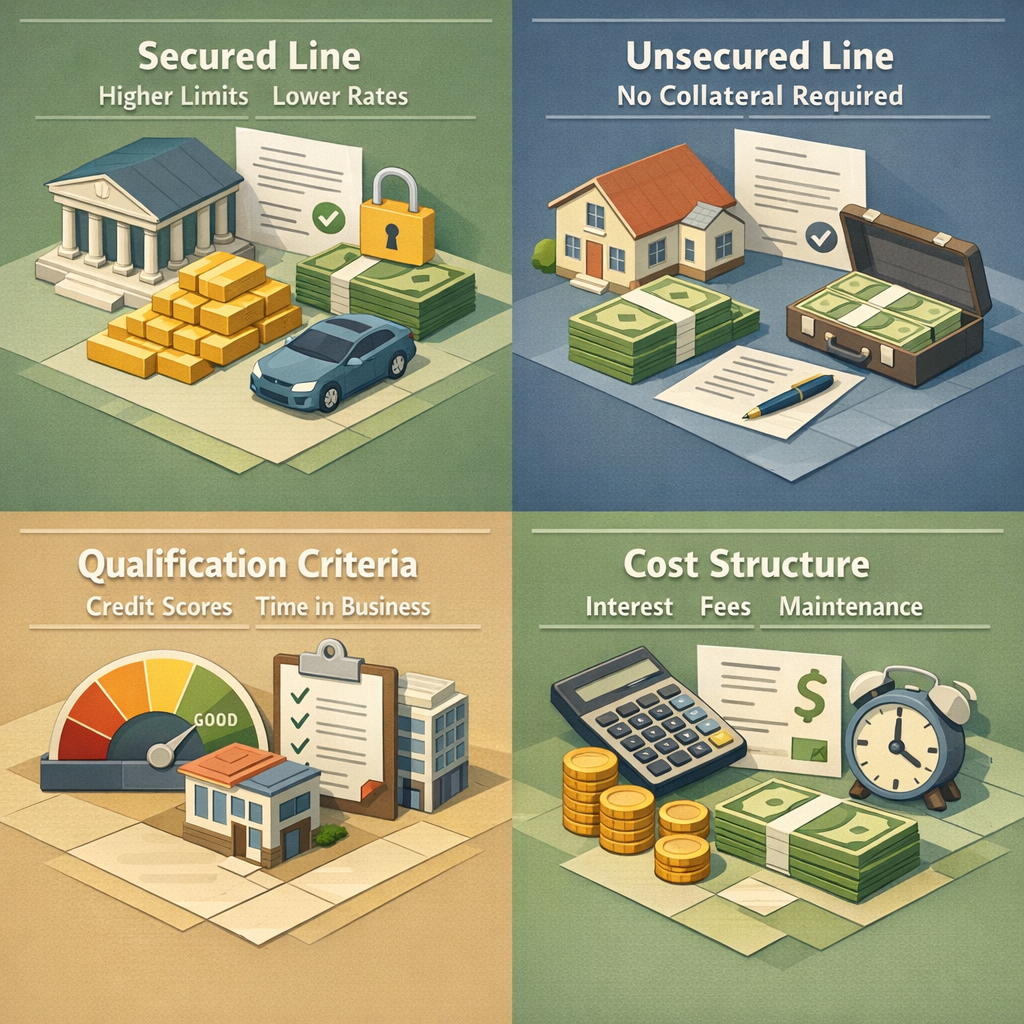
Choosing between a secured and unsecured business line of credit is one of the first decisions you'll need to make. Each has distinct trade-offs worth considering carefully based on your business's financial position and risk tolerance.
A secured line of credit typically offers higher credit limits and may carry lower interest rates because the lender has collateral to fall back on if the borrower defaults. This can be an attractive option for businesses with significant assets and the need for larger credit capacity. However, it does mean that certain business assets are at risk if repayment becomes a challenge.
An unsecured line of credit doesn't put specific assets on the line, which many business owners find appealing. The trade-off is that lenders may apply stricter qualification standards and the interest rates could be higher to compensate for the increased risk they're absorbing. For businesses with strong credit profiles and solid revenue, an unsecured line may still offer very practical terms.
It's also worth noting that many business lines of credit include a personal guarantee, even when they're technically unsecured by business assets. This means the business owner may be personally responsible if the business can't repay the debt — a factor that's important to understand before signing any agreement.
How Interest Rates and Fees Are Typically Structured
The cost of a business line of credit goes beyond just the interest rate. Understanding the full fee structure is essential so you can accurately compare options and avoid surprises down the line. While specific rates vary widely based on the lender, your credit profile, loan amount, and market conditions, there are a few cost components that commonly appear.
- Interest rate: Charged only on the outstanding balance, this may be fixed or variable. Variable rates are often tied to a benchmark rate such as the prime rate, meaning your borrowing costs could fluctuate over time.
- Draw fees: Some lenders charge a small fee each time you draw from the line of credit. These can add up if you're drawing frequently, so it's worth factoring them into your cost analysis.
- Maintenance or annual fees: Certain lenders charge a fee to keep the line open, regardless of whether you're actively using it. These are sometimes waived if you maintain a minimum draw or balance.
- Origination fees: A one-time fee charged when the line of credit is established, often expressed as a percentage of the credit limit.
- Early termination fees: If you close the line before the term ends, some lenders may charge a fee. Always review this clause carefully.
Shopping around and comparing the full annual percentage rate (APR) — not just the stated interest rate — is one of the smartest moves a commercial borrower can make. It gives you a more complete picture of what you'll actually pay.
Tips for Using a Business Line of Credit Responsibly
Having access to a revolving credit facility is a powerful advantage, but it requires discipline. Misusing a business line of credit — such as drawing on it for non-essential expenses or carrying a high balance for extended periods — can lead to unnecessary interest costs and put your business in a financially vulnerable position. Here are some practical strategies to help you use this tool wisely.
Only Borrow What You Need
Just because you have a $75,000 credit limit doesn't mean you should use all of it. Draw only what's necessary for the specific need at hand. Keeping your utilization ratio low — ideally below 30% to 50% of your limit — can also help protect your business credit score.
Have a Repayment Plan Before You Draw
Before pulling funds from your line of credit, have a clear idea of how and when you'll repay. For instance, if you're drawing to cover a seasonal gap, project when revenue will return to ensure you can service the debt without stress.
Monitor Your Draws and Balances Regularly
Many lenders offer online portals where you can track draws, balances, and payment schedules in real time. Staying on top of this information helps you avoid surprises and manage cash flow more effectively.
Build and Maintain a Strong Relationship with Your Lender
Consistent, responsible use of a line of credit can position you well when you need to request a limit increase or apply for additional financing in the future. Demonstrating reliable repayment behavior builds trust and may open doors to better terms over time.
Is a Business Line of Credit the Right Fit for Your Company?
A business line of credit isn't the right solution for every financing need, but it can be an incredibly valuable tool when used in the right context. It tends to work best for businesses that experience cash flow variability, need short-term access to working capital, or want a financial safety net available without the commitment of a fixed term loan.
If your business needs to fund a major equipment purchase, acquire commercial real estate, or finance a long-term expansion project, a term loan or SBA loan might be a better fit. The key is matching the financing tool to the specific need. Using a revolving credit line for long-term capital investments can lead to higher overall costs and put unnecessary pressure on your cash flow.
Entrepreneurs and small business owners who are evaluating their financing options should consider speaking with a knowledgeable lender or financial advisor who understands the commercial lending landscape. A lending professional can help you assess your business's financial health, identify the right products, and structure a borrowing strategy that supports your goals without overextending your resources.
Whether you're a seasoned entrepreneur or a newer business owner exploring your first credit facility, understanding how a business line of credit works puts you in a much stronger position to make informed, confident decisions.
●Conclusion
A business line of credit is one of the most flexible and practical financing tools available to small business owners and entrepreneurs. It gives you the ability to respond quickly to cash flow gaps, unexpected expenses, and growth opportunities — without the rigidity of a traditional term loan. By understanding how it works, what lenders look for, and how to use it responsibly, you can turn this revolving credit facility into a genuine competitive advantage. If you're ready to explore your options, connect with a LoanWise lending specialist today and take the next step toward smarter business financing.