Starting a bakery is an exciting venture — but turning your passion for baking into a thriving business often requires capital. For many aspiring bakery owners, a Small Business Administration (SBA) loan can be one of the most accessible and affordable ways to get funded. SBA loans typically offer competitive interest rates, longer repayment terms, and lower down payment requirements compared to conventional business loans. However, the application process can feel overwhelming, especially for first-time borrowers. One of the most common questions entrepreneurs ask is: what documents are needed for an SBA loan for a new bakery? This guide breaks it all down in plain language so you can walk into your lender's office prepared and confident.
Understanding SBA Loan Options for a Bakery Startup
Before diving into paperwork, it helps to understand which SBA loan programs are most commonly used for an SBA loan bakery startup. The two most popular options are the SBA 7(a) loan and the SBA Microloan program.
- SBA 7(a) Loans: These are the most widely used SBA loans and can provide up to $5 million in funding. They're suitable for bakeries that need capital for equipment, leasehold improvements, working capital, or inventory.
- SBA Microloans: For smaller bakery startups, the SBA Microloan program offers up to $50,000 through nonprofit intermediary lenders. This can be a strong fit if you're launching a home-based or small retail bakery.
- SBA 504 Loans: If you're planning to purchase commercial real estate or major equipment for your bakery, an SBA 504 loan may be worth exploring. These loans are structured to support long-term asset purchases.
Each program has its own eligibility criteria, but all require a thorough documentation package. Understanding which loan type fits your bakery's needs will help you target the right lender and tailor your documents accordingly.
Core Business Documents Every Bakery Applicant Needs
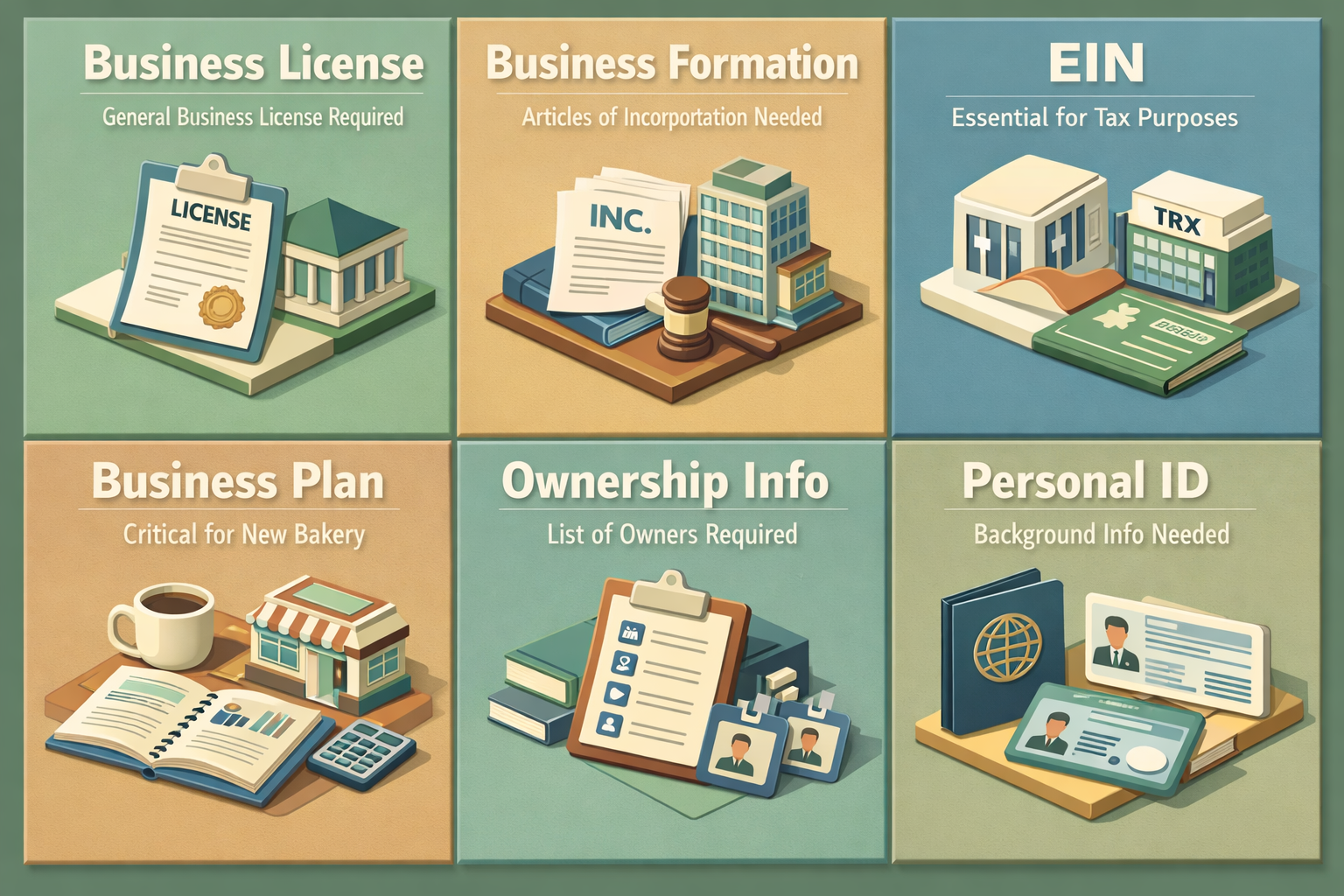
When lenders review your SBA loan application, they want to confirm that your bakery is a legitimate business with a clear legal structure. The following core business documents are typically required regardless of which SBA program you apply through.
- Business license and permits: You'll likely need a general business license, a food handler's permit, and possibly a health department certificate, depending on your state and local regulations.
- Business formation documents: This includes your Articles of Incorporation or Articles of Organization if you've set up an LLC or corporation. Sole proprietors may need a DBA (Doing Business As) certificate.
- Employer Identification Number (EIN): Your EIN, issued by the IRS, is essential for tax purposes and confirms your business identity with the lender.
- Business plan: For a new bakery, this is one of the most critical documents. Your plan should cover your concept, target market, competitive landscape, pricing strategy, and a detailed financial forecast.
- Ownership and affiliate information: Lenders will ask for a list of all owners with equity stakes of 20% or more. You'll need to provide personal identification and background information for each owner listed.
Getting these foundational documents in order early can significantly speed up your application timeline. Many lenders won't even begin the underwriting process without this basic package in place.
Financial Statements and Projections for a New Bakery Loan
Because your bakery is a startup, you won't have years of business revenue history to show. This is where financial projections become especially important. Lenders want to see that you've done your homework and that your bakery has a realistic path to profitability.
Here's what's typically expected in terms of financial documentation for a documents for small business bakery loan application:
- Projected income statements: Provide monthly profit and loss projections for the first one to two years, and annual projections for years three through five. Base your numbers on realistic assumptions about sales volume, pricing, and cost of goods.
- Cash flow projections: Lenders pay close attention to cash flow because it reflects your ability to service loan repayments. Your projections should account for seasonal fluctuations, which are common in the food service industry.
- Balance sheet projections: A projected balance sheet shows your anticipated assets, liabilities, and owner's equity at a future date. Even if estimated, it demonstrates financial awareness.
- Personal financial statements: Since your bakery is new, lenders will heavily weigh your personal financial health. SBA Form 413 is the standard personal financial statement form that applicants must complete.
- Tax returns: Provide two to three years of personal tax returns. If you have any existing business activity, include those business tax returns as well.
If you're not confident building these projections yourself, consider working with a CPA or a SCORE mentor. Strong financial modeling can meaningfully strengthen your application.
Collateral, Credit, and Personal Background Requirements
SBA loans are partially guaranteed by the federal government, but lenders still require borrowers to meet personal creditworthiness standards. When reviewing your application, lenders will assess both your personal and business credit profile, as well as any collateral you can offer.
- Personal credit score: Most SBA lenders prefer a personal credit score of at least 650, though some may consider applicants with slightly lower scores depending on other compensating factors. The stronger your credit, the more favorable your loan terms may be.
- Business credit report: If your bakery entity has been established for some time before applying, the lender may pull a business credit report as well. For brand-new startups, this may not yet exist.
- Collateral documentation: SBA lenders are generally required to take available collateral when it exists. This could include equipment, real estate, or other business assets. You'll need to provide documentation of any assets you're offering as collateral, including appraisals where applicable.
- Personal guarantee: All owners with 20% or more equity stake are typically required to sign a personal guarantee, meaning they're personally responsible for repaying the loan if the business cannot.
- Background and resume: Lenders want to see that you have relevant experience. A resume highlighting your background in baking, food service management, or small business ownership can add credibility to your application.
Being transparent about your credit history and any past financial challenges is always advisable. Lenders appreciate honesty, and some may be willing to work with you if you can demonstrate how you've learned from past difficulties.
What Your Bakery Business Plan Must Include to Win Lender Confidence
Your business plan is arguably the single most important document in your SBA loan bakery startup application. For a brand-new bakery with no operating history, this document effectively tells your story and makes the case for why your business will succeed. A well-crafted plan shows lenders that you're serious, strategic, and prepared.
A strong bakery business plan typically includes the following sections:
- Executive summary: A concise overview of your bakery concept, funding needs, and business goals. Keep this section clear and compelling — it's often the first thing a lender reads.
- Company description: Detail your bakery's legal structure, location, products, and what sets you apart from competitors in your area.
- Market analysis: Demonstrate that you understand your local market. Include data on your target customer demographic, local competition, and demand for specialty baked goods.
- Operations plan: Describe your daily operations, supplier relationships, staffing needs, and food safety compliance measures.
- Marketing and sales strategy: Explain how you plan to attract and retain customers. This might include social media marketing, local events, wholesale partnerships, or an e-commerce component.
- Financial plan: This section ties back to your projections. Include your startup cost breakdown, funding request amount, and a detailed explanation of how loan proceeds will be used.
Lenders are not just evaluating your numbers — they're evaluating you as an entrepreneur. A polished, thoughtful business plan can go a long way toward building lender confidence even when your bakery has no track record yet.
Loan-Specific Forms and SBA Application Requirements
Beyond your general business and financial documents, the SBA and its approved lenders require applicants to complete specific government forms. Knowing what documents are needed for an SBA loan for your new bakery also means understanding these standardized forms.
- SBA Form 1919 – Borrower Information Form: This form collects personal and business background information from all applicants and owners. It includes questions about criminal history, prior bankruptcies, and debarment from federal programs.
- SBA Form 413 – Personal Financial Statement: As mentioned earlier, this form captures your personal assets, liabilities, income, and contingent liabilities. Every owner with 20% or more stake must complete it.
- SBA Form 912 – Statement of Personal History: This may be required in certain situations, particularly if an owner has disclosed prior legal issues on Form 1919.
- Loan application from the lender: Each SBA-approved lender typically has its own loan application form that you must complete in addition to the SBA forms. These vary by institution.
- Use of proceeds statement: You'll need to clearly outline how you intend to spend the loan funds. For a bakery, this might include commercial ovens, display cases, leasehold improvements, initial inventory, and working capital reserves.
Working with an SBA-preferred lender or a Small Business Development Center (SBDC) in your area can help you navigate these forms accurately. Errors or omissions on official SBA documents can delay or derail your application.
Tips for Strengthening Your SBA Loan Application as a Bakery Startup
Gathering the right documents is essential, but how you present your application also matters. Here are some practical strategies that may improve your chances of approval as a new bakery borrower:
- Start with a clear funding goal: Know exactly how much you need and why. Vague or overly ambitious funding requests can raise red flags with lenders. A specific, itemized budget shows discipline and planning.
- Build your personal credit before applying: If your credit score is borderline, spending a few months paying down debt and resolving any errors on your credit report could meaningfully improve your profile.
- Bring equity to the table: SBA loans typically require borrowers to contribute some of their own capital — often 10% to 30% of the total project cost. Demonstrating that you have skin in the game increases lender confidence.
- Seek guidance from a SBDC or SCORE mentor: These free resources can help you refine your business plan, review your financials, and prepare for lender interviews. Many successful SBA borrowers credit mentorship as a key factor in their approval.
- Organize your documents systematically: Create a clean, well-organized application package. A disorganized submission can signal to lenders that your business operations might be equally disorganized.
- Be ready for follow-up questions: Lenders may request additional documentation during the underwriting process. Respond promptly and completely to avoid unnecessary delays.
Preparation and professionalism can set you apart from other applicants. Treat the application process as a preview of how you'll run your bakery — with attention to detail and a commitment to follow-through.
●Conclusion
Understanding what documents are needed for an SBA loan for a new bakery is the first step toward securing the funding that brings your dream to life. From business formation paperwork and financial projections to official SBA forms and a compelling business plan, each document plays a role in telling your story to lenders. While the process may feel complex at first, breaking it down into manageable steps — and reaching out to resources like SBDCs, SCORE mentors, or experienced SBA lenders — can make it far more approachable. At LoanWise, we're here to help small business owners and entrepreneurs navigate the lending landscape with clarity and confidence. Whether you're just starting to explore your options or you're ready to apply, connecting with a knowledgeable lending advisor can make all the difference. Start your journey today and take the first step toward opening the bakery you've always envisioned.