Running a craft brewery that peaks during warmer months or around major festivals can be incredibly rewarding — but it also means facing lean periods when revenue dips and expenses don't. If you're a seasonal craft brewery owner eyeing an SBA loan to bridge that gap, expand your taproom, or invest in new equipment, preparation is everything. Knowing exactly what documents are needed for an SBA loan for a seasonal craft brewery during off-season can be the difference between a smooth approval process and a frustrating, drawn-out experience. This guide walks you through the core documentation requirements, explains why lenders scrutinize seasonal businesses more closely, and offers practical tips to strengthen your application even when your taproom is quiet.
Why Seasonal Craft Breweries Face Unique SBA Lending Challenges
Seasonal businesses like craft breweries operate on an income cycle that doesn't match the steady, month-to-month cash flow most lenders prefer to see. A brewery that generates the bulk of its revenue between May and October may look financially stressed during a January or February loan review — even if the business is fundamentally healthy and profitable on an annual basis.
SBA lenders understand that seasonal fluctuations are a normal part of certain industries. In fact, the SBA's standard loan programs, including the popular SBA 7(a) loan, do allow for seasonal businesses. However, the underwriting process is more detailed. Lenders want to see that your brewery can service debt throughout the year, not just during peak months. That means the documentation you submit needs to tell a compelling, complete story about your brewery's financial health across all four seasons.
Additionally, breweries in the beverage alcohol space may face extra scrutiny because they operate under state and federal licensing requirements. Lenders may want assurance that your licenses are current, your compliance history is clean, and your business model is sustainable beyond the busy season. Understanding these dynamics early helps you build a stronger, more targeted loan package.
Core Financial Documents Every SBA Lender Will Request
Regardless of your business type, SBA lenders require a standard set of financial documents. For a seasonal craft brewery, these documents carry extra weight because they must demonstrate annual viability, not just peak-season performance. Here's what you should expect to gather:
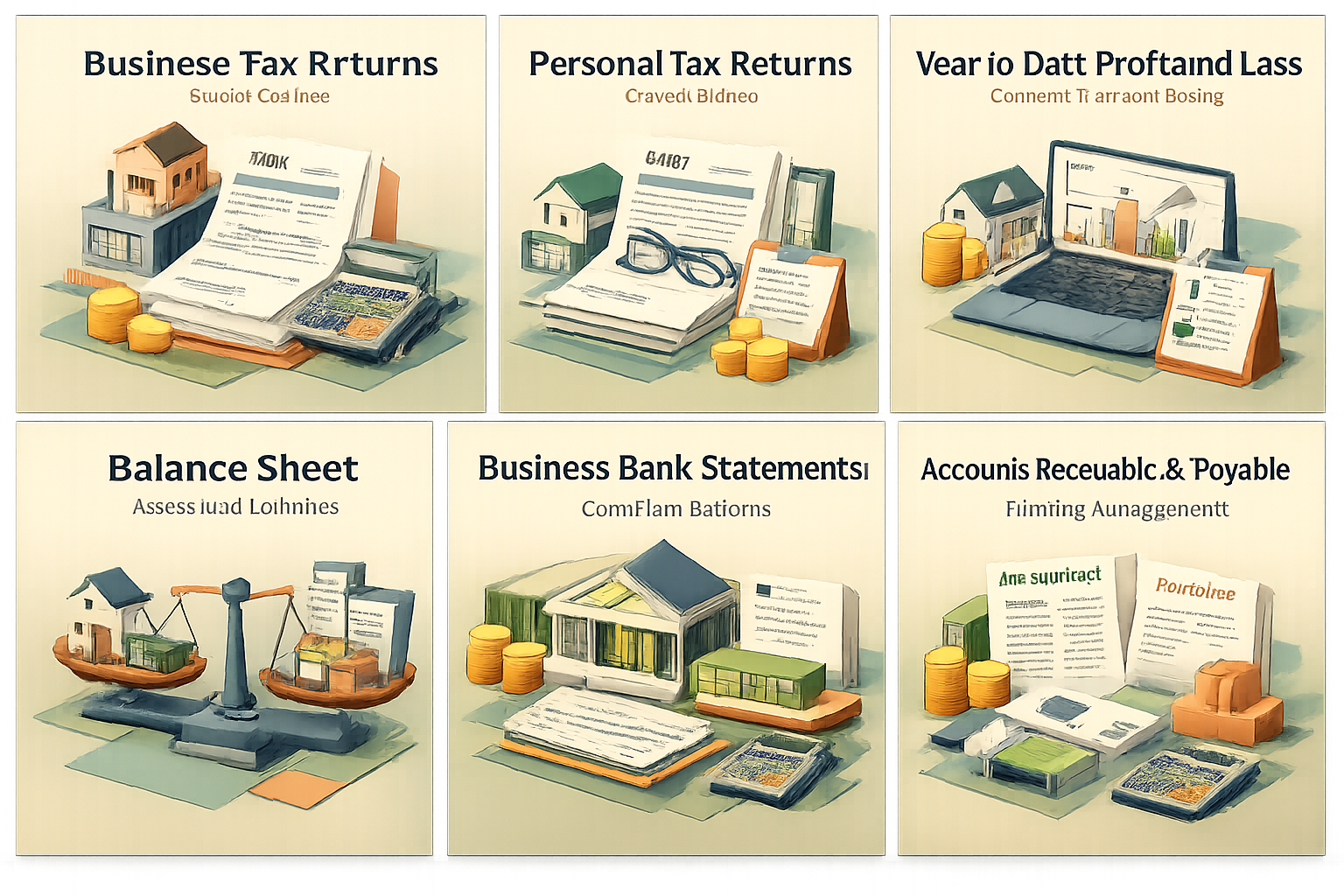
- Business tax returns (last 2–3 years): Lenders want to see your brewery's full annual income, including the off-season months. Federal business tax returns — typically IRS Form 1120, 1120-S, or Schedule C depending on your entity type — give lenders the clearest picture of your recurring revenue and profitability.
- Personal tax returns (last 2–3 years): Most SBA loans require personal tax returns from all owners holding 20% or more of the business. This helps lenders assess the personal financial strength behind the business.
- Year-to-date profit and loss statement: A current P&L, ideally prepared or reviewed by a CPA, shows lenders where your brewery stands right now — even if you're in the middle of your slow season.
- Balance sheet: A recent balance sheet documents your brewery's assets, liabilities, and equity. It gives lenders a snapshot of your financial position at a specific point in time.
- Business bank statements (last 12 months): Bank statements are particularly important for seasonal businesses. They reveal your cash flow patterns month by month, helping lenders see how you manage expenses when taproom revenue is low.
- Accounts receivable and payable aging reports: These documents show what your brewery is owed and what it owes, which speaks to your short-term liquidity and financial management habits.
Having these documents organized and up to date before you approach a lender can significantly speed up the underwriting process and signal to lenders that you're a serious, well-managed business.
Business Formation and Licensing Documents That Matter for Breweries
Craft breweries are regulated at multiple levels, which means your SBA loan application will need to include more than just financial statements. Lenders and SBA processing centers will typically ask for documents that verify your legal business standing and your right to operate. These may include:
- Business licenses and permits: This includes your state brewery license, local business operating license, and any county or municipal permits relevant to your taproom or production facility.
- Federal Brewer's Notice: Issued by the Alcohol and Tobacco Tax and Trade Bureau (TTB), this is the federal permit required to produce and sell malt beverages. Lenders will want to confirm it's active and in good standing.
- Articles of incorporation or organization: These foundational documents confirm your business's legal structure — whether you're operating as an LLC, S-Corp, C-Corp, or partnership.
- Operating agreement or bylaws: These internal governance documents outline ownership percentages, decision-making authority, and profit distribution — all details SBA lenders review carefully.
- Employer Identification Number (EIN) verification: Your EIN confirmation letter from the IRS is a standard requirement across virtually all SBA loan applications.
- Ownership and affiliation documentation: If you have investors or co-owners, the SBA may request documentation confirming ownership percentages and any affiliated business interests.
Keeping these documents current and readily accessible is especially important for breweries, where licensing lapses or compliance gaps could raise red flags during underwriting.
Seasonal Revenue Documentation: Telling Your Off-Season Story Effectively
This is the section where seasonal craft brewery owners can truly differentiate their application. When a lender sees that revenue dropped sharply in November and hasn't recovered by the time you're applying in February, they need context — and it's your job to provide it. Here's how to build a compelling seasonal revenue narrative:
Monthly Revenue Breakdown
Prepare a month-by-month revenue summary for at least the past two full years. This isn't just about showing your best months — it's about demonstrating a predictable and recurring seasonal pattern. Lenders are generally more comfortable lending to a business with consistent seasonality than one with erratic, unpredictable income.
Seasonal Cash Flow Projections
A forward-looking cash flow projection — typically covering 12 to 24 months — shows lenders how you plan to manage loan repayment across both peak and slow periods. Be realistic. Lenders are experienced at spotting overly optimistic projections, and a well-reasoned, conservative forecast often builds more trust than rosy numbers.
Prior Year Comparisons
Side-by-side comparisons of your off-season months across multiple years can help lenders see that slow periods are stable and manageable, not worsening. If your February revenue has been consistently similar over three years, that predictability is a strength, not a weakness.
Evidence of Off-Season Revenue Streams
If your brewery generates revenue during the off-season through wholesale distribution, online merchandise, canned beer sales, or private event bookings, document these clearly. Diversified income — even if smaller than peak-season taproom sales — can meaningfully improve your debt service coverage ratio in the eyes of a lender.
What Documents Are Needed for an SBA Loan for a Seasonal Craft Brewery During Off-Season: The Business Plan
A strong business plan is one of the most important documents in your SBA loan application — and for seasonal businesses, it may carry even more weight. Your business plan should address not only your brewery's current operations but also how the loan proceeds will strengthen your business model and support repayment through slow seasons.
Most SBA lenders expect a business plan to include:
- Executive summary: A concise overview of your brewery, its history, mission, and the purpose of the loan.
- Business description: Details about your brewing operations, taproom setup, distribution model, and seasonal calendar.
- Market analysis: An overview of your local craft beer market, your target customer base, and any competitive advantages your brewery holds.
- Management and ownership profiles: Resumes or bios for key team members, highlighting relevant brewing, business management, and hospitality experience.
- Use of loan proceeds: A clear, itemized explanation of how you'll use the SBA funds — whether for equipment upgrades, working capital during the off-season, taproom expansion, or another purpose.
- Repayment strategy: A plain-language explanation of how your brewery will meet its debt obligations, especially during months when revenue is lower.
Your business plan should be honest about seasonality while also making a confident case for why your brewery is a sound lending investment. Lenders aren't expecting perfection — they're looking for clarity, realistic planning, and evidence that you understand your own business.
Collateral, Personal Guarantees, and SBA-Specific Forms to Prepare
SBA loans typically require collateral when available, as well as personal guarantees from owners with a significant ownership stake. For a seasonal craft brewery, collateral might include brewing equipment, real estate (if you own your facility), vehicles used in distribution, or other business assets. Lenders generally won't decline a loan solely because collateral is limited, but they will document what's available.
In terms of personal guarantees, the SBA generally requires all owners holding 20% or more of the business to personally guarantee the loan. This means your personal financial documents — including a personal financial statement (SBA Form 413) — will be part of your application package.
Beyond the financial and business documents, expect to complete several SBA-specific forms, which may include:
- SBA Form 1919 (Borrower Information Form): Collects background information on the business and its owners, including questions about prior criminal history, prior government loans, and business affiliations.
- SBA Form 912 (Statement of Personal History): Required in certain circumstances to clarify background information disclosed on Form 1919.
- SBA Form 413 (Personal Financial Statement): A detailed snapshot of each owner's personal assets, liabilities, income, and net worth.
Your lender may also have their own internal forms and checklists. Asking for a complete document checklist upfront — before you begin gathering paperwork — can save significant time and prevent last-minute surprises during underwriting.
Practical Tips to Strengthen Your SBA Loan Application as a Seasonal Brewer
Knowing what documents are needed for an SBA loan for a seasonal craft brewery during off-season is the first step — but how you present those documents can be just as important as what's in them. Here are a few strategies that could help your application stand out:
- Work with a CPA familiar with the beverage alcohol industry. Financial statements prepared or reviewed by a qualified accountant carry more credibility with lenders than self-prepared documents. A CPA who understands brewery operations can also help you present your financials in the most favorable and accurate light.
- Apply through an SBA Preferred Lender. SBA Preferred Lenders have delegated authority to approve loans without sending every decision to the SBA for review, which can significantly speed up the process. Many of these lenders also have experience with seasonal or specialty food and beverage businesses.
- Apply before your slow season hits its lowest point. If possible, begin your SBA loan application in early fall — before revenue drops sharply — so your most recent bank statements still reflect stronger cash flow. Timing your application strategically could improve how your financials look during underwriting.
- Write a clear, honest letter of explanation for seasonal patterns. A brief, well-written letter attached to your application that explains your seasonal revenue cycle can prevent underwriters from misinterpreting a slow month as a sign of financial distress.
- Demonstrate off-season cost management. Show lenders that you actively manage expenses during slow months — through reduced staffing, inventory adjustments, or renegotiated supplier terms. This signals financial discipline and reduces perceived risk.
Building a relationship with a lender who has experience with breweries or seasonal businesses may also be worth pursuing. Familiarity with your industry means fewer misunderstandings and a smoother underwriting experience overall.
●Conclusion
Navigating the SBA loan process as a seasonal craft brewery owner requires more preparation than the average business applicant — but it's absolutely achievable with the right documentation and a clear financial story. Understanding what documents are needed for an SBA loan for a seasonal craft brewery during off-season gives you a meaningful head start. From tax returns and P&L statements to your Federal Brewer's Notice and seasonal cash flow projections, each document plays a role in helping lenders see your brewery as the viable, well-managed business it is.
At LoanWise, we work with small business owners and entrepreneurs across a wide range of industries — including food, beverage, and seasonal businesses — to connect them with the right lending solutions. If you're ready to explore your SBA financing options, our team is here to help you put together a strong, complete application. Reach out to LoanWise today and let's find the funding path that fits your brewery's unique rhythm.