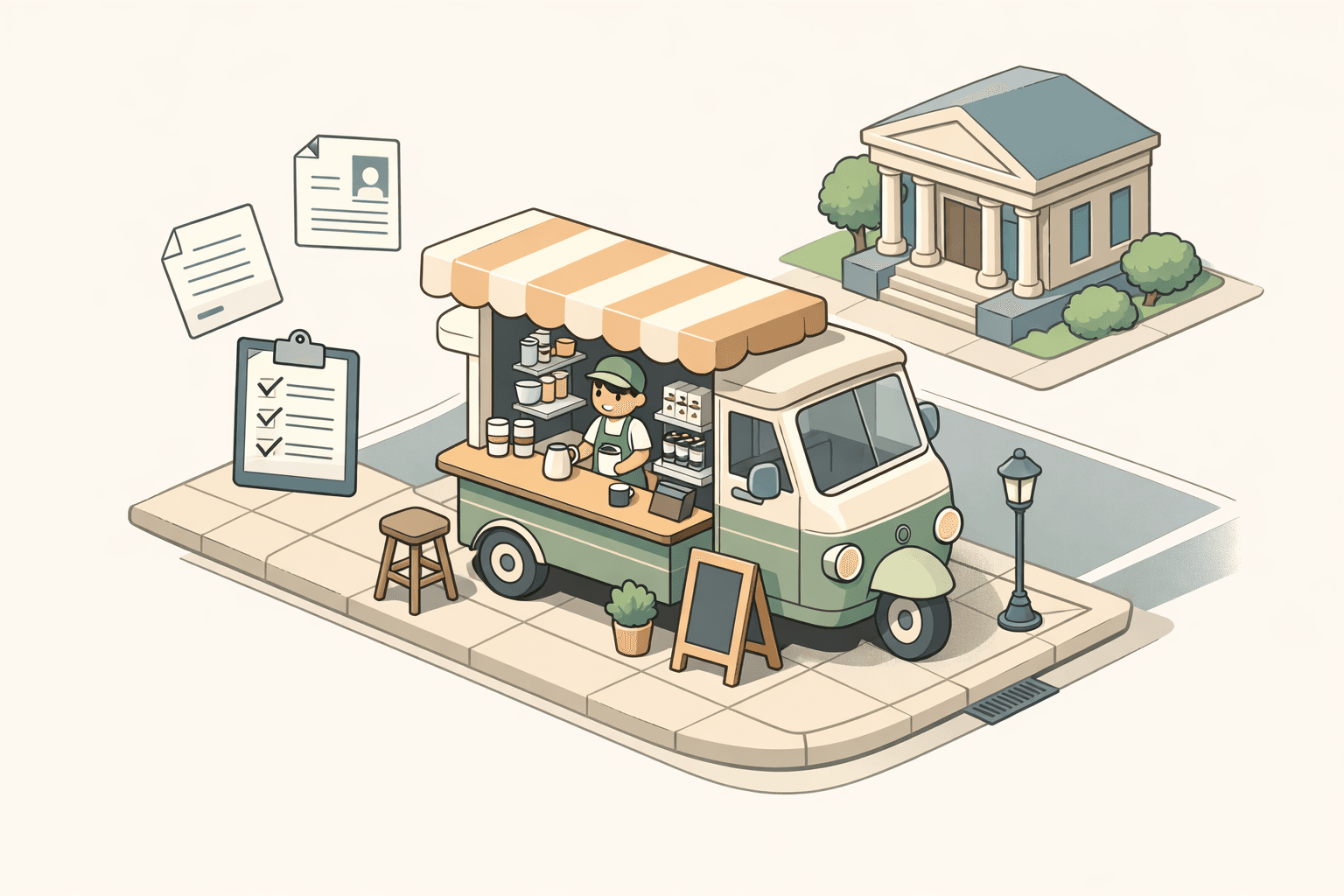
Starting a mobile coffee cart business is an exciting venture. You get to serve great coffee, connect with your community, and build something truly your own. But like any business, it takes capital to get rolling — and that's where an SBA loan can make a real difference. The U.S. Small Business Administration offers loan programs designed to help entrepreneurs like you access affordable financing, even at the early stages of business ownership. Before you can secure that funding, though, you'll need to gather the right paperwork. Understanding what documents are needed for an SBA loan for a mobile coffee cart startup can save you time, reduce stress, and improve your chances of approval. This guide walks you through the key documentation categories so you can approach your lender with confidence.
Why SBA Loans Are a Smart Choice for Mobile Food and Beverage Startups
SBA loans are among the most popular financing options for small business owners and entrepreneurs — and for good reason. They typically offer lower interest rates, longer repayment terms, and more flexible qualification criteria compared to conventional business loans. For a mobile coffee cart startup, this could mean manageable monthly payments while you're still building your customer base.
Two SBA programs tend to be most relevant for startups in the food and beverage space. The SBA 7(a) loan is the most widely used and can cover a broad range of business expenses, from equipment purchases to working capital. The SBA Microloan program may also be a strong fit for smaller funding needs — often up to $50,000 — which is common for mobile cart operators who need funds for the cart itself, initial inventory, permits, and branding.
Because these loans are partially guaranteed by the SBA, lenders may be more willing to work with newer businesses that don't have years of operating history. That said, lenders still need to assess risk carefully, which is why thorough documentation is so important. Coming prepared shows that you're a serious, organized entrepreneur ready to run a legitimate operation.
Personal and Business Identity Documents You'll Need to Provide
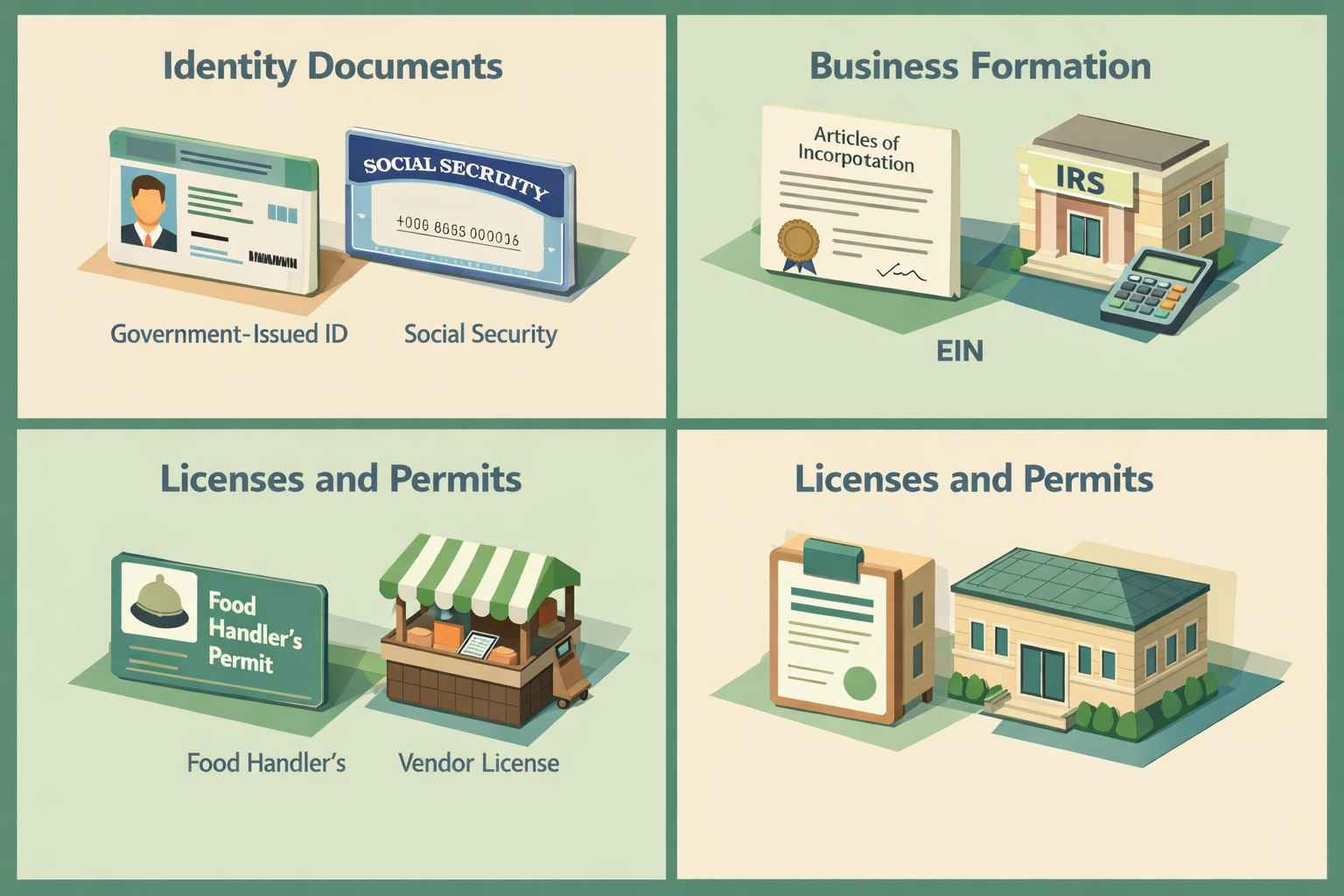
Every SBA loan application starts with verifying who you are and the legal standing of your business. Lenders will typically ask for a range of identity and formation documents. While exact requirements can vary by lender and loan program, here's what you'll likely need to have ready:
- Government-issued photo ID: A valid driver's license or passport for all owners with a significant ownership stake in the business.
- Social Security Number or Individual Taxpayer Identification Number (ITIN): Required for credit and background checks.
- Business formation documents: This may include your Articles of Incorporation or Organization, operating agreement (for LLCs), or partnership agreement if applicable.
- Employer Identification Number (EIN): Your federal tax ID, which you can obtain through the IRS. This is essential for opening business bank accounts and filing taxes.
- Business licenses and permits: For a mobile coffee cart, this could include a food handler's permit, mobile vendor license, health department certification, and any city or county permits required to operate in your target locations.
If your business hasn't been formally registered yet, it's a good idea to complete that step before applying for an SBA loan. Lenders want to see a legally established entity, even at the startup stage.
Financial Records That Paint a Clear Picture of Your Startup's Viability
Financial documentation is often the most involved part of the SBA loan application process. Since a mobile coffee cart startup likely won't have years of business revenue to show, lenders will look at a combination of personal financial history and forward-looking business projections. Here's what you'll typically be expected to provide:
Personal Financial Statements
Lenders want to understand your overall financial health. You'll likely need to submit a personal financial statement that lists your assets, liabilities, income, and expenses. This helps the lender assess your ability to repay the loan even if the business runs into early challenges.
Personal Tax Returns
Most lenders will request two to three years of personal federal tax returns. These documents confirm your income history and give lenders a fuller view of your financial background.
Business Bank Statements
If your business is already open or has an existing account, recent bank statements — typically covering three to six months — may be required. Even for a new startup, opening a dedicated business checking account before you apply can demonstrate financial organization.
Business Tax Returns
If your mobile coffee cart has been in operation for any period of time, you'll likely need to submit business tax returns for those years. Brand-new startups without filed returns may not need to provide these, though requirements can vary.
Business Plan and Financial Projections: The Heart of Your Startup Application
For a startup with little or no operating history, a well-crafted business plan is arguably the most important document you'll submit. It tells the story of your business — where you're going, how you'll get there, and why you're a worthwhile lending risk. Lenders evaluating SBA loan mobile coffee cart startup documents will pay close attention to this section of your application.
A strong business plan for a mobile coffee cart should typically include:
- Executive summary: A concise overview of your business concept, target market, and funding request.
- Business description: Details about your cart concept, menu offerings, branding, and what makes you stand out in your local market.
- Market analysis: Research on your target customers, local competition, and demand for mobile coffee services in your area.
- Operations plan: How you'll run the cart day-to-day, including staffing, location strategy, hours of operation, and supply chain for beans and supplies.
- Marketing and sales strategy: How you plan to attract and retain customers, whether through social media, local events, partnerships, or community presence.
- Financial projections: This is critical. You'll want to include projected income statements, cash flow forecasts, and a break-even analysis for at least two to three years. These projections should be realistic and supported by market data where possible.
Even if you've never written a business plan before, there are free resources available through the SBA and SCORE (a nonprofit partner of the SBA) that can help you build one that meets lender expectations.
Collateral, Use of Funds, and Loan-Specific Forms Required by the SBA
Beyond financial statements and your business plan, there are several additional documents and disclosures that lenders and the SBA may require as part of a complete application package.
Statement of Use of Funds
Lenders want to know exactly how you plan to use the loan proceeds. For a mobile coffee cart startup, this might include the purchase price of the cart or trailer, espresso machines and equipment, initial inventory, permits and licensing fees, insurance, and working capital to cover early operating costs. Being specific here demonstrates financial planning and reduces lender uncertainty.
Collateral Documentation
Depending on the loan amount, lenders may request collateral to secure the loan. For smaller amounts under SBA Microloan thresholds, collateral requirements may be less stringent. However, if you own personal assets like a vehicle or savings, you may be asked to disclose them. Some lenders may also accept the equipment itself — such as the coffee cart — as partial collateral.
SBA-Specific Application Forms
The SBA requires several standard forms as part of its loan guarantee process. These commonly include:
- SBA Form 1919: Borrower Information Form, completed by each owner.
- SBA Form 912: Statement of Personal History, which involves a background check.
- SBA Form 413: Personal Financial Statement for owners with 20% or more ownership.
Your lender will typically guide you through which specific SBA forms are required based on the program you're applying under. It's a good idea to ask your lender for a complete checklist early in the process.
Credit and Background Information Lenders Will Review
Your credit profile plays a meaningful role in whether you qualify for an SBA loan and what terms you may receive. While the SBA doesn't set a universal minimum credit score, many lenders look for a personal credit score of at least 640 to 680 for SBA 7(a) loans, though some Microloan programs through nonprofit intermediaries may be more flexible with credit requirements.
Before applying, it's wise to review your credit reports from all three major bureaus — Equifax, Experian, and TransUnion. Look for any errors that could be dragging down your score and dispute inaccuracies if needed. Paying down existing balances and resolving any outstanding collections ahead of time may also strengthen your application.
In addition to your credit report, lenders may review your background for any legal or financial red flags. The SBA Form 912 mentioned earlier is part of this process. Being transparent and upfront about your history is always the better approach — lenders value honesty, and undisclosed issues discovered later can jeopardize your application.
For newer entrepreneurs without an established business credit profile, your personal credit history carries significant weight. Building a positive credit relationship now — even with a small secured card or by making on-time payments across all accounts — can improve your standing over time.
Tips for Organizing Your Application and Working With an SBA-Approved Lender
Knowing what documents are needed for an SBA loan for a mobile coffee cart startup is only half the battle. How you present and organize those documents can also influence how smoothly your application moves through the review process. Here are a few practical tips to help you put your best foot forward:
- Create a dedicated document folder: Whether physical or digital, keep all your application materials in one place. Label everything clearly and ensure documents are current and legible.
- Work with an SBA-approved lender: Not all banks and lenders participate in SBA programs. Working with a lender experienced in SBA loans — including Community Development Financial Institutions (CDFIs) for Microloan applicants — can make the process smoother and faster.
- Seek free guidance through SCORE or your local SBDC: Small Business Development Centers (SBDCs) and SCORE mentors provide free consulting to entrepreneurs at all stages. They can review your business plan, help you prepare financial projections, and point out gaps in your application before you submit.
- Be responsive and thorough: If your lender requests additional documentation during underwriting, respond quickly. Delays on your end can slow the entire process.
- Ask questions: Don't hesitate to ask your lender to clarify requirements. Understanding what's expected upfront prevents back-and-forth later.
Starting a mobile coffee cart business is a meaningful entrepreneurial step, and an SBA loan funding can be a powerful tool to help you get there. With the right preparation and the right lending partner, you may find the process far more manageable than you expect.
●Conclusion
Securing an SBA loan for your mobile coffee cart startup is absolutely within reach — it just takes preparation, patience, and the right guidance. From identity and business formation documents to financial projections and SBA-specific forms, each piece of your application tells the lender something important about your ability and commitment as a business owner. The more organized and thorough you are, the stronger your application will be. If you're ready to explore financing options for your mobile coffee cart venture, LoanWise is here to help you navigate the lending landscape and connect with the right SBA-approved resources for your goals. Take the first step today and let's get your business moving.