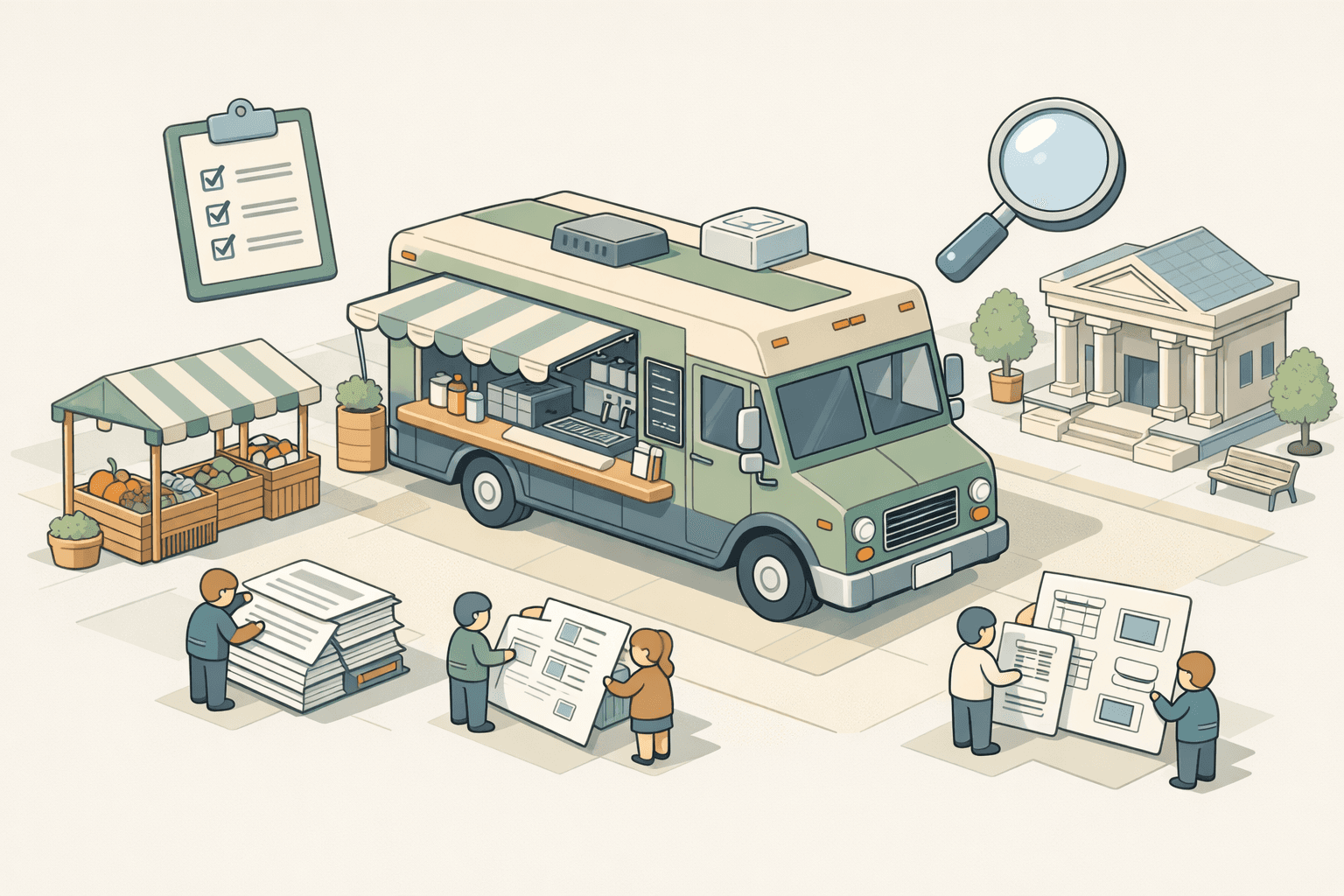
Starting a food truck business is an exciting venture, but getting it off the ground often requires serious capital — especially when custom equipment is involved. A fully outfitted food truck with specialty cooking stations, refrigeration units, and branded builds can run well into six figures. That's where an SBA loan comes in. The Small Business Administration offers loan programs specifically designed to help entrepreneurs like you access affordable financing. But before you can secure funding, you'll need to understand exactly what documents are needed for an SBA loan for a new food truck with custom equipment. Gathering the right paperwork early can save weeks of back-and-forth with lenders and dramatically improve your approval odds.
Why SBA Loans Are a Smart Choice for Food Truck Entrepreneurs
Before diving into documentation, it helps to understand why SBA loans are often a top financing option for food truck startups. Unlike conventional business loans, SBA-backed loans typically offer longer repayment terms, lower down payment requirements, and more competitive interest rates — making them especially useful for entrepreneurs who are still building their financial foundation.
The most commonly used programs for food truck financing include the SBA 7(a) loan, which can be used for equipment, working capital, and startup costs, and the SBA Microloan program, which may suit smaller funding needs. For custom-built equipment specifically, a 7(a) loan is often the preferred route since it covers a broader range of expenses and can accommodate higher loan amounts.
Because these loans are partially guaranteed by the federal government, lenders tend to take on less risk — which may translate to better terms for the borrower. That said, the application process is more document-intensive than a simple bank loan, so preparation is key.
Personal and Business Identity Documents You Will Need
The foundation of any SBA loan application starts with verifying who you are and how your business is structured. Lenders will typically request the following identity and formation documents:
- Government-issued photo ID — A driver's license or passport for all owners with 20% or more equity in the business.
- Social Security numbers — Required for personal background checks and credit pulls.
- Business formation documents — This includes your Articles of Incorporation or Articles of Organization, operating agreements (for LLCs), or partnership agreements.
- Employer Identification Number (EIN) — Issued by the IRS, this is your business's tax identification number.
- Business licenses and permits — For a food truck, this may include your local business license, food handler's permit, health department certification, and any mobile vendor permits required in your operating area.
If you haven't yet formed your business entity, it's strongly recommended to do so before applying. Lenders want to see that you've taken the proper legal steps to establish your operation as a legitimate small business.
Financial Statements and Tax Records That Lenders Review Closely
Since a food truck with custom equipment may represent a brand-new business, your financial documentation package will look a bit different than it would for an established company. Here's what you can generally expect lenders to request:
- Personal tax returns — Typically the last two to three years. Lenders use these to assess your personal income history and financial responsibility.
- Business tax returns — If you've been operating under a related business entity, provide at least two years of returns.
- Personal financial statement — The SBA Form 413 is a standardized document that outlines your personal assets, liabilities, and net worth.
- Business financial statements — If your business is already operating in any capacity, you may need a current balance sheet, profit and loss statement, and cash flow statement.
- Bank statements — Usually three to six months of personal and business bank statements to verify liquidity and financial habits.
For brand-new ventures, lenders understand that historical business financials may not exist. In these cases, your personal financial strength, credit history, and the quality of your business plan carry significantly more weight.
What Documents Are Needed for an SBA Loan for a New Food Truck with Custom Equipment Specifically
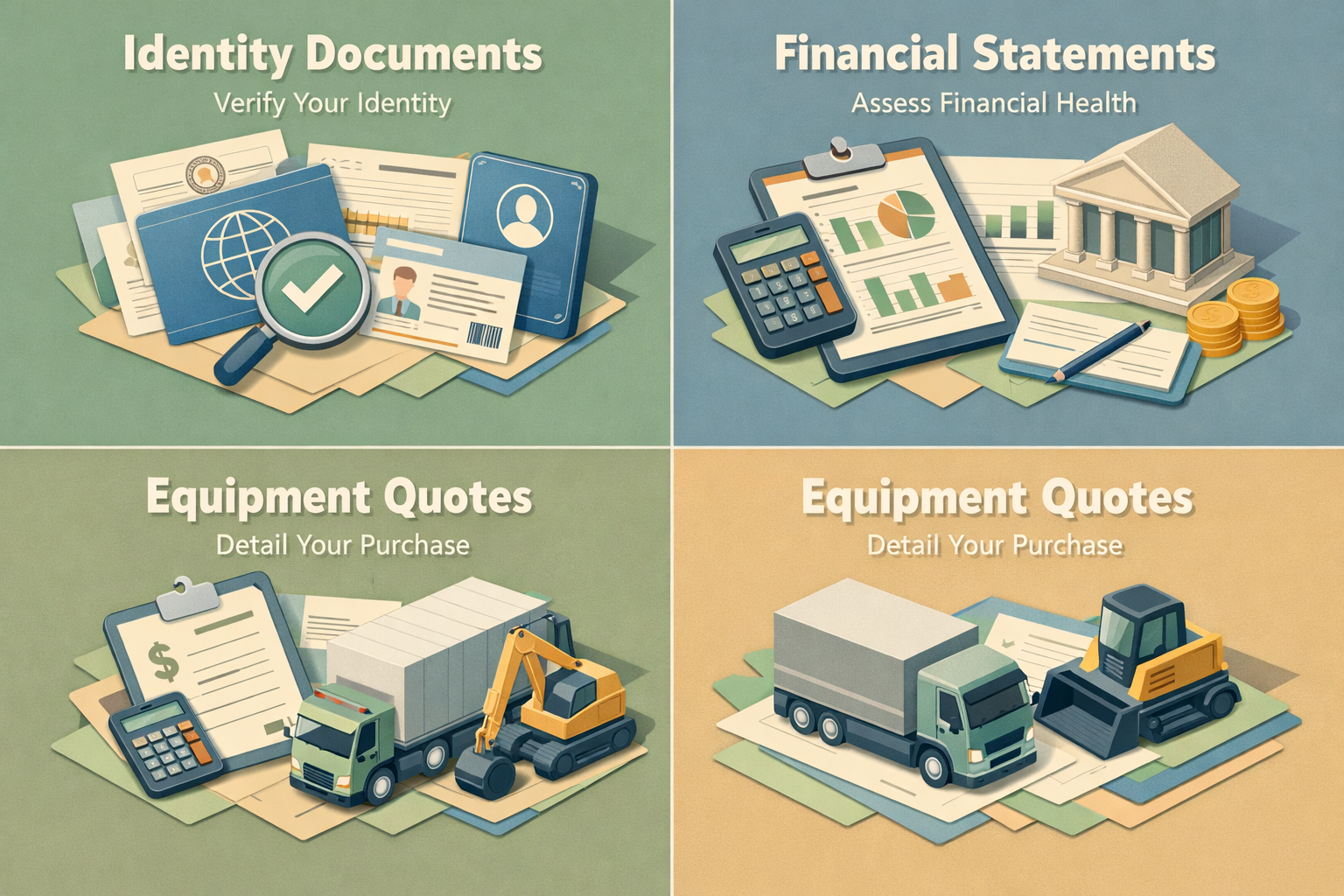
This is where food truck applicants often get tripped up. Because you're not just buying an existing vehicle but investing in a custom-built unit with specialized equipment, the lender needs much more detail about exactly what you're purchasing and why it costs what it does. Here's what's typically required:
- Equipment quotes or vendor invoices — Detailed written quotes from the manufacturer or custom fabricator outlining every component: the truck chassis, cooking equipment, ventilation systems, wrap and branding, refrigeration, and more. The more itemized, the better.
- Equipment specifications — Some lenders may request technical spec sheets for custom-built units, especially if the equipment is unusual or highly specialized.
- Vendor or fabricator credentials — Documentation showing that the company building your truck is licensed and reputable. This might include their business license, references, or past project portfolios.
- Asset appraisal or valuation — In some cases, lenders may want an independent appraisal of the custom vehicle's projected value after completion.
- Insurance documentation — Proof of commercial auto and equipment insurance, or at minimum a commitment letter from an insurer, showing the asset will be protected.
Understanding what documents are needed for an SBA loan for a new food truck with custom equipment in this category specifically can make or break your timeline. Delays in gathering vendor quotes or specs are among the most common reasons applications stall.
Building a Business Plan That Supports Your Equipment Financing Request
For startup food truck ventures, your business plan isn't just a formality — it's often the most persuasive document in your entire application. A well-crafted plan tells lenders the story of your business and demonstrates that you've thought through the risks and opportunities carefully. A strong SBA loan business plan for a food truck should include:
- Executive summary — A concise overview of your concept, target market, and funding request.
- Market analysis — Research on your local food truck market, customer demographics, and competitive landscape.
- Menu and service model — Description of your offerings and how you plan to generate revenue.
- Location and operational strategy — Where you plan to operate, event bookings, catering opportunities, and daily routes.
- Financial projections — A minimum of two to three years of projected income statements, cash flow forecasts, and break-even analysis. These should align with the loan amount you're requesting and reflect realistic revenue assumptions.
- Use of funds — A clear breakdown showing exactly how the SBA loan proceeds will be used, including the custom truck build, initial inventory, working capital, and any permits or licensing fees.
Lenders want to see that you're not just passionate about food — you're running a viable business. The more thorough and realistic your projections, the more confident a lender will feel about approving your SBA loan food truck application.
Credit Qualifications and Collateral Considerations for Startup Borrowers
Your personal credit profile plays a significant role in whether you qualify for an SBA loan, especially as a new business owner without a track record. While the SBA doesn't publish a universal minimum credit score, many lenders look for a personal FICO score of at least 650 to 680, though some may accept lower scores depending on the strength of other application components.
Here's what lenders may assess regarding creditworthiness and collateral:
- Personal credit report — Expect lenders to pull a hard credit inquiry. Derogatory marks like bankruptcies, defaults, or late payments could complicate approval.
- Collateral — The custom food truck itself may serve as collateral for the loan. However, because it's a specialized asset, lenders may also look for additional collateral such as personal real estate or savings.
- Personal guarantee — The SBA typically requires personal guarantees from all owners holding 20% or more equity. This means your personal assets could be at risk if the business defaults.
- Owner equity injection — Many SBA lenders expect you to contribute 10% to 30% of the total project cost from your own funds. For a custom food truck build, this could be a meaningful out-of-pocket investment.
If your credit is less than ideal, consider taking a few months to improve it before applying. Paying down existing debt, correcting errors on your credit report, and avoiding new credit inquiries can all help strengthen your position for equipment financing small business applications.
●Conclusion
Applying for an SBA loan to fund a new food truck with custom equipment is absolutely achievable — but it does require careful preparation and a thorough documentation package. From business formation records and personal financial statements to custom equipment quotes and a compelling business plan, every document you submit tells part of your story. The more organized and complete your application, the smoother the process tends to be.
At LoanWise, we work with small business owners and entrepreneurs at every stage of the lending journey. Whether you're still exploring your options or ready to submit an application, our team can help you navigate the SBA loan process with confidence. Connect with a LoanWise lending specialist today and take the first step toward putting your food truck on the road.