
Owning a flower shop is a rewarding venture, but it comes with a unique challenge — revenue often peaks around Valentine's Day, Mother's Day, and the winter holidays, then slows to a trickle during the quieter months. If you've ever found yourself staring at unpaid invoices, empty coolers, and a tight cash register during the off-season, you're not alone. The good news is that financing options exist specifically for businesses like yours. Understanding how to get a working capital loan for a seasonal flower shop during off-season could be the difference between closing your doors temporarily and keeping your shop healthy and ready for the next rush. This guide walks you through everything you need to know — from the types of loans available to the steps that can boost your approval chances.
Why Seasonal Cash Flow Is a Real Challenge for Flower Shop Owners
Flower shops are among the most seasonally dependent small businesses in retail. Revenue can swing dramatically from one month to the next. During peak holidays, orders flood in and margins can be strong. But during the off-season — often late summer through early fall, and again after New Year's — foot traffic slows, wholesale flower costs may still be high, and fixed overhead expenses like rent, utilities, and payroll don't pause just because customers do.
This cash flow gap is a structural issue, not a sign of poor management. Even well-run flower shops with loyal customer bases may find themselves short on working capital for a flower shop during slow periods. Without enough liquid funds, it becomes difficult to:
- Restock inventory ahead of an upcoming holiday rush
- Pay staff consistently throughout the year
- Cover rent and utility bills on time
- Invest in marketing to attract new customers
- Maintain or upgrade refrigeration and display equipment
Recognizing that this challenge is common — and that lenders understand it — is the first step toward finding a workable solution.
What Is a Working Capital Loan and How Does It Help Your Flower Shop
A working capital loan is a type of short-term financing designed to cover a business's everyday operational expenses rather than long-term investments or asset purchases. It's meant to bridge the gap between the money coming in and the money going out — especially during periods when revenue dips but expenses continue.
For a flower shop owner, this type of financing can provide the breathing room needed to stay operational during slow months and position the business to capitalize on peak seasons. Rather than cutting staff or delaying critical orders, a working capital loan lets you maintain stability and even plan ahead.
Common uses for a seasonal business loan in the floral industry include:
- Pre-ordering wholesale blooms and supplies before major holidays
- Paying for cold storage or refrigeration maintenance
- Running targeted local marketing campaigns during the off-season
- Covering payroll for part-time or full-time staff
- Managing supplier payments without disrupting vendor relationships
It's worth noting that working capital loans are typically not meant for purchasing real estate or large equipment. They're designed for operational agility — keeping the lights on and the flowers fresh while business rebuilds its momentum.
Loan Options Worth Exploring for Your Seasonal Flower Business
There isn't a single "best" loan for every flower shop. The right product depends on your credit profile, how long you've been in business, your revenue history, and how quickly you need funds. Here are several financing loan options that may work well for seasonal floral businesses:
Business Line of Credit
A business line of credit is often considered one of the most flexible tools for seasonal businesses. You're approved for a credit limit and can draw funds as needed, paying interest only on what you use. This makes it ideal for off-season periods where expenses are unpredictable. Many small business owners find that having a line of credit in place before the slow season begins provides significant peace of mind.
SBA 7(a) Loans
The U.S. Small Business Administration's 7(a) loan program is one of the most widely used loan programs for small businesses. These loans can be used for working capital and may offer longer repayment terms and competitive rates compared to some alternative lenders. However, the application process can be more involved, so it may be best to apply well before the off-season hits rather than during a cash crunch.
Short-Term Business Term Loans
Short-term term loans provide a lump sum upfront that's repaid over a set period — often six months to two years. These could be a good fit if you have a specific expense in mind, such as pre-purchasing inventory for an upcoming holiday. Approval times vary by lender, and terms depend heavily on your creditworthiness.
Merchant Cash Advance
A merchant cash advance (MCA) provides upfront capital in exchange for a percentage of future sales. While this option tends to have faster approval times and fewer documentation requirements, it can also carry higher costs. It may be worth exploring if other options aren't accessible, but it's wise to review the terms carefully before committing.
SBA Microloans
If your funding need is modest — perhaps a few thousand to cover supplier costs — an SBA microloan could be a strong fit. These loans are typically offered through nonprofit community lenders and may be more accessible for newer businesses or those with limited credit history.
How to Get a Working Capital Loan for a Seasonal Flower Shop During Off-Season: Step-by-Step
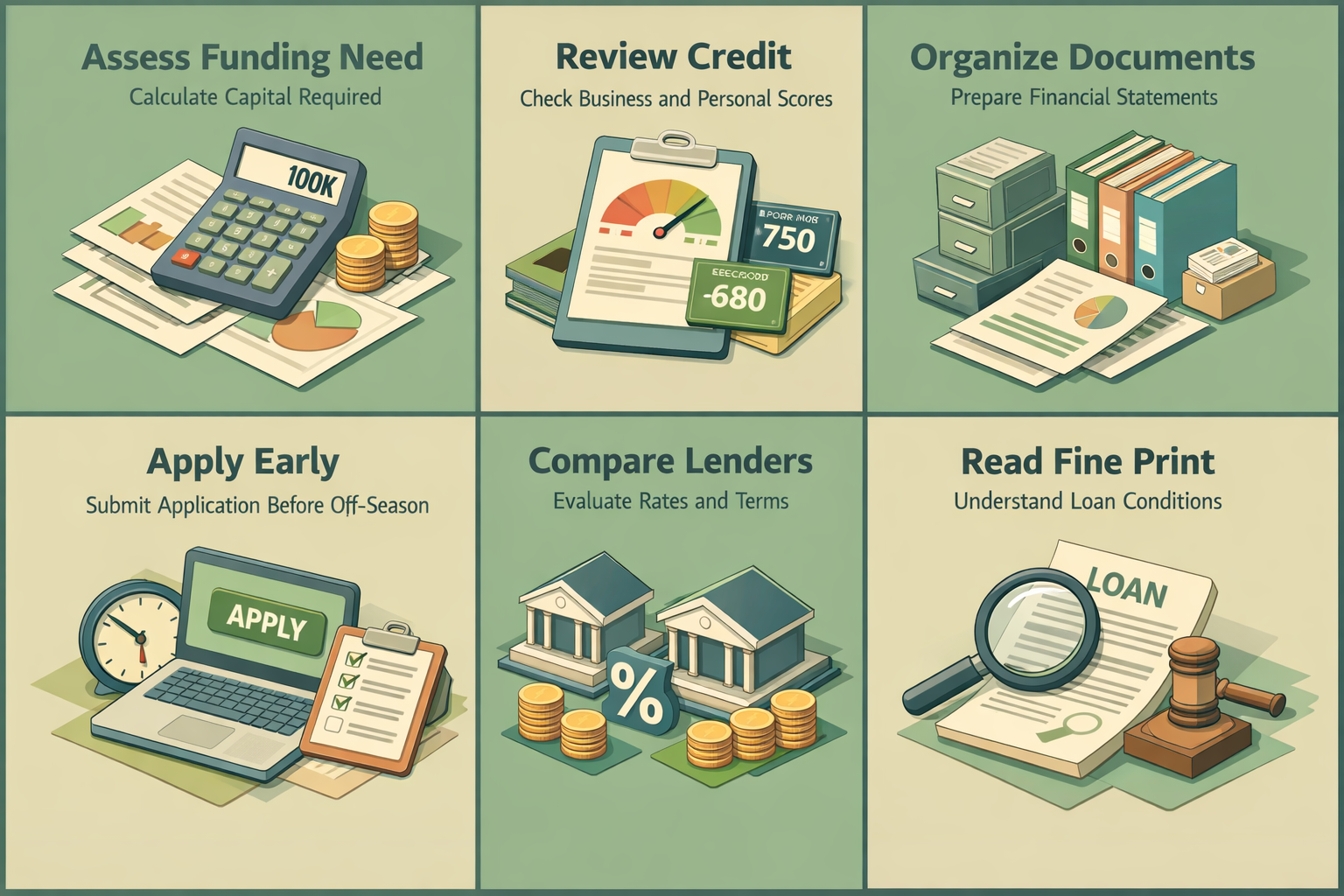
Understanding how to get a working capital loan for a seasonal flower shop during off-season involves more than just submitting an application. Preparation and timing are just as important as choosing the right lender. Here's a practical roadmap to follow:
Step 1: Assess Your Actual Funding Need
Before approaching any lender, calculate how much capital you actually need and what you'll use it for. Lenders respond well to borrowers who can articulate a clear purpose for the funds. Break down your monthly expenses, identify the shortfall, and project when you expect revenue to recover.
Step 2: Review Your Business Credit and Personal Credit
Lenders will likely review both your business credit profile and your personal credit score. Check both before applying so you're not caught off guard. Address any errors or outstanding issues in advance. A stronger credit profile could unlock better terms and lower costs.
Step 3: Organize Your Financial Documents
Most lenders will ask for several months of bank statements, profit and loss statements, tax returns, and sometimes a business plan. Having these organized and ready can speed up the process and signal that you're a responsible borrower.
Step 4: Apply Before the Off-Season Begins
Timing matters. Applying for financing when your bank account is already running low may limit your options and negotiate leverage. Ideally, apply during or just after a peak revenue period when your financials look their strongest.
Step 5: Compare Multiple Lenders
Don't settle for the first offer you receive. Compare rates, fees, repayment schedules, and prepayment penalties across several lenders. Community banks, credit unions, online lenders, and SBA-backed programs each have different strengths depending on your situation.
Step 6: Read the Fine Print
Before signing any agreement, make sure you understand the total cost of the loan, repayment frequency, and any conditions that could affect your business operations. If something is unclear, ask questions or consult a financial advisor.
Building a Stronger Borrower Profile Before You Apply
Lenders assess risk when deciding whether to approve a loan and at what terms. As a seasonal business loan applicant, there are steps you can take to present your flower shop in the best possible light — even during the off-season.
- Maintain separate business banking: Keeping personal and business finances separate makes it easier for lenders to assess your business's true financial health.
- Build a business credit history: Opening a business credit card or trade accounts with suppliers and paying them on time helps establish a credit track record.
- Document your seasonal patterns: A simple one-page summary showing revenue highs and lows over the past two or three years can help a lender understand that slow months are expected — not a red flag.
- Show a repayment plan: Lenders want to know how you plan to repay the loan. Tying your repayment schedule to your peak revenue months is a strategy that may resonate well with lenders familiar with seasonal businesses.
- Reduce existing debt: If you carry high balances on business credit cards or other obligations, paying those down before applying could improve your debt-to-income ratio.
It's also worth building a relationship with a local banker or credit union before you need funds. Lenders who already know your business and your track record may be more willing to work with you during a slow period.
What to Watch Out for When Borrowing During Slow Periods
While borrowing to bridge a seasonal gap is a legitimate and often smart strategy, there are pitfalls to be aware of. Taking on more debt than you can realistically repay — or choosing a high-cost product when a better option might be available — can create more stress than the slow season itself.
Here are some cautions to keep in mind:
- Avoid borrowing more than you need: It can be tempting to take a larger loan "just in case," but excess debt that generates interest without a clear purpose can strain your finances once the off-season ends.
- Be cautious with very short repayment windows: Some lenders, particularly those offering merchant cash advances, may require daily or weekly repayments. These structures can be difficult to manage if revenue is still slow.
- Watch for prepayment penalties: Some loans include fees for paying off early, which could hurt you if your business bounces back faster than expected.
- Understand the true cost of borrowing: Beyond the interest rate, factor in origination fees, processing fees, and any other costs. The Annual Percentage Rate (APR) is often a more accurate measure of total borrowing cost than the interest rate alone.
Working with a trusted lending advisor or small business development center (SBDC) can help you evaluate options with a clearer head and avoid products that aren't the right fit for your situation.
●Conclusion
Running a seasonal flower shop takes passion, planning, and financial resilience. The off-season doesn't have to threaten your business — it can actually be an opportunity to strengthen your operations, build supplier relationships, and prepare for the next surge in demand. Securing the right working capital for a flower shop can make all the difference in staying competitive year-round. Whether you explore an SBA loan, a business line of credit, or a short-term term loan, the key is to plan ahead, present your business clearly, and borrow responsibly. At LoanWise, we're here to help small business owners like you navigate your financing options with confidence. Reach out today to explore what lending solutions might be the right fit for your seasonal business needs.