
Starting a bakery is an exciting venture, but turning your passion for baking into a thriving business takes more than a great recipe. It takes capital — and for many new bakery owners, a Small Business Administration (SBA) loan is one of the most accessible and affordable financing options available. Whether you're planning to open a neighborhood bread shop or a full-service artisan bakery, understanding what documents are needed for SBA loan for a new bakery startup is a critical first step. Getting your paperwork in order early can mean the difference between a smooth approval and frustrating delays. This guide walks you through every major document category so you can walk into your lender's office prepared and confident.
Why SBA Loans Are a Smart Choice for New Bakery Owners
Before diving into the documentation checklist, it helps to understand why SBA loans are so popular among food service entrepreneurs. The SBA doesn't lend money directly — instead, it guarantees a portion of loans made by approved lenders, which reduces the lender's risk and makes it easier for startups with limited credit history to qualify.
For new bakery startups, this government-backed structure can offer several potential advantages:
- Lower down payments compared to conventional small business loans
- Longer repayment terms, which may help manage monthly cash flow during the early stages
- Competitive interest rates that are often more favorable than alternative lenders
- Flexible use of funds, including equipment purchases, leasehold improvements, working capital, and inventory
The most common SBA loan programs for bakery startups include the SBA 7(a) loan — the most widely used option — and the SBA Microloan program, which may be well-suited for very small or home-based bakery operations needing smaller funding amounts. Understanding which program fits your needs will also help you identify which specific documents your lender may request.
Personal Financial Documents Every SBA Borrower Needs
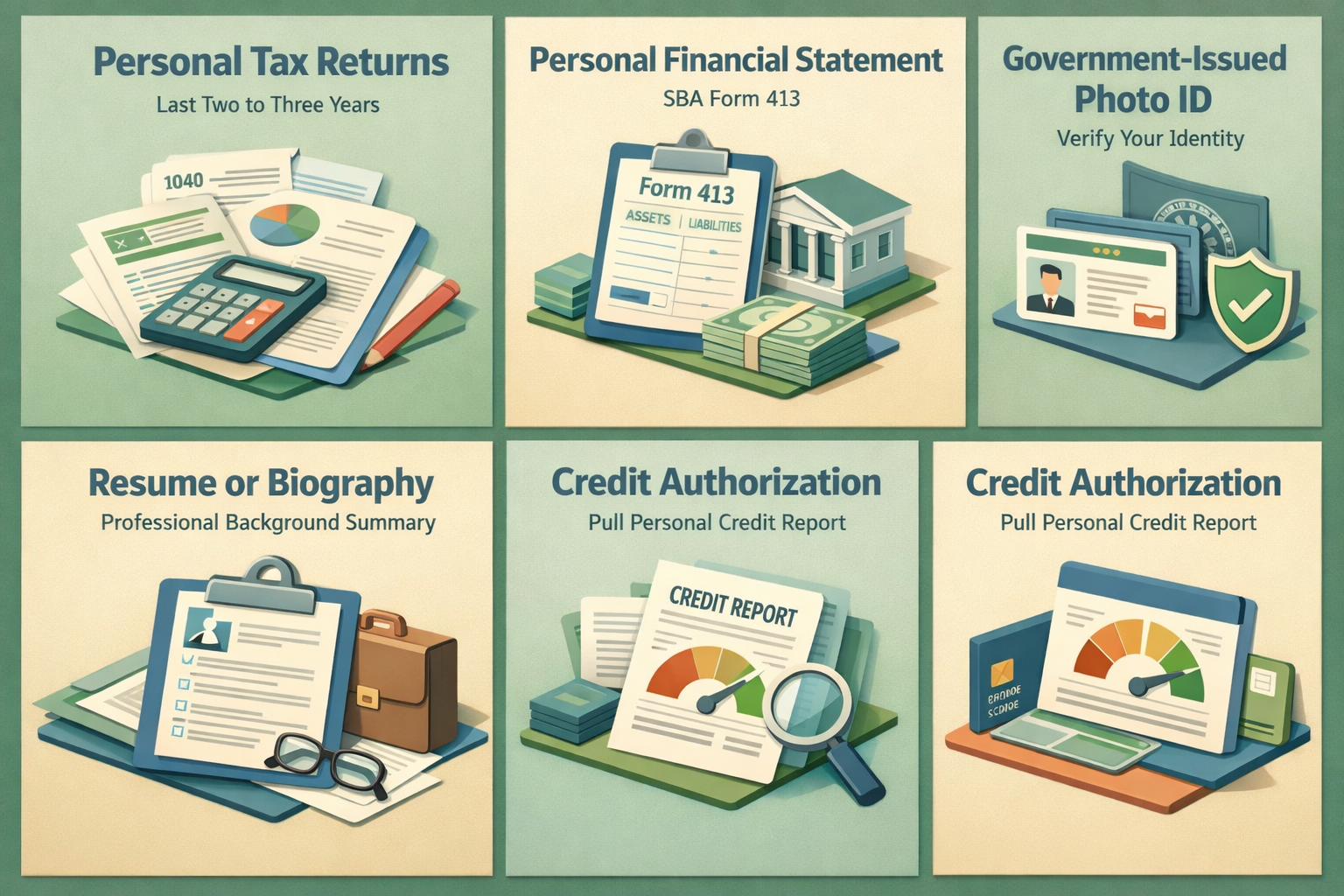
Because your bakery is a new business without an established financial track record, SBA lenders will place significant weight on your personal financial profile. Expect to gather the following personal documents as part of your SBA loan bakery startup documentation package:
- Personal tax returns — Typically the last two to three years of federal personal income tax returns for all owners with 20% or more ownership
- Personal financial statement — A completed SBA Form 413, which outlines your personal assets, liabilities, income, and expenses
- Government-issued photo ID — A driver's license or passport to verify your identity
- Resume or biography — A summary of your professional background, particularly any experience in food service, culinary arts, or business management
- Credit authorization — Lenders will pull your personal credit report; a strong credit score may strengthen your application
It's worth noting that lenders may view your personal credit history as a proxy for how you'll manage business debt. If your credit score has some blemishes, it may be helpful to write a brief letter of explanation addressing any negative items before submitting your application.
Business Plan and Financial Projections That Lenders Want to See
Since your bakery hasn't opened yet, lenders can't evaluate historical business performance. Instead, they rely heavily on a well-crafted business plan to assess the viability of your concept and your ability to repay the loan. This is one of the most important — and most time-intensive — parts of your application.
Your business plan should typically include:
- Executive summary — A concise overview of your bakery concept, mission, and goals
- Business description — Details about your bakery's products, target market, location, and competitive advantages
- Market analysis — Research on local demand, competitors, and your target customer base
- Operations plan — How your bakery will function day to day, including staffing, hours, and production processes
- Marketing strategy — How you plan to attract and retain customers
- Financial projections — Typically covering three to five years, including projected income statements, balance sheets, and cash flow statements
- Break-even analysis — A calculation showing at what point your bakery's revenue will cover its costs
Your financial projections don't need to be perfect, but they should be realistic and supported by logical assumptions. Lenders understand that startups operate on estimates, but they want to see that you've thought carefully about your revenue model and cost structure. If you're not confident preparing these projections yourself, working with an accountant or SCORE mentor can be a worthwhile investment.
Business Formation and Legal Documents You'll Need to Provide
Even if your bakery hasn't served its first customer yet, you'll need to show that your business is legally organized and compliant. Lenders and the SBA require documentation confirming your business entity exists and is properly registered. Common documents in this category include:
- Business license and permits — Depending on your location, this may include a general business license, food handler's permit, and health department certification
- Articles of incorporation or organization — If you've formed an LLC, corporation, or partnership, you'll need the formation documents filed with your state
- Operating agreement or bylaws — Internal governance documents that outline how your business is run and ownership percentages
- Employer Identification Number (EIN) — Your federal tax ID, obtainable from the IRS at no cost
- Fictitious business name (DBA) filing — If you're operating under a name different from your legal business name
- Franchise agreement — If you're opening a franchised bakery concept, the SBA lender will want to review the franchise disclosure document
Getting these documents in place early is important not just for your loan application — it's also a foundational step in establishing your bakery as a legitimate business entity, which can benefit you in future financing rounds as well.
Collateral, Equity Injection, and Use of Funds Documentation
SBA lenders typically require borrowers to demonstrate some level of personal investment in the business, often referred to as an equity injection. For startup businesses, this is especially important because there are no existing business assets to collateralize. Here's what you may need to document:
- Equity injection evidence — Bank statements or other records showing that you're contributing your own funds (typically 10–30% of the total project cost, though this can vary by lender and loan program)
- Source of funds letter — A written explanation of where your equity contribution is coming from, whether savings, a gift, or proceeds from another asset sale
- Collateral documentation — If you own real estate or other significant assets, lenders may require appraisals or account statements. SBA lenders are generally required to take available collateral, but a lack of collateral alone may not disqualify you
- Use of proceeds statement — A detailed breakdown of how you plan to spend the loan funds, such as equipment purchases, leasehold improvements, initial inventory, and working capital
Being transparent and specific about how you intend to use the funds can strengthen your application. Lenders want to see that every dollar has a purpose tied to building a viable bakery operation.
Property and Equipment Details Your Lender May Request
Bakeries require specialized equipment — commercial ovens, mixers, proofing racks, refrigeration units, display cases, and more. Your lender will want documentation related to the physical space and equipment your bakery will operate with. This may include:
- Lease agreement or letter of intent — If you're renting commercial space, provide a copy of the signed lease or a letter of intent from the landlord confirming the terms
- Vendor quotes or invoices — Written quotes from equipment suppliers for all major purchases, which help substantiate your funding request
- Floor plan or build-out specs — If you're renovating a space, architectural drawings or contractor bids may be required
- Contractor agreements — Signed contracts for any construction or renovation work to be completed before opening
If you're purchasing an existing bakery building rather than leasing, you may also need a commercial appraisal, a property inspection report, and title documentation. Real estate purchases financed through an SBA 504 loan involve additional steps and documentation compared to the standard 7(a) process, so it's helpful to clarify with your lender early which program applies to your situation.
Tips for Organizing and Submitting Your SBA Loan Application
Knowing what documents are needed for SBA loan for a new bakery startup is only half the battle — how you present them matters too. A disorganized or incomplete application can slow down the underwriting process significantly. Here are some practical tips to help you put your best foot forward:
- Create a master checklist — Use the categories above to build a running list of every document required, and check items off as you gather them
- Work with an SBA-approved lender early — Different lenders may have slightly different requirements. Connecting with an SBA loan bakery startup resource like an SBA Preferred Lender or a local Small Business Development Center (SBDC) can help you tailor your package
- Keep digital copies organized — Scan all documents and store them in clearly labeled folders so you can submit electronically when requested
- Double-check all forms for accuracy — Errors or inconsistencies between your personal tax returns, financial statements, and business projections can raise red flags
- Be responsive during underwriting — Once submitted, lenders may request additional information. Responding quickly can keep your timeline on track
- Consider professional help — An accountant, SBA consultant, or SCORE mentor can review your application before submission and catch common mistakes
It's also worth noting that SBA loan processing times can vary depending on the lender and loan program. Working with an SBA Preferred Lender may offer faster turnaround times than going through the standard SBA approval process, which could matter if you have a lease start date or equipment delivery deadline approaching.
●Conclusion
Opening a bakery is a labor of love — and securing the right financing is one of the most important steps in making that dream a reality. Understanding what documents are needed for SBA loan for a new bakery startup gives you a clear roadmap and helps you avoid costly application delays. From your personal financial statements and business plan to legal formation documents and equipment quotes, each piece of the puzzle tells your lender a story about your readiness to succeed. Start gathering your documents early, lean on available resources like SBDCs and SCORE mentors, and partner with an SBA-experienced lender who can guide you through the process. At LoanWise, we're here to help small business owners like you find the right lending path forward — so you can focus on what you do best: baking.