
Starting a craft brewery is an exciting venture, but turning that dream into a fully operational taproom takes more than great recipes — it takes real capital. For many entrepreneurs entering the craft beer industry, an SBA 7(a) loan is one of the most accessible and flexible financing tools available. It can help cover everything from brewing equipment and leasehold improvements to working capital and initial inventory. That said, the application process can feel overwhelming, especially if you've never applied for a small business loan before. One of the most common questions new brewery owners ask is: what documents are needed for SBA 7(a) loan for a new craft brewery startup? Understanding what lenders and the SBA expect before you walk through the door can dramatically improve your chances of approval and speed up the process. This guide walks you through each documentation category in plain language so you can get organized and get funded.
Understanding the SBA 7(a) Loan and Why Breweries Use It
The SBA 7(a) loan program is the Small Business Administration's flagship lending product. It's designed to help small businesses — including startups — access funding that might otherwise be difficult to secure through conventional bank financing. Loan amounts can go up to $5 million, and repayment terms can extend up to 10 years for working capital or up to 25 years for real estate, making it well-suited for the capital-intensive nature of launching a craft brewery.
Craft breweries often require substantial upfront investment. Brewing systems, fermentation tanks, taproom build-outs, licensing fees, and initial raw materials can add up quickly. An SBA loan for brewery startup projects is attractive because the government guarantee reduces the risk for lenders, which often translates into more favorable terms for borrowers — including lower down payments and longer repayment windows than many conventional business loans offer.
That said, because the SBA guarantees a portion of the loan, lenders are required to follow specific underwriting guidelines. This means the documentation requirements are thorough. Being well-prepared isn't just helpful — it's essential.
Personal Financial Documents Every Applicant Must Provide
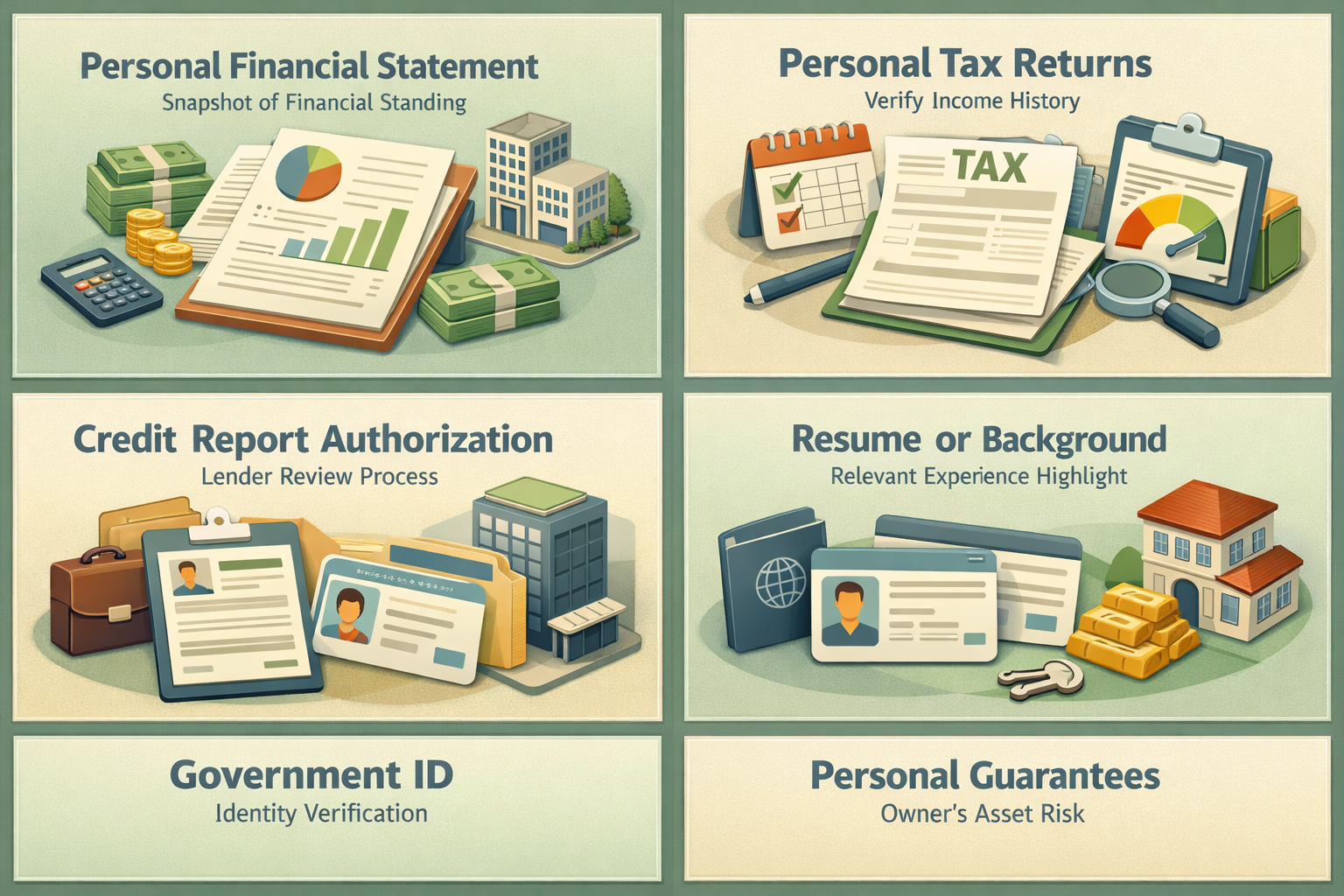
Lenders want to understand the financial health of every person who owns 20% or more of the business. For a new craft brewery startup, this typically includes the founders and any co-owners. Here's what you'll likely need to provide on a personal level:
- Personal financial statement (SBA Form 413): This standardized form captures your assets, liabilities, income, and net worth. It gives lenders a snapshot of your overall financial standing.
- Personal tax returns: Most lenders require the last two to three years of personal federal tax returns for each owner. This helps verify income history and financial consistency.
- Personal credit report authorization: Lenders will pull your credit as part of their review. A score of 680 or higher is often considered favorable for SBA loans, though some lenders may work with scores as low as 650 depending on other factors.
- Resume or personal background statement: Because this is a startup, lenders place significant weight on your relevant experience. A resume highlighting any background in brewing, hospitality, food and beverage operations, or business management can strengthen your application considerably.
- Government-issued identification: A valid driver's license or passport is typically required for identity verification purposes.
It's worth noting that personal guarantees are typically required for SBA 7(a) loans. Every owner with 20% or more equity will generally need to sign a personal guarantee, meaning their personal assets could be at risk if the business defaults.
Business Plan and Financial Projections: The Heart of a Startup Application
Because a new craft brewery has no operating history, your business plan becomes one of the most critical documents in your loan package. Lenders can't look at past performance, so they rely on your projections and strategic thinking to assess whether your brewery is likely to succeed. A strong business plan for an SBA loan for brewery startup applications should generally include:
- Executive summary: A concise overview of your brewery concept, mission, target market, and funding request.
- Company description: Details about your legal structure, ownership, location, and what makes your brewery unique in the market.
- Market analysis: Research into the local and regional craft beer market, your target customer base, and an honest assessment of the competitive landscape.
- Products and services: A description of your planned beer lineup, taproom experience, food offerings (if any), and any distribution strategy.
- Marketing and sales strategy: How you plan to attract customers, build brand awareness, and generate revenue in the early months.
- Management team overview: Backgrounds of key team members, emphasizing relevant industry or business experience.
- Financial projections: This section typically includes a projected income statement, cash flow statement, and balance sheet for at least three years. Lenders will scrutinize these numbers carefully, so make sure your assumptions are realistic and clearly explained.
Your financial projections should show not just optimistic growth, but also a credible path to covering your debt service. Lenders want to see that your projected revenues can comfortably support your loan payments — this is often measured using a debt service coverage ratio (DSCR) of at least 1.25, meaning your net operating income should be at least 1.25 times your annual loan payments.
Business and Legal Documents Required for Brewery Licensing and Entity Verification
SBA lenders need to verify that your brewery is a legitimate, legally registered business entity. The craft brewery business loan requirements around legal documentation tend to be consistent across most SBA-approved lenders. Here's what you should gather:
- Business formation documents: Depending on your structure, this could include Articles of Incorporation, Articles of Organization (for an LLC), or a partnership agreement. These documents confirm how the business is legally structured.
- Operating agreement or bylaws: These internal documents outline ownership percentages, decision-making authority, and how the business is managed.
- Employer Identification Number (EIN): You'll need your EIN, issued by the IRS, to verify your business's tax identity.
- Business licenses and permits: For a brewery, this is particularly important. You'll need to show that you have — or are in the process of obtaining — the appropriate federal, state, and local permits. In the U.S., this includes a Brewer's Notice from the Alcohol and Tobacco Tax and Trade Bureau (TTB), as well as any state liquor licenses and local zoning approvals.
- Lease agreement or real estate documents: If you've already secured a location, include a copy of your signed lease. If you're purchasing property, you'll need a purchase agreement. Lenders want to confirm your physical operating location.
- Franchise or licensing agreements (if applicable): If your brewery concept involves any licensed brand or brewing system, include those agreements.
Having your legal paperwork in order signals to lenders that you're serious, organized, and operating within the appropriate regulatory framework — all factors that build confidence in your application.
Collateral Documentation and How It Affects Your Loan Approval
While the SBA doesn't require lenders to decline a loan solely because of insufficient collateral, most lenders will still ask for it — especially for startup businesses. Collateral reduces the lender's risk and can improve your loan terms. For a new craft brewery, collateral documentation might include:
- Equipment lists and valuations: If you're purchasing brewing systems, fermentation vessels, kegging lines, or taproom furniture, provide itemized lists with estimated values or vendor quotes. Equipment can often serve as collateral for the loan itself.
- Real estate documents: If you own commercial or residential property, a recent appraisal or mortgage statement may be requested. In some cases, lenders may place a lien on personal real estate as additional security.
- Inventory documentation: For a startup, this may be limited, but any existing raw materials, packaging inventory, or other tangible assets should be documented.
- Vendor quotes and equipment invoices: If you're using loan funds to purchase specific equipment, having firm quotes from vendors helps lenders understand exactly how the money will be deployed.
It's important to be transparent about what collateral you have available. Trying to overstate asset values or omit liabilities could raise red flags during underwriting. Lenders appreciate straightforward disclosures, and being upfront typically leads to a smoother review process.
Additional SBA-Specific Forms and Requirements You Shouldn't Overlook
Beyond the standard financial and legal documents, the SBA requires several program-specific forms that must be completed accurately. Missing even one of these could delay your application or cause a rejection. When asking what documents are needed for SBA 7(a) loan for a new craft brewery startup, don't overlook these SBA-mandated items:
- SBA Form 1919 (Borrower Information Form): This form collects background information on the business and its principals, including questions about prior legal issues, prior SBA loans, and business affiliations.
- SBA Form 912 (Statement of Personal History): Required if any owner has had legal or criminal history. Full disclosure is critical here.
- SBA Form 413 (Personal Financial Statement): Already mentioned above, this is an official SBA form — not just any financial statement.
- Debt schedule: A complete list of all current business and personal debts, including balances, monthly payments, interest rates, and creditors.
- Use of proceeds statement: A clear breakdown of exactly how you plan to use the loan funds. For a brewery startup, this might detail the percentage going toward equipment, leasehold improvements, working capital, and licensing fees.
- Affiliate business information: If any owner has an ownership interest in other businesses, those relationships and financials may need to be disclosed as well.
Your SBA-approved lender will typically provide you with a complete checklist tailored to their institution's requirements. It's always a good idea to ask for that checklist upfront so nothing slips through the cracks.
Tips for Strengthening Your Craft Brewery Loan Application Before You Apply
Getting organized is only half the battle. How you present your application matters just as much as the documents themselves. Here are several practical steps that could improve your odds of approval:
- Work with an SBA-preferred lender: SBA Preferred Lenders have delegated authority to approve loans without sending them to the SBA for separate review, which can speed up your timeline significantly. Ask lenders upfront whether they hold preferred lender status.
- Engage a SCORE mentor or SBDC advisor: The Small Business Administration's network of SCORE mentors and Small Business Development Centers (SBDCs) offers free guidance to entrepreneurs. A mentor with food and beverage or hospitality experience can help you refine your business plan and financial projections before submission.
- Demonstrate industry knowledge: Because craft brewery startups are considered somewhat specialized, showing that you understand the industry — including TTB compliance, state regulations, distribution channels, and seasonal demand — can set your application apart.
- Show equity injection: SBA lenders typically expect borrowers to contribute a portion of the project cost themselves — often around 10% to 30% depending on the loan size and risk profile. Having your own skin in the game signals commitment and lowers lender risk.
- Keep your personal finances clean: In the months before applying, avoid taking on new personal debt, making large unexplained deposits, or missing any payments. Lenders will review your financial patterns closely.
- Be honest about challenges: If you have a past bankruptcy, a prior business failure, or a gap in relevant experience, address it proactively in a written explanation. Lenders tend to respond better to transparency than to omissions discovered during underwriting.
Preparation and professionalism go a long way in the SBA lending process. The more complete and well-organized your package, the more confidence you'll instill in your lender — and the faster your review is likely to move forward.
●Conclusion
Launching a craft brewery is a bold, rewarding entrepreneurial pursuit — and securing the right financing is a foundational step in making it happen. Understanding what documents are needed for SBA 7(a) loan for a new craft brewery startup gives you a meaningful head start over applicants who walk in underprepared. From personal financial statements and business plans to TTB licensing paperwork and SBA-specific forms, each document plays a role in building a compelling, credible loan application. The craft brewery business loan requirements may seem extensive, but they exist to protect both you and your lender — and meeting them thoroughly demonstrates that you're ready to run a serious business. If you're ready to take the next step, consider reaching out to an SBA-approved lender or a local SBDC advisor to get a personalized checklist and expert guidance tailored to your specific project. Your brewery dream is closer than you think — you just need the right roadmap to get there.