
Securing financing through the Small Business Administration's flagship lending program can be a game-changer for entrepreneurs and small business owners. But before funding hits your account, there's an important step that trips up many applicants: gathering the right paperwork. Understanding what documents are needed for SBA 7(a) loan applications is one of the most practical things you can do to move your request forward efficiently. Lenders want to see a complete, well-organized file — and arriving prepared signals that you're a serious, responsible borrower. This guide walks through every major category of documentation you'll likely encounter, so you can approach the process with confidence and clarity.
Why the SBA 7(a) Loan Requires Thorough Documentation
The SBA 7(a) loan program is the most popular small business loan option backed by the federal government, and it comes with significant advantages — including longer repayment terms, competitive interest rates, and access to capital that might otherwise be difficult to obtain through conventional lending. However, because the government is partially guaranteeing these loans, both the SBA and the participating lender need to verify that your business is creditworthy, financially stable, and capable of repaying the debt.
This is why the SBA 7(a) loan application checklist tends to be more extensive than what you'd see with a standard bank term loan or a line of credit. The additional documentation isn't meant to create obstacles — it's designed to give lenders a complete picture of your business's health, history, and future potential. When you understand the reasoning behind each requirement, the process becomes far less daunting.
It's also worth noting that documentation requirements can vary slightly depending on the lender, the loan amount, and the specific use of proceeds. Some lenders may ask for additional items beyond the standard list, while others — particularly those with SBA Preferred Lender status — may streamline certain steps. Always confirm exact requirements directly with your lender before submitting your file.
Core Business Documents Every Applicant Should Prepare
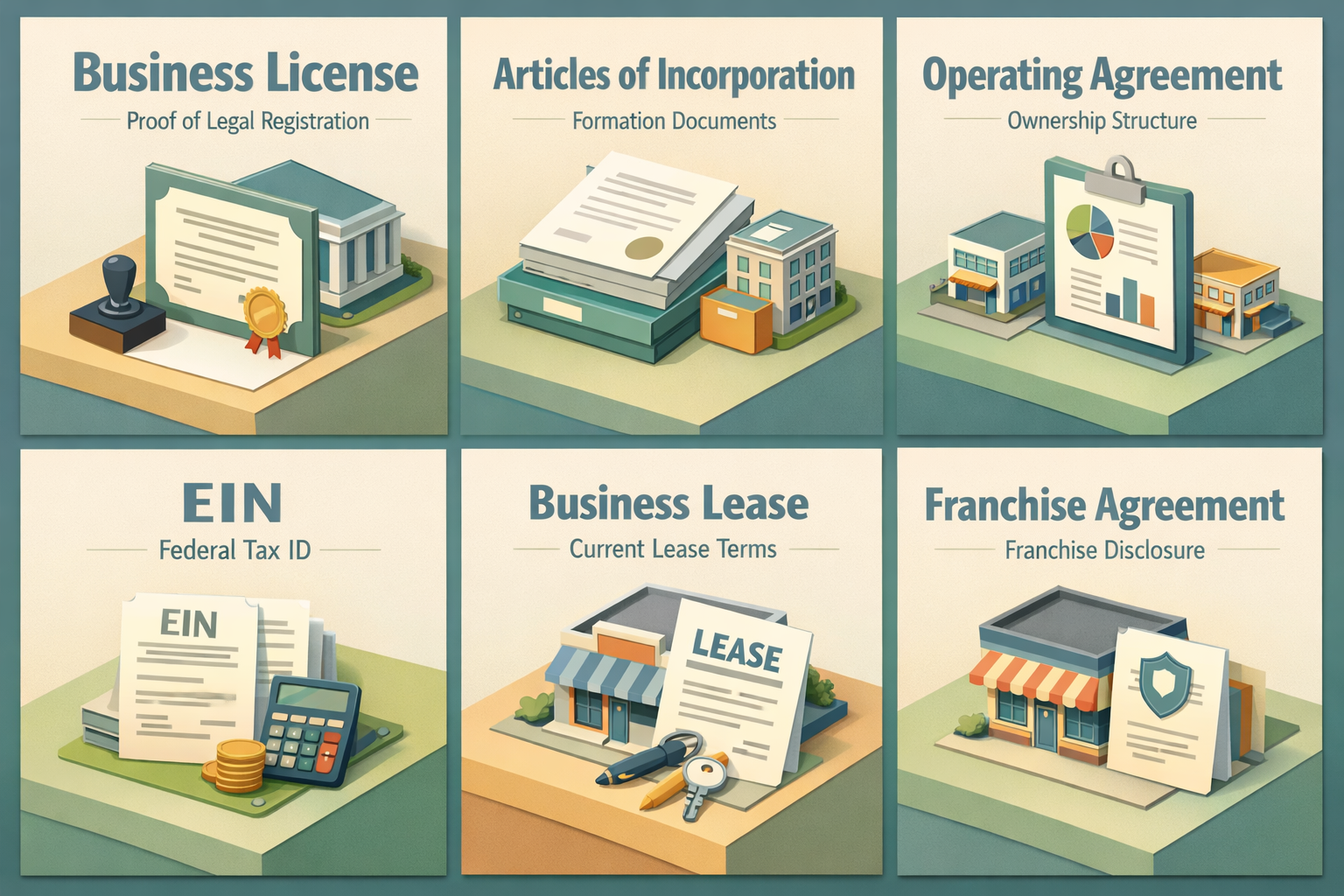
The foundation of any SBA 7(a) loan application starts with documents that establish the legal identity and structure of your business. These items confirm that your company is legitimate, properly organized, and authorized to enter into a loan agreement. You'll typically need to gather the following:
- Business license and registration: Proof that your business is legally registered in your state or municipality.
- Articles of incorporation or organization: For corporations, LLCs, or partnerships, these formation documents outline how the business is structured.
- Operating agreement or partnership agreement: Describes ownership percentages, roles, and decision-making authority among business partners or members.
- Employer Identification Number (EIN): Your federal tax ID, which identifies your business with the IRS.
- Business lease agreement: If your business operates from a commercial location, lenders may want to see your current lease terms.
- Franchise agreement: If applicable, franchisees may need to provide their franchise disclosure documents and agreements.
Having these documents organized and readily accessible can meaningfully speed up the underwriting process. Many lenders will not proceed with a formal review until they've confirmed the legal standing of your business, so it's smart to prioritize this category early in your preparation.
Business Financial Statements the Lender Will Review
One of the most critical components of your application involves your business financial statements for SBA loan review. These documents give underwriters a detailed look at how your company earns money, manages expenses, and builds equity over time. Lenders typically request financial records going back two to three years, along with current-year figures. Here's what you can generally expect to provide:
- Profit and loss statements (P&L): Also called income statements, these summarize your revenues, costs, and net income over a defined period.
- Balance sheets: A snapshot of your business assets, liabilities, and owner's equity at a specific point in time.
- Cash flow statements: Demonstrates how cash moves in and out of your business, which is often more telling than profit figures alone.
- Accounts receivable and payable aging reports: Shows outstanding invoices owed to you and bills you owe to vendors.
- Business debt schedule: A listing of all current business debts, including monthly payments, outstanding balances, and creditor names.
If your financials are prepared by a certified public accountant (CPA), that tends to carry more weight with underwriters. However, internally prepared statements may be acceptable depending on the lender and loan size. Either way, accuracy and consistency across all financial documents are essential — discrepancies can slow down or derail your application.
Tax Returns and IRS Authorization Forms
Tax returns serve as an independent verification of the financial information you've provided. Lenders cross-reference your submitted financial statements against filed returns to ensure consistency. For a typical SBA 7(a) application, you'll likely need to supply:
- Business tax returns: Generally the last two to three years of complete federal returns, including all schedules and attachments.
- Personal tax returns: Most lenders require the last two to three years of personal federal tax returns for all owners with a significant ownership stake — often defined as 20% or more.
- IRS Form 4506-C: This is an IRS tax transcript request form that authorizes the lender to verify your returns directly with the IRS. It's a standard requirement for virtually all SBA loans.
It's important that the tax returns you submit match what was actually filed with the IRS. Any differences between your submitted documents and IRS records can raise red flags during underwriting. If you've filed extensions or have amended returns, notify your lender upfront so they can guide you on how to handle those situations appropriately.
Personal Financial Statement and Owner Background Information
Because SBA 7(a) loans typically require a personal guarantee from owners with 20% or more equity in the business, lenders need to evaluate each guarantor's personal financial position as well. The personal financial statement SBA 7(a) requirement is captured primarily through SBA Form 413, which is a standardized document that outlines your personal assets, liabilities, income sources, and net worth.
Beyond the financial statement itself, you'll also typically need to provide:
- Government-issued photo ID: A driver's license or passport to verify your identity.
- Resume or professional biography: Demonstrates your relevant experience and qualifications in your industry — especially important for newer businesses where historical financial data may be limited.
- SBA Form 912 (Statement of Personal History): This form discloses any prior criminal history, which the SBA reviews as part of its character assessment.
- Personal credit authorization: Lenders will pull personal credit reports for all guarantors. You'll likely need to sign a consent form.
Strong personal financials and a clean background can meaningfully reinforce your application, particularly if your business financials are modest. Lenders want to know that the people behind the business have the character and capacity to stand behind the obligation.
Business Plan, Use of Proceeds, and Collateral Details
Lenders need to understand not just where your business has been, but where it's going — and how the loan will help get it there. For this reason, a well-prepared business plan is often a required component of the required paperwork for SBA 7(a) loan submissions, especially for startups or businesses with limited operating history.
A strong business plan typically includes:
- An executive summary describing your business model and value proposition
- A market analysis showing demand for your product or service
- Details on your management team and organizational structure
- Financial projections for the next two to three years, including projected revenue, expenses, and cash flow
- A clear explanation of how loan proceeds will be used
The use of proceeds is particularly important. The SBA and lenders want to see a specific, reasonable plan for how borrowed funds will be deployed — whether that's purchasing equipment, hiring staff, acquiring real estate, refinancing existing debt, or covering working capital needs. Vague or unsupported uses of funds can create hesitation during underwriting.
Collateral documentation may also be requested depending on the loan size. This could include appraisals, property deeds, vehicle titles, or equipment lists. While the SBA does not automatically decline loans for lack of collateral, lenders are generally required to collateralize the loan to the extent possible. Being upfront about what collateral is available — and providing supporting documentation — demonstrates transparency and good faith.
Tips to Organize Your SBA 7(a) Application File Effectively
Knowing what documents are needed for SBA 7(a) loan approval is only half the battle — how you present that information matters too. Lenders process many applications at once, and a clean, well-organized file can help yours move through underwriting more smoothly. Here are some practical tips to strengthen your submission:
- Create a master checklist: Use the SBA's published guidelines and your lender's specific requirements to build a document checklist and track what you've gathered versus what's still outstanding.
- Use clearly labeled folders: Whether submitting digitally or in print, organize documents into clearly named categories — business formation, financials, tax returns, personal information, and so on.
- Ensure consistency across documents: Business names, addresses, EINs, and financial figures should match across all submitted materials. Inconsistencies, even minor ones, can trigger additional review.
- Work with your accountant early: If you don't have current financial statements prepared, engage your CPA well before applying. Waiting until the last minute can delay your timeline significantly.
- Be proactive about disclosures: If there are blemishes in your financial or personal history — a past bankruptcy, a tax lien, or a slow-pay period — address them upfront with a brief written explanation. Lenders typically respond better to transparency than to discovering issues on their own.
- Ask your lender for their specific checklist: Preferred lenders and standard lenders may have slightly different requirements. Always get a written list from your specific lender before you begin assembling documents.
Taking the time to build a thorough, accurate, and organized application file reflects the kind of professionalism that lenders look for in borrowers they're willing to back. It may also help reduce the back-and-forth that often causes delays.
●Conclusion
Preparing for an SBA 7(a) loan application is genuinely one of the more document-intensive experiences in small business financing — but it's also one of the most rewarding when everything comes together. By understanding the full scope of what's typically required, you put yourself in a much stronger position to move through the process efficiently and land the funding your business needs. From core business formation records and financial statements to personal background disclosures and a solid business plan, each document tells part of the story lenders need to hear. At LoanWise, we're here to help small business owners and entrepreneurs navigate the lending landscape with clarity. If you're ready to explore your SBA financing options, connect with one of our experienced business lending specialists today.