
If you're a homeowner looking to unlock the equity in your home, a Home Equity Line of Credit — commonly known as a HELOC — can be a powerful financing tool. Whether you're planning a renovation, consolidating high-interest debt, or funding a major expense, a HELOC gives you flexible access to funds based on your home's value. But before a lender approves your application, they'll need to verify several key details about your finances and property. Understanding what documents are needed for a HELOC application before you start can save you time, reduce stress, and help you put your best foot forward. This guide walks you through everything you'll likely need to gather — from income records to property documentation — so you're fully prepared when you sit down with your lender.
Why Lenders Request So Much Documentation
A HELOC is a form of secured credit tied directly to your home. Because your property serves as collateral, lenders take the approval process seriously. They want to confirm that you have enough equity in the home, that you can afford the repayments, and that the property itself is worth what you claim. This is why the required documents for home equity line of credit applications tend to be more thorough than what you might submit for an unsecured personal loan.
Lenders are essentially evaluating two things at once: your creditworthiness as a borrower and the value of the asset backing the loan. The documentation you provide helps them assess both. Being organized and proactive about gathering your paperwork can also signal to lenders that you're a responsible borrower — which may work in your favor during the review process.
Proof of Identity and Personal Information
Before anything else, your lender will need to confirm who you are. This is a standard part of any loan application and typically involves providing government-issued identification. Most lenders will accept a driver's license, state-issued ID, or passport. In some cases, they may also request your Social Security number to pull your credit report as part of the HELOC application checklist.
If you're applying jointly with a co-borrower — such as a spouse or domestic partner — both parties will need to submit identification and personal details. It's worth checking with your lender early on about whether a co-borrower might strengthen your application, particularly if your individual income or credit score is on the lower end of their qualifying range.
Proof of Income: What You'll Need to Show Your Earning Power
One of the most critical parts of any HELOC application is demonstrating that you have reliable, sufficient income to repay what you borrow. Lenders want confidence that you won't overextend yourself, so they'll ask for documentation that paints a clear picture of your financial situation. Proof of income for HELOC applications typically includes several types of records depending on how you earn your money.
For salaried or hourly employees, common income documents include:
- Recent pay stubs — usually covering the last 30 days
- W-2 forms from the past two years
- Federal tax returns for the past one to two years
If you're self-employed, the documentation requirements tend to be more involved. Lenders may ask for:
- Two years of personal and business tax returns
- A current profit and loss statement
- Business bank statements for recent months
- A CPA letter verifying your self-employment status
Those who receive additional income sources — such as rental income, Social Security benefits, alimony, or investment dividends — may also need to provide supporting documentation like award letters, lease agreements, or brokerage statements. Lenders typically want to see that these income streams are consistent and likely to continue. It's best to ask your lender upfront exactly which income types they'll count and what documentation each one requires.
Property-Related Documents That Support Your Application
Since a HELOC is secured by your home, your lender will need detailed information about the property itself. This is where property appraisal for HELOC purposes becomes a key part of the process. A lender needs to know your home's current market value to determine how much equity you actually have available.
Here's what you might expect to provide or authorize in this category:
- Property appraisal: Many lenders will order an independent appraisal of your home. In some cases, they may use an automated valuation model (AVM) instead, though a full appraisal is common for larger credit lines. You may be responsible for the appraisal fee.
- Most recent mortgage statement: This shows your current outstanding loan balance, which helps the lender calculate your available equity.
- Homeowners insurance policy: Lenders want to verify that your property is properly insured. You'll typically need to provide your current declarations page.
- Property tax records: Some lenders will request evidence of your most recent property tax payments to confirm there are no delinquencies that could complicate the lien position.
- Title information: Your lender may also conduct a title search to confirm ownership and check for any existing liens on the property.
Being current on your mortgage and property taxes is important going into the application. Outstanding delinquencies or liens could affect your eligibility or the terms of the credit line you're offered.
Credit History and Debt Disclosure Requirements
Your credit profile plays a significant role in whether you're approved and what interest rate you receive. While you typically don't need to provide a paper copy of your credit report — lenders pull this directly — there are still important steps you can take to prepare. Reviewing your own credit report before applying can help you catch and dispute any errors that might unfairly lower your score.
Lenders will assess your debt-to-income ratio (DTI), which compares your total monthly debt obligations to your gross monthly income. To calculate this accurately, they may ask you to disclose all existing debts, including:
- Your primary mortgage balance and monthly payment
- Auto loans and personal loans
- Student loan obligations
- Credit card minimum payments
- Any other recurring financial commitments
Some lenders may ask you to provide recent statements for these accounts to verify balances. Keeping your DTI as low as possible before applying — for example, by paying down revolving balances — could potentially improve both your approval odds and the rate you're offered. Most lenders look for a DTI below a certain threshold, though requirements can vary. It's worth discussing specifics with your lender or a mortgage advisor.
The Complete HELOC Application Checklist at a Glance
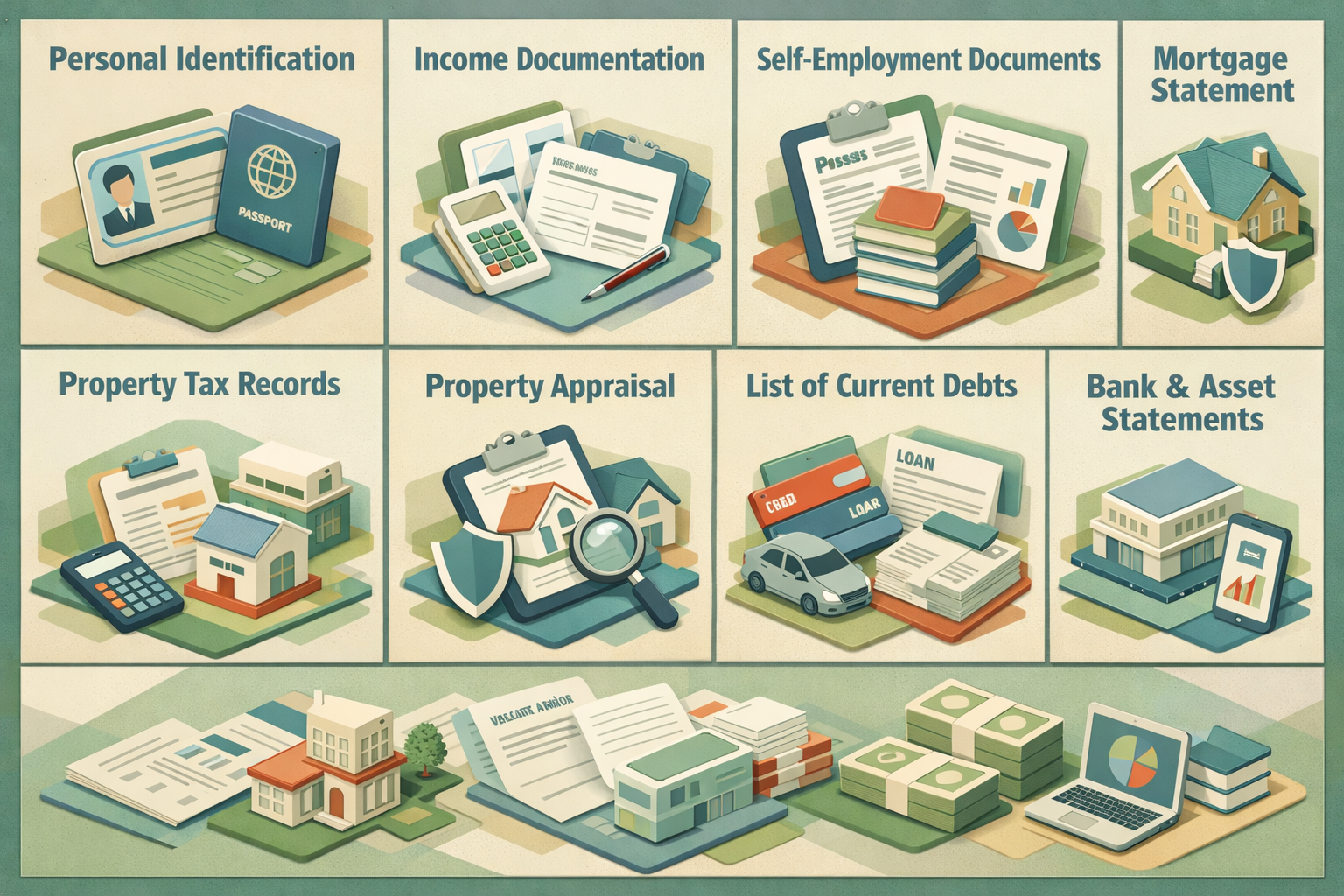
Pulling everything together before you apply can make the process much smoother. Here's a consolidated HELOC application checklist to help you organize your documents efficiently:
- Personal identification: Government-issued photo ID (driver's license, passport)
- Social Security number for credit authorization
- Income documentation: Pay stubs, W-2s, tax returns (one to two years), and any supplemental income records
- Self-employment documents: Business returns, profit and loss statement, bank statements
- Mortgage statement: Most recent statement showing your outstanding balance
- Homeowners insurance: Current declarations page
- Property tax records: Evidence of recent payments
- Property appraisal: Your lender will typically arrange this, but be prepared for the associated cost
- List of current debts: Statements or account details for all outstanding obligations
- Bank and asset statements: Recent statements showing checking, savings, and investment accounts
Every lender has slightly different requirements, so this list should be treated as a strong starting point rather than an absolute standard. Always confirm directly with your lender which documents they require before submitting your application.
Tips to Make Your HELOC Application Go More Smoothly
Even when you understand what documents are needed for a HELOC application, small missteps can slow things down. Here are a few practical strategies to help your application move forward without unnecessary delays:
- Start gathering documents early. Some records — like tax returns or business financials — can take time to locate or request from accountants. Don't wait until the last minute.
- Check your credit before applying. A higher credit score may lead to better rates and terms. If your score needs improvement, it might be worth spending a few months addressing outstanding issues first.
- Keep your finances stable during the process. Avoid making large purchases, opening new credit accounts, or changing jobs while your application is under review. These changes can affect how your financial profile appears to the lender.
- Be transparent about your debts. Lenders will verify your liabilities anyway, so full disclosure from the start avoids complications and builds trust.
- Ask questions. If you're unsure whether a document qualifies or whether a particular income source will count, ask your loan officer directly. A good lender will guide you through the specifics of their process.
Taking a methodical approach to your application could help you secure a competitive rate and a credit limit that genuinely works for your financial goals.
●Conclusion
Knowing what documents are needed for a HELOC application is the first step toward a smoother, more confident borrowing experience. From income verification and identity confirmation to property appraisals and debt disclosures, each document serves a purpose in helping lenders assess your eligibility and protect their investment. The more organized and prepared you are going in, the better positioned you'll be to move through underwriting efficiently. At LoanWise, our lending experts are here to walk you through every step of the HELOC process — from gathering your paperwork to comparing your options. Ready to get started? Connect with a LoanWise advisor today and find out how much of your home equity you may be able to access.