
Investment Property Mortgage Essentials Guide
Securing a mortgage loan for investment property requires a different approach than traditional homebuyer financing. Real estate investors face unique challenges and opportunities when it comes to financing rental properties, fix and flip projects, and expanding their portfolios. Understanding the latest trends in investment property mortgage rates and specialized loan products can make the difference between a profitable deal and a missed opportunity.
The landscape for investment property financing has evolved significantly, with DSCR loans gaining popularity and non-QM lending offering more flexible terms. Current market conditions in 2026 present both challenges and opportunities for investors looking to leverage debt strategically.
DSCR Loan Qualification Essentials
DSCR loan qualification essentials focus on the property's income potential rather than your personal financial situation. These loans have become increasingly attractive for real estate investors who want to expand their portfolios without traditional income verification requirements.
- Property cash flow calculations determine loan approval instead of personal debt-to-income ratios
- Credit scores typically need to meet minimum thresholds, though requirements may vary by lender
- Down payment requirements often range from 20% to 25% for investment properties
- Property type and location can influence qualification criteria and terms
Current Investment Property Mortgage Rates
Current Investment Property mortgage rates have shown favorable movement for investors in 2026. DSCR loan interest rates have decreased significantly since 2024, creating opportunities for both new acquisitions and refinancing existing properties.
- DSCR loan rates currently range between 6.00% to 7.50% as of early 2026
- Rate reductions from previous years may improve cash flow on rental properties
- Refinancing existing investments could lower monthly payments and increase profitability
- Market conditions suggest continued competitive pricing in the non-QM lending space
Rental Property Financing Strategies
Rental property financing strategies must align with your investment goals and portfolio expansion plans. Different loan products serve different purposes in building a successful real estate investment business.
- DSCR loans work well for long-term rental properties with stable cash flow
- Bridge loans may suit investors planning quick renovations before permanent financing
- Portfolio lenders might offer more flexibility for investors with multiple properties
- Conventional loans remain viable for properties under conforming loan limits
Steps to Calculate Rental Property Income
Steps to calculate rental property income accurately are crucial for DSCR loan approval and investment analysis. Lenders evaluate the property's ability to service debt based on rental income projections and actual market data.
- Determine gross rental income using market rent analysis and comparable properties in the area
- Calculate net operating income by subtracting property taxes, insurance, maintenance, and vacancy allowances
- Apply the debt service coverage ratio formula by dividing net operating income by total debt service
- Verify your calculations meet lender requirements, typically looking for DSCR ratios above 1.0 to 1.25
Investment Property Loan Application Process
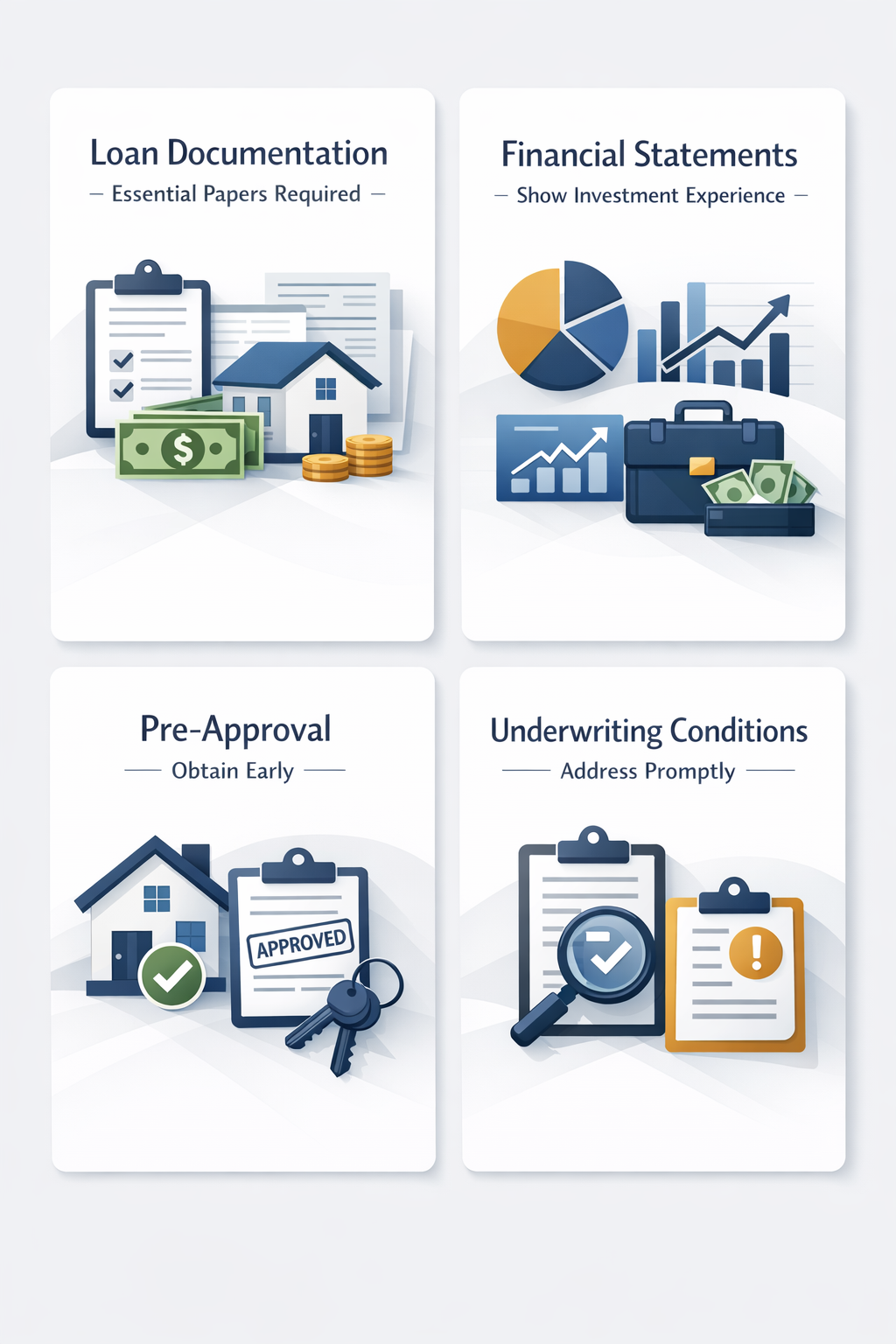
Investment property loan application process differs from traditional mortgage applications, with lenders focusing more heavily on the asset's performance potential. Understanding these steps can streamline your financing timeline.
- Gather property documentation including rent rolls, lease agreements, and recent appraisals or market analyses
- Prepare financial statements showing your investment experience and available reserves for property management
- Submit application materials early in your property search to obtain pre-approval letters
- Work with your lender to address any underwriting conditions promptly during the approval process
Maximizing Loan-to-Value Ratios
Maximizing loan-to-value ratios helps investors preserve capital for additional investments or property improvements. Non-QM lending trends suggest more favorable LTV options may become available throughout 2026.
- Research lenders offering competitive LTV ratios for investment properties, potentially up to 80% in some cases
- Consider the relationship between LTV ratios and interest rates when evaluating loan offers
- Evaluate whether higher leverage improves your overall return on investment for specific deals
- Monitor market trends that might influence LTV availability and pricing in the non-QM space
Key Investment Property Financing Takeaways
Key investment property financing takeaways for 2026 center on leveraging improved market conditions and understanding how different loan products serve various investment strategies. The conforming loan limit increase to $832,750 expands conventional financing options for properties in higher-cost markets, while DSCR loan rates have become more competitive. Successful investors should monitor evolving requirements, particularly for short-term rental properties, and consider how current favorable trends in non-QM lending might enhance their acquisition and refinancing strategies. The focus should remain on cash flow analysis and property performance rather than traditional personal income metrics when evaluating financing options.
●Conclusion
The mortgage loan for investment property landscape continues to evolve with opportunities for savvy real estate investors. Current market conditions, including improved DSCR loan rates and higher conforming loan limits, create a favorable environment for portfolio expansion and refinancing strategies. Success depends on understanding how different loan products align with your investment goals and maintaining focus on property cash flow performance.
Working with lenders who specialize in investment property financing can help you navigate the unique requirements and take advantage of favorable terms. Whether you're acquiring your first rental property or expanding an existing portfolio, the right financing strategy positions you for long-term investment success in today's competitive real estate market.