Running a small business is exciting, but it can also be financially demanding. Whether you need to cover payroll gaps, purchase inventory, or manage unexpected expenses, a business line of credit can offer the flexible funding you need. The challenge? If your credit score has taken a hit, getting approved may feel like an uphill battle. But it doesn't have to be. Understanding what are the requirements for a business line of credit with poor credit is the first step toward finding a solution that actually works for your business. In this guide, we'll break down what lenders typically look for, explore alternative financing paths, and share practical steps to strengthen your position as a borrower.
Understanding a Business Line of Credit and How It Works
A business line of credit is a revolving form of financing that gives business owners access to a set amount of funds they can draw from as needed. Unlike a traditional term loan where you receive a lump sum upfront, a line of credit lets you borrow only what you need, repay it, and borrow again. This makes it an especially useful tool for managing cash flow, handling seasonal fluctuations, or covering short-term operational costs.
There are two main types: secured and unsecured. A secured line of credit requires collateral — such as equipment, inventory, or accounts receivable — while an unsecured business line of credit for poor credit doesn't require assets backing the loan. Naturally, unsecured options tend to come with stricter requirements or higher interest rates, especially when the borrower has a lower credit score.
For small business owners and entrepreneurs, understanding this distinction is important. If your personal or business credit score is less than ideal, a secured option might actually make approval more accessible, since the lender has a way to recover funds if repayment becomes an issue.
What Are the Requirements for a Business Line of Credit With Poor Credit
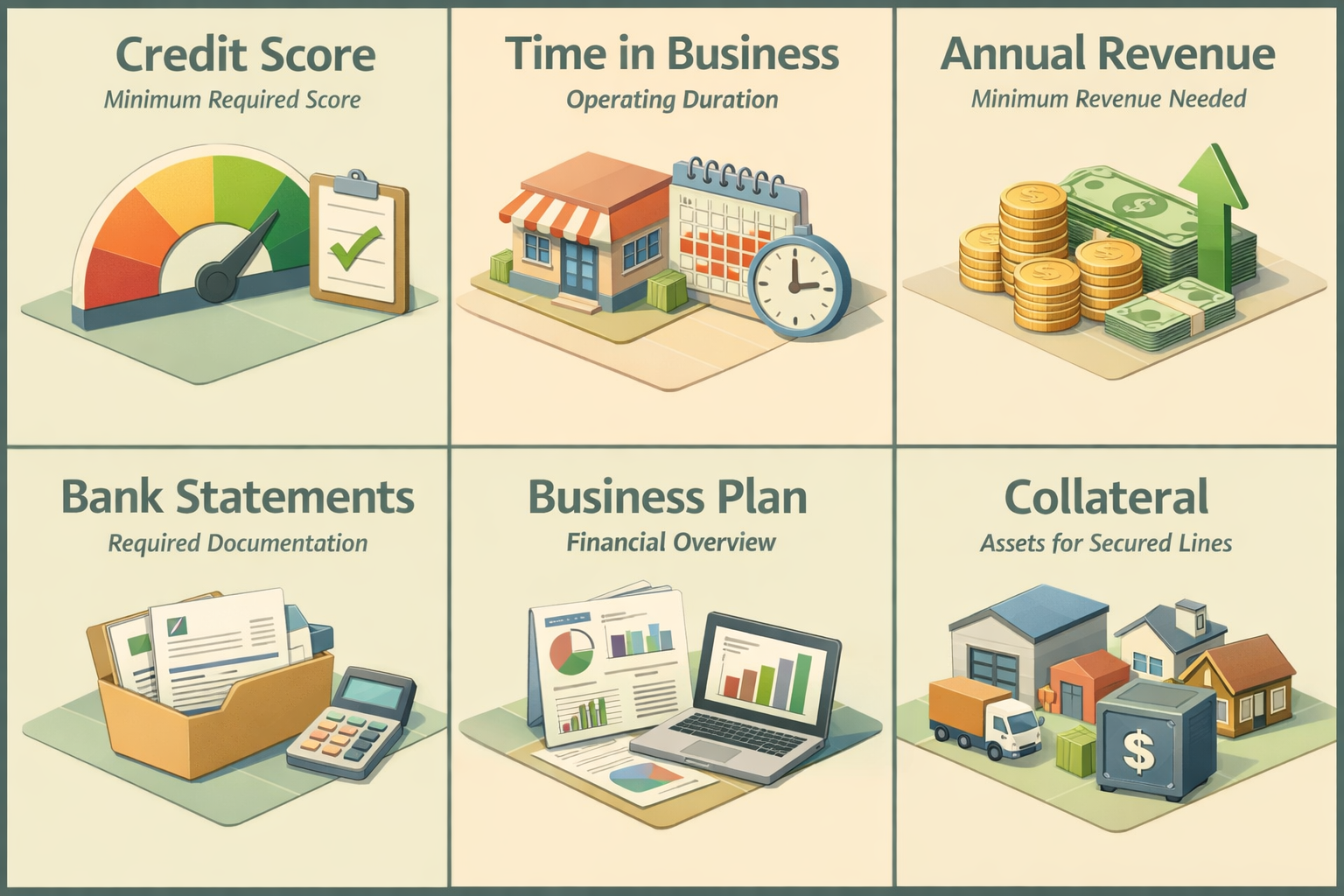
So, what are the requirements for a business line of credit with poor credit? While requirements vary by lender, there are several common factors that most financing providers will evaluate when reviewing your application.
- Credit Score: Traditional banks often prefer credit scores of 680 or higher. However, many alternative and online lenders may work with scores as low as 500 to 600, depending on other compensating factors in your application.
- Time in Business: Most lenders want to see that your business has been operating for at least six months to two years. Startups with limited history may face additional scrutiny or be directed toward startup-specific programs.
- Annual Revenue: Lenders typically require a minimum level of monthly or annual revenue to ensure you have the cash flow to support repayment. Many alternative lenders set this threshold at around $50,000 to $100,000 in annual revenue, though this can vary widely.
- Bank Statements: Expect to provide three to six months of business bank statements. Lenders use these to evaluate your average daily balance, deposit consistency, and overall financial health.
- Business Plan or Financial Projections: Some lenders, especially those working with newer businesses or poor-credit borrowers, may ask for a basic business plan or financial projections to better understand how you intend to use the funds and repay them.
- Collateral (for Secured Lines): If you're applying for a secured line, you'll need to identify assets that can serve as collateral. This might include real estate, equipment, or receivables.
It's worth noting that no single factor will make or break your application on its own. Lenders typically look at the full picture, so strong revenue or significant collateral might help offset a lower credit score.
Business Line of Credit Bad Credit Options Worth Exploring
Having poor credit doesn't mean your options are limited to a single path. There are several business line of credit bad credit options that small business owners and entrepreneurs can explore depending on their specific situation.
Online and Fintech Lenders
Online lenders have become one of the most accessible sources of small business financing for borrowers with imperfect credit. Many fintech platforms use alternative underwriting models that factor in real-time business data — such as payment processing history, cash flow patterns, and customer reviews — rather than relying solely on credit scores. This can open doors that traditional banks might keep closed.
Merchant Cash Advances
While technically not a line of credit, a merchant cash advance (MCA) provides upfront capital in exchange for a percentage of future sales. MCAs are generally easier to qualify for with poor credit, though they often carry higher effective costs. They may be worth considering as a short-term bridge while you work on improving your credit profile.
Invoice Financing
If your business regularly invoices clients, invoice financing — also known as factoring — could be a viable alternative. Rather than waiting 30, 60, or 90 days for customers to pay, you sell your outstanding invoices to a lender at a discount in exchange for immediate cash. Credit requirements for invoice financing are often more flexible because the lender is primarily looking at the creditworthiness of your clients, not just yours.
Credit Unions and Community Development Financial Institutions (CDFIs)
Credit unions and CDFIs often have more flexible lending criteria than large commercial banks. These mission-driven organizations may be particularly supportive of small businesses in underserved communities or those facing credit challenges. If you haven't explored these options yet, they could be well worth your time.
The Role of Alternative Lenders for Business LOC Approvals
One of the most meaningful shifts in small business lending over the past decade has been the rise of alternative lenders for business LOC products. Unlike traditional banks that may take weeks to process an application and have rigid qualification standards, alternative lenders for business LOC often offer faster decisions, more flexible terms, and a broader appetite for risk.
These lenders typically operate online and use technology to streamline the application process. You might receive a credit decision within 24 to 48 hours, and funding could be available shortly thereafter. This speed can be critical for small business owners dealing with time-sensitive financial needs.
That said, it's important to read the fine print. Alternative lenders often charge higher interest rates and fees to compensate for the increased risk of lending to borrowers with poor credit. Annual percentage rates (APRs) can vary significantly, so comparing multiple offers before committing is always a smart move.
When evaluating alternative lenders, consider looking at factors such as repayment terms, draw fees, maintenance fees, prepayment penalties, and whether the lender reports your payment history to business credit bureaus. Building a positive payment record with a lender that reports to credit bureaus could help you qualify for better financing down the road.
Unsecured Business Lines of Credit for Poor Credit: What to Expect
An unsecured business line of credit for poor credit is one of the most sought-after products among small business owners who either don't have collateral to offer or prefer not to risk their assets. While these products do exist, it's important to have realistic expectations going in.
Because the lender takes on more risk without collateral, approval criteria tend to be tighter in other areas. Lenders offering unsecured lines to poor-credit borrowers may require stronger revenue numbers, a longer operating history, or a personal guarantee from the business owner. A personal guarantee means that if the business can't repay the debt, the lender can pursue the owner's personal assets to recover what's owed.
Credit limits on unsecured lines for poor-credit borrowers may also be lower — at least initially. Many lenders start with a modest credit limit and increase it over time as you demonstrate responsible use and consistent repayment. Think of it as an opportunity to build a track record that earns you access to greater capital in the future.
If you're exploring unsecured options, focus on lenders that are transparent about their fees, offer clear repayment terms, and have a reputation for working constructively with small business borrowers. Reading reviews from other business owners can provide valuable insight into the day-to-day experience of working with a particular lender.
Practical Steps for Improving Credit for a Business Line of Credit
Improving credit for business line of credit eligibility doesn't happen overnight, but taking consistent, intentional steps can make a meaningful difference — sometimes in as little as a few months.
Separate Your Business and Personal Finances
If you haven't already, open a dedicated business bank account and apply for a business credit card or trade line. Keeping your finances separate helps establish a distinct business credit profile that lenders can evaluate independently of your personal credit history.
Pay Down Existing Debt
Your credit utilization ratio — the amount of credit you're currently using compared to your total available credit — has a significant impact on your credit score. Paying down existing balances, even incrementally, can help improve this ratio and signal financial responsibility to lenders.
Dispute Inaccuracies on Your Credit Report
It's not uncommon for credit reports to contain errors. Review both your personal and business credit reports carefully and dispute any inaccuracies with the relevant credit bureaus. Even minor corrections can result in a noticeable score improvement.
Build Positive Trade References
Work with suppliers and vendors who report payment history to business credit bureaus such as Dun & Bradstreet, Equifax Business, or Experian Business. Paying your trade accounts on time is one of the most straightforward ways to strengthen your business credit profile over time.
Apply Strategically
Each time you apply for credit, a hard inquiry may be recorded on your report. Applying for multiple lines of credit within a short window can temporarily lower your score. Instead, research lenders whose qualification criteria align with your current profile and apply selectively to maximize your approval odds without unnecessary credit pulls.
●Conclusion
Understanding what are the requirements for a business line of credit with poor credit is genuinely empowering. While a lower credit score does create some obstacles, it doesn't close the door entirely on flexible business financing. From alternative online lenders and invoice financing to credit unions and strategic credit-building practices, there are more paths forward than many business owners realize. The key is to approach the process with clear expectations, do your research, compare offers carefully, and take proactive steps to improve your credit profile over time. At LoanWise, we're here to help you navigate your financing options with confidence — so you can focus on what matters most: growing your business.