For small business owners and entrepreneurs, cash flow flexibility can make or break daily operations. Whether you're managing seasonal slowdowns, covering payroll, or seizing a sudden growth opportunity, having access to revolving credit can be a game-changer. But before you apply, it's important to understand what are the requirements for a business line of credit — because lenders evaluate several factors before extending this type of financing. This guide walks you through the key eligibility criteria, what lenders typically look for, and how you can position your business for approval.
Understanding What a Business Line of Credit Actually Is
A business line of credit (LOC) is a flexible financing tool that allows you to borrow up to a set credit limit, repay it, and borrow again — much like a credit card but often with lower interest rates and higher limits. Unlike a traditional term loan, you only pay interest on the amount you actually draw, not the full credit limit. This makes it an attractive option for businesses that need ongoing access to working capital rather than a one-time lump sum.
There are two main types: secured and unsecured. A secured line of credit requires collateral — such as business assets, inventory, or accounts receivable — while an unsecured line relies more heavily on your creditworthiness and financial history. Secured lines may come with higher credit limits and lower interest rates, but they also carry more risk if you default. Unsecured lines are more accessible for some businesses but often come with stricter qualification standards.
Lenders offering business lines of credit include traditional banks, credit unions, online lenders, and the U.S. Small Business Administration (SBA). Each comes with its own set of requirements, timelines, and terms, so it's worth comparing your options carefully before committing.
Credit Score Needed for a Business Line of Credit
One of the first things lenders look at when evaluating business line of credit eligibility is your credit profile — both personal and business. If your business is relatively new or hasn't yet established a separate credit history, lenders will often rely heavily on your personal credit score to assess risk.
Generally speaking, most traditional banks and credit unions may prefer a personal credit score of 680 or higher, though some online lenders may work with scores as low as 600 or even lower in certain cases. Keep in mind that the higher your credit score, the better your chances of securing a larger credit limit and a more competitive interest rate.
Your business credit score — reported through agencies like Dun & Bradstreet, Equifax Business, or Experian Business — also plays a role. Strong business credit demonstrates to lenders that your company has a track record of managing debt responsibly. If you haven't already, it's wise to register your business with these reporting agencies and work on building a solid business credit profile over time.
- Excellent personal credit (720+): Likely to qualify for the best terms and highest limits
- Good personal credit (680–719): Competitive options with most traditional lenders
- Fair personal credit (600–679): May qualify through online lenders, possibly with higher rates
- Poor personal credit (below 600): Approval is difficult; focus on credit repair first
It's also worth noting that lenders may pull both a soft and hard credit inquiry during the application process, so be mindful of applying to multiple lenders in a short period, as this could temporarily affect your score.
Revenue Requirements for a Business Line of Credit
Beyond credit scores, revenue requirements for a business line of credit are among the most critical factors lenders consider. Lenders want to see that your business generates enough consistent income to repay what you borrow. As a result, most lenders will ask for documentation of your annual or monthly revenue.
While specific thresholds vary by lender and loan product, many traditional lenders may look for a minimum annual revenue in the range of $100,000 to $250,000, though online and alternative lenders may accept lower figures. Some lenders also evaluate your average monthly revenue to understand how stable your cash flow is throughout the year, rather than just looking at annual totals.
Lenders typically request some or all of the following to verify revenue:
- Business bank statements (usually 3–6 months)
- Profit and loss (P&L) statements
- Tax returns (both business and personal, often 1–2 years)
- Accounts receivable reports
If your revenue is seasonal or irregular, be prepared to explain this to the lender. Some lenders are more accommodating of cyclical businesses, especially if you can demonstrate a consistent pattern over multiple years. It may also help to show that your business has strong receivables or reliable contracts that support future income.
Time in Business and Operational History Matter More Than You Think
Another key pillar of how to qualify for a business LOC is your time in business. Lenders generally view established businesses as lower-risk borrowers because they have a demonstrable history of operations, revenue generation, and financial management. Startups and very young businesses, on the other hand, often struggle to meet standard LOC requirements through traditional channels.
Most conventional lenders typically require a minimum of one to two years in business. Some online lenders may accept businesses that have been operating for as little as six months, but the trade-off is often higher interest rates or lower credit limits. Banks and SBA-affiliated lenders tend to be the most conservative, frequently preferring businesses with two or more years of operating history.
Your operational history also signals stability. Lenders may look at factors such as whether your business has maintained consistent banking relationships, paid vendors and suppliers on time, and avoided major financial disruptions. A well-documented business history — including articles of incorporation, business licenses, and a steady banking track record — can strengthen your application significantly.
If you're a newer business owner, don't be discouraged. Consider starting with a smaller credit limit through an alternative lender, building a positive repayment history, and then refinancing or upgrading to a better product once your business matures.
Additional Factors That Influence Business Line of Credit Eligibility
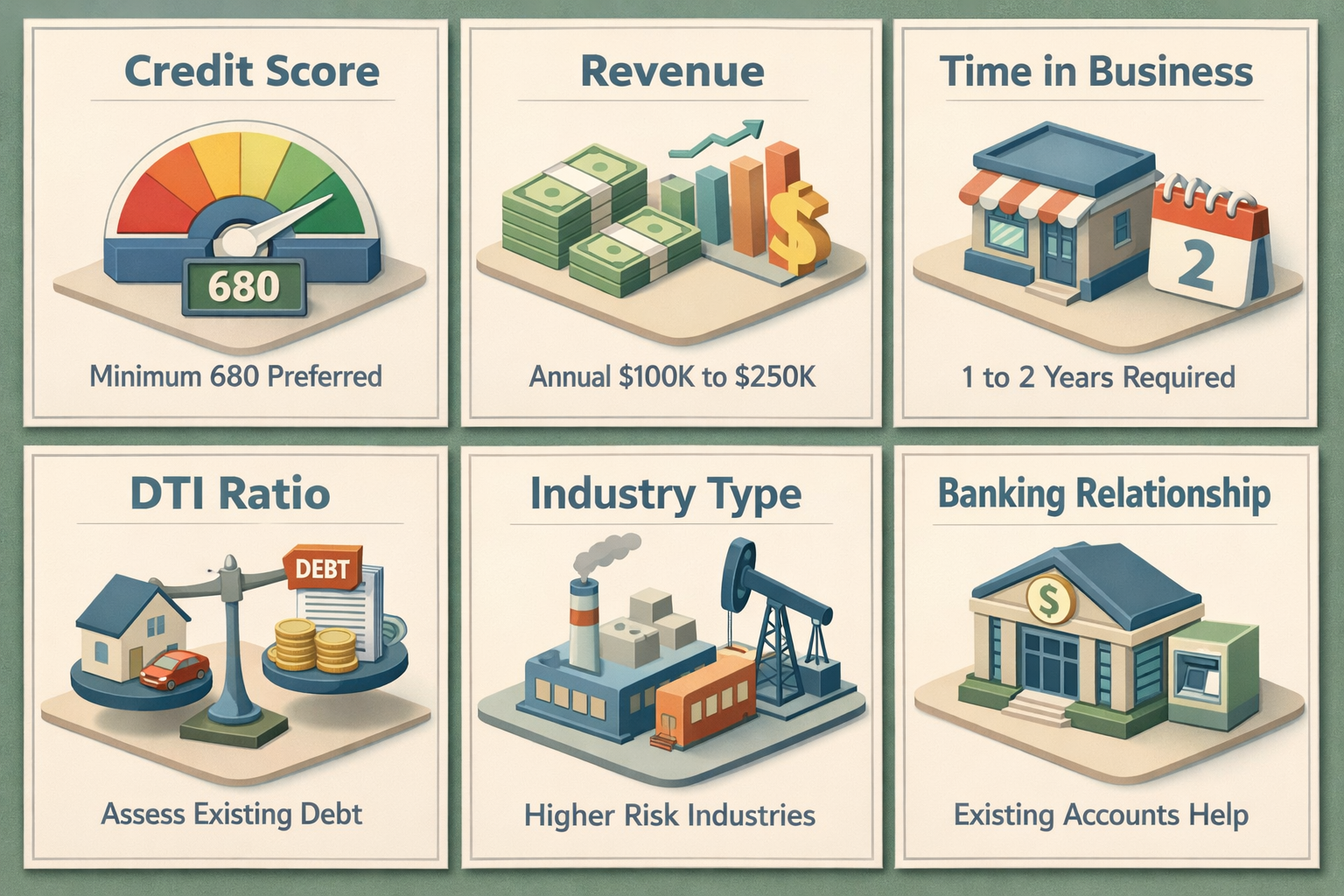
Credit score, revenue, and time in business are the three most commonly cited requirements, but lenders often look at a broader picture when evaluating what are the requirements for a business line of credit. Here are several additional factors that could influence your eligibility and the terms you receive:
- Debt-to-income (DTI) ratio: Lenders assess how much existing debt your business carries relative to its income. A high DTI ratio may signal financial strain and reduce your chances of approval.
- Industry type: Some lenders view certain industries as higher risk — such as restaurants, construction, or hospitality — and may apply stricter standards or offer less favorable terms.
- Collateral: For secured lines of credit, the type and value of collateral you can offer plays a significant role. Common forms include equipment, real estate, inventory, and receivables.
- Business plan and financial projections: Some lenders, particularly banks, may request a formal business plan or future financial projections, especially for newer businesses or larger credit requests.
- Banking relationship: Having an existing relationship with the lender — such as a business checking or savings account — can sometimes improve your odds of approval and may speed up the underwriting process.
- Legal and compliance standing: Your business must typically be in good legal standing, with no outstanding tax liens, judgments, or unresolved legal disputes.
It's worth reviewing all of these factors before submitting your application. Identifying potential weaknesses early gives you time to address them or find a lender whose criteria better align with your current business profile.
How to Strengthen Your Application Before Applying
Knowing the requirements is only half the battle — preparing a strong application is what ultimately determines your success. Here are practical steps small business owners and entrepreneurs can take to improve their chances of qualifying for a business line of credit:
- Check and improve your credit scores: Review both your personal and business credit reports for errors. Dispute inaccuracies, pay down existing balances, and avoid opening new credit accounts right before applying.
- Organize your financial documents: Have your bank statements, tax returns, P&L statements, and balance sheets ready and up to date. Lenders move faster when your paperwork is in order.
- Separate business and personal finances: If you haven't already, open a dedicated business checking account and use it exclusively for business transactions. This makes it easier for lenders to assess your business revenue accurately.
- Pay down existing debt: Reducing outstanding balances improves your DTI ratio and demonstrates financial responsibility.
- Build business credit proactively: Register with business credit bureaus, open a business credit card, and pay all obligations on time to establish a positive credit profile.
- Work with a lending advisor: A knowledgeable lending professional can help you identify the best products for your situation, prepare your documentation, and navigate the underwriting process with confidence.
Taking these steps won't guarantee approval, but they can meaningfully improve your profile and help you access better rates and terms when you do apply.
●Conclusion
Understanding what are the requirements for a business line of credit is the first step toward securing the flexible financing your business needs to grow and adapt. From maintaining a healthy credit score to demonstrating consistent revenue and a solid operational history, each requirement reflects what lenders need to feel confident in extending revolving credit to your business. The good news is that many of these factors are within your control — and with the right preparation, even businesses that don't qualify today may be well-positioned to apply successfully in the near future. At LoanWise, our team of experienced lending advisors is ready to help you evaluate your options, understand your eligibility, and find a business line of credit that fits your goals. Reach out to LoanWise today and take the next step toward smarter business financing.