Running a small electronics import business comes with exciting opportunities — but it also comes with real financial challenges. Whether you're sourcing consumer gadgets, components, or devices from overseas suppliers, you need reliable funding to pay for goods before they ever reach your warehouse. That's where trade financing becomes essential. If you've been wondering how to get trade financing for a small electronics importer, you're in the right place. This guide breaks down the most practical and accessible financing tools available to small business owners and entrepreneurs in the electronics import space, so you can move inventory, satisfy customers, and grow with confidence.
Why Electronics Importers Need Specialized Funding Solutions
Importing electronics isn't quite like running a domestic retail operation. When you order goods from overseas manufacturers — particularly in regions like Southeast Asia or East Asia — you're typically required to pay upfront or commit to significant deposits well before your shipment arrives. This creates a cash flow gap that can strain even a well-managed small business.
Beyond timing, electronics carry unique risks. Currency fluctuations, shipping delays, customs holds, and quality control issues can all impact your bottom line. Traditional term loans may not always align with the cyclical and transaction-based nature of import businesses. That's why many small importers seek trade finance options for electronic goods import that are specifically structured around purchase cycles, supplier relationships, and international payment requirements.
Understanding what makes your financing needs unique is the first step. From there, you can match the right tool to the right situation — whether that's a letter of credit to reassure a new supplier, or a revolving credit line to manage seasonal inventory surges.
Letters of Credit: Building Trust With Overseas Suppliers
A letter of credit (LC) is one of the most widely used instruments in international trade finance. Essentially, it's a guarantee issued by your bank on your behalf, promising your overseas supplier that payment will be made once certain conditions are met — typically, proof of shipment and documentation compliance.
For small electronics importers, an LC can be a powerful tool when working with a new supplier who doesn't yet know your business. It provides the seller with assurance that funds are available and that your bank is backing the transaction. Meanwhile, you as the buyer may be able to defer payment until goods are confirmed shipped or even received.
There are several types of letters of credit worth knowing:
- Irrevocable LC: Cannot be changed without both parties' consent — offers strong protection for the supplier.
- Confirmed LC: A second bank in the supplier's country also guarantees payment, adding an extra layer of security.
- Standby LC: Functions more like a backup guarantee — it's only drawn upon if you fail to meet your payment obligation.
- Revolving LC: Resets automatically after each use, making it efficient for regular, repeat orders.
To obtain a letter of credit, you'll typically apply through your commercial bank or a trade finance lender. The bank will assess your creditworthiness, may require collateral, and will charge fees — often a percentage of the LC value. It's worth comparing providers, as terms and costs can vary meaningfully.
Purchase Order Financing: Funding Confirmed Orders Before They Ship
What if you've already secured a large order from a domestic buyer, but you don't have the cash on hand to pay your overseas electronics supplier? Purchase order (PO) financing may be a practical solution. Under this arrangement, a third-party lender pays your supplier directly — or issues a payment guarantee — so that production and shipment can proceed.
Once the goods are delivered and your customer pays the invoice, the PO financing company collects its repayment plus fees. The remaining balance goes to you. This structure means you don't need existing capital to fulfill a big order — you're essentially leveraging a confirmed sale to unlock funding.
PO financing is particularly well-suited for electronics importers who work with wholesalers, retailers, or institutional buyers. Lenders offering this product typically want to see:
- A confirmed purchase order from a creditworthy end buyer
- A reliable supplier with a track record of fulfillment
- Gross margins sufficient to cover financing costs and still leave profit
Keep in mind that PO financing costs can be higher than conventional loans, and not all lenders offer this product. It's generally viewed as a short-term, transaction-specific tool rather than a long-term financing strategy. Still, for a growing importer working to scale order volume, it could bridge an important gap.
Invoice Financing and Factoring for Cash Flow Between Shipments
After your electronics arrive and you've sold to domestic buyers, you may face another challenge: waiting 30, 60, or even 90 days for those buyers to pay their invoices. Invoice financing and invoice factoring are tools designed to turn those outstanding invoices into immediate working capital.
With invoice financing, you borrow against the value of your unpaid invoices. The lender advances a percentage of the invoice value — often somewhere in the range of 70% to 90% — and you repay the advance plus fees once your customer pays. You retain control of your customer relationships and collections.
With invoice factoring, you sell your invoices outright to a factoring company. The factor advances a portion of the invoice value immediately and then collects directly from your customer. Once collected, the factor remits the remaining balance minus its fee. This option can be faster and simpler but involves giving up some control over the customer interaction.
Both options can be especially valuable for small electronics importers dealing with net-term agreements from larger buyers. Rather than waiting weeks or months for cash to come in, you can reinvest in the next shipment, cover operating expenses, or take advantage of bulk pricing opportunities from suppliers.
SBA Loan Programs That May Support Import Businesses
The U.S. Small Business Administration (SBA) offers several loan programs that small importers may find useful — though the right program depends on your specific needs and how your business is structured.
The SBA 7(a) loan is the agency's flagship program and offers flexible use of funds. Proceeds can often be used for working capital, inventory purchases, and even international trade needs. For importers specifically, the SBA has an Export Working Capital Program (EWCP) and an International Trade Loan (ITL) — though these are typically aimed at exporters or businesses affected by imports rather than importers themselves. It's worth speaking directly with an SBA-approved lender to determine eligibility for your situation.
The SBA 504 loan is more focused on fixed assets and real estate, so it may be less directly applicable to trade financing — but if your electronics business has grown to the point of needing warehouse space or equipment, it could play a role in your broader financing strategy.
For smaller operations just getting started, SBA Microloans offer amounts up to $50,000 through nonprofit intermediaries. These may be a good fit for early-stage importers who need modest working capital to place their first few orders. Eligibility and terms vary by intermediary lender, so researching local SBA microloan providers is a smart first step.
Business Lines of Credit and Term Loans for Ongoing Import Operations
Beyond trade-specific instruments, traditional business lines of credit and term loans remain practical funding tools for electronics importers who have established credit histories and steady revenue.
A revolving line of credit allows you to draw funds as needed, repay, and draw again — making it well-suited for businesses with fluctuating inventory needs or irregular cash flow cycles. For an electronics importer managing multiple suppliers and product categories, a line of credit offers the flexibility to respond quickly to purchasing opportunities or cover unexpected costs like customs fees or shipping delays.
A term loan, on the other hand, provides a lump sum upfront that you repay in fixed installments over a set period. Term loans may work well if you're looking to make a larger, one-time inventory investment or expand your product catalog significantly.
When evaluating these options, lenders will typically review:
- Your business credit score and personal credit history
- Time in business — many lenders prefer at least one to two years of operating history
- Annual revenue and cash flow documentation
- Existing debt obligations
Building strong banking relationships early in your import business can improve your access to these products over time.
How to Get Trade Financing for a Small Electronics Importer: Key Steps to Take
Now that you understand the main financing tools available, let's talk about how to actually pursue them. Knowing how to get trade financing for a small electronics importer is as much about preparation as it is about finding the right lender.
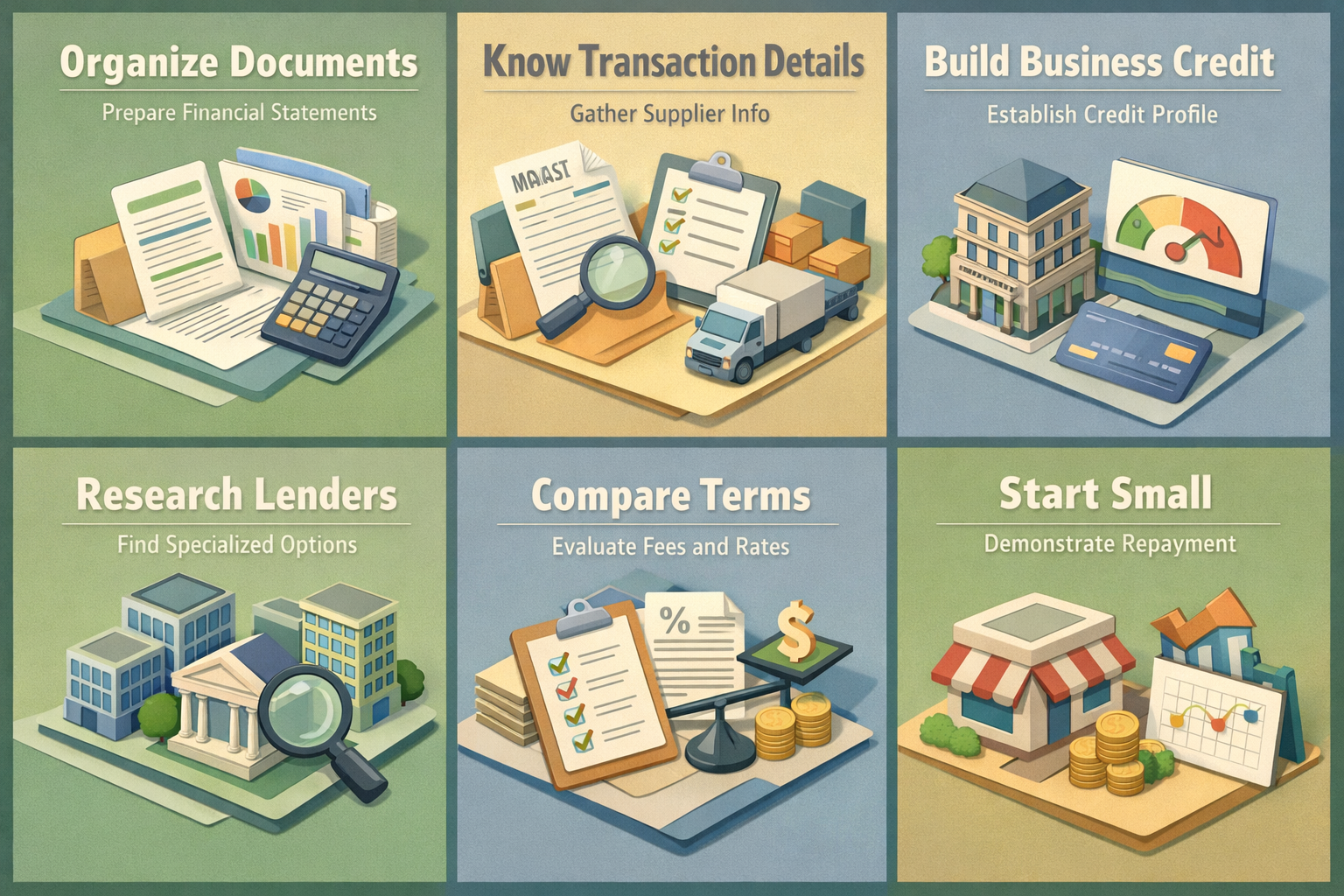
Here are practical steps to improve your chances of approval and find the best fit:
- Organize your financial documents: Lenders will want to see bank statements, tax returns, profit and loss statements, and possibly supplier contracts. Having these ready speeds up the process.
- Know your transaction details: For trade finance options like LCs or PO financing, you'll need to provide specifics about your supplier, shipment size, and end buyer — so gather this information in advance.
- Build or improve your business credit: Establish a business entity, open a dedicated business bank account, and apply for a business credit card if you haven't already. These steps help create a credit profile separate from your personal finances.
- Research specialized trade finance lenders: Some lenders focus specifically on small importers and international trade. Fintech lenders, community development financial institutions (CDFIs), and international banks may offer products that traditional community banks don't.
- Compare terms carefully: Look at fees, advance rates, repayment timelines, and any collateral requirements before committing. The cheapest option isn't always the most flexible or reliable.
- Start small and build a track record: If you're new to formal financing, starting with a smaller facility and demonstrating timely repayment can open doors to larger credit lines down the road.
It may also be worth consulting with a small business advisor or a commercial loan specialist who has experience in international trade. They can help you identify programs you might not be aware of and guide you through the application process.
●Conclusion
Securing the right financing is one of the most important things a small electronics importer can do to sustain and grow their business. Whether you're using a letter of credit to build supplier trust, leveraging invoice factoring to smooth out cash flow, or exploring SBA programs for working capital, there are more trade finance options for electronic goods import available today than ever before. The key is understanding your specific needs, preparing strong documentation, and connecting with lenders who understand the import space. At LoanWise, we're here to help small business owners and entrepreneurs find financing solutions that fit their goals. Reach out today to explore your options and take the next step toward a stronger, more resilient import business.