If you're a veteran or active-duty service member considering buying a duplex, a VA loan could be one of the most powerful financing tools available to you. But before you sign on the dotted line, it's important to understand exactly what you'll pay at settlement. A common question among military borrowers is: what are closing costs for VA loan on duplex purchase? The answer involves a mix of standard mortgage fees, VA-specific charges, and a few rules that make this loan program stand apart from conventional financing. This guide breaks it all down so you can walk into closing with confidence.
How VA Loans Work for Multifamily Properties Like Duplexes
The VA loan program is designed to help eligible veterans, active-duty service members, and surviving spouses purchase primary residences with favorable terms — including no down payment in many cases and no private mortgage insurance. What many borrowers don't realize is that VA loans can also be used to purchase multifamily properties, including duplexes, as long as the borrower intends to live in one of the units as their primary residence.
This owner-occupancy requirement is essential. The VA's rules are clear: you must occupy the property, not simply buy it as a rental investment. When you purchase a duplex with a VA loan, you'll live in one unit while potentially renting out the other. This setup allows veterans to build wealth through real estate investing while still benefiting from VA loan terms.
It's worth noting that VA loans for multifamily properties may involve slightly more scrutiny during the appraisal and underwriting process. Lenders will typically want to confirm that the property meets the VA's Minimum Property Requirements and that the borrower's intent to occupy is genuine. Understanding this context helps set realistic expectations before you start calculating closing costs.
What Are Closing Costs for VA Loan on Duplex Purchase: The Full Breakdown
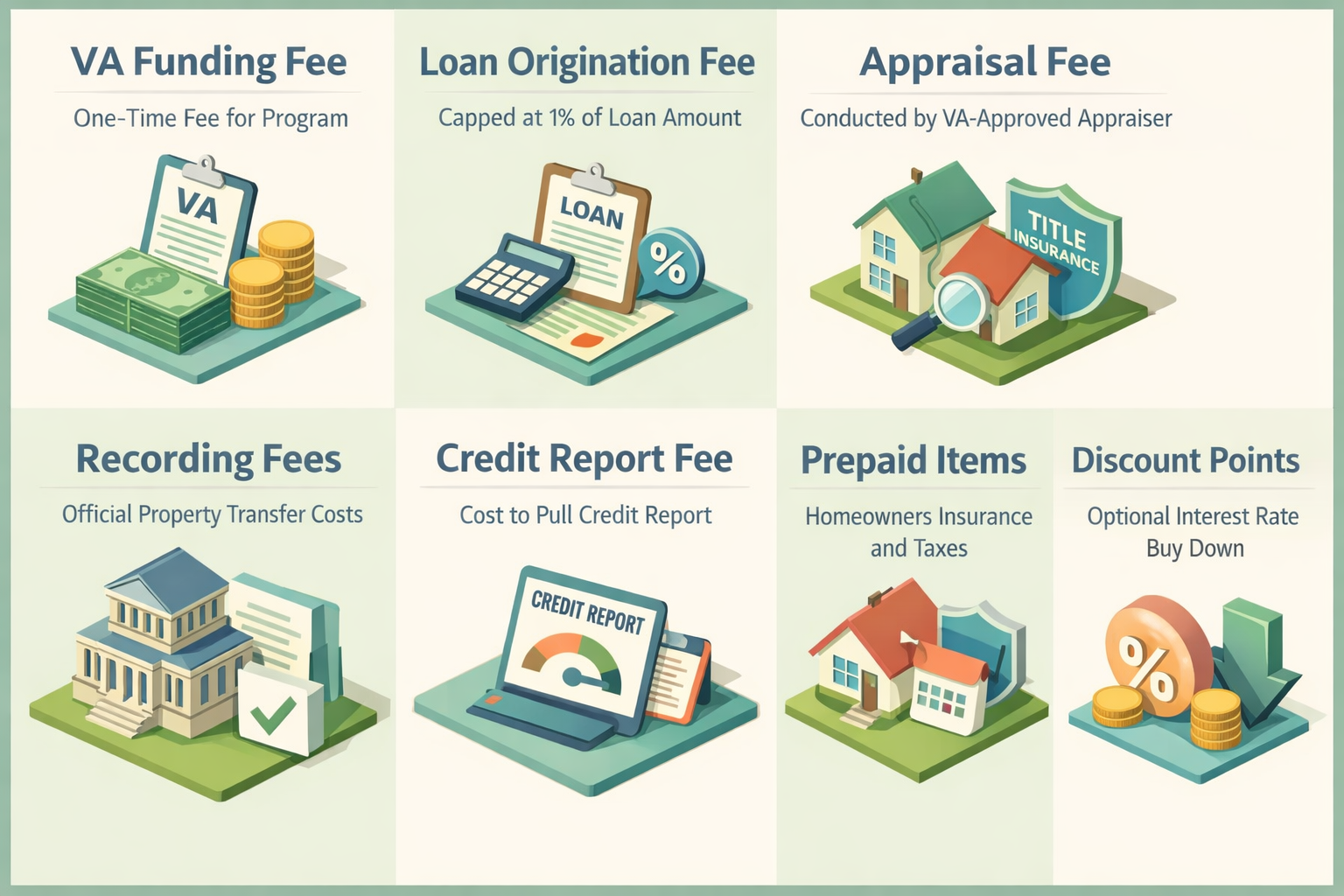
So, what are closing costs for VA loan on duplex purchase, and how do they differ from a standard home purchase? Most of the line items will look familiar to anyone who has reviewed a Loan Estimate, but a few are unique to the VA program. Here's what you can typically expect:
- VA Funding Fee: This is one of the most significant VA-specific costs. It's a one-time fee paid to the Department of Veterans Affairs to help sustain the loan program. The amount depends on your down payment, whether it's your first VA loan, and your military service category. Borrowers who are exempt due to a service-connected disability do not pay this fee.
- Loan Origination Fee: The VA limits lender origination fees to no more than 1% of the loan amount. This cap is a meaningful consumer protection that keeps lender charges in check.
- Appraisal Fee: VA appraisals are required and must be conducted by a VA-approved appraiser. For a duplex, the appraisal may be slightly more involved than a single-family home, which could affect the fee.
- Title Insurance and Title Search: These fees protect both the lender and the borrower from potential title disputes or liens on the property.
- Recording Fees: Local governments charge these fees to officially record the property transfer and the new mortgage.
- Credit Report Fee: Lenders typically charge a small fee to pull your credit report as part of the application process.
- Prepaid Items: These include prepaid homeowners insurance, property taxes placed into escrow, and prepaid mortgage interest for the days between closing and your first payment due date.
- Discount Points: If you choose to buy down your interest rate, you'll pay points at closing. This is optional and can be a smart strategy if you plan to stay in the property long-term.
Total closing costs on a VA loan — including the funding fee — can vary widely depending on the loan amount, location, lender, and individual borrower circumstances. It's always a good idea to request a Loan Estimate early in the process and compare offers from multiple lenders.
VA Loan Closing Cost Rules: What Lenders Cannot Charge You
One of the most borrower-friendly aspects of the VA loan program is its list of fees that lenders are not permitted to charge veterans. These are sometimes called "non-allowable fees," and they offer meaningful financial protection.
Under VA guidelines, lenders cannot charge veterans for certain fees that are common in conventional mortgage transactions. These may include attorney fees (beyond what is customary in your area), fees for preparing loan documents, application fees beyond what's reasonable, and certain inspection fees not required by the VA. It's important to review your Loan Estimate carefully and ask your lender to explain any fee you don't recognize.
Sellers, on the other hand, are allowed to pay a broader range of closing costs on behalf of the veteran buyer. In fact, VA rules permit sellers to pay all of the veteran's loan-related closing costs, plus up to 4% of the loan amount in concessions — such as paying the funding fee. This seller concession flexibility can be especially useful in a duplex purchase negotiation, where the seller may be motivated to close quickly.
Owner-Occupied Duplex Financing: How Rental Income May Affect Your Loan
When exploring VA loan duplex closing costs owner occupied scenarios, it's also worth understanding how the rental income from the second unit could influence your overall loan picture. Lenders may allow you to use a portion of the projected rental income from the second unit to help qualify for the loan, though the specific rules and documentation requirements can vary by lender and situation.
Typically, lenders require a signed lease or a rental market analysis from the appraiser to support any rental income used for qualification. Some lenders may apply a vacancy factor, meaning they'll only count a percentage of the gross rent to account for potential vacancy periods. This is a common and conservative underwriting practice.
Having rental income on your side could potentially help you qualify for a larger loan amount, which in turn affects the overall loan size — and therefore the dollar amount of certain closing costs that are calculated as a percentage of the loan. It's a good idea to discuss this with your loan officer early so you understand how projected rent factors into your specific scenario.
Rolling Closing Costs Into the Loan and Other Strategies to Reduce Out-of-Pocket Expenses
One of the advantages of VA financing is that there are several legitimate strategies available to reduce what you pay out of pocket at closing. Here are some options worth exploring with your lender:
- Finance the VA Funding Fee: The VA funding fee can be rolled into the loan balance rather than paid upfront. This increases your monthly payment slightly but eliminates a potentially significant cash outlay at closing.
- Negotiate Seller Concessions: As mentioned earlier, sellers can contribute to your closing costs under VA rules. When making an offer on a duplex, you may negotiate for the seller to cover a portion or all of your allowable closing costs.
- Lender Credits: Some lenders offer credits in exchange for a slightly higher interest rate. This can reduce your upfront costs, though it typically means paying more over the life of the loan. This trade-off makes more sense for borrowers who don't plan to hold the loan long-term.
- Shop Multiple Lenders: Because lender fees can vary, shopping around may reveal meaningful differences in origination charges and other costs. The VA's 1% origination cap helps, but other fees can still differ.
- Ask for a No-Closing-Cost Option: Some lenders offer no-closing-cost VA loans where fees are either rolled into the rate or the loan balance. This isn't always the most cost-effective choice long-term, but it can be useful for borrowers who are short on liquid cash at closing.
VA Appraisal Considerations for Duplex Properties
The VA appraisal process for a duplex deserves special attention because it differs in a few important ways from a single-family home appraisal. VA-approved appraisers assess both the market value and the property's compliance with the VA's Minimum Property Requirements (MPRs). For a duplex, the appraiser will evaluate the condition and functionality of both units, not just the one you plan to occupy.
If the property doesn't meet VA MPRs, the seller may be required to make repairs before the loan can close. This is a potential source of delay and negotiation, so it's wise to conduct your own due diligence — including a separate home inspection — before making a firm offer. A professional inspection is not required by the VA but is strongly recommended, especially for multifamily properties where issues in one unit could affect both.
The appraisal fee for a duplex may be higher than for a single-family home, though the exact amount depends on your location and the complexity of the property. This is a normal allowable closing cost under VA guidelines. Be sure to budget for it accordingly when estimating your total out-of-pocket costs.
●Conclusion
Understanding what are closing costs for VA loan on duplex purchase helps you plan smarter and avoid surprises at the settlement table. From the VA funding fee and the 1% origination cap to non-allowable fees and seller concession rules, the VA loan program offers veterans a well-structured and borrower-friendly path to homeownership — and even real estate investment through owner-occupied multifamily financing. If you're ready to explore your VA loan options for a duplex purchase, speaking with an experienced VA-approved lender is the best first step. At LoanWise, our team is here to help you navigate every detail from application to closing.