For eligible veterans and active-duty service members, the VA home loan benefit is one of the most powerful financing tools available. It offers competitive interest rates, no private mortgage insurance, and flexible qualification standards. But did you know that this benefit can also be used to purchase a multi-family property — as long as you live in one of the units? If you're considering this strategy, one of the first questions you'll likely ask is: what are closing costs for VA loan on a multi-family property with owner occupancy? The answer involves a mix of standard mortgage fees, VA-specific charges, and a few unique considerations that apply when the property has more than one unit. This guide breaks it all down in plain language so you can walk into the process fully informed.
How VA Loans Work for Multi-Family Properties
Before diving into closing costs, it helps to understand how VA loans apply to multi-family properties. The Department of Veterans Affairs allows eligible borrowers to use their VA loan benefit to purchase properties with up to four units, provided the borrower intends to occupy one of those units as their primary residence. This owner-occupancy requirement is non-negotiable — it's what makes the VA loan a residential mortgage product rather than an investment loan.
This setup can be a smart financial move. A veteran could purchase a duplex, triplex, or fourplex, live in one unit, and collect rental income from the others. That rental income may even help qualify for the loan in some cases, depending on the lender's guidelines and documentation requirements.
However, multi-unit properties typically come with higher purchase prices than single-family homes, which means closing costs can also be higher. Understanding the fee structure ahead of time helps you plan your budget accurately and avoid unwanted surprises at the closing table.
Breaking Down What Are Closing Costs for VA Loan on a Multi-Family Property With Owner Occupancy
So, what are closing costs for VA loan on a multi-family property with owner occupancy? In general, closing costs on a VA loan typically range from 2% to 5% of the loan amount. Because multi-family properties often carry larger loan balances, the total dollar amount of closing costs could be significantly higher than what you'd see on a single-family purchase. That said, the types of fees involved are broadly similar — it's the scale and a few VA-specific rules that set them apart.
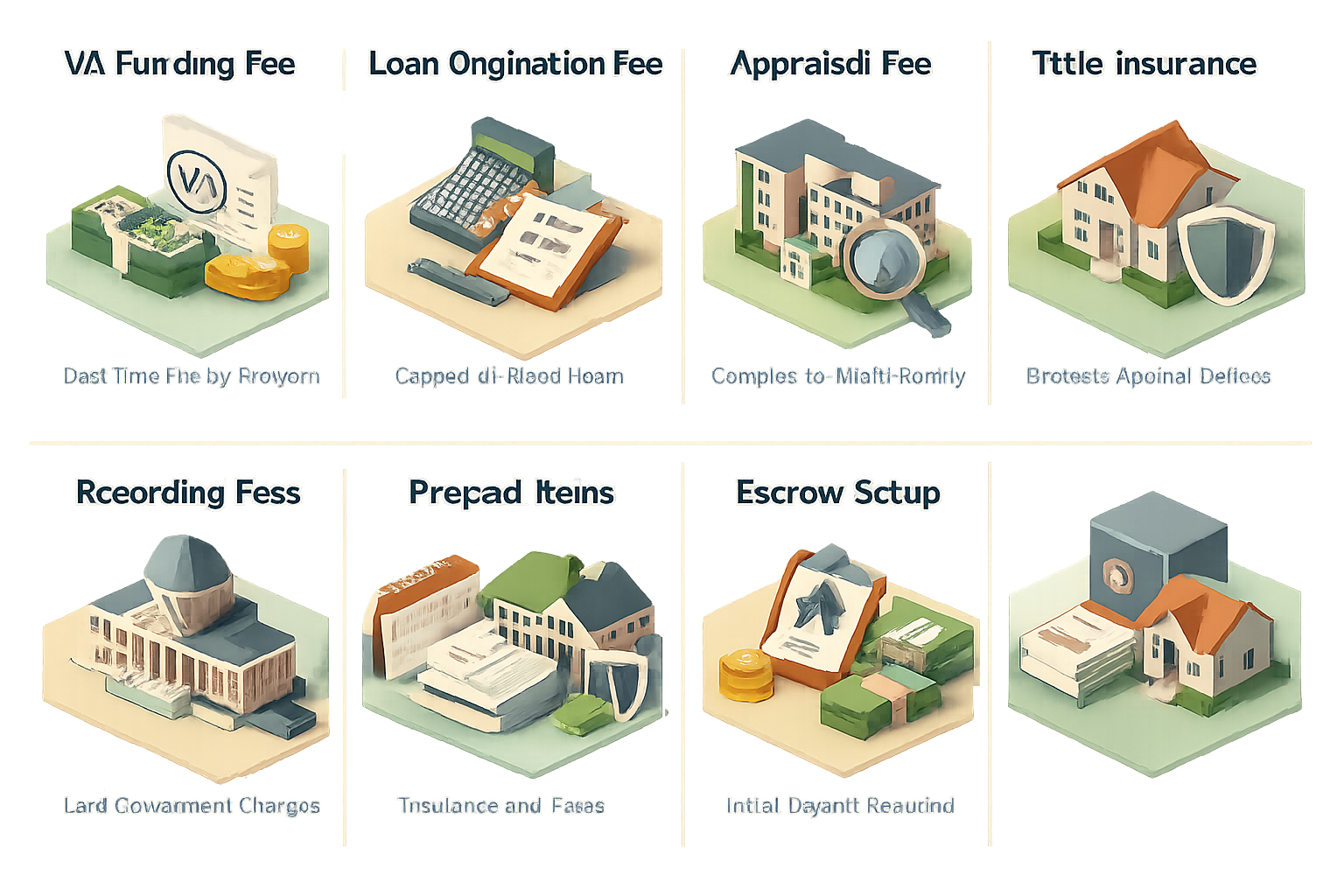
Here's a look at the main categories of closing costs you might encounter:
- VA Funding Fee: This is one of the most significant VA-specific costs. It's a one-time fee paid to the Department of Veterans Affairs to help sustain the loan program. The amount varies based on your down payment, whether it's your first VA loan use, and your military service type. Veterans with a service-connected disability rating may be exempt from this fee entirely.
- Loan Origination Fee: VA rules limit lenders to charging no more than 1% of the loan amount as an origination fee. This cap is designed to protect borrowers from excessive upfront lender charges.
- Appraisal Fee: The VA requires a VA-approved appraisal for all purchases. Multi-family property appraisals are typically more complex and may cost more than single-family appraisals due to the additional income analysis involved.
- Title Insurance and Title Search: These fees protect both you and your lender against title defects or ownership disputes. The cost can vary by state and property price.
- Recording Fees: Local governments charge fees to officially record the property transfer. These are generally modest but vary by location.
- Prepaid Items: These include prepaid homeowners insurance, prepaid property taxes, and prepaid mortgage interest covering the days between closing and your first payment due date.
- Escrow Setup (Impound Account): Many lenders require an initial deposit into an escrow account for taxes and insurance. This isn't technically a fee, but it does require cash at closing.
Keep in mind that on a multi-unit property, property taxes and insurance premiums are likely to be higher than on a single-family home, which means your prepaid and escrow amounts will also be larger.
VA Loan Rules on Who Pays What at Closing
One of the advantages of using a VA loan is the built-in buyer protections around closing costs. The VA publishes a list of fees that sellers are not allowed to require the buyer to pay — these are sometimes referred to as "non-allowable" fees. Common non-allowable fees include:
- Attorney fees charged by the lender's attorney
- Lender-required pest inspection fees (in most cases)
- Prepayment penalties
- Settlement charges that exceed reasonable amounts
Because of these restrictions, sellers often agree to cover some of the buyer's closing costs as part of the purchase negotiation. In fact, VA rules allow sellers to pay all of the buyer's loan-related closing costs, plus up to 4% of the purchase price in additional concessions. On a multi-family property, this seller concession flexibility can be especially valuable given the higher price points involved.
Additionally, lenders may offer "lender credits" in exchange for a slightly higher interest rate, which can reduce the amount of cash you need at closing. This trade-off is worth evaluating carefully — it lowers upfront costs but increases your monthly payment and total interest paid over time.
The VA Funding Fee on Multi-Family Purchases
The VA funding fee deserves its own section because it's often the largest single closing cost on a VA loan. This fee is calculated as a percentage of the total loan amount, so on a multi-family property — which typically carries a higher price tag — it can represent a meaningful sum.
The funding fee percentage depends on several factors:
- First-time vs. subsequent use: First-time VA loan users generally pay a lower funding fee than those who have used the benefit before.
- Down payment amount: Making a down payment of 5% or more can reduce the funding fee percentage. A down payment of 10% or more reduces it further.
- Type of service: Regular military members, National Guard, and Reservists may have slightly different rates.
The good news is that you don't have to pay the funding fee out of pocket if you don't want to. The VA allows borrowers to roll the funding fee into the loan balance, which means you finance it over the life of the loan rather than paying it at closing. This can make a VA loan more accessible upfront, though it does increase your overall loan amount and monthly payment slightly.
Veterans receiving VA disability compensation are typically exempt from the funding fee altogether. If you believe you may qualify for an exemption, it's worth confirming this with your lender or the VA before closing.
Appraisal and Inspection Costs Unique to Multi-Family VA Purchases
The VA appraisal process for a multi-family property is more involved than for a standard single-family home. VA-approved appraisers must assess the property's market value and also confirm that it meets the VA's Minimum Property Requirements (MPRs) — standards that ensure the home is safe, sound, and sanitary.
For a two- to four-unit property, the appraiser also analyzes rental income potential, vacancy rates, and local rental market conditions as part of the income approach to valuation. This added complexity typically means appraisal fees for multi-family properties are higher than those for single-family homes. The exact cost varies by geographic area and property type, but borrowers should budget accordingly.
Beyond the VA appraisal, lenders and buyers often arrange for a separate home inspection. While the VA doesn't require a general home inspection, it's strongly recommended — especially for multi-unit properties where multiple systems (HVAC, plumbing, electrical) serve more than one unit. Inspection fees for multi-family homes may also run higher than those for single-family properties due to the additional square footage and systems involved.
Some areas also require pest inspections, particularly in regions prone to termite activity. In many cases, the VA allows the seller to cover the cost of a pest inspection, which can save the buyer money.
Smart Ways to Reduce VA Loan Closing Costs on a Multi-Family Home
Closing costs can feel overwhelming, but there are several practical strategies that may help reduce your out-of-pocket expenses when using a VA loan closing costs multi-family property purchase strategy:
- Negotiate seller concessions: Ask the seller to cover a portion or all of your closing costs as part of the purchase offer. VA guidelines permit this, and in a buyer-friendly market, sellers may be willing to accommodate the request.
- Shop around for lenders: Not all lenders charge the same fees. Comparing loan estimates from multiple VA-approved lenders can reveal meaningful differences in origination fees, discount points, and other lender charges.
- Request lender credits: If you're comfortable with a slightly higher interest rate, lender credits can offset closing costs. This strategy works best when you plan to sell or refinance within a few years before the higher rate cost outweighs the upfront savings.
- Make a down payment: While VA loans don't require a down payment, putting money down can lower your VA funding fee percentage, which reduces one of the largest upfront costs.
- Roll the funding fee into the loan: As mentioned, financing the funding fee eliminates it as a cash-at-closing expense, though it does add to your loan balance.
- Ask about grants or assistance programs: Some state and local programs offer closing cost assistance to veterans. Availability varies by location, so it's worth researching what might be available in your area.
Timing matters too. Closing at the end of the month reduces the amount of prepaid interest you owe at closing, since you only pay interest for the remaining days in that month rather than a full month's worth.
Owner-Occupancy Rules and What They Mean for Your Investment Strategy
It's worth reinforcing that the VA's owner-occupancy requirement is central to the entire multi-family VA loan strategy. You must intend to live in one of the units as your primary residence — typically within 60 days of closing, though extensions may be possible in certain circumstances.
This means you can't use a VA loan to purchase a pure rental property or a building where you have no intention of living. However, once you've fulfilled the occupancy requirement and some time has passed, you may have options to convert the property into a full investment property later, depending on your circumstances and any future VA loan usage plans.
For eligible veterans and service members, the combination of no down payment, competitive rates, and the ability to generate rental income from additional units makes this one of the more compelling entry points into real estate investing. The rental income from the other units may help offset your mortgage payment, making homeownership more affordable while simultaneously building long-term wealth through property appreciation and equity.
Understanding all the associated costs — including VA loan closing costs multi-family property specifics — is essential to making this strategy work financially. Running the numbers carefully before you commit helps ensure that the investment makes sense both as a place to live and as a long-term financial asset.
●Conclusion
Navigating the closing costs on a VA loan for a multi-family property takes some preparation, but it's entirely manageable with the right information. From the VA funding fee and appraisal costs to title insurance and prepaid expenses, each fee serves a purpose — and many of them can be negotiated, reduced, or financed. The key question — what are closing costs for VA loan on a multi-family property with owner occupancy — doesn't have a single fixed answer, since costs vary by loan size, lender, location, and borrower profile. What you can count on is that the VA program's built-in protections, including the 1% origination fee cap and seller concession rules, are designed to keep costs reasonable for eligible borrowers. If you're ready to explore this opportunity further, speaking with a VA-experienced mortgage professional is the best next step. At LoanWise, our team can help you understand your full cost picture and find the financing solution that fits your goals.