Buying a multi-family property with a VA loan is one of the smartest moves an eligible veteran or active-duty service member can make. You get to purchase a duplex, triplex, or four-unit building with no down payment, use future rental income to help qualify, and still enjoy the competitive rates the VA loan program is known for. But before you sign on the dotted line, it's worth asking: what are closing costs for VA loan on a multi-family property? Closing costs are fees and charges due at settlement, and they can add up quickly — especially on a larger investment like a multi-unit home. Understanding these costs upfront helps you plan your finances, negotiate with sellers, and avoid any surprises at the closing table.
How VA Loans Work for Multi-Family Properties
Before diving into closing costs, it helps to understand how VA loans apply to multi-family properties. The Department of Veterans Affairs allows eligible borrowers to use VA loan benefits to purchase properties with up to four units — as long as the borrower intends to occupy one of those units as their primary residence. This owner-occupancy requirement is non-negotiable, but it opens the door to a powerful wealth-building strategy: living in one unit while renting out the others.
This setup is particularly attractive for first-time real estate investors who want to ease into rental property ownership without taking on a large down payment. VA loans for multi-family homes — including duplexes — follow many of the same guidelines as single-family VA loans, but there are a few extra considerations, especially when it comes to appraisal requirements and rental income documentation.
It's also worth noting that lenders may apply additional scrutiny when underwriting a multi-unit home with a VA loan. They'll typically want to verify that the property meets VA Minimum Property Requirements (MPRs), and they may require a more thorough appraisal process. These factors can influence certain closing costs, which we'll cover in detail below.
What Are Closing Costs for VA Loan on a Multi-Family Property
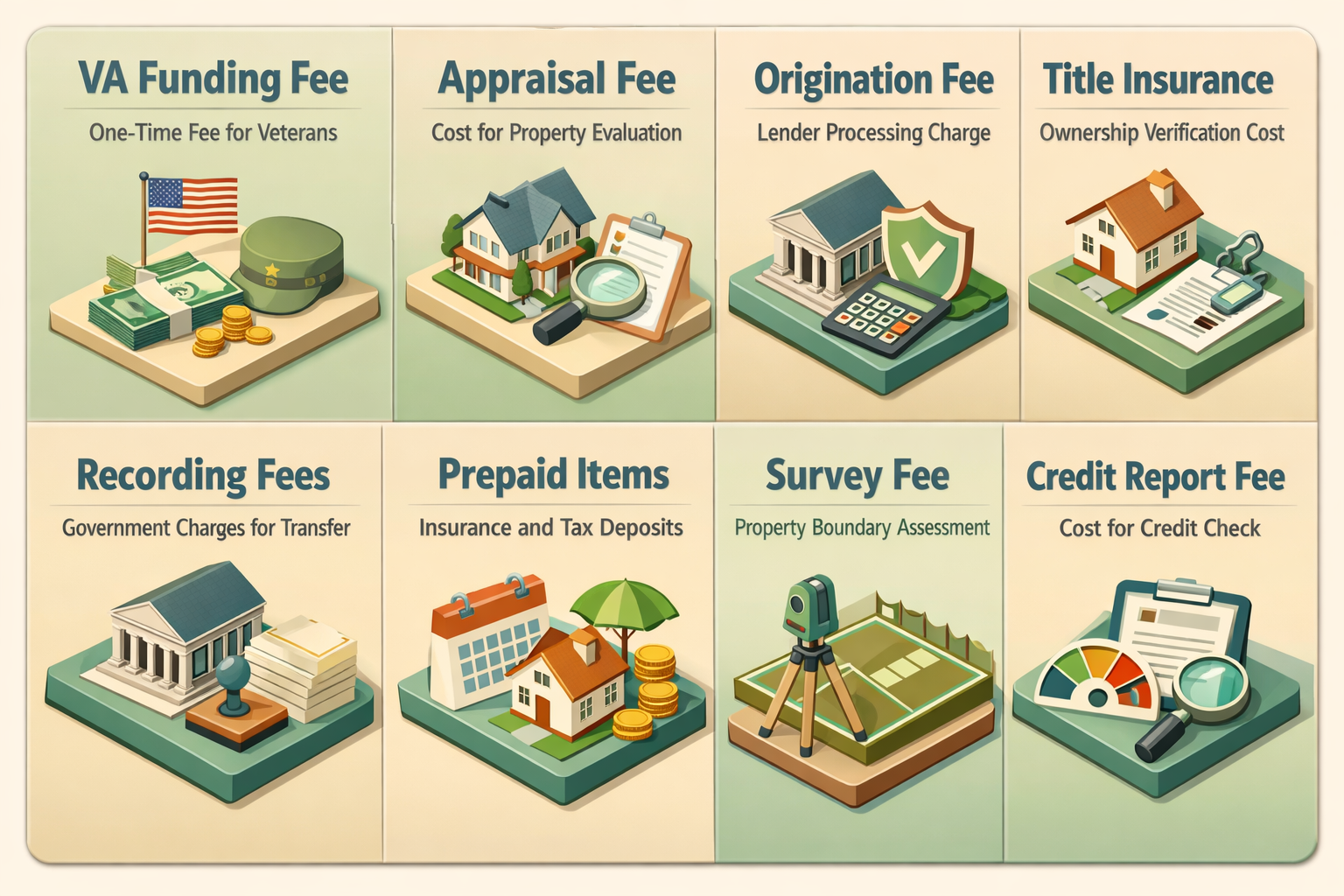
So, what are closing costs for VA loan on a multi-family property? In general, VA loan closing costs fall into two broad categories: fees the VA regulates or prohibits, and standard third-party fees that borrowers are expected to pay. Understanding this distinction is key to estimating your total out-of-pocket expenses.
Here's a breakdown of the most common closing costs you might encounter:
- VA Funding Fee: This is a one-time fee paid to the Department of Veterans Affairs. It helps sustain the loan program for future generations of veterans. The amount varies based on factors like your down payment, whether it's your first VA loan, and your military service category. For most first-time VA borrowers with no down payment, the funding fee may be around 2.15% of the loan amount, though this figure can change and should be confirmed with your lender. Certain veterans with service-connected disabilities may be exempt from this fee entirely.
- Appraisal Fee: VA loans require a VA-approved appraiser to evaluate the property. Multi-family appraisals tend to cost more than single-family appraisals due to the added complexity of assessing multiple units. Expect this fee to be higher on a duplex or larger property compared to a standard single-family home.
- Origination Fee: Lenders may charge an origination fee for processing the loan. The VA limits this fee to no more than 1% of the loan amount. Lenders cannot charge additional fees on top of this 1% cap for items like underwriting, processing, or document preparation — a significant consumer protection for VA borrowers.
- Title Insurance and Title Search: These fees cover the cost of verifying ownership history and protecting against future title disputes. On a multi-family property, title searches can sometimes be more involved, which may push this cost slightly higher.
- Recording Fees: These are government charges for officially recording the property transfer. They vary by county and state.
- Prepaid Items: These include prepaid homeowner's insurance premiums, prepaid interest, and the initial escrow deposit for property taxes and insurance. On a multi-family property, insurance costs may be higher due to the increased liability and structure size.
- Survey Fee: Some lenders or local jurisdictions may require a property survey, particularly on multi-unit properties where lot lines and shared spaces need to be clearly defined.
- Credit Report Fee: Lenders typically pass along the cost of pulling your credit report, though this is usually a smaller charge.
In total, VA loan closing costs — excluding the funding fee — often range somewhere between 2% and 5% of the loan amount, though this can vary widely depending on the property location, lender, and loan size. On a multi-family property, you might land on the higher end of that range due to the added complexity of the transaction.
VA Loan Closing Costs for a Duplex: What's Different
When specifically looking at VA loan closing costs duplex scenarios, a few nuances are worth highlighting. A duplex is the most common multi-family property veterans purchase with VA financing, and while the general fee structure mirrors that of a single-family transaction, there are meaningful differences in scope and cost.
First, the appraisal process for a duplex involves evaluating both units, reviewing comparable two-unit rental properties in the area, and confirming the property meets VA Minimum Property Requirements for all habitable spaces. This takes more time and expertise, which is typically reflected in a higher appraisal fee compared to a single-family home.
Second, homeowner's insurance for a duplex is often more expensive. Because you're insuring a larger structure with a rental unit involved, insurers may classify the property differently and charge a higher premium. This means your prepaid insurance costs at closing — and your ongoing escrow contributions — could be notably higher than they would be on a single-unit purchase.
Third, if the duplex has shared utilities, common areas, or older systems that need documentation, your lender may require additional inspections or certifications. While not all of these are standard closing cost line items, they can add to your total pre-closing expenditures.
On the positive side, the VA's 1% origination fee cap still applies to duplex purchases, offering real protection against excessive lender fees. And if you're exempt from the VA funding fee due to a service-connected disability, that's one major cost you won't have to worry about regardless of property type.
Fees the VA Prohibits Lenders From Charging
One of the most valuable aspects of the VA loan program is its consumer protections around closing costs. The VA has a list of fees that lenders are not allowed to charge VA borrowers. These are sometimes called "non-allowable fees," and knowing what they are can help you spot overcharges before they happen.
Fees lenders typically cannot charge VA borrowers include:
- Attorney fees (for the lender's attorney, not the borrower's)
- Closing or settlement fees charged by the lender
- Underwriting fees
- Processing fees
- Document preparation fees
- Rate lock fees
- Loan application fees
These restrictions exist because the VA has already accounted for lender compensation through the origination fee cap. If a lender tries to itemize these charges separately, that's a red flag worth addressing with your loan officer or reporting to the VA.
It's important to note that third-party service providers — such as title companies, appraisers, and surveyors — can still charge their standard fees. The restriction applies specifically to fees that the lender would be collecting for their own benefit. Reviewing your Loan Estimate carefully and comparing it against the VA's guidelines can help you catch any discrepancies early in the process.
Smart Strategies to Reduce Your Closing Costs
Closing costs don't have to catch you off guard. There are several legitimate strategies that may help reduce what you pay out of pocket when closing on a VA loan for a multi-family property.
Negotiate Seller Concessions
The VA allows sellers to pay up to 4% of the loan amount in concessions toward the buyer's closing costs. On a multi-family property with a higher price point, this could represent a meaningful dollar amount. Seller concessions can cover things like the VA funding fee, prepaid taxes and insurance, and other allowable closing costs. In a buyer-friendly market, this negotiation tactic can be especially effective.
Shop for Third-Party Services
Your lender is required to provide you with a Loan Estimate within three business days of receiving your application. This document outlines which third-party services you're permitted to shop for — such as title companies, settlement agents, and homeowner's insurance. Taking time to compare quotes from multiple providers could reduce your overall closing costs by a meaningful margin.
Roll the Funding Fee Into the Loan
If you don't want to pay the VA funding fee upfront at closing, you may have the option to finance it into the loan amount. This spreads the cost over the life of the loan rather than requiring a large lump sum at settlement. Keep in mind that rolling the fee into the loan does increase your total loan balance and your monthly payment slightly.
Ask About Lender Credits
Some lenders offer credits in exchange for a slightly higher interest rate. This trade-off — known as a lender credit — can reduce your upfront closing costs. Whether this makes sense depends on how long you plan to stay in the property and how the numbers compare over time. It's worth asking your loan officer to run both scenarios so you can make an informed decision.
How Rental Income Affects Your VA Loan Eligibility on Multi-Unit Properties
One of the compelling advantages of buying a multi-family property with a VA loan is the potential to use projected rental income from the non-owner-occupied units to help meet income qualification requirements. However, lenders treat this income carefully, and not all rental income may be counted in full.
Most lenders will require documentation such as existing lease agreements or a professional appraisal that includes a rental income schedule. If the property is not currently rented, the lender may use a percentage of the market rent determined by the appraiser. Lenders typically apply a vacancy factor — often around 25% — meaning they'll count only 75% of the gross rental income to account for potential vacancies and maintenance costs.
It's also worth noting that if you're a first-time landlord without prior rental management experience, some lenders may be more conservative about how much of the projected rental income they'll consider. Working with a lender experienced in VA multi-family transactions can make the qualification process smoother and more transparent.
Understanding how rental income factors into your eligibility can also influence how you approach your overall financial planning — including how much you're willing to pay in closing costs and whether seller concessions might help bridge any gaps.
●Conclusion
Purchasing a duplex or multi-unit property with a VA loan is a genuine opportunity to build long-term wealth while taking advantage of benefits you've earned through your service. But going in with a clear picture of what are closing costs for VA loan on a multi-family property makes the entire process less stressful and more financially sound. From the VA funding fee and appraisal costs to title insurance and prepaid items, these expenses are manageable — especially when you know which fees the VA restricts, how to negotiate seller concessions, and where you might have flexibility to shop around. If you're ready to explore your VA loan options for a multi-family purchase, speaking with a knowledgeable loan officer who specializes in VA financing is a great place to start. At LoanWise, we're here to help you navigate every step of the process with confidence.