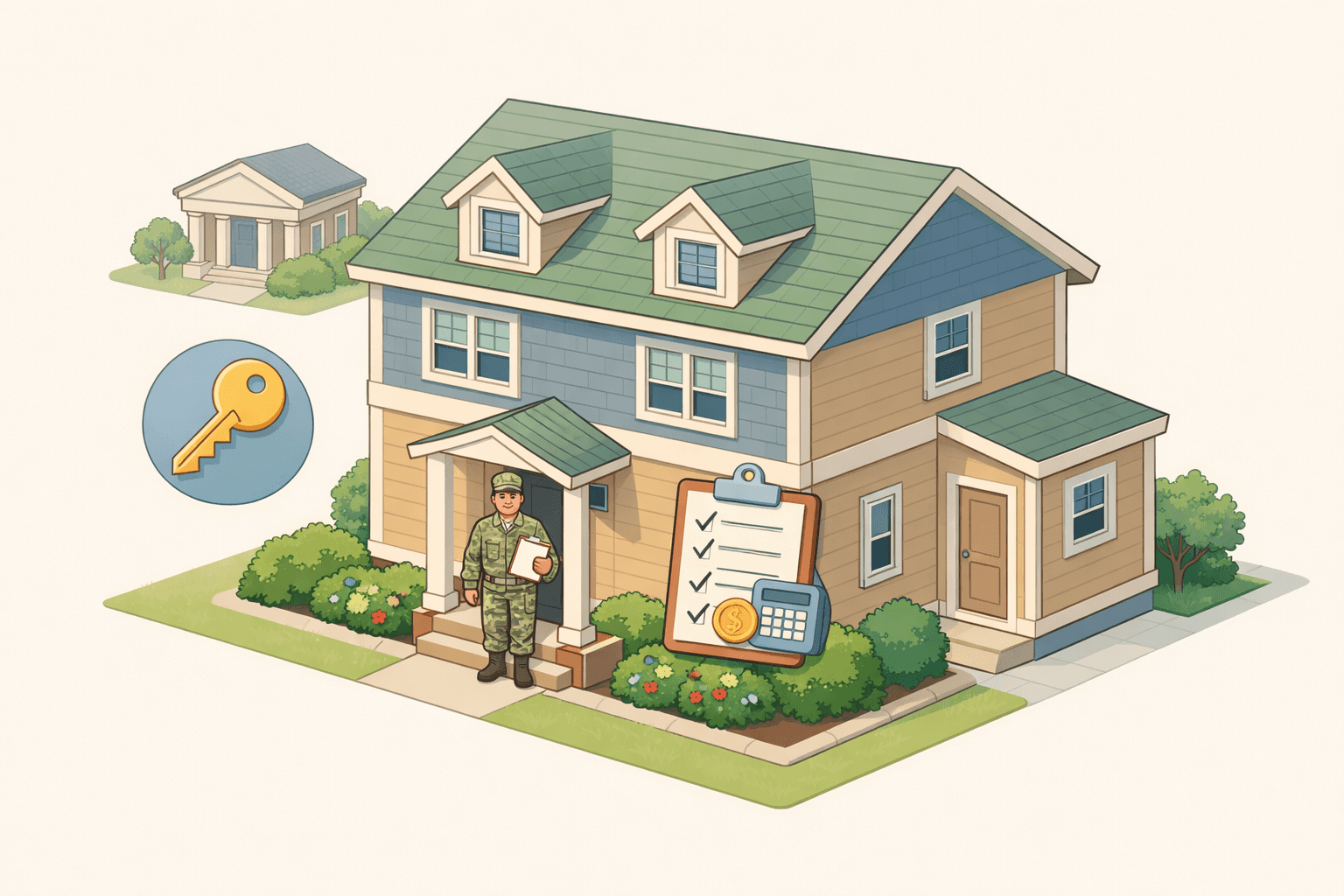
For veterans and active-duty service members looking to build wealth through real estate, buying a duplex with a VA loan can be a powerful strategy. You get to live in one unit and rent out the other, potentially offsetting your mortgage payment with rental income. But when owner financing enters the picture, things can get a little more complex — especially when it comes to understanding what you'll owe at the closing table. So, what are closing costs for a VA loan on a duplex with owner financing? That's exactly what we'll break down in this guide. From VA funding fees to lender charges and negotiated seller concessions, we'll walk you through everything you need to know before signing on the dotted line.
How VA Loans Work for Multifamily Properties Like Duplexes
The VA loan benefit is one of the most valuable financial tools available to eligible veterans, active-duty service members, and surviving spouses. While many people associate VA loans with single-family homes, the program does allow financing for multifamily properties — including duplexes, triplexes, and fourplexes — as long as the borrower intends to occupy one of the units as their primary residence.
This owner-occupancy requirement is a core condition of VA loan eligibility. You can't use a VA loan to purchase a pure investment property. However, if you plan to live in one unit of a duplex and rent out the other, you may qualify. This arrangement is often called "house hacking" in real estate investing circles, and it's a legitimate and popular way for veterans to start building a real estate portfolio with minimal upfront costs.
VA loans are backed by the U.S. Department of Veterans Affairs, which reduces risk for lenders and allows them to offer competitive terms — typically no down payment requirement, no private mortgage insurance (PMI), and flexible credit guidelines. These advantages make VA loans an attractive option for veterans purchasing a duplex, even when the transaction involves owner financing from the seller.
It's worth noting that not all lenders offer VA loans on multifamily properties, and those who do may have additional overlays or requirements beyond the VA's baseline guidelines. Shopping around and working with a VA-experienced lender is strongly recommended.
Understanding Owner Financing and Its Role in a VA Loan Transaction
Owner financing — sometimes called seller financing — is a real estate arrangement where the property seller acts as the lender for some or all of the purchase price. Instead of the buyer getting a traditional mortgage from a bank, the seller extends credit directly to the buyer, often with a negotiated interest rate, repayment schedule, and terms.
When it comes to VA loans, owner financing can come into play in a couple of ways. In some cases, a seller might offer to carry a second lien or provide a seller concession to help cover closing costs. In other situations, buyers may explore hybrid arrangements where a VA loan covers the primary financing and the seller contributes through concessions or credits at closing.
It's important to understand that a pure owner-financed transaction — where the seller finances 100% of the purchase — typically does not involve a VA loan at all, since VA loans are issued by VA-approved lenders. However, sellers can participate meaningfully in a VA loan transaction by contributing to closing costs through what are known as seller concessions. The VA allows sellers to pay up to 4% of the loan amount in concessions, which can cover items like the VA funding fee, prepaid taxes and insurance, and other closing costs.
Understanding the boundaries of how owner financing and VA loans interact is key to structuring a deal that works for both buyer and seller — and that keeps you compliant with VA guidelines.
What Are Closing Costs for a VA Loan on a Duplex with Owner Financing
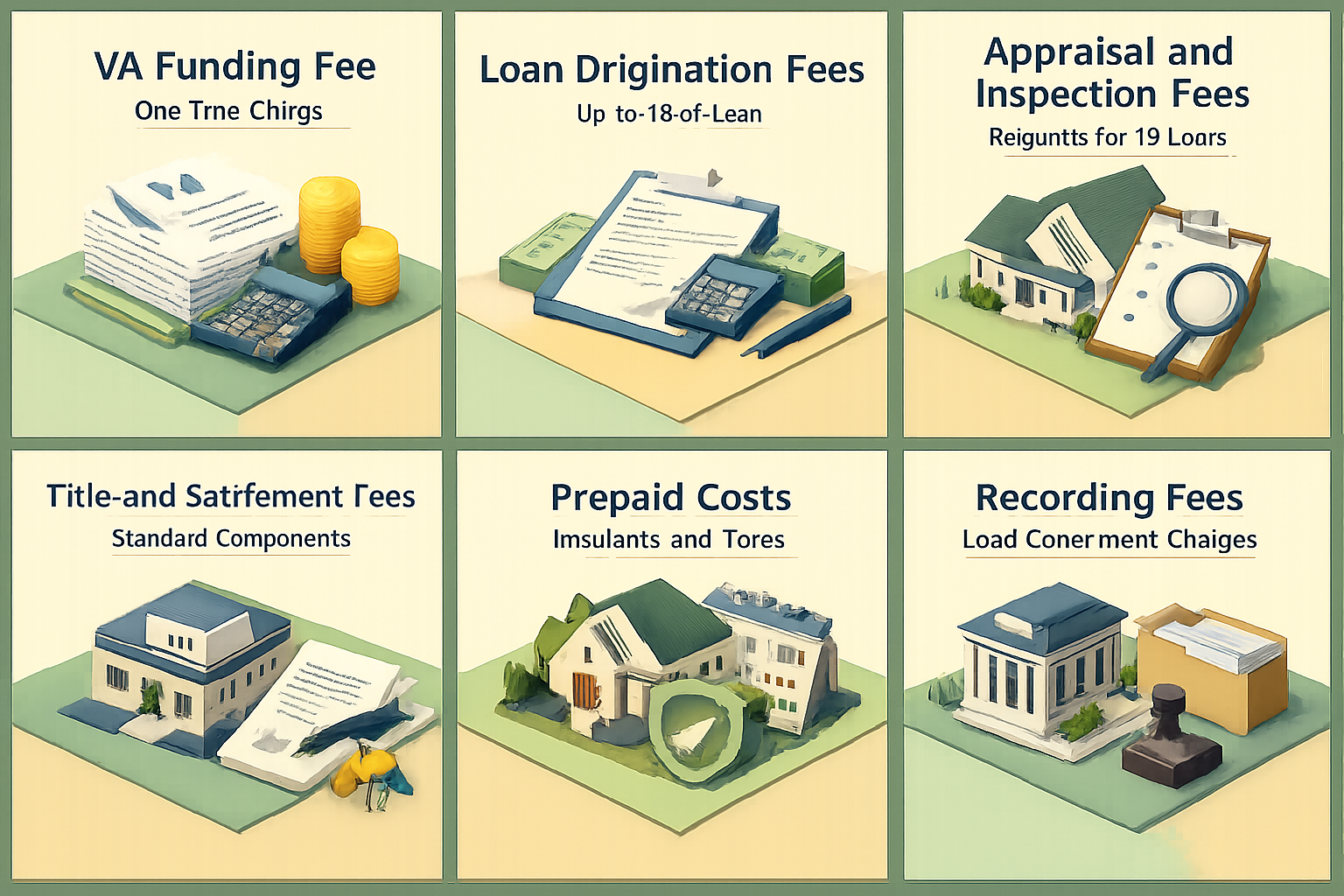
When veterans ask what are closing costs for a VA loan on a duplex with owner financing, the answer involves understanding both the standard VA loan closing costs and any adjustments that may come from a seller-assisted financing arrangement. Let's break down the typical fees involved.
VA Funding Fee
The VA funding fee is a one-time charge required by the Department of Veterans Affairs on most VA loans. It helps fund the program and reduces costs for taxpayers. The amount varies based on factors such as whether it's your first VA loan use, your down payment amount, and whether you're a veteran, active-duty service member, or a surviving spouse. Some veterans with service-connected disabilities may be exempt from the funding fee entirely. This fee can be rolled into the loan amount or paid upfront at closing.
Loan Origination Fees
VA lenders are permitted to charge an origination fee, though the VA limits certain fees to protect borrowers. Lenders may charge up to 1% of the loan amount as an origination fee. Any charges beyond the flat 1% must fall within VA-allowable fee categories.
Appraisal and Inspection Fees
VA loans require a VA appraisal conducted by a VA-approved appraiser. For a duplex, this appraisal may cost more than a single-family home appraisal due to the additional complexity. Home inspection fees, while not always required by the VA, are strongly recommended and are typically paid by the buyer. Pest inspections may also be required depending on the property's location.
Title and Settlement Fees
Title search fees, title insurance, and settlement or closing agent fees are standard components of most real estate transactions, including VA loans. These costs protect both the lender and the buyer from title defects or claims on the property.
Prepaid Costs and Escrow Reserves
Borrowers are typically required to prepay homeowners insurance, property taxes, and mortgage interest at closing. Lenders also commonly require an escrow account to be funded upfront, which may include two to three months of property taxes and insurance reserves.
Recording Fees and Transfer Taxes
Local government recording fees and, in some jurisdictions, transfer taxes may apply when the property changes hands. These vary significantly by location and property value.
VA Loan Closing Cost Rules: What Sellers Can and Cannot Pay
One of the more flexible aspects of the VA loan program is how seller concessions can be structured. When owner financing is part of the conversation, sellers may be willing to contribute toward closing costs as part of the overall deal negotiation — and the VA has specific rules governing this.
The VA allows sellers to pay all of the buyer's VA loan closing costs, plus up to 4% of the established value of the property in additional concessions. These seller-paid concessions can include the VA funding fee, prepaid taxes and insurance, judgments or debts on behalf of the veteran, and temporary buydowns of the interest rate.
However, there are fees that the VA does not permit sellers to pay on behalf of the buyer — such as certain real estate agent commissions in some transaction structures — and there are fees that the VA explicitly restricts lenders from charging borrowers, including attorney fees for preparing loan documents (in most cases) and settlement charges beyond VA-allowable amounts.
When a duplex seller is open to owner financing discussions, this can be a valuable negotiating lever. A veteran buyer might negotiate for the seller to cover a larger share of closing costs in exchange for terms that benefit the seller — such as a quicker closing timeline or a higher purchase price. Understanding what's allowable under VA guidelines helps both parties structure a compliant and mutually beneficial transaction.
How Rental Income from the Second Unit May Affect Your VA Loan Qualification
One of the appealing aspects of purchasing a duplex with a VA loan is the potential to use rental income from the second unit to help qualify for a larger loan amount. However, VA lenders have specific guidelines around how — and whether — projected rental income can be counted.
Generally, lenders may allow a portion of the anticipated rental income from the non-owner-occupied unit to offset the property's housing expenses in your debt-to-income (DTI) calculation. This could improve your qualifying ratios and potentially allow you to borrow more. However, lenders typically require documentation such as a signed lease agreement or a market rent analysis from the VA appraisal to support the income claim. If there's no existing tenant or lease, some lenders may only count a percentage of the market rent — often around 75% — to account for vacancy risk.
This is worth discussing early with your loan officer, especially if the duplex's purchase price stretches your borrowing capacity. In situations involving owner financing concessions from the seller, the overall deal structure may affect how underwriters view the transaction, so transparency and thorough documentation are essential.
Working with a lender experienced in VA multifamily loans can make a significant difference in how rental income is treated during the underwriting process.
Strategies to Reduce Out-of-Pocket Closing Costs on Your VA Duplex Purchase
Even though VA loans offer significant cost advantages over conventional financing, closing costs on a duplex purchase can still add up. Here are some strategies that may help veterans minimize out-of-pocket expenses when buying a buy a duplex with a VA loan.
- Negotiate seller concessions: As mentioned, VA guidelines allow sellers to contribute to closing costs. In a motivated seller situation — which owner financing arrangements sometimes represent — there may be room to negotiate meaningful concessions.
- Roll the funding fee into the loan: Rather than paying the VA funding fee upfront, eligible borrowers can finance it into the loan balance. This keeps cash in your pocket at closing, though it does increase your monthly payment slightly.
- Shop lenders for origination fees: Origination fees and lender charges can vary meaningfully between lenders. Getting multiple loan estimates allows you to compare true costs and potentially save hundreds or thousands of dollars.
- Request lender credits: Some lenders offer lender credits in exchange for a slightly higher interest rate. This can reduce upfront closing costs, though it increases the long-term cost of the loan. It may be a worthwhile trade-off depending on how long you plan to hold the property.
- Close at the end of the month: Mortgage interest is prepaid from the closing date through the end of the month. Closing later in the month means fewer days of prepaid interest are required, reducing that portion of your closing costs.
- Verify your funding fee exemption status: Veterans with a service-connected disability rating may be exempt from the VA funding fee. Confirming your status before closing ensures you don't pay a fee you're not required to pay.
Combining these strategies thoughtfully — and working with an experienced VA lender who understands multifamily transactions — can meaningfully reduce the cash you need to bring to the closing table.
●Conclusion
Understanding VA loan duplex closing costs owner financing arrangements requires a clear picture of both the VA loan program's rules and how seller contributions can be structured in a duplex transaction. From the VA funding fee and appraisal costs to title fees and prepaid escrow items, closing costs can vary based on loan size, location, and negotiated terms. The good news is that the VA loan program offers meaningful protections and flexibility for veteran buyers — including the ability to have sellers cover a significant share of closing costs.
Whether you're a first-time homebuyer using your VA benefit or an experienced real estate investor looking to expand your portfolio through house hacking, a duplex purchase with a VA loan could be one of the smartest financial moves you make. At LoanWise, our team is ready to help you navigate what are closing costs for a VA loan on a duplex with owner financing and find the right financing structure for your goals. Reach out today to connect with a VA-experienced loan specialist who can guide you through every step of the process.