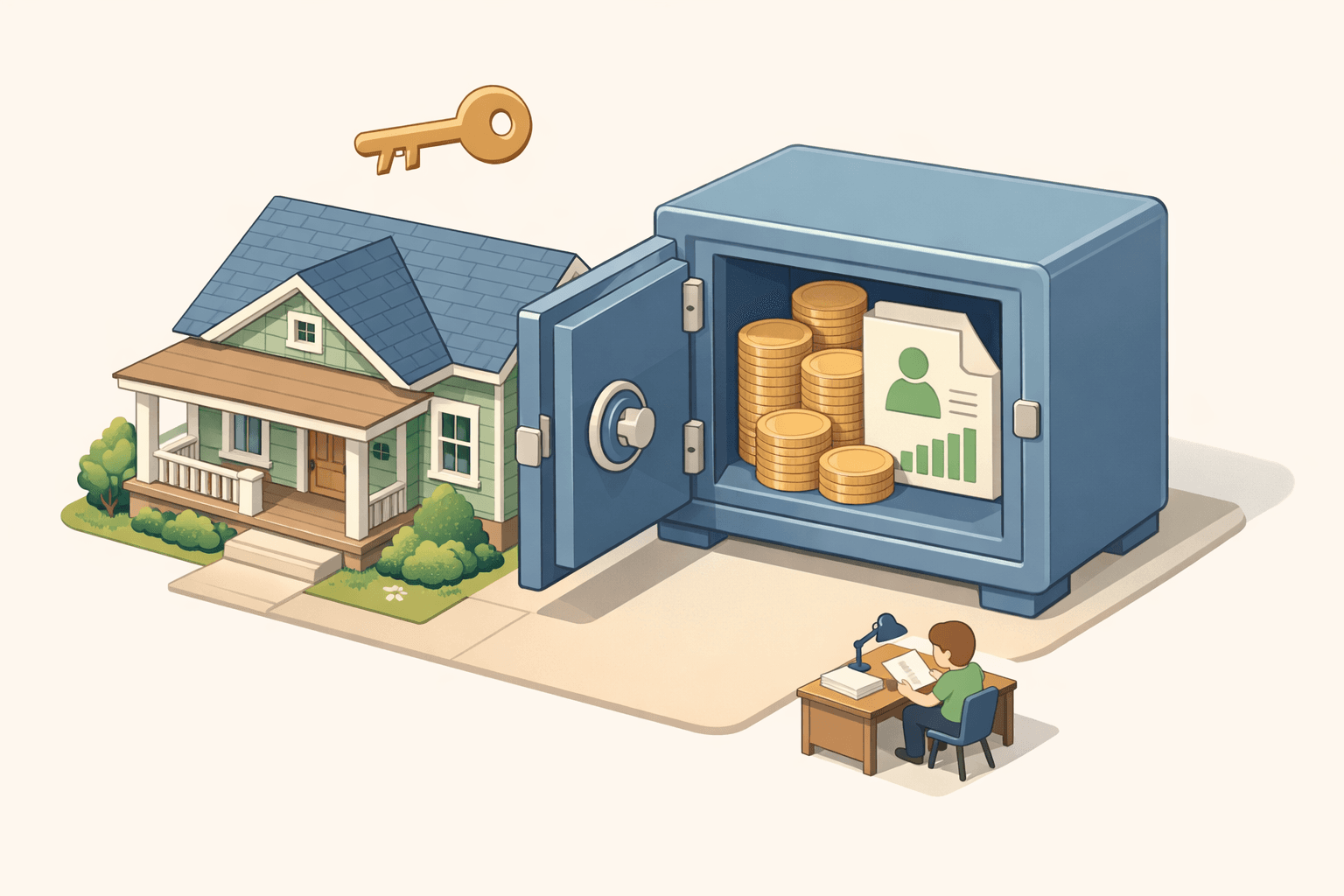
Buying a home is one of the biggest financial decisions most people will ever make. For many homebuyers, pulling together a down payment is the hardest part of the process. If you've spent years building a retirement nest egg, you might be wondering whether those funds can help you get across the finish line. The good news is that using retirement savings for a home purchase is entirely possible — but there are specific rules you'll need to follow. Understanding the requirements for a conventional loan with 10% down payment from retirement funds can help you move forward with clarity and confidence.
What Makes a Conventional Loan Different from Other Mortgage Programs
A conventional loan is a mortgage that's not backed by a government agency like the FHA, VA, or USDA. Instead, these loans follow guidelines set by Fannie Mae and Freddie Mac, the two government-sponsored enterprises that purchase most conventional mortgages from lenders in the secondary market.
Because conventional loans aren't government-insured, lenders tend to apply stricter qualification standards. However, they also offer flexibility that government-backed loans often don't — including the ability to finance primary residences, second homes, and investment properties with varying down payment levels.
A 10% down payment is one of the more common entry points for conventional financing. It's large enough to signal financial responsibility to lenders but small enough to remain achievable for many borrowers. With a 10% down payment, you're borrowing 90% of the home's purchase price, which means you'll typically be required to carry private mortgage insurance (PMI) until your loan-to-value ratio reaches 80% or better.
Conventional loans are available in both fixed-rate and adjustable-rate formats, and they can be conforming (within Fannie Mae and Freddie Mac limits) or non-conforming, depending on the loan amount and property type.
Core Eligibility Standards Lenders Look For
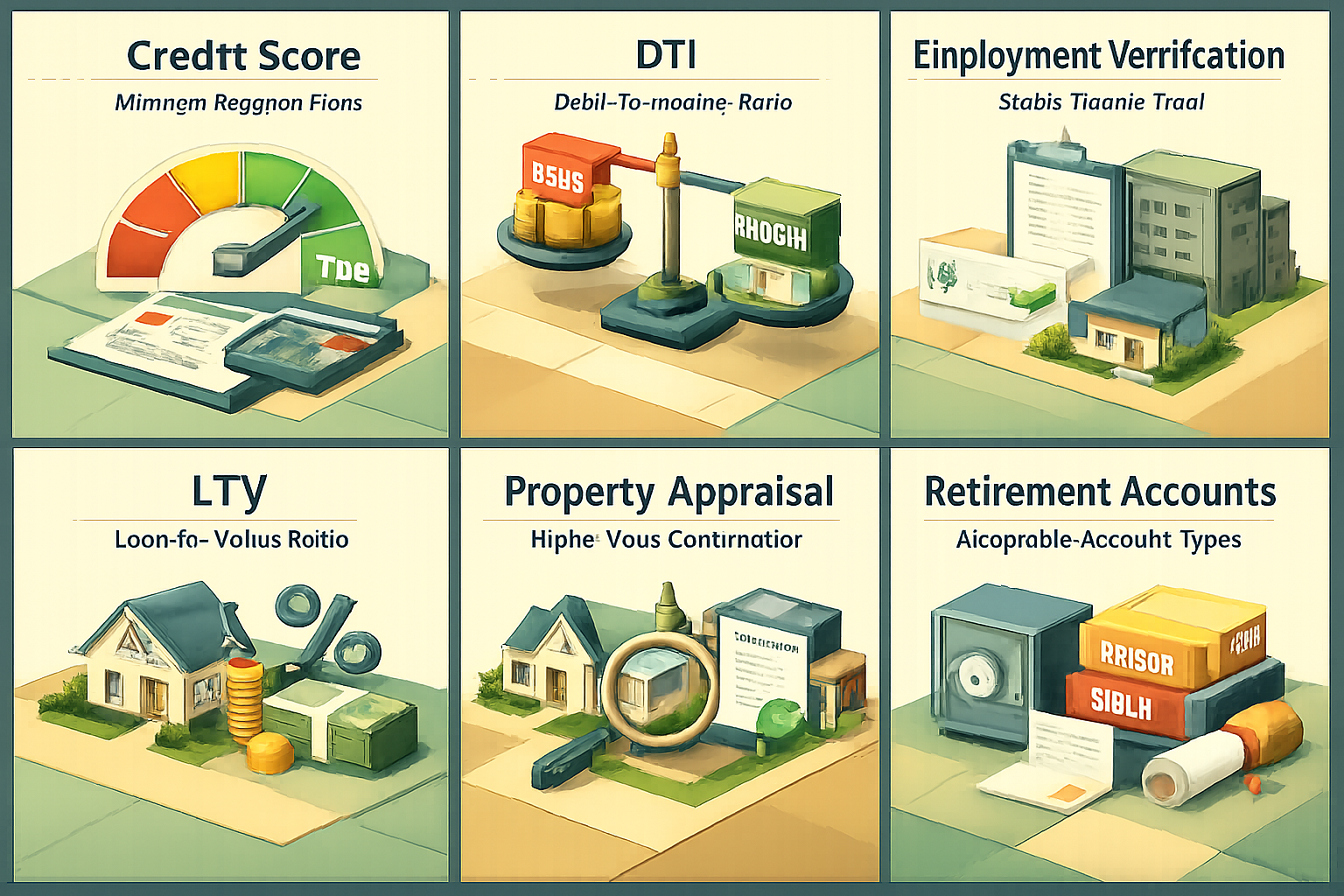
Before a lender will approve a conventional mortgage, they'll evaluate several key financial factors. Meeting these benchmarks is essential — regardless of where your down payment comes from.
- Credit Score: Most lenders require a minimum credit score of 620 for conventional loans. However, borrowers with scores of 740 or higher typically receive the most favorable interest rates. If your credit score falls below the threshold, it may be worth taking time to improve it before applying.
- Debt-to-Income Ratio (DTI): Lenders typically want to see a total DTI at or below 45%, though some programs may allow up to 50% with compensating factors. Your DTI includes all monthly debt obligations divided by your gross monthly income.
- Employment and Income Verification: Lenders will want to verify stable employment and consistent income, usually through recent pay stubs, W-2 forms, and federal tax returns. Self-employed borrowers may need to provide additional documentation.
- Loan-to-Value Ratio (LTV): With a 10% down payment, your LTV will be 90%. This is within acceptable limits for conventional financing, though it does trigger PMI requirements.
- Property Appraisal: The home must be appraised at or above the purchase price to confirm the collateral supports the loan amount.
These standards are fairly consistent across most conventional loan programs, though individual lenders may apply overlays — meaning stricter internal requirements — on top of the baseline guidelines.
Requirements for Conventional Loan with 10% Down Payment from Retirement Funds
When your down payment is sourced from a retirement account — such as a 401(k), IRA, SEP-IRA, or similar plan — lenders have specific documentation and verification requirements. Meeting the requirements for a conventional loan with 10% down payment from retirement funds means being prepared to prove both the existence and the accessibility of those funds.
Acceptable Retirement Account Types
Lenders generally accept funds from a wide range of retirement accounts, including traditional IRAs, Roth IRAs, 401(k) plans, 403(b) plans, and pension accounts. The key factor is that the funds must be accessible to you. Vested balances in employer-sponsored plans are typically counted, but unvested contributions may not be.
Documentation You'll Need to Provide
Expect to provide recent retirement account statements — usually covering the most recent two months — showing the current balance. If you're withdrawing or borrowing from the account, you'll also need to show proof of the transaction and confirm the funds have been deposited into your bank account before or at closing.
How Lenders Count Retirement Assets
Here's an important nuance: lenders don't always count the full face value of retirement account balances. Because withdrawals from traditional retirement accounts are often subject to taxes and early withdrawal penalties (if you're under 59½), lenders may discount the usable value. Many lenders apply a 60% or 70% factor to account for these potential deductions, though the exact calculation can vary by lender and loan program.
Borrowing vs. Withdrawing from Your Retirement Account
Some borrowers choose to take a loan from their 401(k) rather than a direct withdrawal. If you do this, the monthly repayment of that loan will be included in your DTI calculation, which could affect your overall qualification. A direct withdrawal avoids adding to your debt obligations, but it may come with tax consequences. It's wise to speak with a tax advisor before making this decision.
Asset Depletion and Alternative Income Calculation Methods
There's another way retirement funds can help you qualify — not just as a source for your down payment, but as a form of income. Some lenders offer what's known as an asset depletion or asset dissipation calculation. Under this method, a lender divides your total eligible assets by the remaining loan term (in months) to generate a hypothetical monthly income figure.
For example, if you have $500,000 in retirement savings and are applying for a 30-year loan, a lender might divide $500,000 by 360 months to arrive at an imputed monthly income of approximately $1,388. This can supplement your qualifying income if you're retired or have limited traditional employment income.
Not every lender offers this program, and the specific rules can vary significantly. Some lenders may require that you be of retirement age or already drawing from the account. Others may apply a discount factor to the retirement balance before running the calculation. If you think asset depletion income might apply to your situation, ask your loan officer upfront whether their programs support it.
This approach can be particularly helpful for homebuyers who are recently retired, semi-retired, or who are transitioning between careers and haven't yet established a consistent income stream from their new role.
Sourcing and Seasoning: Why Paper Trails Matter
One of the most important — and sometimes overlooked — aspects of using retirement funds for a down payment is the concept of sourcing and seasoning. Lenders are required to verify where down payment funds come from, and they want to see that those funds have been sitting in your account for a reasonable period of time.
Sourcing refers to proving the origin of the funds. For retirement accounts, this is generally straightforward because account statements clearly identify the institution and account type. However, if you recently rolled over funds from one account to another, you may need to provide statements from both accounts to document the trail.
Seasoning refers to how long the funds have been in the account. In many cases, lenders prefer to see at least 60 days of account history. This helps them confirm that the funds weren't borrowed from an undisclosed source, which could impact your overall debt picture.
When funds move from a retirement account into a checking or savings account, lenders will want to trace that transfer as well. Make sure you keep records of all transactions and can clearly explain any large deposits or transfers that appear on your bank statements.
Being organized and proactive about your documentation can make the approval process significantly smoother. Gaps or inconsistencies in your paper trail could raise questions that slow down or complicate your closing timeline.
Private Mortgage Insurance and Long-Term Cost Considerations
Putting 10% down on a conventional loan means your lender will typically require private mortgage insurance. PMI is a monthly premium that protects the lender — not you — in case you default on the loan. It's worth factoring this cost into your overall budget when planning your home purchase.
PMI rates can vary based on your credit score, loan amount, and LTV ratio, but they're often somewhere in the range of 0.2% to 2% of the original loan amount per year. The good news is that PMI is not permanent. Once your loan balance drops to 80% of the home's original appraised value, you may be eligible to request PMI cancellation. Lenders are also federally required to automatically cancel PMI once your balance reaches 78% of the original value, assuming your payments are current.
Beyond PMI, it's also important to think carefully about the long-term implications of withdrawing retirement funds for a down payment. While homeownership builds equity, pulling from retirement savings reduces the compounding growth potential of those assets. If you're withdrawing before age 59½, you may also face a 10% early withdrawal penalty from the IRS in addition to ordinary income taxes on the amount withdrawn.
Balancing the goal of homeownership against retirement security is a personal financial decision, and many financial advisors suggest exploring all available down payment sources — including gift funds, requirements for conventional loan assistance programs, or a smaller loan balance — before tapping retirement savings.
●Conclusion
Using retirement savings to fund a home purchase is a viable path for many buyers, but it comes with real responsibilities. Meeting the requirements for a conventional loan with 10% down payment from retirement funds means understanding how lenders evaluate those assets, providing thorough documentation, and thinking carefully about the tax and retirement implications of your decision.
Whether you're a first-time buyer, a seasoned homeowner looking to upgrade, or someone entering retirement and ready to plant roots in a new community, conventional mortgage retirement savings down payment strategies can open doors that might otherwise feel out of reach. The key is working with a knowledgeable loan officer who can guide you through the process and help you structure your application for the best possible outcome. At LoanWise, our team is here to help you evaluate your options and move forward with confidence.