
Buying a houseboat as your primary residence is an exciting lifestyle choice — but it also comes with a financing journey unlike most traditional home purchases. If you've been researching your options, you may have already discovered that lenders treat floating homes differently than standard single-family properties. One of the most important questions buyers ask early on is: what are closing costs for conventional loan on a houseboat as primary residence? The answer isn't always straightforward, because houseboat financing sits at a unique intersection of maritime regulations, real estate law, and conventional lending guidelines. This guide breaks down everything you need to know — from what closing costs typically include to the extra fees that may arise specifically because of the floating nature of your future home.
Why Financing a Floating Home Is Different From a Standard Mortgage
Before diving into closing costs, it helps to understand why houseboat financing works differently in the first place. Most conventional mortgage programs — including those backed by Fannie Mae and Freddie Mac — are designed for properties that sit on land and are permanently affixed to a foundation. A houseboat, by contrast, floats on water and may or may not be classified as real property depending on how it's titled and moored.
Lenders typically draw a distinction between two types of floating residences:
- Floating homes: These are often permanently moored, connected to utilities, and may be titled as real property — making them more likely to qualify for conventional mortgage financing.
- Liveaboard boats: These are vessels first and residences second. They're more commonly financed through marine lenders rather than traditional mortgage products.
For a conventional loan for liveaboard boat or floating home, the lender will want to confirm the property meets specific eligibility requirements. This classification matters enormously because it determines which financing products are available to you — and ultimately shapes your closing cost structure.
Standard Closing Cost Categories You'll Likely Encounter
Whether you're buying a traditional house or financing a floating home, many conventional loan closing costs will look familiar. These standard fees tend to appear on most mortgage transactions and form the foundation of what you'll see on your Loan Estimate disclosure.
Origination and Lender Fees
Lenders typically charge an origination fee to process and underwrite your loan. This fee is often expressed as a percentage of the loan amount — commonly somewhere between 0.5% and 1% — though it can vary based on your lender, loan size, and the complexity of the transaction. Houseboat loans may carry higher origination fees because fewer lenders specialize in this niche, which reduces competition and can push costs upward.
Appraisal Fees
A standard home appraisal is required for virtually every conventional purchase loan. For a houseboat or floating home, the appraisal process is notably more complex. Appraisers must find comparable sales — often called "comps" — and floating homes have very few of them in most markets. This scarcity could mean a longer appraisal timeline and a higher appraisal fee than you'd pay for a land-based property. In some cases, lenders may require a specialized marine appraiser in addition to, or instead of, a traditional real estate appraiser.
Title Search and Title Insurance
Title work on a floating home can be more involved than on a conventional property. The title company must confirm ownership history, ensure there are no liens, and verify how the property is legally classified. If the houseboat is titled as a vessel rather than real estate, title insurance may not be available in the traditional sense — and lenders may require alternative protections. This added complexity could increase your title-related closing costs.
Prepaid Items and Escrow Setup
Most conventional loans require borrowers to prepay certain items at closing. These typically include:
- Homeowner's insurance premiums (or in this case, a marine or floating home insurance policy)
- Prepaid mortgage interest for the days remaining in the closing month
- Property taxes, if applicable to your floating home's jurisdiction
- Initial deposits into your escrow account
Insurance for a houseboat used as a primary residence may cost more than a standard homeowner's policy, which could affect how much you prepay at closing.
Unique Closing Fees Specific to Houseboat Mortgage Transactions
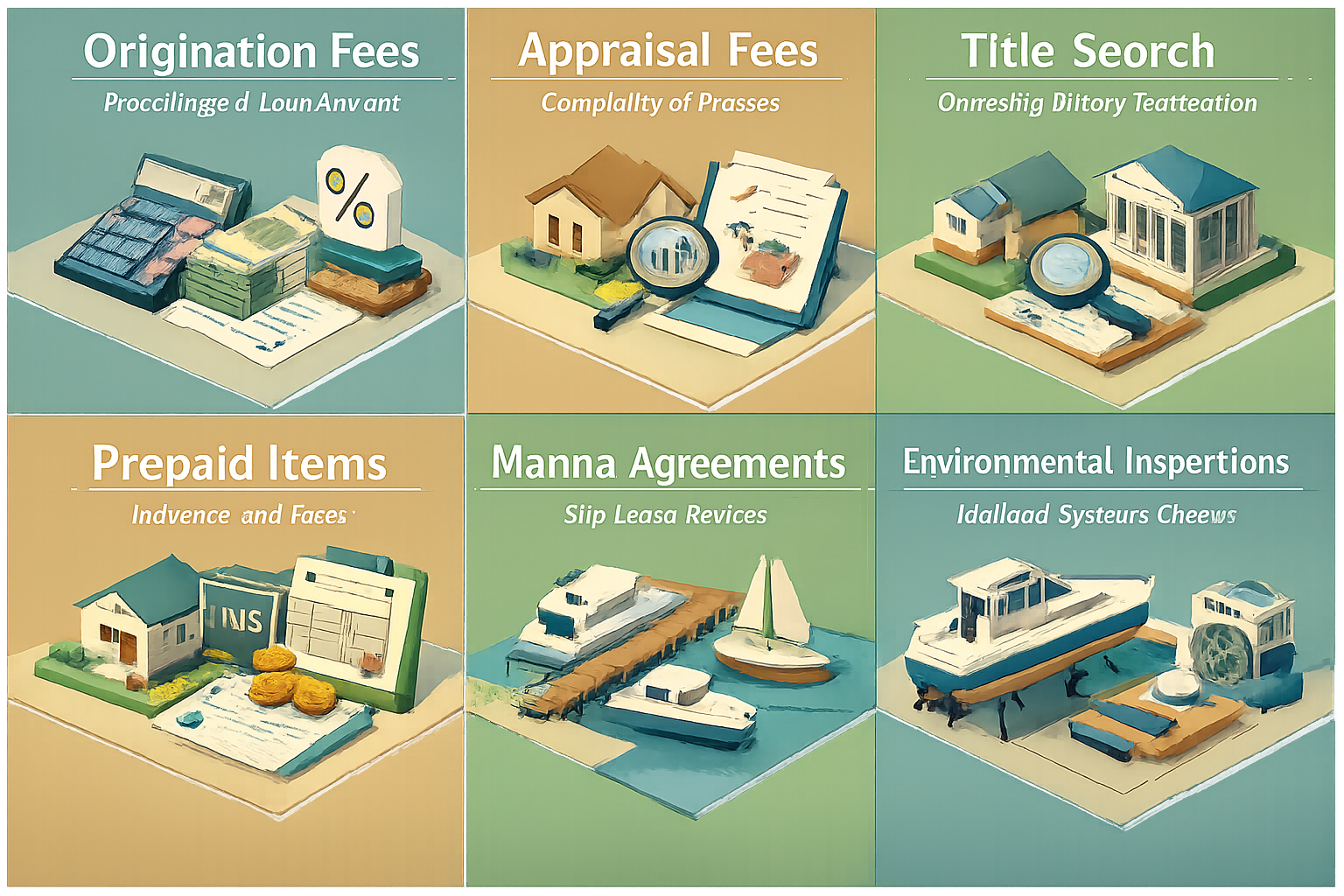
Beyond the standard fees, houseboat mortgage closing costs often include a set of charges that buyers of traditional homes never encounter. Being aware of these upfront can help you budget more accurately and avoid surprises at the closing table.
Marina Slip Agreements and Moorage Documentation
If your houseboat is moored in a marina, the lender will likely want to review your slip lease or moorage agreement. In some cases, there may be fees associated with having an attorney review this agreement or for transferring the slip rights to you as the new owner. These are unique property mortgage closing fees that don't exist in a standard home purchase.
Vessel Documentation and Registration Review
If your floating home is classified as a vessel by the U.S. Coast Guard, there may be fees related to reviewing or transferring vessel documentation. Lenders who offer conventional loans for floating properties often require confirmation that the vessel title is clear and properly documented before funding the loan.
Environmental and Structural Inspections
In addition to a standard home inspection, lenders and buyers of floating homes often commission additional inspections, such as:
- Hull inspections: A marine surveyor may be required to assess the structural integrity of the hull, which is critical for both safety and insurability.
- Mechanical and systems inspections: Electrical, plumbing, and propulsion systems unique to floating homes may require specialized review.
These inspection costs add to your overall closing expenses and are a routine part of due diligence when financing a floating home.
How Much Should You Budget for Houseboat Mortgage Closing Costs?
For a conventional mortgage on a traditional home, closing costs typically fall somewhere in the range of 2% to 5% of the loan amount. For a houseboat or floating home, you may want to budget toward the higher end of that range — or potentially above it — given the additional complexity of the transaction.
Here's a simplified example of how costs might stack up on a $300,000 floating home purchase:
- Origination fee (1%): ~$3,000
- Appraisal (specialized): $600–$1,200+
- Title services: $1,000–$2,500
- Marine survey / hull inspection: $500–$1,500
- Prepaid insurance and taxes: $1,500–$3,000
- Recording and government fees: $200–$600
- Miscellaneous lender and third-party fees: $500–$1,500
These figures are illustrative estimates only. Actual costs will vary based on your location, lender, loan amount, and the specific nature of your floating home. Always request a detailed Loan Estimate from your lender within three business days of submitting your application — this document is required by federal law and gives you a clear breakdown of expected closing costs.
Finding the Right Lender for a Conventional Loan on a Floating Home
One of the biggest challenges in answering what are closing costs for conventional loan on a houseboat as primary residence is that not all lenders offer this type of financing. Because floating homes fall outside standard underwriting guidelines for Fannie Mae and Freddie Mac, many mainstream lenders simply won't touch them. This means your lender options may be more limited than with a conventional home purchase.
When searching for a lender, look for institutions with experience in:
- Portfolio lending (loans held in-house rather than sold to the secondary market)
- Marine and floating home financing
- Non-QM or specialty mortgage products
Working with a lender who has genuine expertise in this niche can make a meaningful difference — not just in your ability to get approved, but also in understanding the full scope of fees you'll face. A specialist lender is more likely to provide an accurate Loan Estimate and walk you through unique property mortgage closing fees that a generalist might overlook.
It's also worth shopping among multiple lenders. Even in a niche market, comparing Loan Estimates side by side can reveal differences in origination fees, third-party service charges, and prepaid costs that could amount to thousands of dollars in savings.
Tips to Reduce Your Closing Costs on a Floating Home Purchase
While some closing costs are fixed by law or lender policy, others may be negotiable or reducible with the right approach. Here are some strategies that could help you manage costs when financing a floating home:
Negotiate Seller Concessions
In a buyer-friendly market, you may be able to ask the seller to contribute toward your closing costs. Conventional loan guidelines generally allow seller concessions up to a certain percentage of the purchase price, depending on your down payment. This can offset some of the out-of-pocket expense at closing.
Shop Third-Party Services
Your lender is required to provide a list of approved third-party service providers — such as title companies and attorneys — but in many cases, you're permitted to shop for your own. Comparing quotes from multiple providers for services like title insurance or inspections could yield meaningful savings.
Consider a No-Closing-Cost Loan
Some lenders offer a no-closing-cost option, where the fees are rolled into the loan balance or offset by a slightly higher interest rate. This can be helpful if you're tight on cash at closing, though it typically means paying more over the life of the loan. Evaluate the trade-off carefully based on how long you plan to stay in the home.
Improve Your Credit Profile Before Applying
A stronger credit score may qualify you for better loan terms and lower fees in some cases. If your credit score is borderline, taking time to pay down balances or resolve any errors on your credit report before applying could improve your overall loan cost picture.
●Conclusion
Buying a houseboat as your primary residence is a rewarding path for those drawn to waterfront living — but it does require more financial preparation than a standard home purchase. Understanding what are closing costs for conventional loan on a houseboat as primary residence means looking beyond the familiar line items and accounting for the specialized appraisals, marine surveys, slip documentation, and insurance requirements that come with floating home ownership. Budgeting conservatively and working with a lender who genuinely understands this niche could make your closing process far smoother. If you're ready to explore your options for houseboat mortgage closing costs and find a financing solution that fits your lifestyle, LoanWise is here to help you navigate every step of the journey.