
Purchasing a rural property is an exciting step, and the USDA loan program makes it more accessible for many homebuyers. But when a property carries a conservation easement, things can get a little more complex — especially at the closing table. If you've been asking yourself what are closing costs for a USDA loan on a property with a conservation easement, you're not alone. This unique combination of government-backed financing and land-use restrictions raises important questions about fees, eligibility, appraisal requirements, and lender expectations. In this article, we'll break it all down in plain language so you can move forward with confidence.
Understanding USDA Loans and How They Work for Rural Homebuyers
The USDA Single Family Housing Guaranteed Loan Program is designed to help low-to-moderate income borrowers purchase homes in eligible rural and suburban areas. One of the program's most attractive features is the zero down payment requirement, which makes homeownership more reachable for buyers who might not have significant savings set aside.
USDA loans are issued by approved private lenders and backed by the U.S. Department of Agriculture. Because the federal government guarantees a portion of the loan, lenders are typically willing to offer competitive interest rates and more flexible qualification standards than conventional mortgage products.
To qualify, borrowers generally must meet income limits, purchase a property in a USDA-designated eligible area, and intend to use the home as their primary residence. The property itself must also meet USDA's minimum property standards — and this is where conservation easements can introduce additional layers of review.
It's worth noting that USDA loans come in two main varieties: the Guaranteed Loan Program (Section 502) aimed at moderate-income buyers and processed through approved lenders, and the Direct Loan Program aimed at very low-to-low income households and funded directly by the USDA. Both programs have their own fee structures, so it's important to clarify which one applies to your situation.
What Is a Conservation Easement and Why Does It Matter for Your Mortgage
A conservation easement is a legal agreement between a landowner and a qualified organization — such as a land trust or government agency — that permanently restricts certain uses of the land in order to protect its natural, agricultural, or scenic value. These restrictions are recorded in the property's deed and typically transfer with the land when it's sold.
Common restrictions under a conservation easement may include limitations on subdividing the land, prohibitions on certain types of development or construction, requirements to maintain natural vegetation or wildlife habitats, and restrictions on commercial activities. In some cases, easements may also limit the size or placement of future structures on the property.
From a mortgage lender's perspective, a conservation easement raises immediate questions about the property's marketability and value. Lenders want to know whether the easement significantly impairs the property's use or resale potential. For USDA financing specifically, underwriters must evaluate whether the property still meets the program's eligibility standards despite any land-use limitations imposed by the easement.
This doesn't necessarily mean a property with a conservation easement is ineligible for USDA financing. However, it does mean the process may take longer and require more documentation than a standard rural home purchase. Borrowers should be prepared for a more thorough review of the easement's terms and how they interact with USDA's property requirements.
What Are Closing Costs for a USDA Loan on a Property with a Conservation Easement
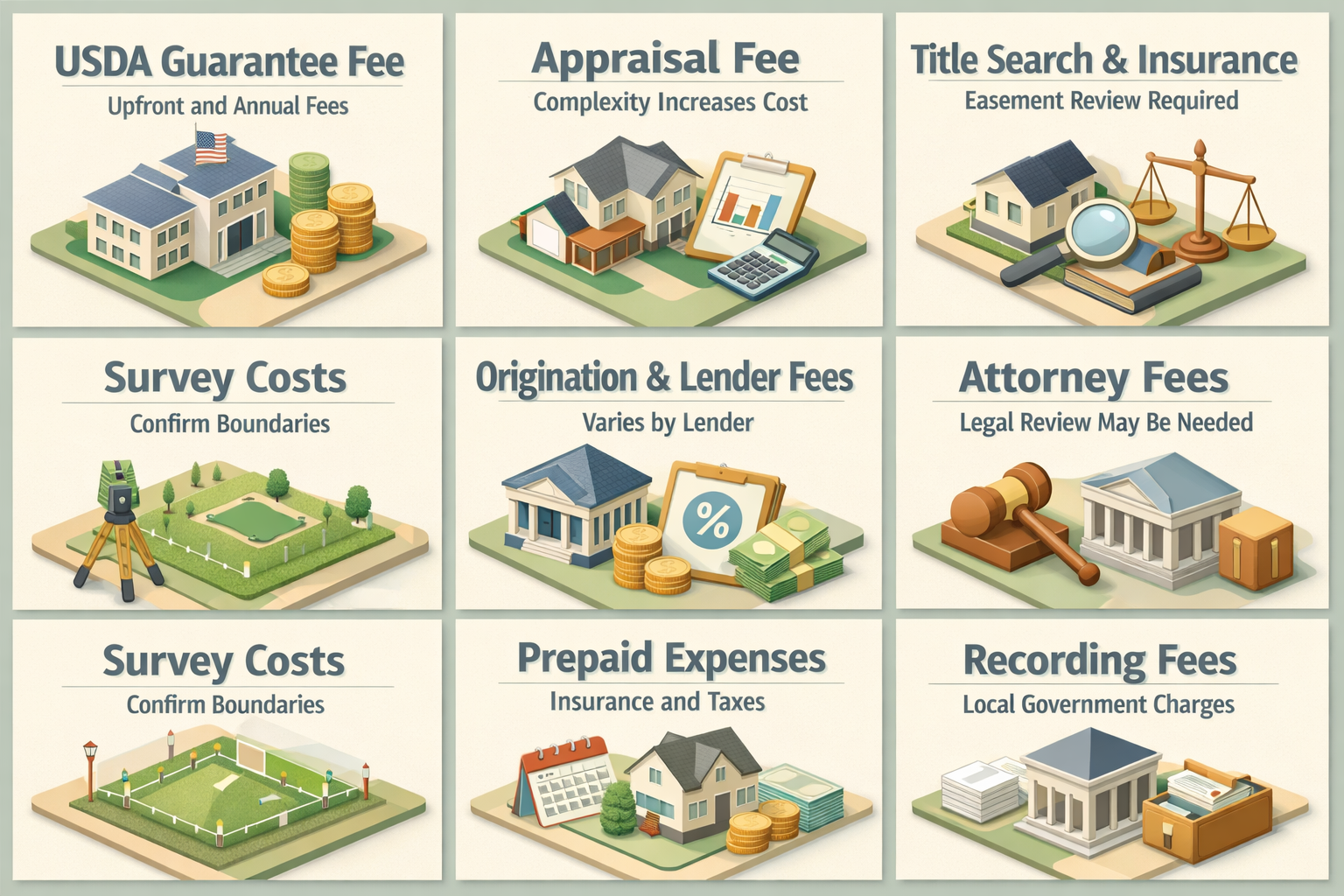
So, what are closing costs for a USDA loan on a property with a conservation easement? The honest answer is that the core closing cost categories are similar to any USDA loan, but the presence of a conservation easement often adds specific fees and may increase the cost of certain services. Here's a closer look at the main cost categories you can expect:
- USDA Guarantee Fee: For the Guaranteed Loan Program, USDA charges an upfront guarantee fee — currently set at 1% of the loan amount — which can be financed into the loan. There's also an annual fee of 0.35% of the remaining loan balance, paid monthly as part of your mortgage payment. These fees apply regardless of whether the property has a conservation easement.
- Appraisal Fee: A licensed appraiser must assess the property's market value. On properties with conservation easements, the appraisal can be significantly more complex. The appraiser must evaluate how the easement affects value, often using paired sales analysis or income-based approaches. This complexity may mean a higher appraisal fee than you'd see on a standard rural property.
- Title Search and Title Insurance: The conservation easement will appear in the title chain, so the title company must thoroughly review the easement agreement as part of the title search. This added review can sometimes increase title fees. Title insurance — both lender's and owner's policies — is typically required and protects against any future claims related to the easement or other encumbrances.
- Attorney or Settlement Agent Fees: Given the legal complexity of a conservation easement, some lenders or state jurisdictions may require an attorney to review the easement documentation at closing. Attorney fees vary widely but could add to your overall settlement costs.
- Survey Costs: USDA may require a land survey to confirm property boundaries and verify that the conservation easement boundaries align with what's recorded. Survey costs depend on property size and complexity and can be notably higher for rural acreage.
- Origination and Lender Fees: These include loan origination fees, underwriting fees, and processing fees charged by your lender. Some lenders charge a flat fee while others charge a percentage of the loan amount.
- Prepaid Expenses and Escrow Deposits: These include prepaid homeowners insurance, property taxes deposited into escrow, and prepaid mortgage interest from the closing date to the end of the month.
- Recording Fees: Local government recording fees apply to the mortgage deed and any related documents. These are typically modest but vary by county.
In total, USDA loan closing costs involved typically range somewhere between 2% and 5% of the purchase price for a standard transaction. However, on a property with a conservation easement, buyers should anticipate that appraisal, title, legal review, and survey costs could push that range toward the higher end.
How USDA Evaluates Properties Burdened by Land-Use Restrictions
When a property has a conservation easement, USDA underwriters take a careful look at how the easement affects the property's eligibility and value. The key concern is whether the easement permanently impairs the borrower's ability to use and enjoy the home, or significantly diminishes the property's resale marketability.
USDA's underwriting guidelines generally require that the property retain sufficient value to support the loan amount even after accounting for the easement's restrictions. The appraiser's role becomes especially important here, as they must document how the easement affects value compared to similar unrestricted properties in the area.
Some conservation easements are relatively modest in scope — for example, restricting the clearing of a woodland buffer — and may have minimal impact on value. Others, particularly those that significantly limit building rights or commercial uses, could have a more meaningful effect on the property's appraised value and marketability. Lenders will generally review the full text of the easement agreement and may request a legal opinion if the terms are ambiguous or unusually broad.
It's also important to understand that the easement holder — the land trust or government agency — may have certain rights of access or oversight on the property. USDA and your lender will want to confirm that these rights don't conflict with the borrower's use of the home as a primary residence or with the lender's security interest in the property.
Strategies to Reduce Out-of-Pocket Closing Costs on a USDA Loan
One of the great advantages of USDA loans is the built-in flexibility when it comes to managing closing costs. Even on a more complex transaction involving a conservation easement, there are several strategies that may help you manage your expenses and reduce what you pay out of pocket at settlement.
- Seller Concessions: USDA guidelines allow sellers to contribute toward the buyer's closing costs. In a buyer-friendly market, negotiating seller-paid closing costs can be an effective way to reduce your upfront expenses without violating program rules.
- Finance Eligible Costs Into the Loan: If the appraised value exceeds the purchase price, USDA allows borrowers to finance certain closing costs into the loan amount up to the appraised value. This can be particularly helpful when you're tight on cash reserves.
- Lender Credits: Some lenders offer credits toward closing costs in exchange for a slightly higher interest rate. This trade-off may make sense if you prefer to minimize upfront cash needs, though it's worth calculating the long-term cost difference carefully.
- Down Payment Assistance Programs: Some state housing finance agencies offer closing cost assistance programs that can be layered with a USDA loan. Eligibility varies by state and income level, so it's worth researching local options.
- Shop for Third-Party Services: For services like title insurance and settlement agents, USDA allows borrowers to shop independently. Getting multiple quotes on these services could yield meaningful savings, especially for more complex conservation easement reviews.
Working with a lender who has experience financing properties with conservation easements can also make a meaningful difference. An experienced loan officer can help you anticipate costs early, identify savings opportunities, and avoid surprises at the closing table.
Common Challenges Buyers Face When Combining USDA Financing with Easement-Restricted Land
Even well-prepared buyers can encounter hurdles when financing a conservation easement property through the USDA program. Being aware of these potential challenges ahead of time can help you plan accordingly.
Appraisal Complexity: Finding a qualified appraiser with experience valuing conservation easement properties in rural areas can sometimes be difficult. If few comparable easement-encumbered sales exist in the area, the appraiser may need to use alternative valuation methods, which can lengthen the process and increase costs.
Lender Inexperience: Not all USDA-approved lenders have dealt with conservation easement properties before. An inexperienced lender may misinterpret the easement's terms or apply overly conservative underwriting standards, potentially delaying or derailing your loan approval. Seeking out a lender with demonstrated experience in this niche can save considerable time and frustration.
Easement Holder Consent: Some conservation easements include clauses requiring the easement holder's consent before a mortgage can be placed on the property. If this applies to your situation, you'll need to factor in the time required to obtain that consent as part of your closing timeline.
Property Eligibility Concerns: In rare cases, a particularly restrictive easement could cause the property to fall outside USDA's eligible property standards. This is more likely when the easement severely limits the property's residential use or when the land is primarily valued for its conservation attributes rather than its function as a home site.
Despite these challenges, many buyers do successfully close on USDA loans for easement-encumbered properties each year. Careful preparation, the right professional team, and clear communication with your lender are the most important factors in reaching a successful outcome.
●Conclusion
Understanding what are closing costs for a USDA loan on a property with a conservation easement requires looking beyond the standard fee checklist. While the foundational cost categories remain similar to any USDA transaction, the presence of a conservation easement typically introduces added complexity in the appraisal, title review, and potentially legal consultation — all of which can influence your total settlement costs. The good news is that USDA's flexible structure, including seller concessions, financed costs, and lender credits, provides meaningful tools to help manage those expenses. If you're exploring this type of purchase, partnering with a knowledgeable lender who understands both USDA guidelines and the nuances of USDA loan conservation easement closing costs can make all the difference. Ready to take the next step? Connect with a LoanWise mortgage specialist today to get a personalized estimate and expert guidance tailored to your unique property situation.