
Starting or expanding a food truck business takes real capital — and finding the right funding source can be one of the biggest challenges for mobile vendors. If you own a home, you may already be sitting on a financing option you haven't fully considered. A Home Equity Line of Credit (HELOC) could potentially help you tap into your home's value to fund equipment, licensing, inventory, or even the truck itself. But before you move forward, understanding HELOC requirements for mobile food truck financing is absolutely essential. This guide walks you through what lenders typically look for, how the process works, and what small business owners and entrepreneurs should weigh carefully before using home equity to fuel their culinary ambitions.
What Is a HELOC and How Does It Work for Business Owners
A HELOC is a revolving line of credit secured by the equity in your home. Unlike a traditional term loan where you receive a lump sum, a HELOC functions more like a credit card — you borrow what you need, when you need it, up to your approved credit limit. This flexibility can be particularly appealing for food truck entrepreneurs who face irregular or seasonal expenses.
HELOCs typically have two phases: a draw period, during which you can borrow funds (often lasting five to ten years), and a repayment period, during which you pay back what you've borrowed. During the draw period, many lenders require only interest payments, which may help manage cash flow during the early stages of your mobile food business.
It's worth noting that while a HELOC is a personal financial product secured by your home equity, lenders generally don't restrict how you use the funds. This means small business owners may use HELOC proceeds for business purposes — including financing for mobile vendors — without needing to go through a traditional business loan application. However, this comes with significant responsibility, since your home serves as collateral.
Core HELOC Requirements You Need to Know Before Applying
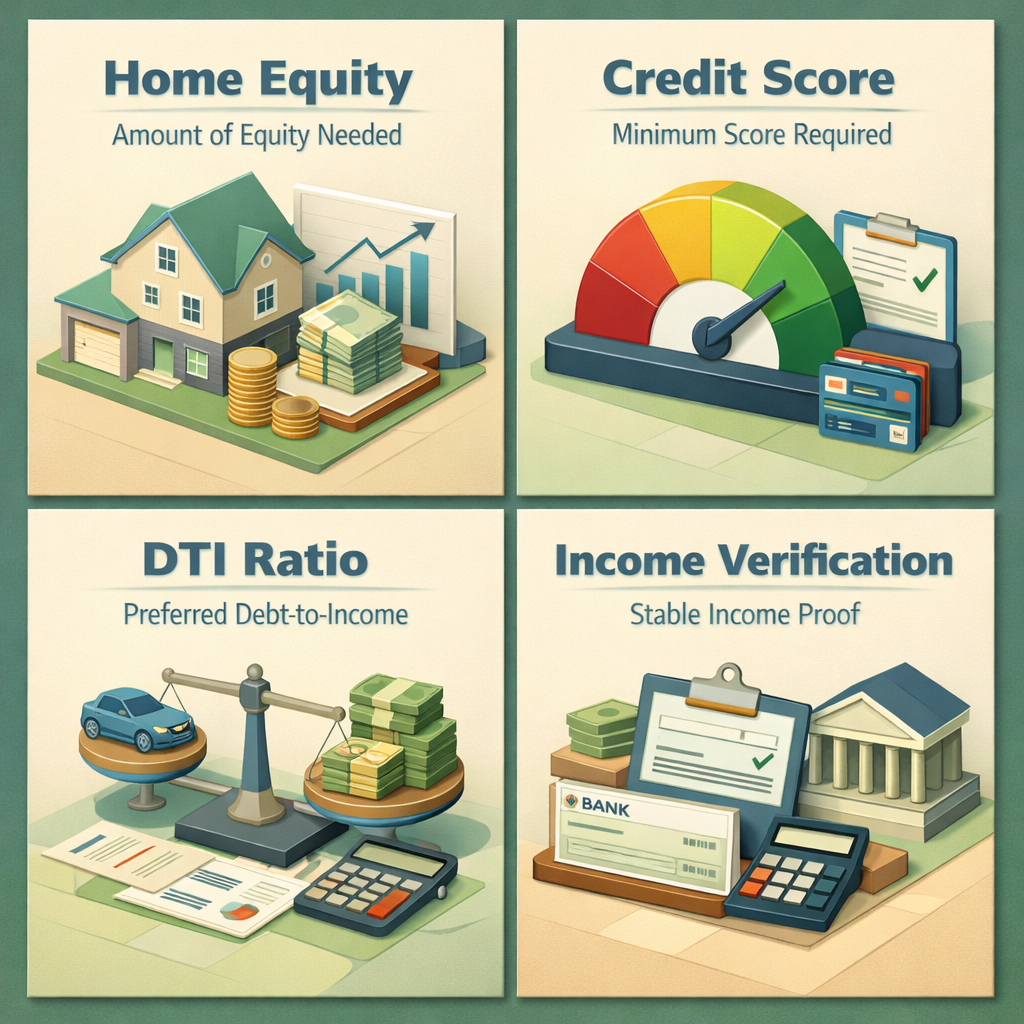
Understanding HELOC requirements for mobile food truck funding starts with knowing what lenders evaluate. While requirements can vary between lenders, there are several standard criteria most financial institutions consider.
Home Equity and Loan-to-Value Ratio
Lenders typically require that you maintain a certain amount of equity in your home after the HELOC is established. Most lenders allow you to borrow up to 80% to 85% of your home's appraised value, minus any existing mortgage balance. For example, if your home is worth $350,000 and you owe $200,000, your available equity might be roughly $97,500 to $107,500 depending on the lender's maximum combined loan-to-value (CLTV) ratio.
Credit Score Standards
Your personal credit score plays a major role in HELOC approval. Most lenders look for a minimum credit score in the range of 620 to 680, though borrowers with scores above 700 may qualify for better rates and terms. For food truck owners who are self-employed or run newer businesses, maintaining a strong personal credit profile is especially important since your business credit history may be limited.
Debt-to-Income Ratio
Lenders will also evaluate your debt-to-income (DTI) ratio — the percentage of your gross monthly income used to service existing debts. A DTI below 43% is commonly preferred, though some lenders may have stricter or more flexible thresholds. If you're already carrying significant business or personal debt, this could affect your HELOC eligibility.
Income Verification and Employment
Stable, verifiable income is a key requirement. Self-employed food truck operators may need to provide two years of tax returns, profit and loss statements, and bank statements to demonstrate consistent earnings. Lenders want assurance that you can repay the line of credit, especially when your income might fluctuate with seasons or events.
Using a HELOC for Your Food Truck Business: Practical Applications
Once you've confirmed eligibility, it helps to think clearly about how a HELOC for food truck business expenses fits into your overall financial plan. The flexible nature of a HELOC makes it well-suited for certain types of business spending.
- Vehicle and equipment purchase: A commercial food truck can cost anywhere from $50,000 to over $150,000 depending on size, customization, and equipment. A HELOC could help cover some or all of this cost.
- Kitchen equipment and outfitting: Commercial-grade cooking appliances, refrigeration units, ventilation systems, and safety equipment represent significant upfront costs that a HELOC may help address.
- Permits, licenses, and health inspections: Mobile food vendors typically need multiple permits at the local and state level. These costs, while smaller individually, can add up quickly.
- Working capital and inventory: Keeping your truck stocked with quality ingredients and supplies is an ongoing expense. Drawing on a HELOC during slower periods may help bridge cash flow gaps.
- Marketing and branding: From truck wraps to social media advertising and website development, building a brand identity requires investment that a HELOC could potentially support.
The key advantage here is that you only pay interest on what you actually borrow, making a HELOC potentially more cost-efficient than taking out a large lump-sum loan when your needs are spread over time.
Home Equity Loan vs. HELOC: Which Makes More Sense for Mobile Vendors
Some food truck entrepreneurs may also consider a home equity loan as an alternative to a HELOC. While both products tap into your home's equity, there are meaningful differences that could influence your decision.
A home equity loan for a food business provides a fixed lump sum at a fixed interest rate, with predictable monthly payments over a set term. This structure can work well if you have a very specific, one-time expense — like purchasing a fully outfitted food truck. You'll know exactly what you owe each month, which simplifies budgeting.
A HELOC, on the other hand, offers a revolving credit line with variable interest rates. It's more flexible but also less predictable, since your rate and payments can change over time. For business owners who expect to draw funds incrementally — covering equipment in phases, for example — a HELOC may offer more control over borrowing costs.
When comparing these options, consider asking yourself:
- Do I need funds all at once, or will my expenses be staggered over time?
- Am I comfortable with variable interest rates, or do I prefer fixed payments?
- How quickly do I expect to repay what I borrow?
Talking with a qualified lending advisor can help you determine which structure best matches your food truck launch or expansion timeline.
Risks and Responsibilities of Using Home Equity to Fund a Food Truck
While a HELOC can open real doors for aspiring food truck owners, it's important to approach this financing strategy with a clear-eyed view of the risks involved. Because your home serves as collateral, defaulting on a HELOC could put your property at risk of foreclosure. This is a serious consideration that every entrepreneur should weigh carefully.
Food truck businesses, while growing in popularity, can face significant volatility. Revenue may depend heavily on location, weather, local events, and competition. If your business hits a rough patch and you've been drawing heavily on your HELOC, keeping up with repayments could become challenging.
Here are some risk management practices worth considering:
- Borrow conservatively: Just because you qualify for a large credit line doesn't mean you should use all of it. Draw only what you need for specific, planned expenses.
- Build a repayment buffer: Before launching, try to have several months of HELOC payment reserves set aside, separate from your operating funds.
- Track business revenue carefully: Monitor your food truck's income closely so you can spot cash flow issues early and adjust before they affect your loan repayments.
- Consult a financial advisor: Mixing personal home equity with business funding carries unique tax and liability implications. A professional advisor can help you structure this wisely.
Strengthening Your HELOC Application as a Self-Employed Food Truck Owner
If you're a self-employed mobile vendor, getting approved for a HELOC may require a bit more preparation than it would for a traditional W-2 employee. Lenders often apply closer scrutiny to borrowers whose income comes from self-employment, commission, or business ownership. Here's how you can improve your chances of approval.
Organize Your Financial Documentation
Lenders will likely request two years of personal and business tax returns, recent bank statements, and a current profit and loss statement. Having these documents organized and ready to submit can speed up the process and demonstrate financial responsibility.
Improve or Protect Your Credit Score
Pay down existing debts where possible, avoid opening new credit accounts before applying, and review your credit report for any errors that could be dragging your score down. Even a modest improvement in your credit score could result in meaningfully better HELOC terms.
Increase Your Home Equity
If your current equity falls short of lender requirements, consider whether it's worth waiting until your mortgage balance decreases further or your home value appreciates before applying. Rushing into a HELOC application when equity is thin may result in a denial or unfavorable terms.
Show a Solid Business Track Record
Even if you're using a personal HELOC, lenders may ask about the purpose of the funds. Being able to present a clear business plan, revenue projections, and a history of responsible financial management can strengthen your overall application profile.
Alternative Financing Paths Worth Comparing for Food Truck Ventures
A HELOC isn't the only tool available to food truck entrepreneurs, and in some cases, alternative financing options may be a better fit — especially if you'd prefer not to put your home on the line.
- SBA Microloans: The U.S. Small Business Administration's Microloan program offers loans up to $50,000 through nonprofit intermediary lenders, often with flexible requirements suited to startups and small businesses.
- Equipment financing: Some lenders specialize in loans specifically designed to purchase commercial vehicles and kitchen equipment, using the equipment itself as collateral rather than your home.
- Business lines of credit: Similar in flexibility to a HELOC but secured by business assets or revenue rather than your home, a business line of credit keeps your personal property separate from business risk.
- SBA 7(a) loans: For established food truck businesses looking to expand, an SBA 7(a) loan could provide larger funding amounts with competitive terms.
- Merchant cash advances: While typically more expensive, MCAs can provide fast access to capital based on future revenue — though they're generally best used as a short-term bridge rather than a primary funding strategy.
Comparing multiple financing options side by side — with guidance from a lending professional — gives you the best chance of choosing the path that protects your finances while fueling your business growth.
●Conclusion
For homeowners with meaningful equity and a clear business plan, understanding HELOC requirements for mobile food truck financing could open a real and practical path to funding your culinary dream. The flexibility of a home equity line of credit may make it well-suited to the staggered, variable costs of launching or growing a food truck operation. That said, this approach carries real responsibility — your home is on the line, and the food service industry can be unpredictable. Take the time to assess your equity position, strengthen your credit profile, and consult with a qualified lending advisor before committing. At LoanWise, we're here to help small business owners and entrepreneurs explore their financing options with clarity and confidence. Reach out to our team today to discuss whether a HELOC or another lending product is the right fit for your mobile food business journey.