If you own a property that includes a commercial greenhouse, you may be sitting on a significant amount of equity — and you might be wondering whether a Home Equity Line of Credit (HELOC) could help you access it. The answer is: possibly, but it comes with some important considerations. Understanding HELOC requirements for a property with a commercial greenhouse isn't always straightforward. Lenders treat mixed-use and specialty properties differently than standard residential homes, and the presence of a commercial greenhouse can raise questions about zoning, property classification, and income documentation. This guide walks you through what lenders typically look for, what challenges you might face, and how to put your best foot forward when applying.
What Makes a Commercial Greenhouse Property Different from a Standard Home
Before diving into the lending requirements, it helps to understand why properties with commercial greenhouses are treated differently. A standard single-family home is relatively easy for lenders and appraisers to evaluate — they look at comparable sales, square footage, and condition. But a property that includes a commercial greenhouse introduces a layer of complexity.
Commercial greenhouses are income-producing structures. They may be used to grow and sell plants, flowers, vegetables, herbs, or other agricultural products. From a lender's perspective, this blurs the line between a residential property and a commercial or agricultural one. The classification of the property — residential, mixed-use, agricultural, or commercial — will have a major impact on whether a HELOC is available and what terms you might receive.
Additionally, commercial greenhouses can significantly affect a property's appraised value. While the structure adds utility and may contribute to income, not all lenders know how to value it properly. Some appraisers may treat the greenhouse as contributory value, while others may not factor it into the home equity at all. This uncertainty is one of the first hurdles you'll need to navigate.
How Lenders Classify Mixed-Use and Agricultural Properties
One of the most critical factors in understanding HELOC requirements for a property with a commercial greenhouse is how the lender classifies your property. Most HELOC products are designed for residential properties — specifically owner-occupied single-family homes, condos, or small multi-family properties. If your property is zoned agricultural or commercial, many traditional lenders may decline the application outright or redirect you to a commercial lending product instead.
Properties that carry a residential zoning designation but include agricultural outbuildings may still qualify for a residential HELOC, depending on the lender's guidelines. However, lenders will typically want to confirm that the primary use of the property is residential. If the greenhouse generates significant business income and dominates the land use, your application may be treated more like a commercial loan request.
It's worth speaking with a knowledgeable mortgage advisor early in the process. Some lenders — particularly portfolio lenders and credit unions — may have more flexibility in how they evaluate specialty properties. These institutions write and hold their own loans rather than selling them on the secondary market, which often means they can apply more nuanced underwriting standards.
Equity, Appraisal, and Combined Loan-to-Value Ratio Explained
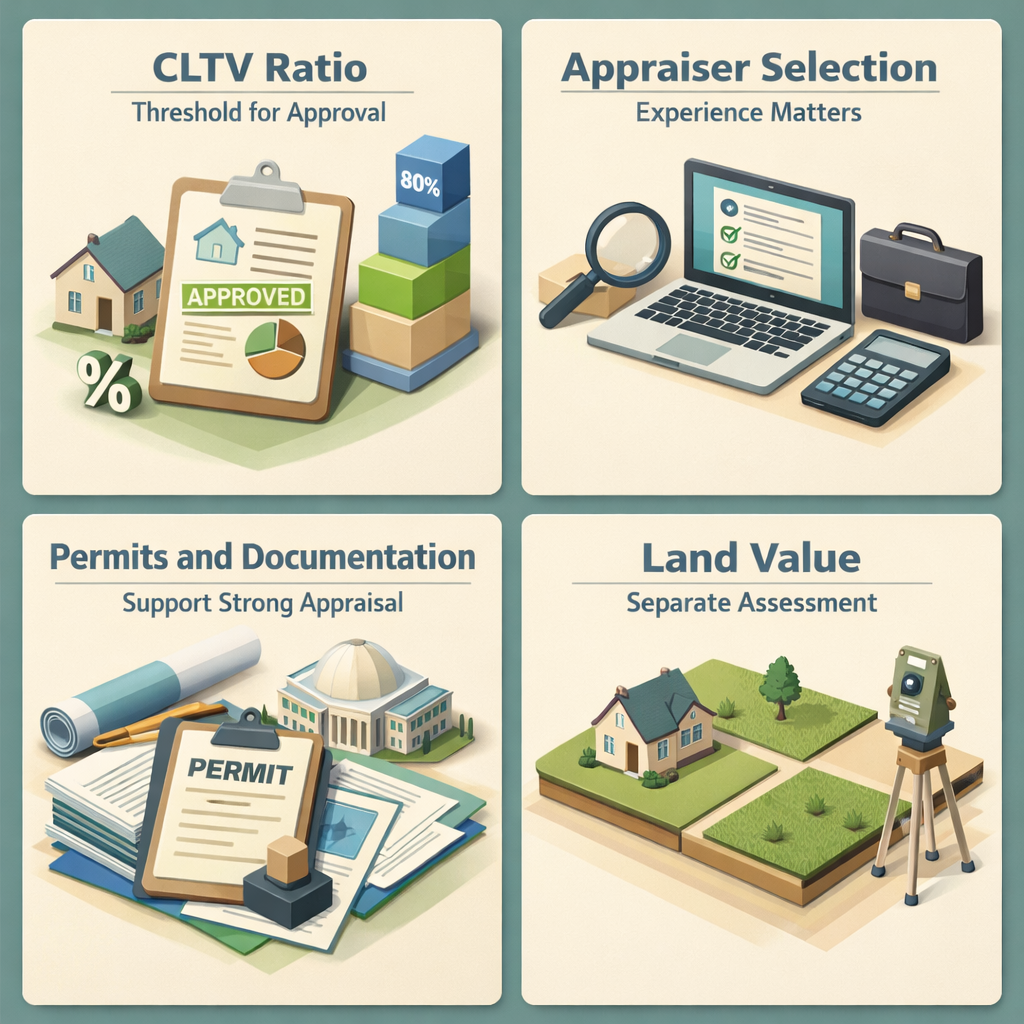
For any HELOC, the foundation of approval is equity. Lenders typically require that your combined loan-to-value (CLTV) ratio — the total of your first mortgage plus the HELOC — stays within a certain threshold. Many lenders cap this at 80% to 90% of the appraised value, though exact limits vary by institution and loan program.
On a property with a commercial greenhouse, the appraisal becomes especially important — and potentially complicated. The appraiser must determine the fair market value of the entire property, including the land, the home, and any outbuildings like the greenhouse. For residential appraisals, this is typically done using comparable sales, but finding true comps for a greenhouse property can be difficult, especially in suburban or rural markets where such properties are rare.
If the appraiser struggles to find comparable sales and assigns a conservative value, your available equity may be lower than expected. On the other hand, if the greenhouse is well-maintained, permitted, and adds genuine market appeal, it could contribute positively to the appraisal. Either way, you should be prepared for some variability in the outcome.
- CLTV ratio: Most lenders want this below 80%–90% of the appraised value
- Appraiser selection: Request an appraiser with rural or specialty property experience
- Permits and documentation: Having proper building permits for the greenhouse may support a stronger appraisal
- Land value: On agricultural properties, lenders may separate the value of the land from the dwelling
Income Documentation and Self-Employment Considerations for Greenhouse Owners
Many people who own commercial greenhouse properties operate them as a business — whether that's a sole proprietorship, an LLC, or a family farming operation. If you're earning income from greenhouse operations, lenders will want to understand how that income affects your overall financial picture.
For HELOC qualification, lenders assess your debt-to-income (DTI) ratio, which compares your monthly debt obligations to your gross monthly income. If your greenhouse business generates income that you report on your tax returns, lenders may use that income to strengthen your application. However, self-employed borrowers and small business owners often have complex tax situations, and lenders typically look at a two-year average of net income after deductions — not gross revenue.
If your business expenses are high relative to your revenue (a common situation in agricultural operations), your qualifying income may appear lower than your actual cash flow. This can be a challenge. In these cases, working with a lender experienced in self-employed or non-QM (non-qualified mortgage) lending could be beneficial. Some lenders offer bank statement programs or alternative income documentation options that may better reflect your true earning capacity.
Key income documents you'll likely need to provide include:
- Two years of personal tax returns (including Schedule C, Schedule E, or Schedule F if applicable)
- Two years of business tax returns if the greenhouse operates as an LLC or corporation
- Year-to-date profit and loss statements
- Business bank statements (12–24 months may be requested)
- Documentation of any lease agreements if the greenhouse space is rented to a third party
Credit Score and Financial Profile Requirements for HELOC Approval
Regardless of the property type, lenders will evaluate your creditworthiness when reviewing your HELOC application. For most conventional HELOC products, lenders typically prefer a credit score of 680 or higher, though some may require 700 or more for specialty or complex properties. Borrowers with scores below these thresholds may still find options, but the interest rate offered could be higher, and lender choices may be more limited.
Beyond the credit score itself, lenders look at your overall credit profile — including your payment history, outstanding balances, length of credit history, and the types of credit you carry. A strong credit profile that demonstrates responsible debt management can help offset some of the complexity that comes with a greenhouse property.
Your DTI ratio is equally important. Most lenders prefer a DTI at or below 43%, though guidelines vary. If your greenhouse business carries its own debt obligations — equipment loans, operating lines of credit, or agricultural loans — those may factor into your DTI depending on how they appear on your credit report and tax returns. It's important to have a clear picture of all your debts before applying.
Zoning Laws, Permits, and How They Affect HELOC Eligibility
Zoning is one of the more underappreciated aspects of understanding HELOC requirements for a property with a commercial greenhouse. Lenders and appraisers rely on local zoning designations to determine how a property can legally be used and how it should be valued. A commercially zoned property typically cannot obtain a residential HELOC, full stop.
If your property is zoned residential or agricultural but you operate a commercial greenhouse, you'll want to verify that your operations are permitted under local ordinances. Unpermitted structures or uses that violate local zoning codes can create serious problems during the appraisal and underwriting process. Lenders may require that any commercial activity on the property be disclosed, and an appraiser may flag unpermitted structures.
Before applying for a HELOC, it may be worth consulting with your local zoning office or a real estate attorney to confirm that your greenhouse is properly permitted and compliant. Having documentation in order — including building permits, certificates of occupancy, and any agricultural exemptions — can make the underwriting process smoother and demonstrate to the lender that the property is legally sound.
Some lenders may also require a review of any easements, agricultural use agreements, or conservation easements on the property, as these can restrict what you do with the land and affect its marketability — a key concern for lenders who might need to foreclose and sell the property in a worst-case scenario.
Exploring Alternative Financing Options If a HELOC Isn't the Right Fit
If a traditional HELOC isn't available due to the commercial nature of your greenhouse property, don't be discouraged. There are several alternative financing paths that may work depending on your goals and financial profile.
Home Equity Loan: Similar to a HELOC but disbursed as a lump sum with a fixed interest rate, a home equity loan may be available through some portfolio lenders who are willing to evaluate specialty properties on a case-by-case basis.
Cash-Out Refinance: If you have substantial equity in your property, a cash-out refinance replaces your existing mortgage with a new, larger loan — and you receive the difference in cash. Some lenders offer cash-out refinance products for mixed-use or rural properties, though terms may vary widely.
Agricultural Loans: The USDA Farm Service Agency (FSA) and other agricultural lenders offer financing specifically designed for farm and agricultural properties. If your greenhouse is a core part of a farming operation, these programs could be a more natural fit.
Commercial Real Estate Loans: If your property is primarily commercial, a commercial mortgage or commercial greenhouse financing might be the appropriate product. These loans are underwritten differently — typically based on the income the property generates — and may offer the capital you need to expand or improve your greenhouse operations.
SBA Loans: Small Business Administration loan programs, such as the SBA 7(a) or SBA 504, may be available to greenhouse business owners looking to finance equipment, improvements, or expansion. These programs are designed to support small business growth and may be accessible even for agricultural enterprises.
●Conclusion
Navigating the lending landscape for a property that includes a commercial greenhouse takes preparation, patience, and the right guidance. Whether you're able to secure a residential HELOC or need to explore alternative financing options, the key is understanding how lenders view your property — and positioning your application accordingly. Work with lenders and advisors who have experience with specialty or mixed-use properties, get your permits and documentation in order, and make sure your financial records clearly reflect your income and equity position. With the right approach, you may find that your greenhouse property opens more financing doors than you initially expected. Ready to explore your options? Connect with a LoanWise mortgage advisor today to discuss what financing solutions may be available for your unique property.