Buying a duplex with a VA loan is one of the smartest moves an eligible veteran or active-duty service member can make. You get to live in one unit, rent out the other, and use one of the most borrower-friendly loan programs available. But before you get to the exciting part — collecting rental income and building equity — you need to understand the costs that come before closing day. If you've been wondering what are closing costs for VA loan on a duplex with separate unit, you're in the right place. This guide breaks it all down in clear, practical terms so you can walk into the process fully prepared.
How VA Loans Work for Multi-Unit Properties Like Duplexes
The VA loan benefit is available not just for single-family homes but also for multi-unit properties — including duplexes, triplexes, and four-unit buildings — as long as the borrower intends to occupy one of the units as their primary residence. This is a critical rule. You can't use a VA loan to purchase a pure investment property. However, if you plan to live in one unit while renting out the other, a duplex is fully eligible.
This makes the VA loan an incredibly powerful tool for veterans interested in real estate investing. You gain access to zero down payment requirements, competitive interest rates, and no private mortgage insurance (PMI) — benefits that conventional investors simply don't enjoy. That said, the presence of a separate, rentable unit does influence certain aspects of the loan process, including how the property is appraised and how some closing costs are calculated.
It's also worth noting that the VA requires the property to meet its Minimum Property Requirements (MPRs). For a duplex with a separate unit, both sides of the property must be safe, structurally sound, and sanitary. Inspections and appraisals therefore carry added weight when the purchase involves a multi-unit building.
Breaking Down the Standard VA Loan Closing Costs
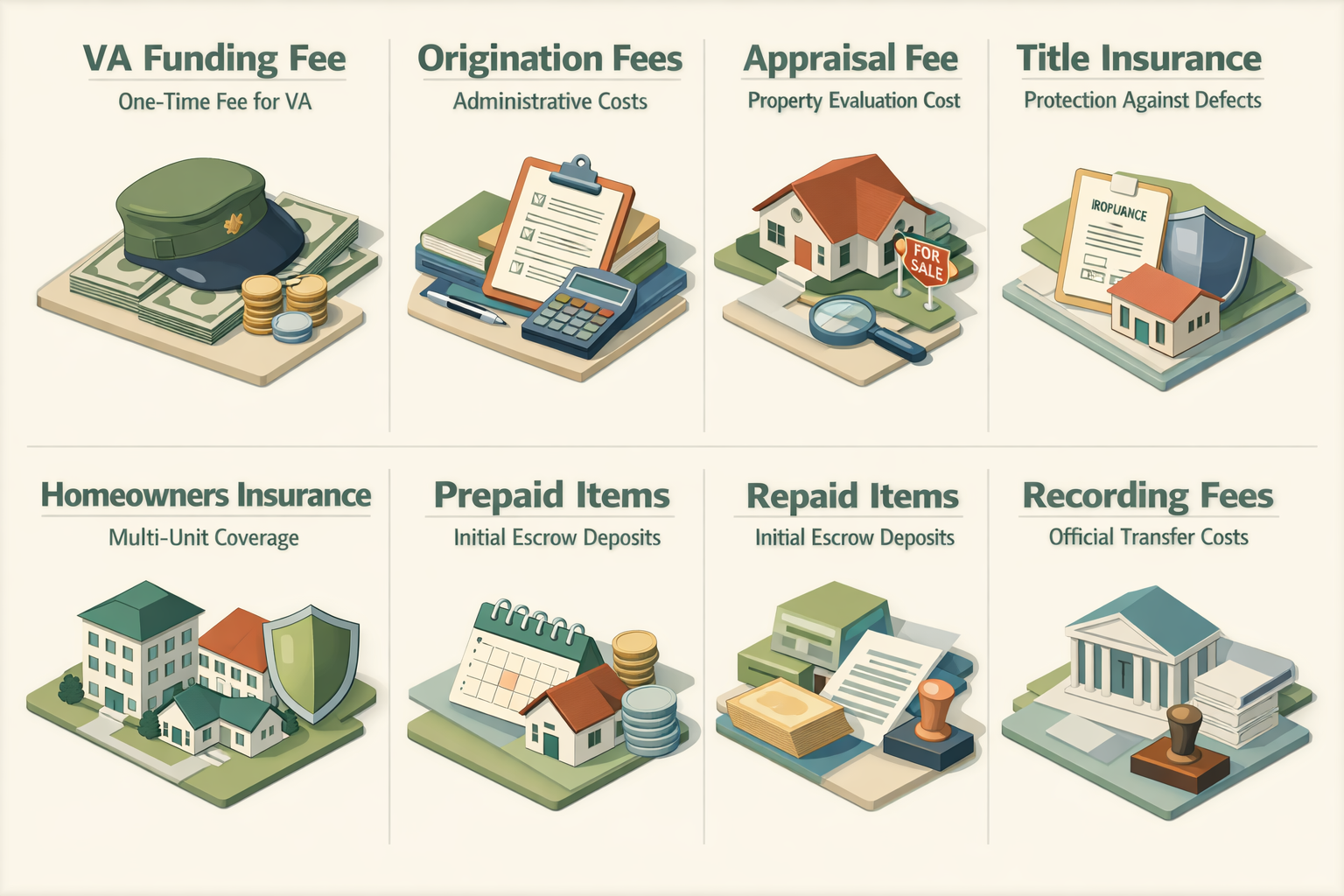
Whether you're buying a single-family home or a duplex, certain closing costs are common across most VA loan transactions. Understanding each one helps you budget accurately and avoid last-minute surprises.
- VA Funding Fee: This is a one-time fee paid to the Department of Veterans Affairs. It replaces the need for mortgage insurance and helps keep the VA loan program sustainable. The fee amount varies based on your down payment, whether it's your first VA loan use, and your military service category. For most first-time VA loan users with no down payment, the funding fee is typically around 2.15% of the loan amount, though this figure can vary. Veterans with a service-connected disability rating may be exempt from this fee entirely.
- Origination Fees: Lenders may charge an origination fee to cover administrative costs. VA rules cap the lender's origination fee at 1% of the loan amount, which provides a meaningful layer of consumer protection.
- Appraisal Fee: A VA-approved appraiser must evaluate the property. For a duplex, this appraisal is typically more involved than for a single-family home, so the fee may be slightly higher. Appraisers must assess both units and confirm the property meets VA MPRs.
- Title Insurance and Title Search: These fees protect the lender — and optionally, you — against title defects. Title costs can vary by location and the complexity of the property's ownership history.
- Homeowners Insurance: Lenders require proof of insurance at closing. For a duplex, you'll want a policy that covers a multi-unit owner-occupied property, which may cost more than a standard homeowners policy.
- Prepaid Items: These include prepaid interest, property taxes, and the initial escrow deposit. They aren't fees in the traditional sense, but they do increase the cash you'll need at closing.
- Recording Fees: Your local government charges a fee to officially record the property transfer. These are generally modest but vary by county.
Taken together, VA loan closing costs — excluding the funding fee — typically range from 2% to 5% of the loan amount, though the actual figure depends on your lender, location, and property specifics.
What Are Closing Costs for VA Loan on a Duplex With Separate Unit — The Key Differences
When you purchase a duplex rather than a single-family home, a few closing cost components may look different. Understanding these distinctions can help you set more accurate expectations.
Higher Appraisal Complexity and Cost
A duplex appraisal is inherently more complex. The VA appraiser must evaluate each unit individually, assess the fair market rent for the separate unit, and confirm the property's overall condition meets VA standards. Because of this, the appraisal fee for a duplex is often higher than what you'd pay for a single-family home. Expect this line item to reflect the additional work involved.
Rental Income Consideration and Its Effect on Loan Sizing
One important benefit of buying a duplex is that lenders may allow you to count a portion of the projected rental income from the separate unit toward your qualifying income. This can help you qualify for a larger loan amount. However, the way lenders treat rental income varies — some require a signed lease, others use a percentage of the appraiser's estimated market rent. This calculation can indirectly affect your loan amount and, as a result, your total closing costs since many fees are percentage-based.
Insurance Considerations for Multi-Unit Properties
Standard homeowners insurance policies may not fully cover a duplex, especially one where the second unit is rented out. You may need a landlord insurance policy or a multi-unit dwelling policy, which could carry a higher premium. This affects your prepaid insurance costs at closing and your ongoing escrow payments.
Property Tax Proration
At closing, property taxes are typically prorated between the buyer and seller based on the closing date. For a duplex — which generally carries a higher assessed value than a single-family home — the prorated tax amount at closing may be larger. It's wise to ask your title company or closing attorney for an estimate ahead of time.
VA Loan Fees You Won't Pay — A Major Advantage
One of the most compelling reasons veterans choose VA loans — even for multi-unit properties — is what they don't have to pay. The VA program places restrictions on certain fees that lenders commonly charge borrowers using conventional or FHA financing.
Under VA rules, lenders are prohibited from charging borrowers for certain closing cost items, which are sometimes called "non-allowable fees." These typically include attorney fees (in most cases), real estate broker fees charged to the borrower by the lender, and certain document preparation fees. This protection can save you hundreds or even thousands of dollars compared to other loan programs.
Additionally, the absence of PMI is a significant long-term savings. On a duplex — which often comes with a higher loan balance — the monthly PMI savings compared to a conventional loan with less than 20% down could be substantial. Over the life of a 30-year loan, this difference compounds considerably.
If you have a service-connected disability, you may also be exempt from the VA funding fee altogether. This exemption can save you thousands of dollars upfront and should be confirmed with your lender before closing.
Who Pays What — Seller Concessions and Negotiating Closing Costs
A common misconception is that VA loan buyers must pay all closing costs out of pocket. In reality, the VA program allows for seller concessions, which can significantly reduce the amount you bring to the closing table.
The VA allows sellers to pay up to 4% of the loan amount in concessions, plus reasonable and customary costs such as the origination fee and discount points. Seller concessions can cover items like the VA funding fee, prepaid taxes, insurance, and even paying off debts to help the buyer qualify. When negotiating the purchase contract for your duplex, it's well worth asking the seller to contribute toward your closing costs.
In addition to seller concessions, you may also have the option to roll certain costs into the loan. The VA funding fee, for example, can typically be financed as part of the loan rather than paid upfront. This reduces the cash you need at closing, though it does slightly increase your monthly payment and total interest paid over time.
Some lenders also offer lender credits — where the lender covers some closing costs in exchange for a slightly higher interest rate. This can be a useful strategy if you're short on cash at closing but comfortable with a marginally higher monthly payment. It's worth running the numbers with your loan officer to see which approach makes the most sense for your situation.
Practical Steps to Estimate and Reduce Your Out-of-Pocket Costs
Going into a VA loan closing unprepared can be stressful. Here are practical steps to help you get a clear picture of what you'll owe and how to minimize it:
- Request a Loan Estimate early: Within three business days of submitting your loan application, your lender is required to provide a Loan Estimate. This document breaks down all expected closing costs and gives you a reliable baseline for comparison shopping.
- Shop multiple lenders: VA loans are offered by a wide range of lenders, and fees can vary significantly. Comparing Loan Estimates from at least two or three lenders could save you a meaningful amount at closing.
- Confirm your funding fee status: If you have a disability rating from the VA, verify your exemption status before your loan closes. Your lender should help you confirm this, but it's worth double-checking on your own as well.
- Negotiate seller concessions: In a buyer-friendly market, sellers may be willing to contribute toward your closing costs. Make this part of your purchase offer strategy from the start.
- Ask about lender credits: If you'd prefer to minimize upfront cash, discuss lender credit options with your loan officer. Just be sure to understand the long-term cost of a slightly higher interest rate before agreeing.
- Review the Closing Disclosure carefully: You'll receive this document at least three business days before closing. Review every line item against your Loan Estimate and ask questions about any discrepancies.
Being proactive and informed throughout the process puts you in a much stronger position to close efficiently and affordably.
Choosing the Right Lender for a VA Duplex Purchase
Not all VA lenders are equally experienced with multi-unit properties. A duplex purchase involves nuances — from rental income calculations to multi-unit appraisal standards — that a lender unfamiliar with these transactions might handle poorly. Choosing a lender with demonstrated experience in VA duplex loans can make the process smoother and help you avoid costly mistakes.
When evaluating lenders, ask specifically about their experience with VA loans for multi-unit properties. Find out how they handle projected rental income in the qualification process and whether they can provide a realistic estimate of your total closing costs early in the conversation. A knowledgeable loan officer should be able to walk you through every fee line by line before you even submit a formal application.
It's also worth considering the lender's responsiveness and communication style. VA duplex transactions can involve more back-and-forth with appraisers, underwriters, and the VA itself. A lender who keeps you informed and responds quickly to requests can prevent delays that might cost you the deal — or cost you money if your rate lock expires.
Finally, confirm that the lender is VA-approved. Only VA-approved lenders can originate VA loans, and working with one who has a strong track record with investment-friendly VA purchases — like a duplex with a separate unit — gives you a meaningful advantage from start to finish.
●Conclusion
Understanding what are closing costs for VA loan on a duplex with separate unit is one of the most important steps in making this type of purchase work in your favor. From the VA funding fee and appraisal costs to seller concessions and lender credits, there are real strategies available to reduce what you pay at closing — and the VA program is structured to protect borrowers at nearly every step. Veterans who take the time to learn the process, compare lenders, and negotiate smartly often find that a VA duplex purchase is one of the most financially rewarding decisions they can make. At LoanWise, we're here to help you navigate every detail so you can close with confidence and start building the future you've earned.