
Business Loan Interest Rates Explained
Understanding business loan interest rates explained in detail can make the difference between a profitable real estate investment and a financial strain. For investors focused on DSCR loans, fix and flip financing, and rental property acquisitions, interest rates directly impact cash flow, return on investment, and long-term wealth building strategies. While traditional mortgage guidance often targets homebuyers, real estate investors face unique considerations that require specialized knowledge of commercial lending products and their pricing structures.
The landscape of business lending for real estate investments typically involves more complex rate calculations than residential mortgages. Factors like debt service coverage ratios, property cash flow projections, and investor experience levels all influence the final rate you might receive. Whether you're evaluating bridge loans for quick acquisitions or long-term rental property financing, understanding how lenders price these products becomes essential for making informed investment decisions.
Essential Rate Factors Every Investor Should Know
Essential rate factors every investor should know form the foundation of successful real estate financing strategies. These factors influencing business loan rates determine not only your initial costs but also your long-term profitability on investment properties.
- Credit Profile and Business History: Lenders typically evaluate both personal credit scores and business credit history, with stronger profiles often qualifying for more favorable rates on DSCR loans and investment property financing.
- Property Cash Flow and DSCR: The debt service coverage ratio measures a property's ability to generate sufficient income to cover loan payments, with higher ratios potentially leading to better interest rate offerings.
- Down Payment and Loan-to-Value Ratio: Larger down payments generally reduce lender risk and may result in lower interest rates, particularly important for fix and flip projects and rental property acquisitions.
- Market Conditions and Economic Factors: Interest rate environments, local real estate markets, and economic indicators influence the base rates that lenders offer to real estate investors.
Current Market Rate Ranges for Investment Properties
Current market rate ranges for investment properties vary significantly based on loan type and borrower qualifications. Average interest rates for business loans in the real estate sector tend to be higher than traditional residential mortgages due to the commercial nature of these investments.
- DSCR Loan Rates: These investor-focused products typically range from competitive rates to premium pricing depending on the property's cash flow and the borrower's overall financial strength.
- Fix and Flip Financing: Short-term bridge loans for renovation projects often carry higher rates than long-term financing but provide the flexibility needed for quick property turnarounds.
- Rental Property Loans: Long-term financing for buy-and-hold strategies may offer more favorable rates compared to bridge financing, especially when properties demonstrate strong rental income potential.
- Portfolio Lender Options: Some specialized lenders offer competitive rates for investors with multiple properties or significant real estate experience.
Fixed vs Variable Rate Comparison Guide
Fixed vs variable business loan rates present distinct advantages and challenges for real estate investors. Understanding these differences helps investors align their financing choices with their investment strategies and risk tolerance levels.
- Fixed Rate Stability: Consistent monthly payments throughout the loan term provide predictable cash flow projections, which can be particularly valuable for rental property investors calculating long-term returns.
- Variable Rate Flexibility: Interest rates that adjust with market conditions might start lower than fixed rates but carry the risk of increases over time, potentially affecting property profitability.
- Hybrid Rate Products: Some lenders offer combination products that provide initial fixed periods followed by variable rates, giving investors a balance of predictability and potential cost savings.
- Rate Lock Considerations: The timing of rate locks during the loan application process can impact final pricing, especially important for time-sensitive fix and flip projects.
Step-by-Step Rate Optimization Process
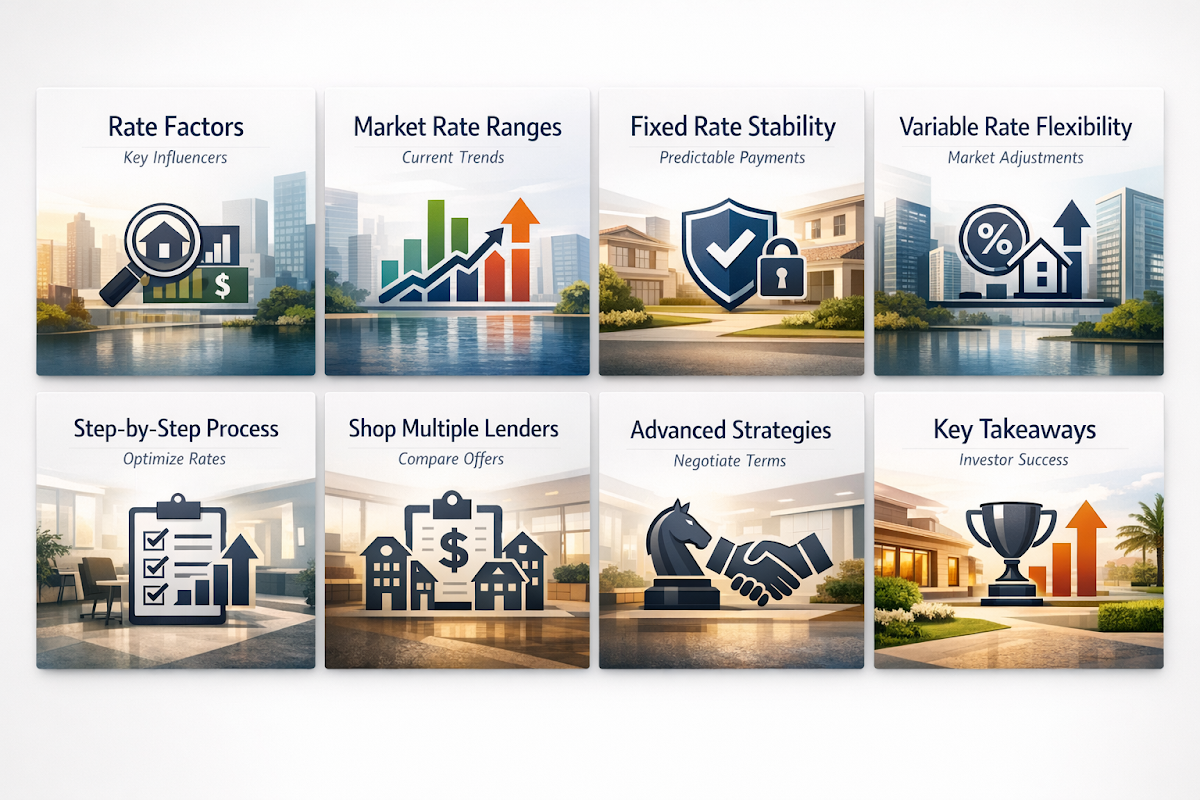
How to get the best business loan interest rate requires a systematic approach that addresses multiple factors within your control. This step-by-step rate optimization process can help investors secure more favorable terms.
- Strengthen Financial Documentation: Prepare comprehensive financial statements, tax returns, and property cash flow analyses that demonstrate your ability to service debt and manage investment properties effectively.
- Improve Property Performance Metrics: Focus on maximizing the debt service coverage ratio through increased rental income, reduced operating expenses, or property improvements that enhance cash flow.
- Shop Multiple Lenders: Compare offerings from traditional banks, credit unions, and specialized commercial lenders who understand real estate investment financing and may offer competitive rates.
- Consider Relationship Banking: Establishing relationships with lenders who specialize in investor financing can lead to better rates and terms, especially for repeat borrowers with proven track records.
Loan Type Comparison for Real Estate Investors
Loan type comparison for real estate investors reveals significant differences in rate structures, terms, and qualification requirements. Each financing option serves different investment strategies and market conditions.
- Bridge Loans for Quick Acquisitions: Short-term financing typically carries higher rates but provides speed and flexibility for competitive market situations or properties requiring immediate improvements before traditional financing.
- DSCR Loans for Income Properties: These products focus on property cash flow rather than personal income, often providing competitive rates for investors with strong rental property performance.
- Portfolio Loans for Multiple Properties: Lenders who keep loans on their books may offer more flexible underwriting and competitive rates for experienced investors with multiple properties.
- Hard Money Alternatives: While generally carrying higher rates, these products provide quick funding for time-sensitive opportunities when traditional financing timelines don't align with investment strategies.
Advanced Strategies for Rate Negotiation
Advanced strategies for rate negotiation can help experienced investors secure better terms on their real estate financing. These approaches leverage market knowledge and lender relationships to optimize borrowing costs.
- Leverage Multiple Property Relationships: Investors with multiple properties or significant assets may negotiate better rates by consolidating their banking relationships or offering additional business to lenders.
- Timing Market Cycles: Understanding interest rate trends and lender appetite for real estate investments can help investors time their applications for optimal pricing conditions.
- Demonstrate Track Record: Experienced investors with successful property management histories and strong financial performance may qualify for preferential pricing from lenders seeking quality borrowers.
- Consider Rate Buydown Options: Some lenders offer the ability to pay additional upfront costs to reduce the interest rate, which might make sense for long-term hold properties with strong cash flow.
Key Takeaways for Investor Success
The most successful real estate investors understand that business loan interest rates explained properly can significantly impact their investment returns and overall portfolio performance. Interest rates represent just one component of the total cost of capital, but they directly affect monthly cash flows and long-term profitability. Investors who focus on optimizing their financial profiles, understanding different loan products, and building relationships with specialized lenders tend to secure more favorable financing terms. The key lies in matching the right financing product to your specific investment strategy, whether that involves quick fix and flip turnarounds or long-term rental property wealth building. Market conditions will continue to fluctuate, but investors with solid fundamentals and strategic approaches to financing will be better positioned to capitalize on opportunities regardless of the rate environment.
●Conclusion
Mastering business loan interest rates represents a critical skill for real estate investors seeking to maximize their returns and build sustainable wealth through property investments. The factors influencing these rates extend beyond simple credit scores to include property performance, market conditions, and lender relationships. While rate optimization requires ongoing attention and strategic planning, investors who understand these concepts can make more informed decisions about their financing options.
Success in real estate investing often depends on your ability to secure appropriate financing at competitive rates. Whether you're pursuing DSCR loans for rental properties, bridge financing for fix and flip projects, or portfolio lending for multiple properties, understanding how lenders price these products gives you a significant advantage. The investment in learning about business loan interest rates typically pays dividends through lower borrowing costs and improved investment returns over time.