
Strategic Vacation Home Mortgage Guide
Real estate investors often overlook vacation properties as viable investment opportunities, yet a mortgage loan for vacation homes can serve as both a personal retreat and income-generating asset. Unlike primary residences, vacation home mortgages typically require different underwriting criteria and down payment structures that savvy investors need to understand.
The vacation rental market has shown resilience across various economic cycles, making these properties attractive for portfolio diversification. However, securing financing for a getaway property involves navigating specific lender requirements that differ significantly from traditional investment property loans.
Whether you're considering a mountain cabin for short-term rentals or a beachfront condo for seasonal income, understanding the mortgage landscape for vacation homes could position you for both personal enjoyment and financial returns.
Vacation Home Mortgage Requirements That Matter
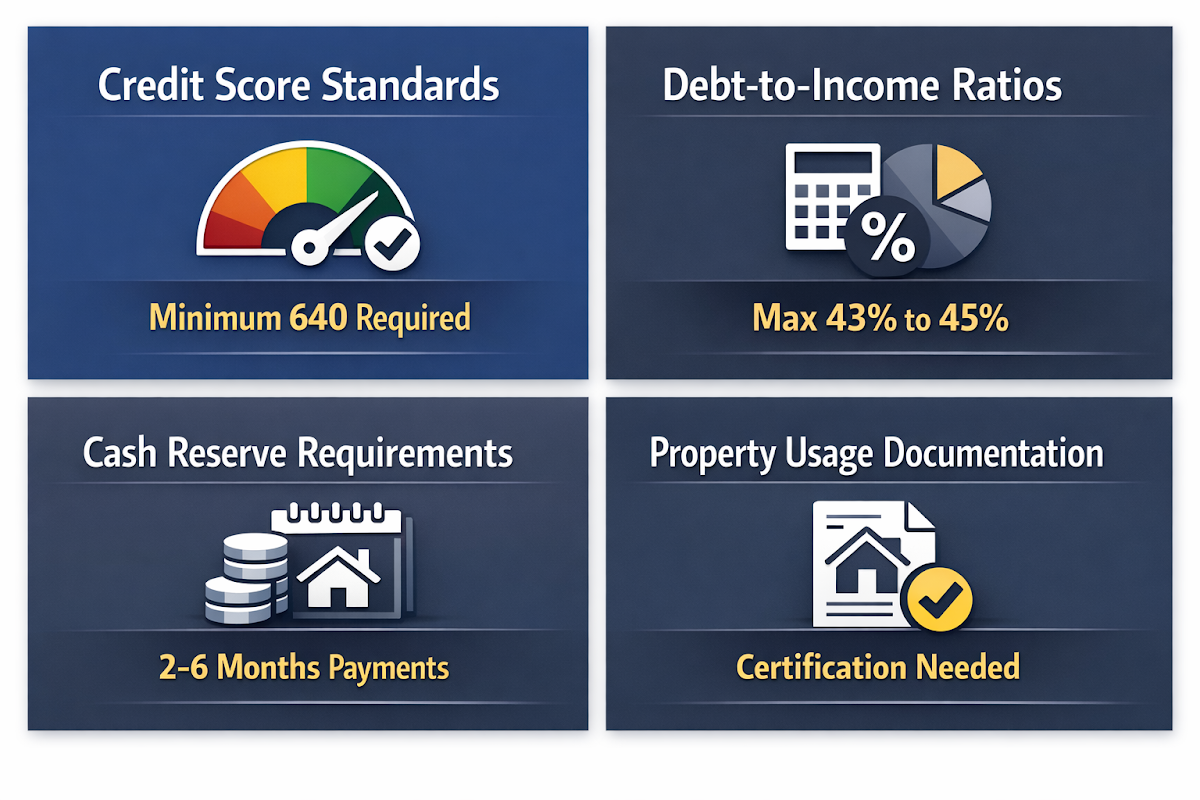
Vacation home mortgage requirements often differ from both primary residence and traditional investment property criteria. Lenders typically view vacation properties as moderate-risk investments, positioning them between owner-occupied homes and pure rental properties in their underwriting guidelines.
- Credit Score Standards: Most lenders require credit scores of 640 or higher for vacation home financing, though some may accept lower scores with compensating factors like larger down payments or significant cash reserves
- Debt-to-Income Ratios: Maximum DTI ratios typically range from 43% to 45%, though some portfolio lenders might accept higher ratios when other qualification factors are strong
- Cash Reserve Requirements: Lenders often require 2-6 months of mortgage payments in reserves, ensuring borrowers can handle carrying costs during vacancy periods
- Property Usage Documentation: Borrowers may need to certify intended use as a vacation home rather than full-time rental, though some seasonal rental activity might be acceptable
Down Payment Strategies for Second Home Mortgages
Second home mortgage requirements typically demand higher down payments compared to primary residences, but the exact amount can vary based on loan programs and lender policies. Understanding these requirements helps investors plan their capital allocation effectively.
- Conventional Loan Standards: Most conventional vacation home loans require minimum down payments of 10-20%, with some lenders preferring 25% to secure better rates and terms
- Jumbo Loan Considerations: High-value vacation properties exceeding conforming loan limits might require 20-30% down payments, particularly in expensive resort markets
- Portfolio Lender Flexibility: Some portfolio lenders offer more flexible down payment options, potentially accepting as little as 15% with strong borrower profiles
- Gift Fund Limitations: Unlike primary residences, many lenders restrict or prohibit gift funds for vacation home down payments, requiring borrowers to demonstrate their own financial capacity
Financing Options Beyond Traditional Mortgages
Financing a getaway property doesn't always require conventional mortgage approaches. Alternative financing strategies might offer advantages for certain investor situations or property types, particularly when traditional qualification becomes challenging.
- Asset-Based Lending: Some lenders focus primarily on property value and borrower assets rather than traditional income verification, which could benefit investors with complex income structures
- Portfolio Lender Programs: Local banks and credit unions might keep vacation home loans in-house, allowing more flexible underwriting guidelines than conventional mortgage programs
- Bridge Financing Options: Short-term bridge loans might help investors secure vacation properties quickly, then refinance into permanent financing once personal or business circumstances stabilize
- Cross-Collateralization Strategies: Using existing real estate equity as collateral might enable access to vacation home financing without traditional down payment requirements
Investment vs Vacation Home Classification
Investment vs vacation home mortgage distinctions significantly impact available loan programs, rates, and qualification requirements. Lenders classify properties based on intended usage, and this classification affects everything from interest rates to required reserves.
- Usage Intent Documentation: Vacation home classification typically requires borrowers to certify personal use intentions, though some seasonal rental activity might remain acceptable under certain programs
- Rate Differentials: Vacation home mortgage rates often fall between primary residence and investment property rates, potentially offering cost savings compared to pure rental property financing
- Rental Income Restrictions: True vacation home loans might limit or prohibit rental income from qualifying calculations, unlike investment property loans that rely on rental revenue projections
- Occupancy Requirements: Some vacation home programs require minimum personal usage periods, though enforcement and verification practices vary among lenders
Essential Steps for Vacation Home Mortgage Success
Essential steps for vacation home mortgage success require systematic preparation and strategic timing. Following a structured approach could improve approval odds and potentially secure more favorable terms for your getaway property investment.
- Financial Documentation Assembly: Gather comprehensive income documentation, asset statements, and credit reports well before application submission to identify any issues requiring attention
- Market Research and Property Selection: Focus on locations with strong rental demand and appreciation potential, as lenders often consider market stability in their approval decisions
- Lender Shopping and Program Comparison: Contact multiple lenders to compare vacation home mortgage rates, terms, and qualification requirements, as significant variations exist in the market
- Pre-approval Timing Strategy: Secure pre-approval before property hunting to understand exact purchasing power and demonstrate seriousness to sellers in competitive markets
- Closing Timeline Coordination: Plan for potentially longer processing times compared to primary residence mortgages, as vacation home loans might require additional documentation review
●Conclusion
A mortgage loan for vacation homes represents both personal lifestyle enhancement and potential investment returns when approached strategically. Success typically requires understanding the unique qualification requirements, down payment expectations, and financing alternatives available in today's market.
The key lies in positioning your vacation home purchase as part of a broader investment strategy while meeting lender criteria for this specific property type. Whether you're seeking a mountain retreat or beachfront investment, proper preparation and market knowledge could make the difference between approval and disappointment.
Consider consulting with experienced mortgage professionals who understand vacation home financing nuances. They can help navigate the various program options and identify lenders most likely to approve your specific situation, potentially saving time and improving your chances of securing favorable terms.