
When you're ready to secure financing for a home purchase, refinance, or business expansion, understanding loan terms can make the difference between a successful application and costly confusion. The lending industry uses specific terminology that might seem overwhelming at first, but mastering these essential definitions empowers you to navigate the borrowing process with confidence. Whether you're a first-time homebuyer exploring mortgage options or an entrepreneur seeking business funding, knowing the language of lending helps you ask the right questions, compare offers effectively, and ultimately secure the financing that best fits your financial goals.
Interest Rate Fundamentals and Payment Structures
Interest rates form the foundation of any loan agreement, representing the cost you'll pay to borrow money. The Annual Percentage Rate (APR) provides the most comprehensive view of your loan's true cost, as it includes not only the base interest rate but also additional fees like origination charges, discount points, and closing costs rolled into one percentage. This makes APR particularly valuable when comparing different loan offers.
Understanding the difference between fixed-rate and adjustable-rate structures is crucial for long-term financial planning. Fixed-rate loans maintain the same interest rate throughout the entire loan term, providing predictable monthly payments that many borrowers prefer for budgeting purposes. Adjustable-rate mortgages (ARMs) typically offer lower initial rates that change periodically based on market conditions, which might benefit borrowers who plan to refinance or sell within a few years.
The principal represents the original loan amount you borrow, while your monthly payment typically includes both principal and interest. As you make payments over time, more of each payment goes toward reducing the principal balance rather than covering interest charges, a process known as amortization.
Loan Duration and Amortization Concepts
The loan term refers to the length of time you have to repay your debt, with common mortgage terms ranging from 15 to 30 years. Shorter terms typically mean higher monthly payments but less total interest paid over the life of the loan, while longer terms reduce monthly payments but increase the total cost of borrowing.
Amortization schedules show exactly how your payments will be applied to principal and interest over time. Early in the loan term, a larger portion of each payment covers interest, but this ratio gradually shifts as the principal balance decreases. Understanding this concept helps borrowers see why making additional principal payments early in the loan can significantly reduce total interest costs.
Some loans feature balloon payments, where you make smaller regular payments followed by a large final payment. These structures might work for borrowers expecting significant income increases or planning to refinance before the balloon payment comes due, but they require careful financial planning to avoid payment difficulties.
Credit Requirements and Qualification Standards
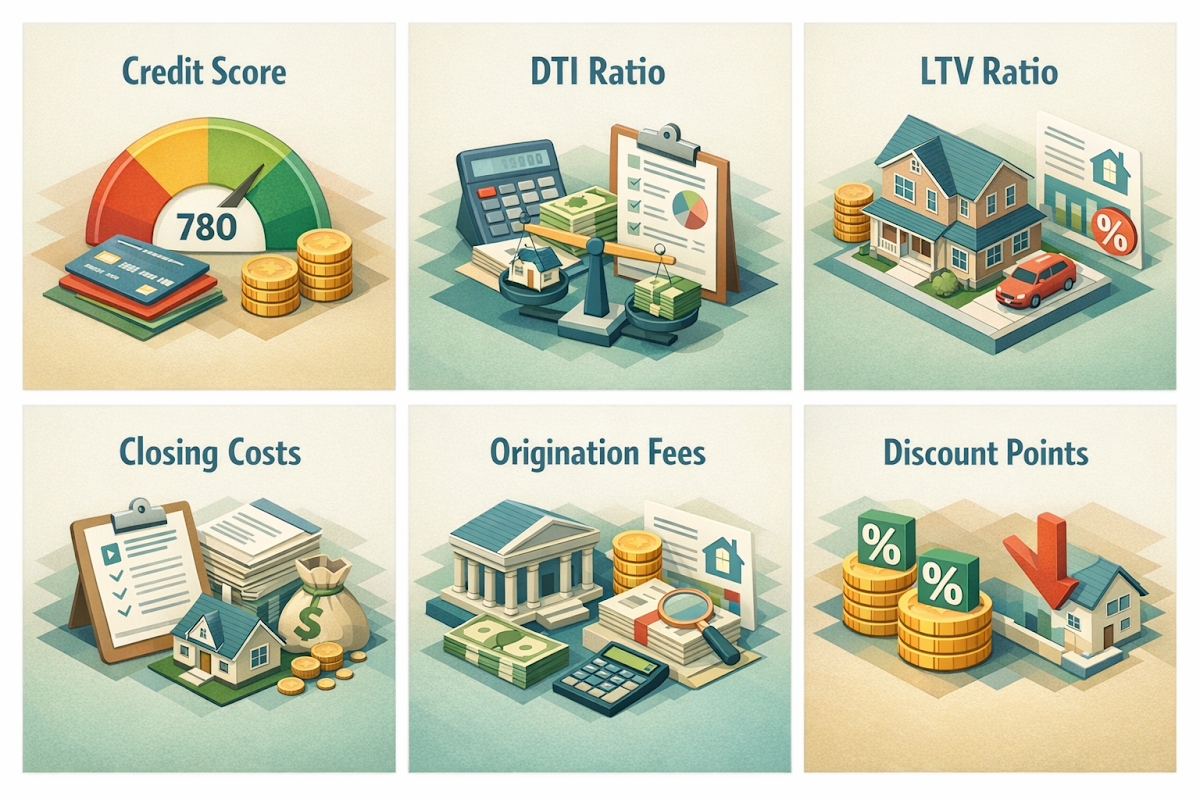
Your credit score serves as a numerical representation of your creditworthiness, typically ranging from 300 to 850. Lenders use this score along with your credit report to assess the risk of lending to you, with higher scores generally qualifying for better interest rates and loan terms.
The debt-to-income ratio (DTI) compares your monthly debt payments to your gross monthly income, helping lenders evaluate your ability to manage additional debt. Most conventional mortgages prefer DTI ratios below 43%, though some programs may accept higher ratios with compensating factors like larger down payments or substantial cash reserves.
Loan-to-value ratio (LTV) measures the loan amount against the property's appraised value or purchase price. Lower LTV ratios indicate less risk for lenders and often result in better loan terms. For conventional mortgages, LTV ratios above 80% typically require private mortgage insurance (PMI) to protect the lender against potential losses.
Closing Costs and Fee Structures
Closing costs encompass various fees and expenses associated with finalizing your loan, typically ranging from 2% to 5% of the loan amount. These costs include appraisal fees, title insurance, attorney fees, and recording charges that facilitate the legal transfer of property ownership.
Origination fees represent charges from your lender for processing your loan application and can be expressed as a percentage of the loan amount or a flat fee. Some lenders offer no-origination-fee loans but may compensate with slightly higher interest rates, making it important to compare the total cost over your expected loan duration.
Discount points allow borrowers to pay additional upfront costs to reduce their interest rate, with each point typically costing 1% of the loan amount and reducing interest rates by about 0.25%. Whether purchasing points makes financial sense depends on how long you plan to keep the loan and your available cash for upfront expenses.
Property and Collateral Considerations
An appraisal provides an independent assessment of your property's market value, ensuring the loan amount aligns with the property's worth. Lenders require appraisals to protect their investment, and the results can affect your loan approval, interest rate, or required down payment amount.
Escrow accounts help manage property-related expenses by collecting additional monthly payments for property taxes, homeowner's insurance, and sometimes mortgage insurance. Your lender holds these funds and pays these expenses when due, helping ensure these critical payments are made on time.
For business loans, collateral represents assets pledged to secure the loan, which the lender may claim if you default on payments. Understanding what assets you're putting at risk and the conditions under which they might be seized helps you make informed borrowing decisions about secured versus unsecured financing options.
Specialized Loan Programs and Options
Government-backed loans include FHA, VA, and USDA programs that offer unique benefits for qualifying borrowers. FHA loans typically require lower down payments and credit scores, while VA loans provide eligible veterans with no down payment options and no mortgage insurance requirements.
Jumbo loans exceed the conforming loan limits set by government-sponsored enterprises and typically require higher credit scores, larger down payments, and more substantial cash reserves. These loans serve borrowers purchasing higher-priced properties but often come with stricter qualification requirements.
For businesses, SBA loans provide government backing that reduces lender risk and often results in more favorable terms for borrowers. Understanding the different SBA programs and their specific requirements can help business owners access capital that might not be available through conventional commercial lending.
Default Prevention and Exit Strategies
Loan modifications represent formal changes to your original loan terms, which might include reduced interest rates, extended loan terms, or principal reductions in cases of financial hardship. Understanding when and how to request modifications can help borrowers avoid foreclosure or default situations.
Refinancing allows borrowers to replace their existing loan with new financing, potentially securing lower interest rates, different loan terms, or accessing home equity for other purposes. Knowing when refinancing makes financial sense requires understanding break-even points and closing cost considerations.
Prepayment penalties are fees some lenders charge for paying off your loan early, either through extra principal payments or refinancing. While less common in residential mortgages today, these penalties still appear in some loan products and should be factored into your long-term financial planning. Understanding comprehensive loan terminology helps borrowers navigate these complex decisions effectively.
●Conclusion
Mastering loan terms and definitions creates a foundation for successful borrowing decisions throughout your financial journey. Whether you're pursuing homeownership, refinancing existing debt, or securing business capital, this knowledge empowers you to communicate effectively with lenders, compare offers accurately, and choose financing that aligns with your goals. Remember that lending professionals are available to explain unfamiliar terms and help you navigate complex decisions. By combining your understanding of loan terminology with expert guidance, you'll be well-equipped to secure financing that supports your long-term financial success and helps you achieve your personal or business objectives.