
Reverse mortgages can provide financial flexibility for qualifying homeowners, but understanding the specific requirements is essential before moving forward. These specialized loan products allow eligible borrowers to convert home equity into cash while remaining in their homes. However, reverse mortgage requirements involve several key criteria that potential borrowers must meet to qualify for this unique financing option.
Age and Borrower Requirements for Reverse Mortgages
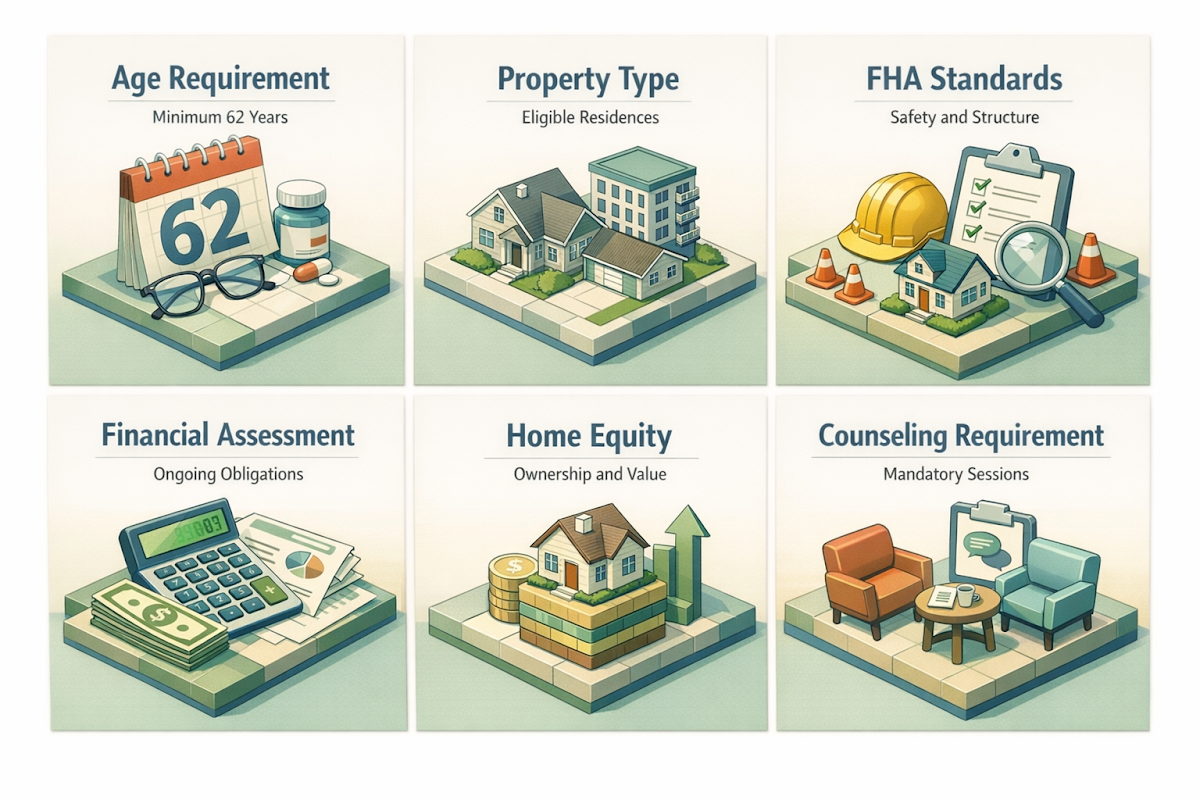
The primary reverse mortgage requirements centers on borrower age, which typically must be at least 62 years old. This age threshold applies to all borrowers listed on the home's title, meaning if you're married and both spouses are on the deed, both must meet the minimum age requirement.
In cases where one spouse is younger than 62, the younger spouse may be listed as a non-borrowing spouse, though this can affect loan terms and available proceeds. The loan amount is generally calculated based on the youngest borrower's age, which might reduce the funds available compared to situations where all borrowers meet the age requirement.
Additionally, all borrowers must demonstrate their legal capacity to enter into the loan agreement and must occupy the property as their primary residence. This residency requirement is ongoing throughout the life of the loan, making it crucial that borrowers understand their commitment to maintaining the home as their primary dwelling.
Property Eligibility Standards and Home Requirements
Property eligibility represents another critical component of reverse mortgage requirements. The home must serve as the borrower's primary residence, and certain property types are typically eligible, including single-family homes, townhomes, and some condominiums that meet specific criteria.
The property must also meet Federal Housing Administration (FHA) standards for most reverse mortgages, particularly Home Equity Conversion Mortgages (HECMs). This includes passing a property appraisal and meeting safety and structural requirements. Some condominiums may qualify if they're in FHA-approved buildings or meet individual unit approval criteria.
Manufactured homes might be eligible under certain conditions, though they must meet specific requirements regarding foundation, age, and square footage. The property's value also plays a role, as loan proceeds are calculated based on the home's appraised value, current interest rates, and the borrower's age.
Financial Assessment and Credit Evaluation Process
While reverse mortgages don't require monthly mortgage payments, lenders still conduct financial assessments to ensure borrowers can maintain ongoing property obligations. This evaluation examines the borrower's ability to pay property taxes, homeowners insurance, and maintenance costs throughout the loan term.
The financial assessment typically reviews credit history, though the standards may be more flexible than traditional mortgage requirements. Lenders look for patterns of meeting financial obligations rather than specific credit scores, though significant recent credit issues could affect approval.
Income verification is also part of the process, helping lenders determine whether borrowers have sufficient resources for ongoing property expenses. If the assessment reveals potential challenges in meeting these obligations, lenders might require setting aside funds from the loan proceeds to cover future property taxes and insurance payments.
Homeownership and Equity Considerations
Borrowers must own their homes outright or have substantial equity to qualify for most reverse mortgages. If an existing mortgage balance remains, the reverse mortgage proceeds must first pay off that debt, with any remaining funds available to the borrower.
The amount of available equity directly affects the loan proceeds, as reverse mortgages are calculated based on the home's value minus any existing debt. Higher equity levels typically translate to more available funds, though the exact amount depends on factors including the borrower's age, current interest rates, and the specific reverse mortgage product chosen.
Property ownership must be clear, with borrowers holding fee simple ownership or qualifying leasehold interests in some cases. Any liens or judgments against the property might need resolution before loan approval, ensuring the reverse mortgage can be properly secured by the home.
Counseling and Education Requirements
HUD-approved counseling sessions are mandatory for most reverse mortgage applications, providing borrowers with independent information about loan features, costs, and alternatives. These sessions typically occur before application submission and help ensure borrowers understand the product's implications.
Counseling covers topics including how reverse mortgages work, associated costs and fees, repayment obligations, and potential effects on heirs and estate planning. Counselors also discuss alternatives that might better serve the borrower's financial goals, ensuring reverse mortgages are appropriate for their specific situation.
The counseling requirement serves as a consumer protection measure, giving borrowers time to consider their decision carefully. Certificates from these sessions are required for loan processing, and some lenders may recommend additional counseling if borrowers have questions during the application process.
Documentation and Application Process
The reverse mortgage application requires comprehensive documentation to verify eligibility and process the loan. Essential documents typically include identification, proof of homeownership, property tax records, and homeowners insurance information.
Financial documentation such as bank statements, Social Security award letters, and pension statements help lenders complete the financial assessment. Property-related documents including recent property tax bills and insurance declarations provide information about ongoing obligations.
The application process also involves a property appraisal to determine current market value, title examination to confirm clear ownership, and various disclosures explaining loan terms and borrower rights. Processing timelines can vary, but borrowers should expect several weeks from application to closing, allowing time for thorough review of all requirements and documentation.
Ongoing Obligations and Loan Maintenance
Meeting reverse mortgage requirements extends beyond the initial approval process, as borrowers must maintain certain obligations throughout the loan term. Primary residence requirements mean the home must remain the borrower's main dwelling, typically requiring occupancy for at least six months annually.
Property maintenance obligations require borrowers to keep the home in reasonable condition, addressing necessary repairs and maintenance to preserve the property's value. Failure to maintain the property could potentially trigger loan acceleration, requiring full repayment.
Tax and insurance payments must remain current, as these protect both the borrower's and lender's interests in the property. Some borrowers may choose or be required to have these payments managed through loan proceeds, ensuring consistent compliance with these ongoing requirements throughout the loan term.
●Conclusion
Understanding reverse mortgage requirements helps homeowners make informed decisions about whether this financing option aligns with their goals and circumstances. From age and property eligibility to ongoing obligations, each requirement serves to protect both borrowers and lenders while ensuring sustainable loan performance. Potential borrowers should carefully evaluate all requirements and consider consulting with qualified professionals to determine if a reverse mortgage meets their specific financial needs and long-term housing plans.