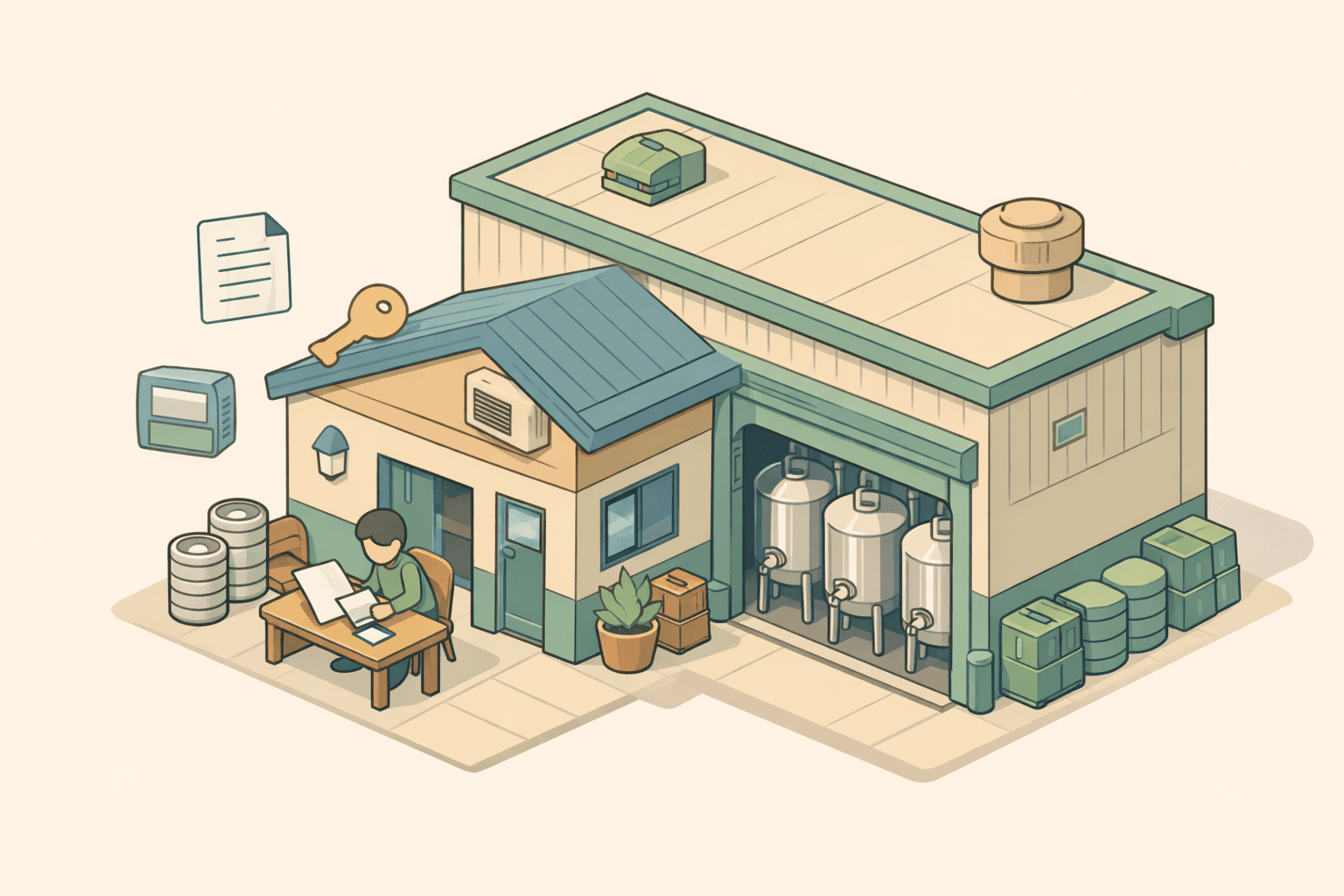
The craft beer industry has grown into a vibrant and competitive market, and many entrepreneurs dream of owning their own brewery. But turning that dream into reality often requires significant capital — capital that most small business owners don't have sitting in a bank account. That's where SBA-backed financing can make a real difference. Understanding the SBA loan requirements for acquiring a small craft brewery is one of the most important steps you can take before approaching a lender. Whether you're a first-time buyer or an experienced entrepreneur looking to expand, knowing what lenders expect — and what the SBA requires — can dramatically improve your chances of securing the funding you need.
Why Craft Brewery Acquisitions Often Rely on SBA Financing
Acquiring a craft brewery is a capital-intensive endeavor. You're not just buying a business concept — you're often purchasing brewing equipment, inventory, real estate or leasehold improvements, existing brand equity, and sometimes a loyal customer base. The total cost can easily run into the hundreds of thousands or even millions of dollars, depending on the size and location of the business.
Traditional commercial loans can be difficult to secure for business acquisitions, especially in the food and beverage sector, which lenders sometimes view as higher risk. SBA loans, particularly the SBA 7(a) loan, are specifically designed to help small business owners access financing that might otherwise be out of reach. Because the SBA guarantees a portion of the loan, lenders are often more willing to approve applications that might not qualify under conventional underwriting standards.
This is one reason why acquiring a brewery business loan through an SBA-approved lender has become a popular route for buyers entering the craft beverage space. The program offers longer repayment terms, competitive interest rates, and flexibility in how the funds can be used — all of which make the acquisition process more manageable for small business borrowers.
Core SBA Loan Requirements for Acquiring a Small Craft Brewery
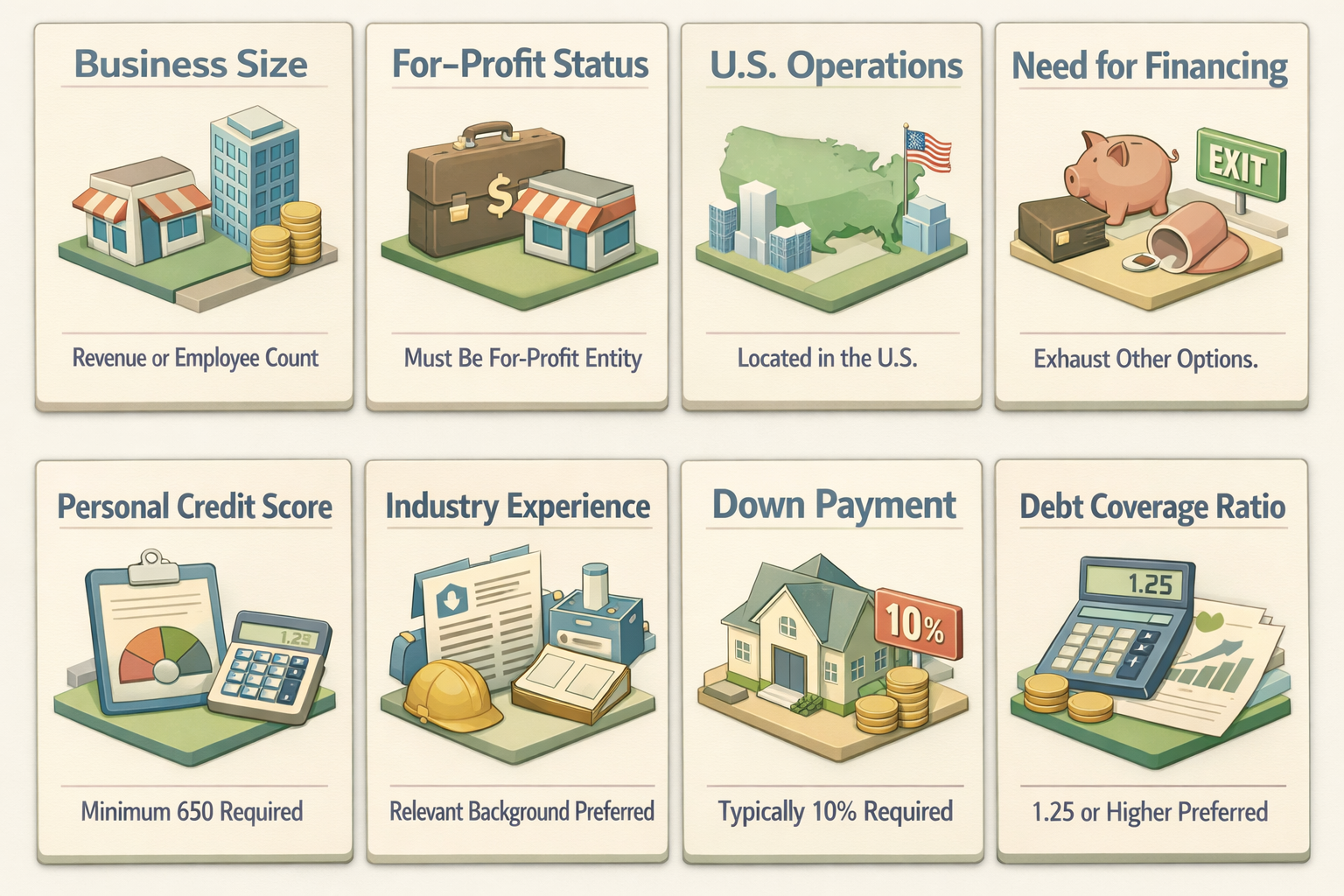
While the specific terms of your loan will depend on the lender and your individual financial profile, there are foundational SBA loan requirements for acquiring a small craft brewery that most borrowers will need to meet. Understanding these upfront can save you time and help you prepare a stronger application.
Business Size and Eligibility
The SBA defines "small business" according to size standards that vary by industry. For most breweries, this means meeting certain revenue or employee count thresholds. Generally, the business being acquired must qualify as a small business under SBA guidelines, and the buyer must intend to actively operate the business after the acquisition. Passive ownership is typically not eligible for SBA financing.
For-Profit Business Status
The brewery must be a for-profit entity. Nonprofits and certain types of cooperatives may not qualify under standard SBA loan programs. Most craft breweries operating as LLCs, S-corporations, or sole proprietorships would typically meet this criterion.
U.S. Business Operations
The business must be physically located and operating within the United States. This is a standard requirement across all SBA loan programs and generally isn't a complication for domestic brewery acquisitions.
Demonstrated Need for Financing
Borrowers must show that they've exhausted other financing options or that the SBA loan fills a genuine need. You'll typically need to demonstrate that you cannot secure the full amount needed through conventional financing alone. This requirement is designed to ensure that SBA resources go to businesses that genuinely need the support.
Borrower Qualifications Lenders Will Evaluate Closely
Beyond the broad SBA program eligibility criteria, individual lenders will conduct their own underwriting analysis. When you're pursuing an acquiring a brewery business loan through the SBA, expect lenders to scrutinize several key areas of your financial and professional profile.
Personal Credit Score
Most SBA-approved lenders look for a personal credit score of at least 650, though some may require higher scores for larger loan amounts or riskier industries. A stronger credit history signals to lenders that you're a responsible borrower who manages debt obligations well. If your score is below the preferred threshold, it may be worth taking time to improve it before applying.
Industry Experience and Management Background
Lenders and the SBA tend to favor borrowers who have relevant experience in the industry they're entering. If you have a background in brewing, food service, hospitality, or small business management, be sure to highlight that in your application. Buyers without direct brewery experience may face additional scrutiny and might be asked to demonstrate a strong management plan or bring on experienced staff.
Down Payment and Equity Injection
SBA loans typically require the borrower to contribute a down payment, often referred to as an equity injection. For business acquisitions, this is commonly around 10% of the total project cost, though lenders may require more depending on the risk profile of the deal. Having this capital ready and documented is a key part of meeting the SBA loan requirements for acquiring a small craft brewery.
Debt Service Coverage Ratio
Lenders will analyze the brewery's historical financial performance to determine whether the business generates enough cash flow to cover its debt obligations. A debt service coverage ratio (DSCR) of 1.25 or higher is generally considered acceptable, meaning the business earns at least 25% more than what's needed to service the debt. If the brewery being acquired has inconsistent or thin margins, this could be a challenge worth addressing proactively.
Key Documents You'll Need to Prepare for the Application
One of the most time-consuming parts of securing SBA financing is gathering the required documentation. Being organized and thorough here can significantly speed up the approval process. Here's what you'll likely need:
- Personal financial statements — including assets, liabilities, and net worth for all owners with 20% or more ownership
- Personal tax returns — typically the last three years of federal tax returns for all principal owners
- Business tax returns for the brewery being acquired — lenders will want to review at least two to three years of financial history
- Profit and loss statements and balance sheets — current financials that reflect the brewery's operating condition
- Business plan — a detailed plan outlining your vision, operational strategy, marketing approach, and financial projections for the acquired business
- Purchase agreement or letter of intent — documentation that outlines the terms of the acquisition
- Collateral documentation — SBA loans generally require collateral; this may include the business assets, equipment, or real property associated with the brewery
- Licenses and permits — proof that the necessary brewing licenses, TTB (Alcohol and Tobacco Tax and Trade Bureau) permits, and state liquor licenses are in place or transferable
Don't underestimate the importance of the business plan. Lenders want to see that you have a clear, realistic strategy for running and growing the brewery post-acquisition. A well-researched plan can often tip the scales in your favor, especially if other parts of your application are borderline.
SBA 7(a) vs. SBA 504: Choosing the Right Program for a Brewery Acquisition
Not all SBA loans are the same, and the program you choose can have a meaningful impact on how your acquisition is structured and financed. Two of the most commonly used programs for business acquisitions are the SBA 7(a) and the SBA 504 loan.
SBA 7(a) Loan
The SBA 7(a) is the most flexible and widely used SBA loan program. It can be used for a broad range of purposes, including business acquisitions, working capital, equipment purchases, and real estate. Loan amounts can go up to $5 million, and repayment terms can extend up to 10 years for business acquisitions (or longer if real estate is involved). This flexibility makes it a strong choice for buyers acquiring a craft brewery with a mix of assets and goodwill.
SBA 504 Loan
The SBA 504 program is more narrowly focused on fixed assets — primarily real estate and major equipment. If the brewery acquisition includes a significant real estate component, the 504 program could offer attractive long-term, fixed-rate financing for that portion of the deal. However, 504 loans cannot typically be used for goodwill or working capital, so they're often combined with other financing rather than used as a standalone solution.
Many buyers end up using the SBA 7(a) as their primary vehicle for an acquiring a brewery business loan, sometimes supplementing with other financing tools depending on the deal structure. Talking to an experienced SBA lender expectations early in the process can help you identify which approach makes the most sense for your specific situation.
Special Considerations for Alcohol-Related Business Financing
Breweries occupy a unique regulatory space, and that has implications for your financing journey. Before your SBA loan can close, lenders and the SBA will want assurance that the business is operating legally and that all necessary licenses can be properly transferred to the new owner.
Liquor licenses, in particular, can be complex. Licensing rules vary significantly by state, and some states have strict limitations on who can hold a license or how licenses can be transferred. In some jurisdictions, the transfer process can take several months, which may affect your acquisition timeline. It's advisable to engage an attorney familiar with alcohol beverage law early in the process.
Additionally, the SBA has historically placed certain restrictions on businesses that derive the majority of their revenue from the sale of alcohol for consumption on premises. A taproom-heavy brewery might face additional scrutiny under SBA loan requirements compared to a production brewery that distributes wholesale. It's worth confirming with your lender exactly how the brewery's revenue model may affect eligibility before you get too far into the process.
Equipment is another consideration. Brewing equipment — fermenters, bright tanks, bottling lines, kegging systems — can represent a substantial portion of a brewery's value. Lenders may require independent appraisals of this equipment, and the condition and age of the machinery can influence how much collateral credit it receives toward the loan.
Tips to Strengthen Your SBA Loan Application Before You Apply
Preparation is everything when it comes to SBA financing. Here are some practical steps you can take to improve your chances of approval before you submit your application:
- Review and improve your credit profile — Pay down existing debts, resolve any derogatory marks, and avoid opening new credit lines in the months leading up to your application.
- Build your industry credentials — If you don't have direct brewing experience, consider working in the industry, obtaining relevant certifications, or partnering with someone who does. Document this experience thoroughly.
- Get your financials in order — Work with an accountant to ensure your personal and business financial statements are accurate, current, and professionally presented.
- Research the target brewery thoroughly — Conduct thorough due diligence on the brewery you're acquiring. Understand its revenue streams, customer base, lease terms, and any outstanding liabilities. Lenders will appreciate a buyer who clearly knows what they're buying.
- Work with an SBA-preferred lender — SBA Preferred Lenders have delegated authority to approve loans without waiting for SBA review, which can significantly reduce processing time. Seek out lenders with experience in food and beverage or hospitality acquisitions.
- Consult a SCORE mentor or Small Business Development Center (SBDC) — These free resources can help you refine your business plan, prepare financial projections, and understand the SBA process before you apply.
Taking these steps won't guarantee approval, but they can meaningfully strengthen your position and demonstrate to lenders that you're a serious, well-prepared borrower.
●Conclusion
Navigating the SBA loan requirements for acquiring a small craft brewery may seem complex at first, but with the right preparation and the right lending partner, it's an achievable goal for many aspiring brewery owners. The SBA loan ecosystem — particularly the 7(a) program — offers small business buyers a powerful tool for accessing capital that supports long-term ownership and growth. From understanding eligibility and documentation requirements to choosing the right loan program and addressing alcohol industry regulations, each step of the process builds toward a stronger application and a smoother acquisition. At LoanWise, we're here to help small business owners and entrepreneurs find the financing solutions that fit their goals. If you're exploring your options for an acquiring a brewery business loan, reach out to our team today and let's talk through what's possible for your situation.