Launching a freelance mobile dog grooming business is an exciting and increasingly popular entrepreneurial path. Pet ownership continues to rise across the country, and busy pet parents are eager for convenient, at-home grooming services. But to get your business on the road — literally — you'll need a specially equipped grooming van, and that's where financing becomes a critical first step. Understanding the startup loan options for a freelance mobile dog grooming business needing a van can make the difference between a dream that stalls and a business that thrives. This guide walks you through the most practical funding paths available to small business owners and solo entrepreneurs looking to launch in this growing industry.
Why Financing a Mobile Grooming Van Is a Unique Challenge
A mobile dog grooming setup isn't just a vehicle — it's your entire storefront on wheels. A fully outfitted grooming van can cost anywhere from $30,000 for a used unit to well over $100,000 for a brand-new, custom-built rig complete with water tanks, grooming tables, dryers, and climate control systems. That's a significant upfront investment for a solo entrepreneur who may be just starting out.
The challenge is that most traditional lenders prefer to work with established businesses that have a track record of revenue and tax returns to show. As a startup, you likely don't have that history yet — and that can make qualifying for a conventional business loan more difficult. Lenders may view your application as higher risk, which could result in stricter credit requirements or higher interest rates. That said, there are several lending programs specifically designed to help early-stage entrepreneurs, and knowing where to look is half the battle.
It's also worth noting that the type of van you choose — whether you buy new, used, or have one custom-converted — will affect both the total loan amount you need and which lenders are willing to finance it. Used vehicles may be harder to finance through certain programs, while newer units may qualify for better terms. Doing your research on the vehicle before approaching a lender can help you present a stronger, more credible loan request.
SBA Microloans: A Smart Starting Point for Solo Groomers
For many first-time small business owners, the SBA Microloan program is one of the most accessible entry points into business financing. Administered through the U.S. Small Business Administration and issued by nonprofit community lenders, these loans offer up to $50,000 in funding — which may be enough to cover a used or moderately priced grooming van along with initial equipment and supplies.
One of the biggest advantages of SBA Microloans is that they're designed for startups and underserved entrepreneurs. Lenders participating in this program typically take a more holistic view of your application, considering your business plan, personal character, and community impact alongside your credit score. This could make it a more realistic option if your credit history is limited or imperfect.
Interest rates on SBA Microloans tend to be reasonable compared to many alternative lenders, and repayment terms can extend up to six years. Many microloan providers also offer business training and mentorship as part of the package, which can be invaluable when you're just getting started. If you're exploring startup van financing for the first time, reaching out to an SBA-approved microlender in your area is a strong first step.
Equipment and Vehicle Financing for Your Grooming Van
Another highly relevant option for mobile groomers is equipment financing or commercial vehicle loans. These are loans specifically structured around the purchase of a physical asset — in this case, your grooming van. Because the vehicle itself serves as collateral, lenders may be more willing to approve startup applicants who might not yet qualify for unsecured business loans.
With equipment financing, you typically make fixed monthly payments over a set term until the van is paid off, at which point you own the asset outright. This structure makes budgeting more predictable, which is helpful when you're still building your client base and managing irregular income as a freelancer. Some lenders in this space work specifically with commercial vehicle purchases and may have experience financing specialty vehicles like grooming vans.
It's worth shopping around, as terms and credit requirements can vary significantly between lenders. Some may require a down payment — often in the range of 10 to 20 percent — while others offer 100 percent financing depending on your creditworthiness. A small business loan mobile grooming specialist or a lender familiar with the pet services industry may be able to offer more tailored options than a general bank.
SBA 7(a) Loans: Broader Coverage for Growing Businesses
If your startup costs extend beyond just the van — say you need working capital, insurance deposits, branding costs, or initial inventory — the SBA 7(a) loan program might be worth considering. This is the SBA's most widely used loan program, offering up to $5 million in financing for a broad range of business purposes, including vehicle purchases and general working capital.
SBA 7(a) loans are partially guaranteed by the federal government, which reduces the risk for lenders and can result in more favorable terms for borrowers — including lower interest rates and longer repayment periods compared to conventional financing. That said, the application process can be more involved, and lenders participating in the program may still require some business history or a strong personal credit profile.
For a freelance mobile dog groomer who's serious about building a sustainable business, preparing a solid business plan before applying for an SBA 7(a) loan is essential. Lenders want to see that you've thought through your target market, pricing strategy, projected revenue, and operating expenses. A well-organized plan can significantly improve your chances of approval, even if you're just starting out.
Personal Loans and Business Credit Cards as Bridge Financing
Sometimes, the fastest path to funding isn't through a traditional business loan at all. Personal loans and business credit cards can serve as bridge financing options while you're in the early stages of building your business credit profile. These tools are generally easier to qualify for if you have a decent personal credit score and a stable income history.
A personal loan could potentially cover the cost of a lower-priced used van or initial grooming equipment, giving you the runway you need to start generating revenue and building your business's financial track record. Once you have a few months of documented business income, you may find it easier to qualify for more formal business financing down the road.
Business credit cards, on the other hand, are better suited for smaller, ongoing expenses — things like grooming supplies, fuel, and marketing costs — rather than large equipment purchases. However, some cards offer introductory 0% APR periods, which could help manage cash flow in the early months. Just be cautious about carrying high balances, as interest charges can add up quickly and strain a tight startup budget.
What Lenders Look for When Evaluating Your Application
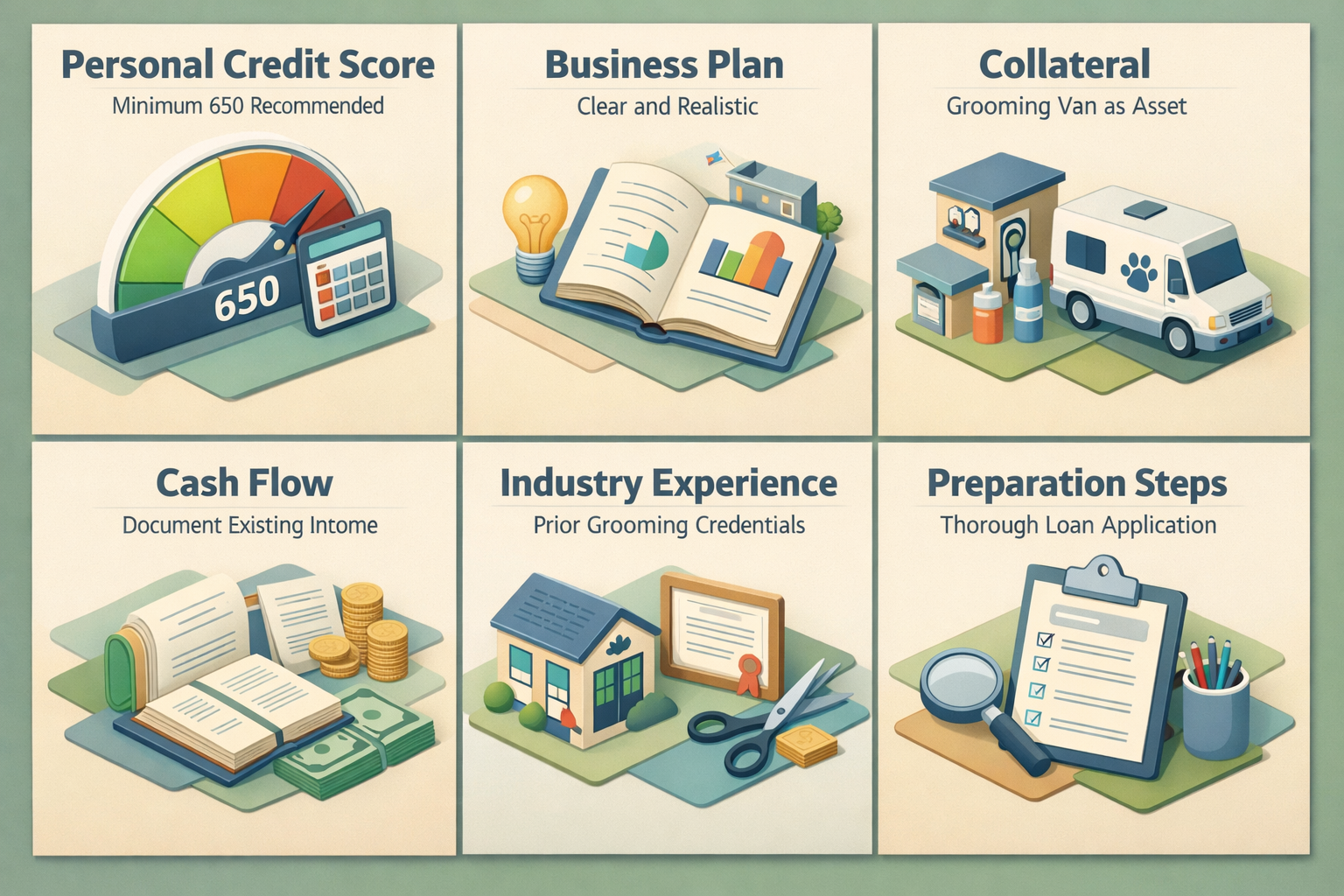
Whether you're applying for an SBA Microloan, equipment financing, or a conventional small business loan, most lenders will evaluate a similar set of factors. Understanding these criteria in advance can help you put together a stronger application and avoid unnecessary rejections that could temporarily impact your credit.
- Personal credit score: For startups without business credit history, lenders typically rely on your personal credit score. A score of 650 or higher may improve your chances with many lenders, though some microloan programs work with borrowers below that threshold.
- Business plan: A clear, realistic business plan demonstrates that you've thought through your market, costs, and revenue projections. It's often the most important document in a startup loan application.
- Collateral: The grooming van itself may serve as collateral for equipment loans. For unsecured loans, lenders may look at personal assets or require a personal guarantee.
- Cash flow and income: If you have any existing freelance income — from grooming or another service — documenting it can strengthen your application. Even part-time grooming work on the side could demonstrate relevant experience and earning potential.
- Industry experience: Lenders may look more favorably on applicants who can show prior grooming experience, certifications, or relevant training, as it signals a lower risk of business failure.
Taking the time to gather these documents and strengthen any weak areas before applying can meaningfully improve your outcomes across all the startup loan options for a freelance mobile dog grooming business needing a van.
Tips for Strengthening Your Loan Application Before You Apply
Preparation matters enormously when you're approaching lenders as a startup. Here are some practical steps that could help you secure better terms and improve your approval odds before you submit a single application.
- Check and improve your personal credit: Pull your credit reports from all three bureaus and dispute any errors. Paying down existing balances and avoiding new hard inquiries in the months before applying can help lift your score.
- Register your business formally: Establishing an LLC or sole proprietorship and obtaining an EIN (Employer Identification Number) signals professionalism and may open doors to lenders who prefer formally structured businesses.
- Open a dedicated business bank account: Separating your personal and business finances makes it easier to track revenue and expenses — and it's something many lenders look for when evaluating your financial habits.
- Get grooming certifications: Credentials from recognized organizations like the National Dog Groomers Association of America (NDGAA) can add credibility to your loan application and your business overall.
- Research your local market: Being able to speak knowledgeably about demand in your service area, your pricing model, and your target clientele shows lenders that you're serious and well-prepared.
Combining thorough preparation with the right loan program could put you in a strong position to secure the startup loan options you need to get your business rolling — both figuratively and literally.
●Conclusion
Starting a freelance mobile dog grooming business is a rewarding entrepreneurial journey, and financing your grooming van doesn't have to be an overwhelming obstacle. From SBA Microloans and equipment financing to SBA 7(a) programs and personal bridge loans, there are multiple pathways that may suit your situation and goals. The key is understanding which options align with your credit profile, startup timeline, and total funding needs — and approaching lenders with a well-prepared application that tells your business story clearly and confidently. At LoanWise, we're here to help small business owners like you navigate the lending landscape and find financing solutions that fit. Ready to explore your options? Connect with a lending advisor today and take the first step toward putting your mobile grooming business on the road.