
SBA Loan Programs for Real Estate Investors
Real estate investors often overlook the significant opportunities available through SBA loan programs when financing commercial properties and investment ventures. While DSCR loans and traditional investment financing might dominate the conversation, SBA loan programs offer unique advantages that can complement your investment strategy. These government-backed financing options provide access to favorable terms, competitive rates, and flexible structures that traditional commercial loans may not offer. Understanding how SBA 7(a) loans, SBA 504 loans, and SBA microloans work within your investment framework could open doors to previously inaccessible deals and enhanced portfolio growth.
Common Questions About SBA Financing for Investors
Many real estate investors have questions about how SBA loan programs fit into their investment strategies. Here are some frequently asked questions that might help clarify the basics.
Q: Can real estate investors use SBA loans for investment properties?
SBA loans are primarily designed for owner-occupied commercial real estate, meaning the borrower must occupy at least 51% of the property for their business operations. Pure investment properties typically don't qualify, but mixed-use properties where you operate a business might be eligible under certain conditions.
Q: What's the main advantage of SBA financing over traditional commercial loans?
SBA loan programs often provide longer repayment terms, lower down payment requirements, and competitive interest rates due to government backing. The SBA guarantee reduces lender risk, which can translate to more favorable terms for qualified borrowers.
Q: How do SBA loans compare to DSCR loans for real estate investors?
While DSCR loans focus on property cash flow and are designed specifically for rental properties, SBA loans require business operations and owner occupancy. They serve different investment strategies and property types within your portfolio.
Key Benefits of SBA 7(a) Loans for Commercial Real Estate
SBA 7(a) loans represent the most versatile option within SBA loan programs, offering several advantages for investors who operate businesses from their commercial properties.
- Flexible Use of Funds: These loans can finance property purchases, construction, renovation, and even working capital needs for your business operations within the property.
- Lower Down Payment Requirements: Typically requiring only 10-15% down for commercial real estate purchases, compared to 20-30% for conventional commercial loans.
- Extended Repayment Terms: Real estate purchases can be financed for up to 25 years, providing better cash flow management for your investment.
- Competitive Interest Rates: Government backing often results in rates that may be more favorable than traditional commercial financing options.
- No Prepayment Penalties: Most SBA 7(a) loans allow early repayment without penalties, providing flexibility as your investment strategy evolves.
Understanding SBA 504 Loans for Fixed Asset Financing
SBA 504 loans are specifically designed for long-term financing of fixed assets like commercial real estate, making them particularly relevant for investors with business operations.
- Unique Financing Structure: These loans combine a conventional bank loan, an SBA debenture, and your down payment to create favorable overall terms for property acquisition.
- Low Down Payment Options: Typically requiring only 10% down for most projects, with the SBA debenture covering 40% and a bank loan covering the remaining 50%.
- Fixed Interest Rates: The SBA portion offers fixed rates for the life of the loan, providing predictable long-term financing costs for your investment planning.
- Job Creation Benefits: Properties that create or retain jobs may qualify for even more favorable terms, aligning business growth with investment objectives.
SBA Microloan Options for Smaller Investment Projects
SBA microloans provide financing solutions for smaller-scale projects and can complement larger investment strategies within your portfolio.
- Accessible Loan Amounts: These loans typically range from small amounts up to $50,000, making them suitable for property improvements, equipment purchases, or working capital needs.
- Flexible Qualification Requirements: Often have more lenient credit and collateral requirements compared to larger SBA loan programs, providing opportunities for newer investors.
- Quick Processing Times: Generally process faster than larger SBA loans, allowing for timely execution of smaller investment opportunities.
- Technical Assistance Available: Many microloan programs include business counseling and support services that can benefit your overall investment strategy.
Step-by-Step Process for SBA Loan Application
Successfully navigating the SBA loan application process requires careful preparation and understanding of the requirements for these specialized loan programs.
- Determine Eligibility and Program Fit: Evaluate whether your investment project meets SBA requirements, including business operations, owner occupancy, and size standards for your industry.
- Prepare Comprehensive Documentation: Gather financial statements, business plans, property information, and personal financial records that demonstrate your ability to successfully manage the investment.
- Select an SBA Preferred Lender: Work with lenders experienced in SBA loan programs who can guide you through the specific requirements and expedite the approval process.
- Submit Application and Undergo Review: The lender will review your application and may request additional information before submitting to the SBA for final approval.
- Complete Closing Process: Once approved, work with your lender and legal counsel to finalize loan documents and close on your property purchase or refinancing.
Essential Eligibility Requirements for SBA Financing
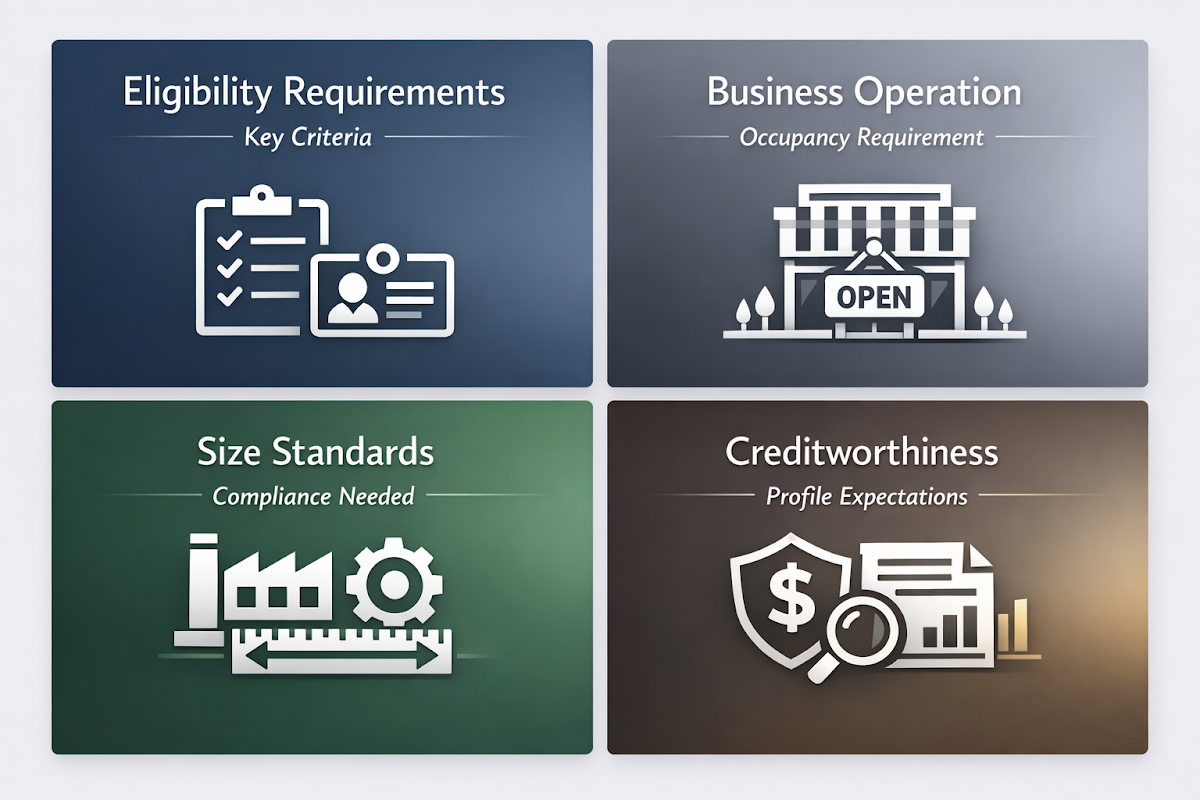
Understanding SBA loan eligibility requirements helps investors determine whether these programs align with their investment strategies and property types.
- Business Operation Requirements: You must operate a legitimate business and occupy at least 51% of the property for business purposes, which limits pure investment property applications.
- Size Standards Compliance: Your business must meet SBA size standards for your industry, which typically focus on annual revenue or number of employees rather than net worth.
- Owner Investment Commitment: Demonstrate significant personal investment in the business and property, typically through the required down payment and ongoing operational involvement.
- Creditworthiness Standards: Maintain acceptable personal and business credit profiles, though requirements may be more flexible than conventional commercial lending.
- Use of Funds Restrictions: Ensure your intended use of funds complies with SBA guidelines, which prohibit speculative investments and require productive business purposes.
●Conclusion
SBA loan programs offer real estate investors alternative financing paths that can complement traditional investment loans like DSCR financing. While these programs require business operations and owner occupancy, they provide access to favorable terms and competitive rates that might enhance certain investment strategies. The key lies in understanding how SBA 7(a) loans, SBA 504 loans, and microloans fit within your broader portfolio approach. As lending standards continue to evolve and new hybrid products emerge, savvy investors who understand multiple financing options position themselves for greater flexibility and opportunity. Consider exploring whether SBA loan programs align with your investment objectives, particularly if you're looking to combine business operations with real estate ownership in your wealth-building strategy.