
Community Development Financial Institutions (CDFIs) represent a vital bridge between traditional banking and underserved communities across America. These specialized financial organizations focus on providing loans and financial services to areas and populations that might face challenges accessing conventional lending options. Whether you're a first-time homebuyer, small business owner, or entrepreneur in a low-income community, understanding CDFI loan programs could open doors to financing opportunities that align with your unique circumstances.
What Are Community Development Financial Institutions
Community Development Financial Institutions are certified financial entities that operate with a mission-driven approach to lending. Unlike traditional banks that primarily focus on profit maximization, CDFIs prioritize community development and financial inclusion. These organizations serve as intermediaries, channeling capital from various sources including government programs, private investors, and foundations into underserved markets.
CDFIs typically focus their lending activities in low-income communities, rural areas, or regions with limited access to mainstream financial services. They offer a range of financial products including home mortgages, small business loans, microloans, and consumer credit options. The unique aspect of CDFI operations lies in their deep understanding of local market conditions and their willingness to work with borrowers who might not meet conventional lending criteria.
These institutions often provide additional support services beyond lending, such as financial counseling, business development assistance, and homebuyer education programs. This comprehensive approach helps borrowers not only secure financing but also build long-term financial stability and success in their ventures.
Types of CDFI Loan Programs Available
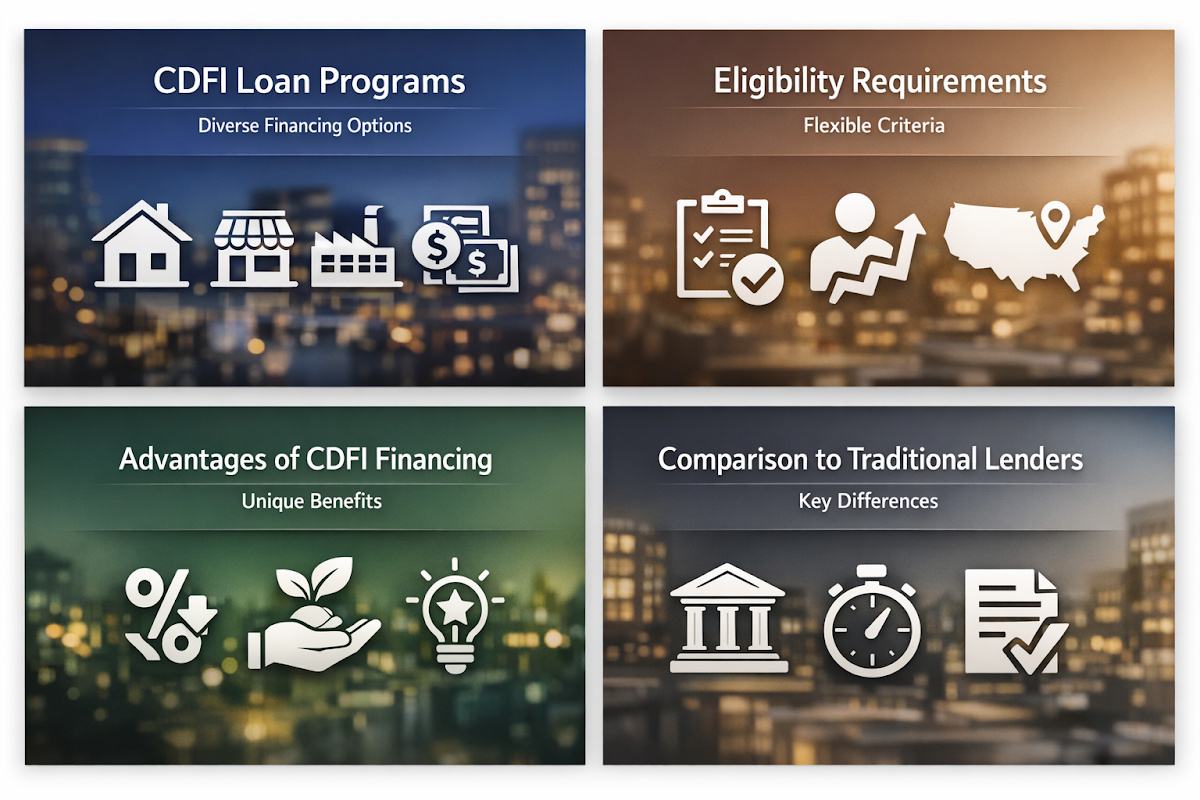
CDFI loan programs encompass a diverse range of financing options designed to meet various community needs. Mortgage lending represents a significant portion of CDFI activity, with programs specifically tailored for first-time homebuyers, low-to-moderate income families, and properties in designated target areas. These mortgage products often feature flexible underwriting standards, reduced down payment requirements, and competitive interest rates.
Small business lending forms another cornerstone of CDFI services. These programs might include traditional term loans, lines of credit, equipment financing, and microloans for very small enterprises. Many CDFIs specialize in serving minority-owned businesses, women entrepreneurs, or businesses located in economically distressed areas where traditional lenders may be reluctant to lend.
Commercial real estate financing through CDFIs often supports community development projects such as affordable housing developments, community centers, healthcare facilities, and mixed-use developments. These loans frequently combine private capital with public funding sources to create sustainable community assets.
Consumer lending programs may include personal loans, auto loans, and credit-building products designed to help individuals establish or repair their credit profiles. Some CDFIs also offer specialized programs for students, veterans, or other specific population groups within their target communities.
Eligibility Requirements and Application Process
CDFI loan programs typically have more flexible eligibility requirements compared to traditional banking institutions, though specific criteria vary by lender and loan type. Geographic location often plays a crucial role, as many CDFIs serve designated target areas that include low-income census tracts, rural communities, or economically distressed regions. Income limits may apply to certain programs, particularly those subsidized by government funding sources.
Credit score requirements for CDFI loans are often more accommodating than conventional lending standards. While traditional lenders might require excellent credit scores, CDFIs may work with borrowers who have limited credit history, past financial difficulties, or non-traditional credit profiles. This flexibility extends to documentation requirements, where CDFIs might accept alternative forms of income verification for self-employed borrowers or those with irregular income patterns.
The application process typically begins with an initial consultation where CDFI staff assess the borrower's needs and explain available program options. This personal approach allows for detailed discussion of individual circumstances and exploration of the most suitable financing solutions. Required documentation usually includes income verification, bank statements, tax returns, and project-specific information for business or real estate loans.
Many CDFIs provide pre-application counseling and ongoing support throughout the loan process. This assistance can be particularly valuable for first-time borrowers who may be unfamiliar with lending procedures or need guidance in preparing their loan applications effectively.
Advantages of CDFI Financing Options
CDFI loan programs offer several compelling advantages that distinguish them from traditional lending sources. Flexible underwriting standards represent perhaps the most significant benefit, as CDFIs consider factors beyond standard credit scores and debt-to-income ratios. These lenders often evaluate borrowers' character, community ties, and business potential rather than relying solely on automated underwriting systems.
Competitive interest rates and favorable loan terms frequently make CDFI products attractive alternatives to conventional financing. Many CDFIs access low-cost funding sources, including government programs and foundation investments, which allows them to offer below-market rates to qualified borrowers. Additionally, reduced fees and closing costs can make homeownership and business expansion more affordable for borrowers with limited resources.
The personalized service approach of CDFIs creates a lending experience that's often more supportive and educational than traditional banking relationships. Loan officers typically take time to understand borrowers' unique situations and provide guidance throughout the financing process. This relationship-based lending model can be particularly beneficial for complex transactions or borrowers with non-standard financial profiles.
Long-term community investment represents another significant advantage, as CDFI loans often support projects that create lasting positive impact. Whether financing affordable housing, supporting local businesses, or funding community facilities, these loans contribute to broader neighborhood revitalization and economic development efforts.
Comparing CDFIs to Traditional Mortgage Lenders
When evaluating CDFI loan programs against traditional mortgage lending options, several key differences emerge that can significantly impact borrower experience and loan accessibility. Traditional lenders typically rely on standardized underwriting criteria, automated systems, and strict documentation requirements that may exclude borrowers with unique circumstances or non-traditional financial profiles.
Processing timelines may vary between CDFI and traditional lenders, with CDFIs sometimes requiring longer evaluation periods due to their manual underwriting processes. However, this extended timeline often results in more thorough consideration of borrower circumstances and creative solutions for complex financing needs. Traditional lenders might offer faster processing through automated systems but may lack flexibility for unusual situations.
Loan product variety differs significantly between these lending types. While traditional lenders offer standardized mortgage products with established parameters, CDFIs might provide specialized programs tailored to specific community needs or borrower demographics. These could include shared equity loans, lease-purchase arrangements, or rehabilitation financing combined with purchase loans.
Geographic focus represents another distinction, as CDFIs concentrate their lending activities within designated target areas where they maintain deep community knowledge and relationships. Traditional lenders typically operate across broader geographic regions with less specialized local expertise. This local focus allows CDFIs to better understand neighborhood market conditions and property values in underserved areas.
Finding and Working with CDFI Lenders
Locating appropriate CDFI lenders requires some research, as these organizations vary widely in their geographic coverage, product offerings, and target markets. The CDFI Fund, administered by the U.S. Department of Treasury, maintains directories of certified CDFIs that can serve as starting points for borrower research. Additionally, local housing counseling agencies, economic development organizations, and community groups often maintain relationships with area CDFIs.
When evaluating potential CDFI partners, borrowers should consider factors such as lending specialization, geographic service areas, loan size limits, and additional services offered. Some CDFIs focus exclusively on mortgage lending, while others provide comprehensive business financing options. Understanding these specializations helps ensure alignment between borrower needs and lender capabilities.
The initial consultation process with CDFI lenders typically involves detailed discussion of borrower objectives, financial circumstances, and project details. This collaborative approach allows for exploration of various financing options and identification of the most suitable loan programs. Borrowers should prepare to discuss their community connections, project impact, and long-term financial goals during these conversations.
Building successful relationships with CDFI lenders often extends beyond the initial loan transaction. Many CDFIs offer ongoing financial counseling, business development support, and refinancing opportunities as borrowers' circumstances evolve. This long-term partnership approach can provide valuable resources for achieving financial stability and growth objectives over time.
Future Outlook for Community Development Lending
The CDFI industry continues to evolve and expand, driven by growing recognition of the importance of financial inclusion and community development. Recent policy initiatives and funding increases have strengthened CDFI capacity to serve underserved markets, while technological advances are improving operational efficiency and borrower access to services.
Emerging trends in CDFI lending include increased focus on climate resilience, affordable housing development, and small business recovery following economic disruptions. Many CDFIs are developing specialized programs to address these contemporary challenges while maintaining their core mission of serving underserved communities.
Partnership opportunities between CDFIs and traditional financial institutions are expanding, creating hybrid lending models that combine CDFI expertise with conventional banking resources. These collaborations can increase loan capacity while maintaining the personalized service and community focus that characterizes CDFI lending.
Technology integration is enhancing CDFI operations through improved loan processing systems, online application platforms, and digital financial counseling tools. These advances may reduce processing times and expand geographic reach while preserving the relationship-based approach that distinguishes CDFI lending from conventional alternatives.
●Conclusion
CDFI loan programs represent valuable financing alternatives for borrowers in underserved communities, offering flexible lending criteria, competitive rates, and personalized service that may not be available through traditional channels. Whether you're seeking mortgage financing, small business loans, or other credit products, exploring CDFI options could provide access to capital and support services that align with your specific needs and circumstances. As these institutions continue to grow and evolve, they're likely to play an increasingly important role in promoting financial inclusion and community development across America.