
Understanding Small Business Loan Requirements for Real Estate Investment Success
Real estate investors often find themselves navigating complex small business loan requirements when seeking financing for their property portfolios. Unlike traditional residential mortgages, investment property financing typically involves specialized loan products that treat real estate investing as a business venture. Understanding these requirements can make the difference between securing favorable terms and facing rejection from lenders.
The landscape of investment property financing has evolved significantly, with lenders increasingly focusing on property performance metrics rather than traditional income documentation. This shift has created new opportunities for savvy investors who understand how to meet the specific criteria that lenders prioritize when evaluating loan applications for rental properties, fix and flip projects, and other investment strategies.
DSCR Requirements for Investment Property Loans
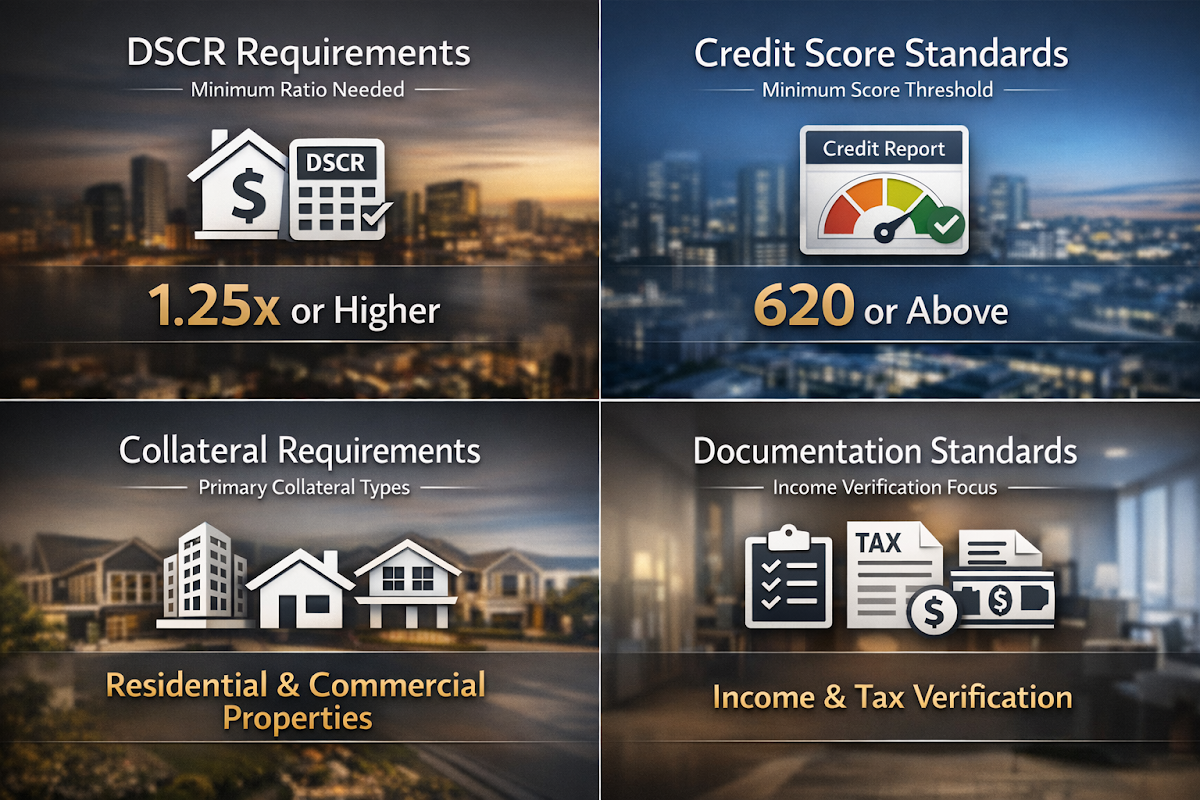
The Debt Service Coverage Ratio represents one of the most critical small business loan requirements for real estate investors. This metric measures a property's ability to generate enough income to cover its debt obligations, making it a primary factor in loan approval decisions.
- Most lenders require a minimum DSCR of 1.00, meaning the property generates at least enough income to cover monthly debt payments
- Ratios of 1.25 or higher typically qualify for more favorable interest rates and loan terms
- Properties with strong cash flow performance may secure better leverage options through higher DSCR ratios
- Lenders calculate DSCR using projected rental income minus vacancy allowances and property management costs
Credit Score Standards for Business Loan Eligibility
Credit score requirements form another cornerstone of business loan eligibility criteria for real estate investors. While these standards may differ from traditional residential mortgages, maintaining strong personal credit remains essential for securing competitive financing terms.
- Many lenders establish minimum credit score thresholds around 680 for investment property loans
- Higher credit scores often unlock better interest rates and more flexible loan structures
- Credit history demonstrates financial responsibility to lenders evaluating long-term investment partnerships
- Some specialized loan programs may accommodate lower credit scores with compensating factors like higher down payments
Collateral Requirements and Asset Protection Strategies
Collateral for business loans in real estate investing typically centers around the properties themselves, though lenders may require additional security depending on loan size and investor experience. Understanding these requirements helps investors structure deals more effectively.
- Investment properties themselves usually serve as primary collateral for mortgage loans
- Some lenders may require personal guarantees or additional assets as secondary collateral
- Cross-collateralization arrangements might involve multiple properties in larger portfolio financing deals
- Asset protection strategies should consider how collateral requirements affect overall investment risk
Documentation and Income Verification Standards
The documentation requirements for investment property loans often differ significantly from traditional mortgage applications. Many loan programs focus on property performance rather than extensive personal income documentation, which can benefit self-employed investors or those with complex income structures.
- DSCR loans may require minimal personal income documentation, focusing instead on rental income projections
- Bank statements and tax returns might still be necessary for certain loan programs and larger financing amounts
- Property appraisals and rent rolls become critical components of the application process
- Some lenders accept alternative documentation methods for qualifying income from investment activities
Down Payment and Reserve Requirements
Investment property financing typically requires higher down payment percentages than owner-occupied residential loans. These requirements reflect the additional risk lenders associate with investment properties and help ensure borrowers have adequate skin in the game.
- Down payment requirements often range from 20% to 25% for investment properties, depending on the loan program
- Cash reserve requirements may mandate several months of mortgage payments in liquid assets
- Some loan programs offer more flexible down payment options for experienced investors with strong portfolios
- Reserve calculations might include property taxes, insurance, and maintenance costs beyond principal and interest payments
●Conclusion
Successfully navigating small business loan requirements as a real estate investor requires understanding how lenders evaluate investment property financing applications. The emphasis on DSCR ratios, credit scores, and property performance metrics creates opportunities for investors who can demonstrate strong cash flow potential and financial responsibility.
Working with lenders who specialize in investment property financing can help streamline the application process and ensure access to loan products designed specifically for real estate investors. By meeting these requirements and maintaining strong financial profiles, investors can secure the funding needed to build and expand their property portfolios effectively.