
Asset-based lending represents a powerful financing solution that allows businesses to leverage their tangible assets to secure capital for growth and operations. Unlike traditional lending that primarily focuses on creditworthiness and cash flow, asset-based lending uses physical collateral as the foundation for loan approval. This approach opens doors for companies that might struggle with conventional financing while providing competitive rates and flexible terms for those with valuable assets to secure their loans.
What Is Asset-Based Lending and How Does It Work
Asset-based lending is a financing method where lenders provide capital secured by a borrower's tangible assets rather than relying solely on credit scores or income verification. The collateral typically includes equipment, inventory, real estate, accounts receivable, or other valuable business assets that can be appraised and potentially liquidated if necessary.
The lending process begins with asset valuation, where qualified appraisers assess the current market value of the proposed collateral. Lenders generally offer loan amounts ranging from 70% to 85% of the asset's appraised value, creating a safety margin that protects both parties. This loan-to-value ratio varies depending on the asset type, market conditions, and the borrower's overall financial profile.
Interest rates for asset-based loans often prove more competitive than unsecured financing options because the collateral reduces the lender's risk exposure. Borrowers benefit from potentially lower rates while gaining access to larger loan amounts than they might qualify for through traditional lending channels.
Equipment Financing Through Asset-Based Lending
Equipment financing represents one of the most common forms of asset-based lending, allowing businesses to acquire or refinance machinery, vehicles, technology, and specialized tools. The equipment itself serves as collateral, making this financing option particularly attractive for companies in manufacturing, construction, transportation, and healthcare sectors.
New equipment purchases typically receive favorable terms because the collateral maintains higher value and longer useful life. However, used equipment financing remains viable, though lenders might require lower loan-to-value ratios or slightly higher interest rates to account for depreciation concerns.
Many equipment financing programs offer flexible repayment schedules that align with the asset's expected cash flow generation. For example, seasonal businesses might negotiate payment structures that accommodate their revenue cycles, while companies purchasing income-generating equipment can match payments to projected earnings from the new assets.
Inventory and Working Capital Solutions
Inventory financing through asset-based lending helps businesses maintain adequate stock levels without straining cash flow. This financing type works particularly well for retailers, wholesalers, and manufacturers who need working capital to purchase seasonal inventory, take advantage of bulk purchasing discounts, or bridge the gap between production and sales cycles.
Lenders evaluate inventory based on factors such as turnover rates, shelf life, marketability, and storage conditions. Fast-moving consumer goods typically receive more favorable terms than specialized or perishable inventory due to their broader market appeal and easier liquidation potential.
Some asset-based inventory programs include revolving credit features that allow borrowers to draw funds as needed and repay as inventory sells. This flexibility helps businesses manage cash flow more effectively while maintaining optimal stock levels throughout different business cycles.
Real Estate and Property-Based Lending Options
Commercial real estate often serves as excellent collateral for asset-based lending, providing businesses with access to substantial capital for expansion, renovations, or debt consolidation. Property-based lending can include owner-occupied buildings, investment properties, raw land, or development projects, each with specific underwriting criteria.
Property appraisals play a crucial role in determining loan amounts, with lenders typically considering factors such as location, condition, income-generating potential, and market trends. Commercial properties with stable rental income or strong market positions generally receive the most favorable lending terms.
Many businesses use real estate equity to fund operations, equipment purchases, or expansion projects while benefiting from potentially tax-deductible interest payments. This strategy allows companies to unlock capital tied up in property ownership without requiring asset sales that might trigger significant tax consequences.
Qualification Requirements and Application Process
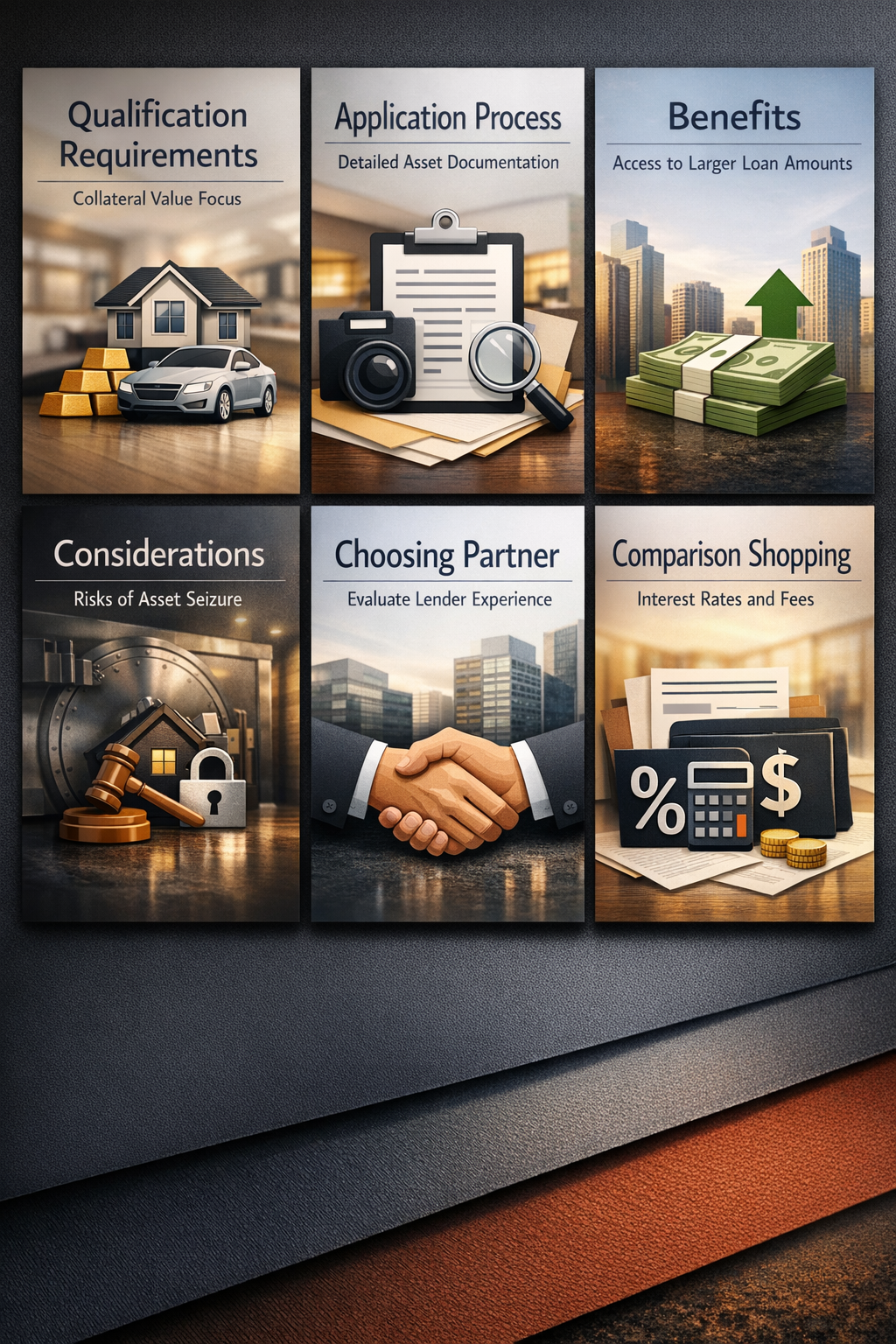
Asset-based lending qualification focuses primarily on collateral value and condition rather than perfect credit scores or extensive financial documentation. However, lenders still evaluate borrower stability, business experience, and repayment capacity to ensure successful loan performance.
The application process typically requires detailed asset documentation, including purchase receipts, maintenance records, insurance information, and current condition assessments. Professional appraisals might be necessary for high-value assets or complex equipment, with costs sometimes shared between lender and borrower.
Credit requirements for asset-based lending are generally more flexible than traditional business loans, though lenders prefer borrowers with demonstrated business experience and reasonable credit histories. Companies with credit challenges might still qualify if their assets provide adequate security and their business models show stability and growth potential.
Benefits and Considerations for Business Owners
Asset-based lending offers several advantages for business owners seeking flexible financing solutions. The primary benefit includes access to larger loan amounts based on asset value rather than income limitations, enabling significant investments in growth opportunities or operational improvements.
Speed often represents another key advantage, as asset-based loans typically process faster than traditional business loans because underwriting focuses on tangible collateral rather than complex financial analysis. This efficiency helps businesses capitalize on time-sensitive opportunities or address urgent capital needs.
However, business owners must carefully consider the risks associated with pledging assets as collateral. Default could result in asset seizure, potentially disrupting business operations or eliminating critical equipment. Additionally, asset depreciation might affect loan terms or require additional collateral during the loan period, making ongoing asset management an important consideration for borrowers.
Choosing the Right Asset-Based Lending Partner
Selecting an appropriate asset-based lending partner requires careful evaluation of lender experience, industry expertise, and service capabilities. Specialized lenders who understand specific asset types or industry requirements often provide more competitive financing solutions and smoother transaction experiences than generalist institutions.
Interest rates, fees, and repayment terms vary significantly among asset-based lenders, making comparison shopping essential for securing optimal financing conditions. Beyond pricing considerations, borrowers should evaluate lender flexibility regarding payment schedules, early repayment options, and modification policies that might become important during changing business conditions.
The application and servicing experience also deserves attention, as responsive communication and efficient processing can significantly impact business operations. Lenders with streamlined digital platforms and dedicated relationship managers often provide superior service levels that justify slightly higher costs through improved convenience and support quality.
●Conclusion
Asset-based lending provides valuable financing opportunities for businesses with tangible assets, offering competitive rates and flexible terms that traditional lending might not accommodate. Whether you're seeking equipment financing, inventory loans, or property-based capital, understanding the collateral requirements and qualification process helps you make informed decisions about your business financing strategy. By working with experienced asset-based lenders who understand your industry and asset types, you can secure the capital needed for growth while maintaining operational flexibility and building long-term financial success.