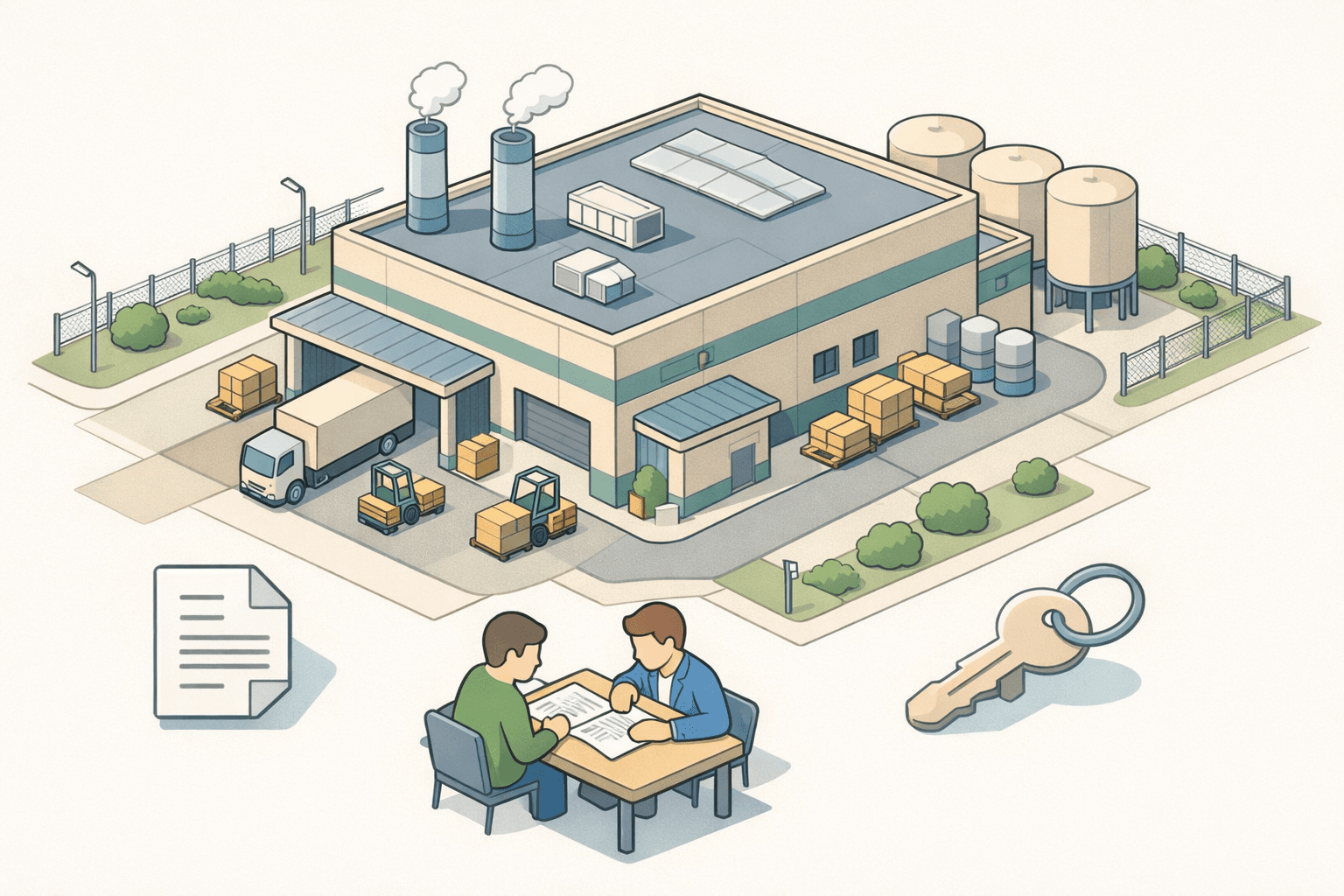
Acquiring a small manufacturing plant is a major milestone for any entrepreneur or business owner. Whether you're buying an existing facility to expand operations, entering a new market, or taking over a retiring owner's business, the financing piece can feel overwhelming. The good news is that the U.S. Small Business Administration (SBA) offers loan programs specifically designed to help small business owners like you make these kinds of bold moves. Understanding your SBA loan options for acquiring a small manufacturing plant could be the key to turning your growth plans into reality. In this guide, we'll walk through the most relevant SBA programs, what to expect during the process, and how to position yourself as a strong borrower.
Why Manufacturing Business Acquisitions Need Specialized Financing
Buying a manufacturing business is fundamentally different from acquiring a retail shop or a service-based company. Industrial properties often come with heavy machinery, specialized infrastructure, environmental considerations, and significant real estate components. These factors make traditional commercial loans harder to qualify for and often more expensive.
Manufacturing acquisitions typically involve multiple asset types bundled together — real property, equipment, inventory, and goodwill. Lenders who aren't familiar with the manufacturing sector may struggle to properly value these assets or feel comfortable extending credit. That's where government-backed SBA loan programs tend to shine. They provide lenders with a partial guarantee, which reduces the lender's risk and often results in better terms for the borrower.
For small business owners and entrepreneurs pursuing SBA loan for manufacturing business acquisition financing, these programs may offer lower down payments, longer repayment terms, and more flexible eligibility criteria compared to conventional commercial lending. That combination can make a real difference when you're trying to preserve working capital while still closing a significant deal.
The SBA 7(a) Loan Program: A Flexible Path to Plant Ownership
The SBA 7(a) loan is the most widely used small business financing program in the country, and it's often a strong fit for manufacturing business buyouts. It can be used to finance the purchase of a business, acquire real estate, buy equipment, and cover working capital needs — all within a single loan structure. This versatility makes it particularly attractive for complex transactions like plant acquisitions where multiple asset classes are involved.
Under the 7(a) program, loan amounts may reach up to $5 million, which can be sufficient for many small manufacturing facility purchases. Repayment terms vary depending on the use of funds — real estate components may be repaid over up to 25 years, while equipment and business acquisition portions typically carry terms of up to 10 years. Longer repayment windows generally mean lower monthly payments, which helps with cash flow during the transition period after acquisition.
Interest rates on SBA 7(a) loans are typically variable and tied to a base rate such as the prime rate or SOFR, with a lender spread on top. While rates can fluctuate, the SBA sets maximum allowable spreads, which may help keep borrowing costs more predictable than some alternative financing options.
Key Uses of the 7(a) Loan in a Plant Acquisition
- Business purchase price: Covers the cost of buying the operating business, including goodwill and intangibles
- Real property: Finances the industrial building or land included in the deal
- Machinery and equipment: Can fund existing equipment being transferred in the sale
- Working capital: Provides funds to keep operations running post-acquisition
- Debt refinancing: May allow refinancing of existing seller debt in certain circumstances
One important factor to keep in mind is that SBA 7(a) loans typically require a down payment of around 10% to 20% of the total project cost, though this can vary depending on the lender, the borrower's creditworthiness, and the specific structure of the deal. For funding manufacturing business buyouts, this is often more accessible than the 25% to 30% a conventional lender might require.
The SBA 504 Loan Program: Purpose-Built for Industrial Real Estate
If the manufacturing plant acquisition is primarily about acquiring the physical property — the building, land, and major fixed assets — the SBA 504 loan program may be an even better fit. The 504 program is specifically designed for the purchase of fixed assets like commercial real estate and heavy equipment, making it a natural option for SBA loans for industrial property purchase.
The 504 loan works through a three-party structure. A private lender, such as a bank or credit union, provides roughly 50% of the project cost. A Certified Development Company (CDC), which is a nonprofit intermediary authorized by the SBA, covers about 40% of the cost through an SBA-backed debenture. The borrower contributes the remaining 10% as a down payment, though this may increase to 15% or 20% for certain scenarios such as special-use properties or startups.
Manufacturing facilities are often classified as special-use properties because they're not easily repurposed for other business types. This classification may result in a slightly higher required down payment, but the 504 program still tends to be more accessible than conventional financing for these asset types.
Advantages of the SBA 504 for Plant Acquisitions
- Long-term fixed rates: The CDC portion carries a fixed interest rate for 10, 20, or 25 years, which helps with long-term financial planning
- Low down payment: A 10% contribution is possible for established businesses acquiring standard commercial real estate
- High loan limits: The 504 program can potentially support projects well above $5 million when the bank and CDC portions are combined
- Job creation or retention: Borrowers are typically expected to create or retain jobs as part of the program's public policy goals
The 504 program does have some limitations worth noting. It generally cannot be used for working capital or inventory, so if your acquisition involves significant non-real-estate components, you might need to pair a 504 loan with a separate 7(a) loan or another financing vehicle.
Comparing SBA 7(a) and SBA 504 for Manufacturing Acquisitions
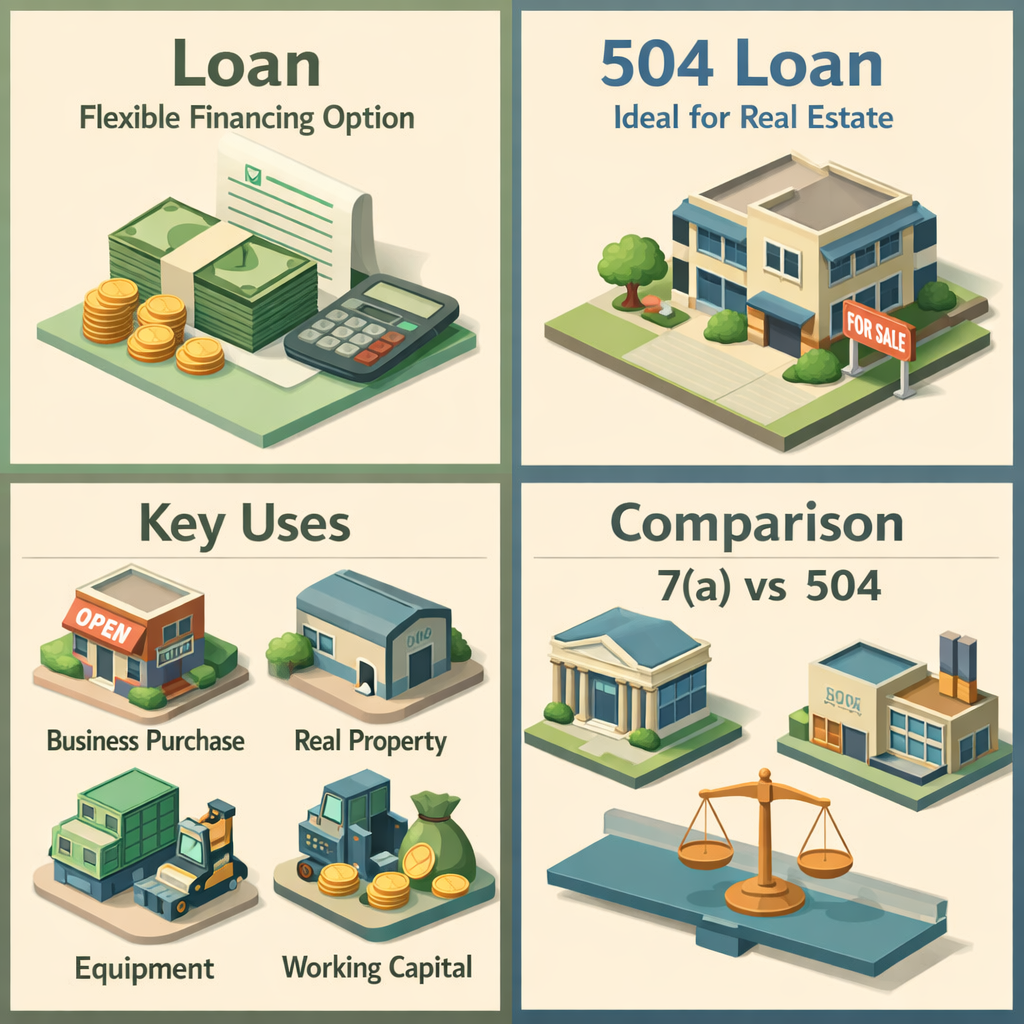
Choosing between these two programs — or deciding whether to use them together — depends largely on the structure of your specific deal. Here's a practical way to think about it:
- Buying the business plus the building: The SBA 7(a) may handle the full transaction, or you could use a 504 for the real estate component and a 7(a) for the business and equipment portions
- Buying the property only (sale-leaseback or owner-occupied purchase): The SBA 504 is often the most cost-effective choice
- Buying a business without significant real estate: The SBA 7(a) is likely your primary option
- Need for working capital post-acquisition: The 7(a) program is more flexible here
Both programs require the business to be for-profit, operate within the U.S., and meet the SBA's size standards for small businesses. Manufacturing businesses are typically evaluated based on the number of employees or average annual receipts, depending on the specific industry code. Your lender or a qualified SBA advisor can help confirm your eligibility before you invest significant time in the application process.
What Lenders Look for in a Manufacturing Plant Acquisition Loan
Understanding what SBA lenders evaluate during underwriting can help you prepare a stronger application and improve your approval odds. While every lender has its own internal criteria, there are common factors that tend to carry significant weight in manufacturing acquisition deals.
Business Cash Flow and Revenue History
Lenders will typically want to see at least two to three years of financial statements for the business being acquired. They want to confirm that the business generates enough cash flow to service the new debt. If the business has inconsistent revenue or has experienced recent losses, lenders may require additional justification or a larger down payment.
Borrower Credit Profile
Your personal credit score matters, especially for SBA loans where you'll likely be required to provide a personal guarantee. Most SBA lenders look for a minimum score in the mid-600s, though stronger scores generally improve your terms and speed up the process. Your business credit history, if applicable, will also be reviewed.
Industry Experience and Management Background
Lenders want to feel confident that you can successfully operate a manufacturing facility. If you have direct experience in the industry, that's a meaningful advantage. If you're transitioning from a related field, be prepared to demonstrate transferable skills and outline your management plan clearly in your business plan.
Environmental and Property Considerations
Manufacturing properties sometimes carry environmental risks, such as soil contamination or hazardous material history. Lenders will often require a Phase I Environmental Site Assessment and may request a Phase II if concerns arise. Addressing these issues proactively — before formally applying — can prevent costly delays.
Steps to Apply for SBA Plant Acquisition Financing
The SBA loan application process for a manufacturing acquisition can take several weeks to a few months depending on complexity, lender capacity, and how prepared you are at the outset. Breaking it into clear steps can make the process feel more manageable.
- Step 1 — Define your deal structure: Determine what exactly you're buying — business, real estate, equipment, or a combination — and what financing structure makes the most sense
- Step 2 — Gather financial documentation: Collect tax returns, profit and loss statements, balance sheets, and debt schedules for both your personal finances and the acquisition target
- Step 3 — Prepare a business plan: A well-crafted business plan that outlines your operational strategy, revenue projections, and management team can significantly strengthen your application
- Step 4 — Find an SBA-approved lender: Work with a lender experienced in manufacturing acquisitions — ideally one with Preferred Lender Program (PLP) status, which can speed up the SBA approval process
- Step 5 — Complete the SBA forms: Your lender will guide you through the required SBA paperwork, including personal financial statements, borrower information forms, and a statement of personal history
- Step 6 — Undergo underwriting and appraisal: Expect a commercial appraisal of the property, a business valuation, and potentially an environmental assessment
- Step 7 — Close the loan: Once approved, work with your lender and legal counsel to finalize the transaction and take ownership of the facility
Staying organized and responsive throughout this process is one of the most practical things you can do to keep your timeline on track.
●Conclusion
Pursuing your manufacturing growth goals through SBA loan options for acquiring a small manufacturing plant is a well-established path that thousands of entrepreneurs have successfully navigated. Whether the SBA 7(a) program's flexibility suits your deal or the SBA 504's long-term fixed rates align better with your real estate-heavy acquisition, there's likely a government-backed solution that fits your situation. The key is preparation — knowing your numbers, understanding the property, and working with lenders who have real experience in industrial acquisitions. At LoanWise, we're here to help you connect with the right financing solutions for your manufacturing ambitions. Reach out today to explore your options and take the next confident step toward owning your own facility.