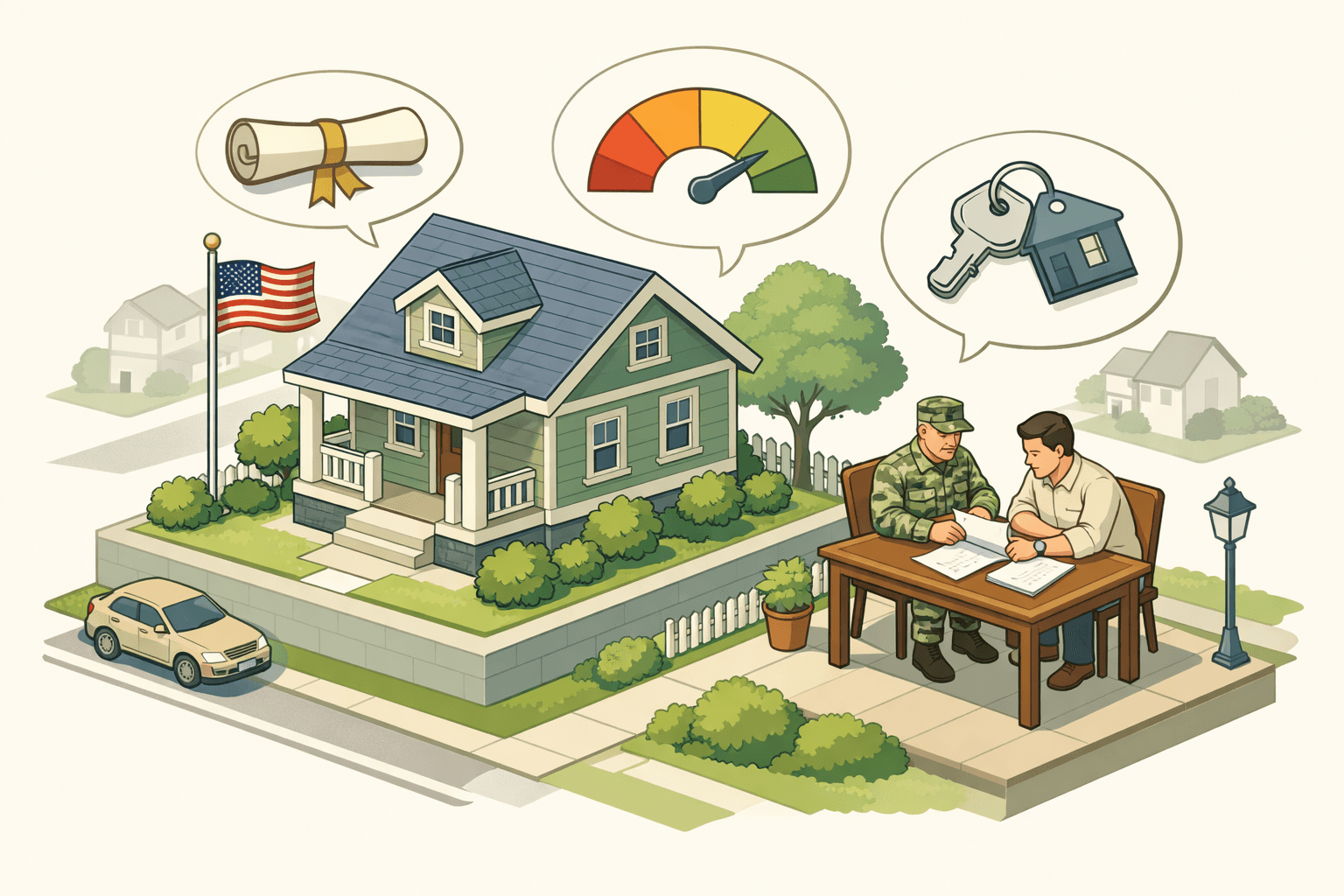
For many veterans and active-duty service members, the VA loan program is one of the most powerful home financing tools available. It offers competitive interest rates, no down payment requirement, and no private mortgage insurance. But what happens when you want to apply with a co-borrower who carries significant student loan debt and a lower credit score? Understanding the requirements for VA loan with co-borrower student loan debt and low credit score situations is essential before you begin the application process. This guide breaks down what lenders typically evaluate, how student loan debt affects your numbers, and what steps you and your co-borrower can take to move toward approval.
How VA Loans Work and Who Can Be a Co-Borrower
The VA loan program is backed by the U.S. Department of Veterans Affairs and is available to eligible veterans, active-duty service members, and surviving spouses. One of the program's core advantages is its flexible qualification standards compared to conventional financing. However, adding a co-borrower introduces additional layers of underwriting review.
When it comes to co-borrowers, the VA distinguishes between two types:
- Veteran co-borrowers: Another eligible veteran or service member who shares the loan. Their full income and full debt load are considered, and they may also contribute their VA entitlement.
- Non-veteran co-borrowers: A spouse, partner, or family member who is not VA-eligible. Their income can help strengthen the application, but their debts — including student loans — also count against the combined debt-to-income ratio. Importantly, the VA's guaranty only applies to the veteran's portion of the loan when using a VA loan with a co-borrower, which may affect available entitlement and loan terms.
It's worth noting that the VA does not set a universal minimum credit score. However, most lenders impose their own overlays, often requiring a score of at least 580 to 620. If your co-borrower has a low credit score, lenders will typically use the lower middle score of all borrowers on the application, which can directly affect approval and the interest rate offered.
How Student Loan Debt Affects VA Loan Eligibility
Student loan debt is one of the most common financial obligations co-borrowers bring to a mortgage application. The way lenders count this debt can significantly influence whether your application clears the debt-to-income (DTI) threshold.
For VA loans, lenders generally follow VA guidelines when calculating student loan payments. Here's what that typically looks like:
- If the loan is in repayment: The actual monthly payment reported on the credit report is used in the DTI calculation.
- If the loan is deferred or in forbearance: The VA generally requires lenders to include a calculated payment — often 5% of the outstanding balance divided by 12 months — even if no payment is currently due. Some lenders may accept documented income-driven repayment (IDR) plan amounts instead, but this varies by lender and can change based on updated agency guidance.
- Income-Driven Repayment Plans: If your co-borrower is enrolled in an IDR plan with a verifiable payment amount, some lenders may use that figure. However, lenders exercise discretion here, so it's wise to confirm their policy directly.
The VA's residual income requirement adds another layer. Even if DTI is manageable, lenders must verify that you and your co-borrower retain enough monthly income after all obligations are paid to cover basic living expenses. This requirement often works in a veteran's favor — but high student loan payments can reduce residual income and complicate approval.
Understanding DTI Limits When a Co-Borrower Has Student Loans
The VA does not publish a hard DTI ceiling, but most lenders look for a combined DTI at or below 41%. Ratios above this threshold don't automatically disqualify a borrower, but they do trigger additional scrutiny. The lender will typically want to see strong compensating factors such as substantial residual income, significant cash reserves, or a long history of stable employment.
When your co-borrower carries student loan debt, their monthly obligations are added to yours to produce the combined DTI. Here's a simplified example of how this might look:
- Veteran's monthly gross income: $4,500
- Co-borrower's monthly gross income: $3,200
- Combined gross income: $7,700
- Proposed mortgage payment (PITI): $1,800
- Co-borrower's student loan payment: $400
- Other monthly debts: $300
- Total monthly obligations: $2,500
- Combined DTI: approximately 32% — potentially approvable
Now adjust the student loan payment upward to $900, and the DTI climbs to nearly 39%. Add a lower credit score to the picture, and the lender may require stronger compensating factors or a larger reserve balance before moving forward. This illustrates why the requirements for VA loan with co-borrower student loan debt and low credit score scenarios demand careful planning.
Credit Score Realities and What Lenders Actually Look For
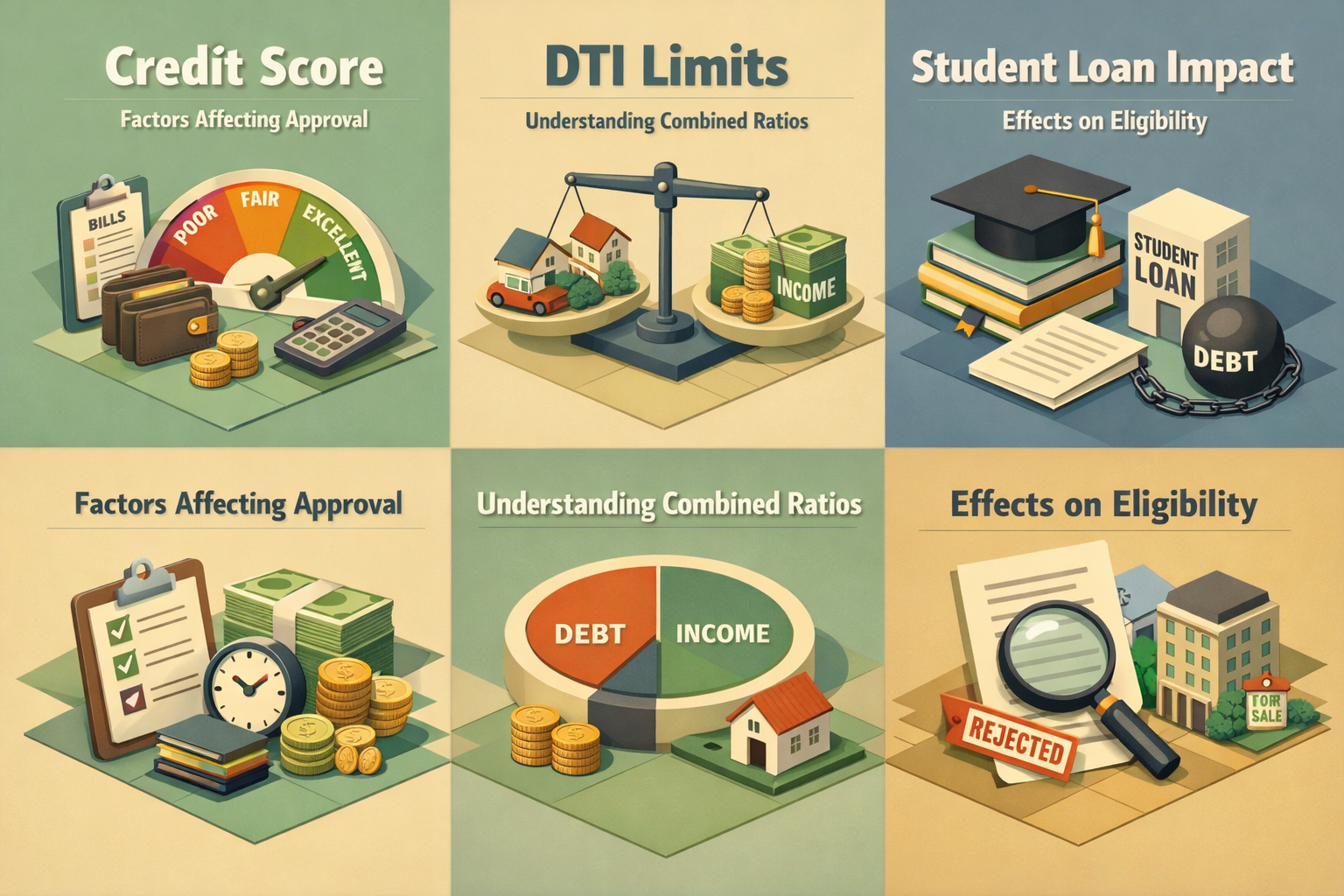
As mentioned earlier, the VA itself does not mandate a specific minimum credit score. That said, private lenders who originate VA loans set their own credit benchmarks, which can range from as low as 500 at some institutions to 640 or higher at others. When both a veteran and a co-borrower are on the loan, lenders typically pull credit reports from all three major bureaus for each applicant and use the middle score for each person, then apply the lower of those two middle scores as the qualifying score for the loan.
A low credit score — typically below 620 — often signals the following to underwriters:
- A history of late or missed payments
- High credit utilization relative to available limits
- Recent derogatory events such as collections or charge-offs
- Limited credit history or a thin credit file
Each of these factors can affect not just approval but also the interest rate you're offered. Even with VA backing, lenders may price loans more conservatively when credit risk is elevated. This means a lower score could translate into a higher rate and a higher monthly payment, which in turn raises DTI further — a compounding challenge when student loan debt and low credit score is already a factor.
It's also worth knowing that some lenders specialize in VA loans and may be more experienced at navigating complex scenarios involving lower scores and higher debt loads. Shopping multiple lenders is a smart strategy in these situations.
Steps to Strengthen a VA Loan Application with These Challenges
If you and your co-borrower are dealing with VA loan co-borrower student loans credit score concerns, there are several practical steps that may improve your position before you apply — or during the process itself.
- Work on the co-borrower's credit score first: Even a modest improvement in the co-borrower's credit score — say, from 580 to 620 — can open more lender options and potentially lower the rate. Paying down revolving balances and disputing inaccurate items on the credit report are often the fastest ways to move the needle.
- Enroll in an income-driven repayment plan: If the co-borrower's student loans aren't already in an IDR plan, enrolling could lower the required monthly payment used in DTI calculations. Keep in mind that lender policies on this vary, so confirm with your loan officer in advance.
- Build cash reserves: Having two to six months of mortgage payments in savings can serve as a compensating factor that helps offset a higher DTI or lower credit score in the eyes of the underwriter.
- Consider a veteran co-borrower instead: If possible, choosing another VA-eligible co-borrower can help preserve entitlement and may provide more underwriting flexibility compared to a non-veteran co-borrower arrangement.
- Verify the veteran's residual income: Ensure that after all debts are accounted for, the veteran meets the VA's residual income threshold for their region and family size. Strong residual income is one of the most powerful compensating factors in VA underwriting.
- Consult a VA-experienced loan officer: Not all lenders handle VA loans the same way. Working with someone who regularly originates VA loans and understands how to document complex scenarios can make a significant difference.
Documentation You Should Prepare in Advance
When navigating a VA loan application that involves a co-borrower with student debt and credit challenges, being organized can save time and reduce stress. Lenders will need thorough documentation to evaluate the full financial picture. Here's what you should typically expect to gather:
- Certificate of Eligibility (COE): The veteran must obtain this from the VA to confirm entitlement. It can often be retrieved directly by the lender through the VA's automated system.
- Two years of tax returns and W-2s: Required for both the veteran and the co-borrower to verify income history.
- Recent pay stubs: Usually the last 30 days for all borrowers.
- Student loan statements: Complete statements showing outstanding balances, current payment status, and any repayment plan documentation.
- Bank and asset statements: Typically the last two to three months, showing reserves and the source of any funds used for closing.
- Explanation letters: If there are derogatory credit items, lenders may ask for a written explanation. Providing a clear, honest letter with any supporting documentation can help underwriters understand the context.
- IDR plan confirmation: If the co-borrower's student loans are on an income-driven plan, print or download official documentation from the loan servicer showing the current approved payment amount.
Being proactive about documentation signals to the lender that you're a serious borrower and can help the underwriting process move more smoothly.
●Conclusion
Applying for a VA loan when a co-borrower brings student loan debt and a lower credit score to the table is undeniably more complex — but it's not necessarily out of reach. The requirements for VA loan with co-borrower student loan debt and low credit score situations require careful attention to DTI calculations, credit benchmarks set by individual lenders, residual income thresholds, and thorough documentation. By understanding how each of these elements interacts, you and your co-borrower can take targeted steps to improve your application's strength. Whether that means paying down balances, enrolling in an income-driven repayment plan, or simply shopping lenders with more flexible overlays, the path forward often starts with solid preparation. LoanWise is here to help you explore your options and connect with lenders experienced in VA financing — even in complex scenarios.