
Navigating the mortgage market as a foreign national already comes with its share of complexity. Add an adjustable-rate mortgage into the mix, and the stakes get even higher — especially when rates begin to shift. Whether you're a non-resident investor, a visa holder, or someone building equity in a U.S. property, understanding your options for refinancing an ARM mortgage with a foreign national borrower profile could make a meaningful difference in your long-term financial picture. This article walks through what lenders typically look for, which loan programs may be available, and what strategies might help you move from a variable rate to something more predictable.
What Makes Foreign National ARM Refinancing Unique
An adjustable-rate mortgages, or ARM, starts with a fixed interest rate for a set introductory period — commonly five, seven, or ten years — after which the rate adjusts periodically based on a benchmark index. For many foreign nationals purchasing U.S. real estate, an ARM may have been the most accessible financing option at the time of purchase, particularly through portfolio lenders or private financing channels.
The challenge arises when the fixed period ends and monthly payments become less predictable. For foreign national borrowers, refinancing out of that ARM carries an added layer of complexity. Most conventional loan programs backed by Fannie Mae or Freddie Mac are not available to non-U.S. citizens who lack permanent residency or a qualifying visa status. This means that many foreign nationals must look toward non-QM (non-qualified mortgage) programs and specialty lenders who operate outside the standard agency guidelines.
Understanding this distinction early is important. It shapes which lenders you can approach, what documentation you'll need, and what loan structures may realistically be on the table.
Eligibility Basics: Who Qualifies as a Foreign National Borrower
Lenders typically define a foreign national borrower as someone who is not a U.S. citizen and does not hold a green card or permanent resident status. This group often includes individuals on work visas such as H-1B or L-1 holders, international investors who do not reside in the United States, and citizens of other countries who own U.S. property as a secondary or investment asset.
It's worth noting that some lenders draw a distinction between resident aliens — those with lawful permanent residency — and true foreign nationals who have no U.S. residency ties. Resident aliens may have access to conventional and government-backed loans, while non-resident foreign nationals are generally limited to portfolio or non-QM products.
For the purposes of exploring options for refinancing an ARM mortgage with a foreign national borrower, this article focuses primarily on non-resident or non-permanent-resident borrowers, since their refinancing path tends to be the most nuanced and often misunderstood.
Non-QM Loan Programs That Could Work for Foreign National ARM Refinances
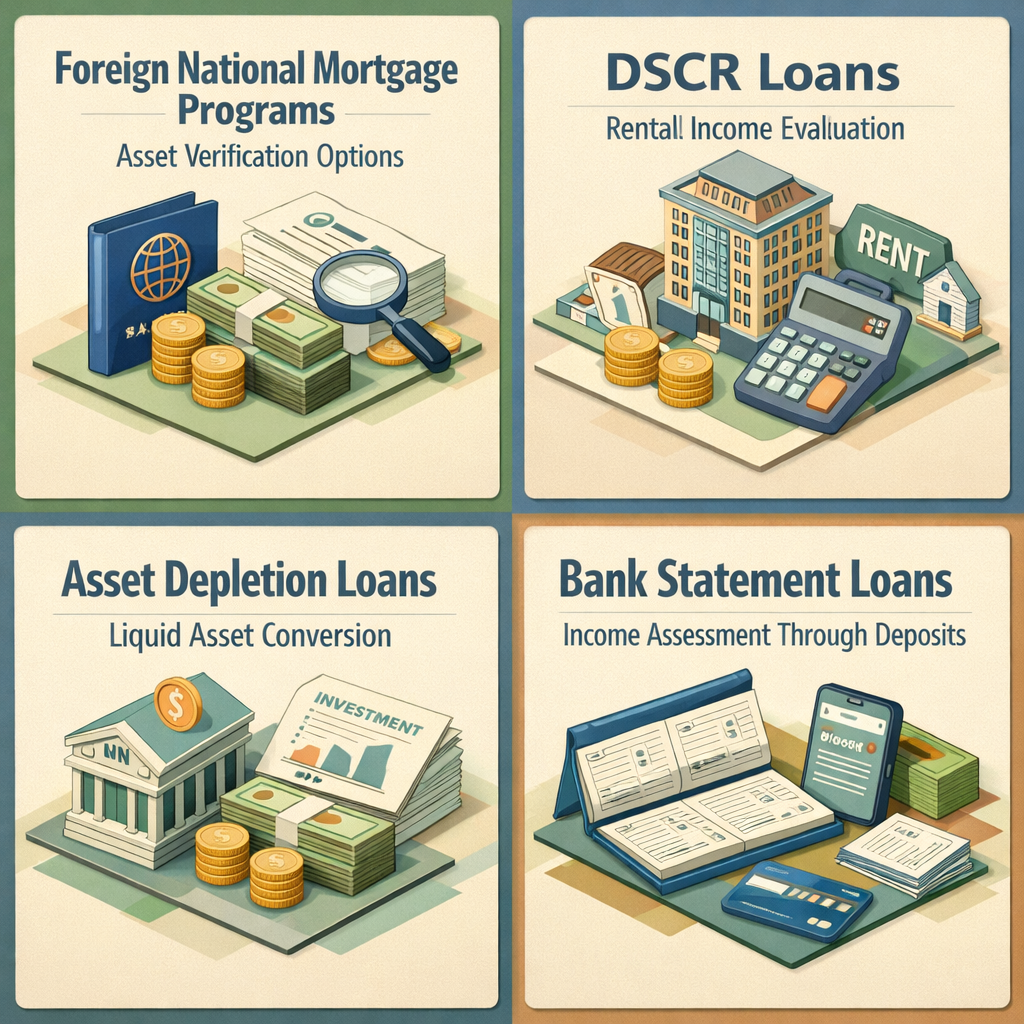
The most common refinancing avenue for foreign nationals is through non-QM lending programs. These are mortgage products offered by private lenders, portfolio lenders, and specialty finance companies that are not required to meet the qualified mortgage standards set by the Consumer Financial Protection Bureau. Because they operate outside agency guidelines, these lenders have more flexibility in how they evaluate borrowers.
Several types of non-QM programs may be well-suited for foreign national ARM refinances:
- Foreign National Mortgage Programs: Some lenders offer dedicated foreign national loan programs that allow refinancing based on asset verification, property income potential, or bank statements rather than U.S. tax returns or Social Security numbers. These programs may accommodate both rate-and-term and cash-out refinances.
- DSCR Loans (Debt Service Coverage Ratio): For foreign nationals refinancing an investment or rental property, DSCR loans evaluate whether the property generates enough rental income to cover the mortgage payment. This can be a strong option if the property has consistent occupancy and rental history.
- Asset Depletion or Asset-Based Loans: If the borrower holds significant liquid assets — whether in U.S. or foreign accounts — some lenders may use a formula that converts those assets into a theoretical monthly income stream, allowing qualification without traditional employment documentation.
- Bank Statement Loans: For foreign nationals who do have some U.S. financial activity, bank statement programs may allow lenders to assess income through 12 to 24 months of account deposits rather than W-2s or tax filings.
Each of these programs comes with its own set of requirements, pricing structures, and loan limits. It's important to work with a lender who has direct experience in foreign national lending rather than treating these applications as standard refinances.
Documentation Requirements Lenders Typically Expect
One of the most common stumbling blocks in a foreign national ARM refinance is documentation. Traditional U.S. mortgage applications rely heavily on domestic credit history, Social Security numbers, W-2 forms, and tax returns — documents that many foreign nationals simply don't have in the conventional format.
Specialty lenders who work with foreign nationals have adapted their processes, but they still require a solid documentation package. Here's what you might expect to provide:
- Valid passport and visa information: Lenders need to confirm your identity and legal status. A copy of a current passport is typically required, and some lenders may request visa documentation as well.
- International credit report or reference letter: Since you may not have a U.S. credit score, many lenders will accept a credit report from your home country or a reference letter from a foreign bank confirming your creditworthiness and account standing.
- Proof of assets: Bank statements from foreign or U.S. accounts showing sufficient reserves are often a key qualifying factor. Lenders may want to see anywhere from three to twelve months of mortgage payments in reserves, depending on the program.
- Property documentation: Current mortgage statements, title information, property tax records, and — for investment properties — a current lease agreement or rental income history.
- Letter of explanation: For borrowers with complex financial situations, a letter explaining income sources, residency status, or asset origin can help lenders build confidence in the application.
Being organized and proactive with documentation often speeds up the approval process considerably. Working with a mortgage broker who specializes in non-QM or foreign national lending can help you anticipate what each specific lender requires.
Rate and Cost Considerations for Non-Resident Refinancers
It's important to set realistic expectations around pricing when exploring a foreign national ARM refinance. Because these loans fall outside conventional guidelines, they typically carry higher interest rates than standard conforming mortgages. The degree of that difference will vary based on factors like loan-to-value ratio, property type, borrower assets, and the specific lender's risk appetite.
Loan-to-value (LTV) ratio tends to be a significant factor. Many foreign national programs cap LTV at 65% to 75%, meaning you may need to have at least 25% to 35% equity in the property to qualify. If your current ARM has eroded equity — due to market conditions or prior cash-out activity — this could affect your refinancing paths available.
Closing costs on non-QM loans may also be higher than conventional alternatives. Some lenders charge origination fees, underwriting fees, or other costs that can add up. It's worth requesting a Loan Estimate from multiple lenders to compare the full cost of each option, not just the interest rate.
Despite potentially higher rates, refinancing out of an ARM into a fixed-rate non-QM product could still be financially beneficial if your ARM is approaching its adjustment period and you expect rates to rise or remain volatile. Locking in a stable home financing — even at a slightly higher rate — might offer meaningful peace of mind and budgeting clarity over the life of the loan.
Strategies to Strengthen Your Refinance Application
Foreign national borrowers who approach the refinance process strategically may find they're in a stronger position than they initially expected. Here are several approaches worth considering:
- Build U.S. financial ties: If you've been maintaining a U.S. bank account, consider doing so consistently for at least 12 to 24 months before applying. A track record of U.S.-based financial activity — even without a Social Security number — can support your application.
- Increase your equity position: If your LTV is currently above typical foreign national program limits, making a lump-sum principal payment before refinancing could open up more program options and potentially lower your rate.
- Time the application strategically: Interest rates fluctuate, and so does lender appetite for foreign national loans. Working with a knowledgeable broker who monitors the non-QM market could help you identify favorable windows for refinancing.
- Compare multiple lenders: Foreign national mortgage programs vary significantly from lender to lender. What one institution declines, another may approve. Casting a wider net through a broker with access to multiple specialty lenders is often more effective than approaching a single bank.
- Consider the property type carefully: Lenders may view single-family investment properties more favorably than condos or multi-family units when it comes to foreign national loans. If your property is in a high-demand rental market, highlighting that rental income stability could strengthen your case.
Working with the Right Lending Partner Makes the Difference
Perhaps the most important factor in successfully navigating the options for refinancing an ARM mortgage with a foreign national borrower is choosing a lender or mortgage professional who genuinely understands this lending niche. Foreign national refinancing isn't a product most retail banks or credit unions specialize in. The lenders who do it well have established relationships with private capital sources, deep knowledge of international documentation standards, and experience in structuring loans that work within the constraints of non-QM guidelines.
A qualified mortgage broker who works in the non-QM space can be particularly valuable here. Rather than limiting your options to one institution's programs, a broker can match your financial profile to the most appropriate lender from a broader marketplace. They can also help you avoid common pitfalls — like submitting incomplete documentation or applying to lenders who don't actually have active foreign national programs.
Before committing to any refinance, it's worth having a candid conversation about your goals. Are you primarily trying to lower your monthly payment? Lock in a stable rate? Access equity for another investment? The answer to those questions should guide which program — and which lender — makes the most sense for your situation.
●Conclusion
Refinancing an adjustable-rate mortgage as a foreign national comes with real challenges, but it's far from impossible. Non-QM programs, DSCR loans, and asset-based mortgage products have expanded the landscape meaningfully in recent years, giving non-resident borrowers more viable paths than they may realize. The key is understanding which programs you may qualify for, gathering the right documentation, and working with a lender who has proven experience in this space. If you're approaching an ARM adjustment period or simply want more stability in your mortgage payments, now may be a good time to explore what's available. LoanWise can help you connect with specialists who understand the full range of options for refinancing an ARM mortgage with a foreign national borrower profile — so you can make a confident, well-informed decision.