
For homebuyers and real estate investors who own rental properties abroad, qualifying for a jumbo loan in the United States can feel like navigating a maze. Lenders scrutinize every detail of your financial profile, and foreign rental income adds a layer of complexity that standard mortgage applications simply don't encounter. Whether you're a non-US citizen purchasing a high-value home stateside or a US resident with overseas investment properties, understanding the requirements for jumbo loan with foreign rental property income and US property is essential before you apply. This guide walks you through what lenders typically expect, what documentation you'll need to gather, and how to position yourself for the best possible outcome.
What Makes Jumbo Loans Different From Conventional Mortgages
Jumbo loans are mortgage products that exceed the conforming loan limits set by the Federal Housing Finance Agency (FHFA). Because they can't be purchased by Fannie Mae or Freddie Mac, lenders take on the full risk themselves. This means they tend to apply stricter underwriting standards compared to conventional loans.
For borrowers with foreign rental income, this distinction matters a great deal. Since jumbo loans aren't subject to standard agency guidelines, each lender has the flexibility — and the responsibility — to set its own rules around how it treats international income. That creates both challenges and opportunities, depending on the lender you choose.
- Higher loan amounts: Jumbo loans typically start where conforming limits end, which in many US counties is above $766,550 as of recent guidelines, though high-cost areas may have higher thresholds.
- Stricter credit requirements: Most jumbo lenders look for a credit score of at least 700, with many preferring 720 or higher.
- Larger down payments: Down payment expectations for jumbo loans often range from 10% to 20% or more, depending on the loan size and borrower profile.
- Lower debt-to-income ratios: Lenders commonly prefer a debt-to-income (DTI) ratio at or below 43%, though some may allow slightly higher with strong compensating factors.
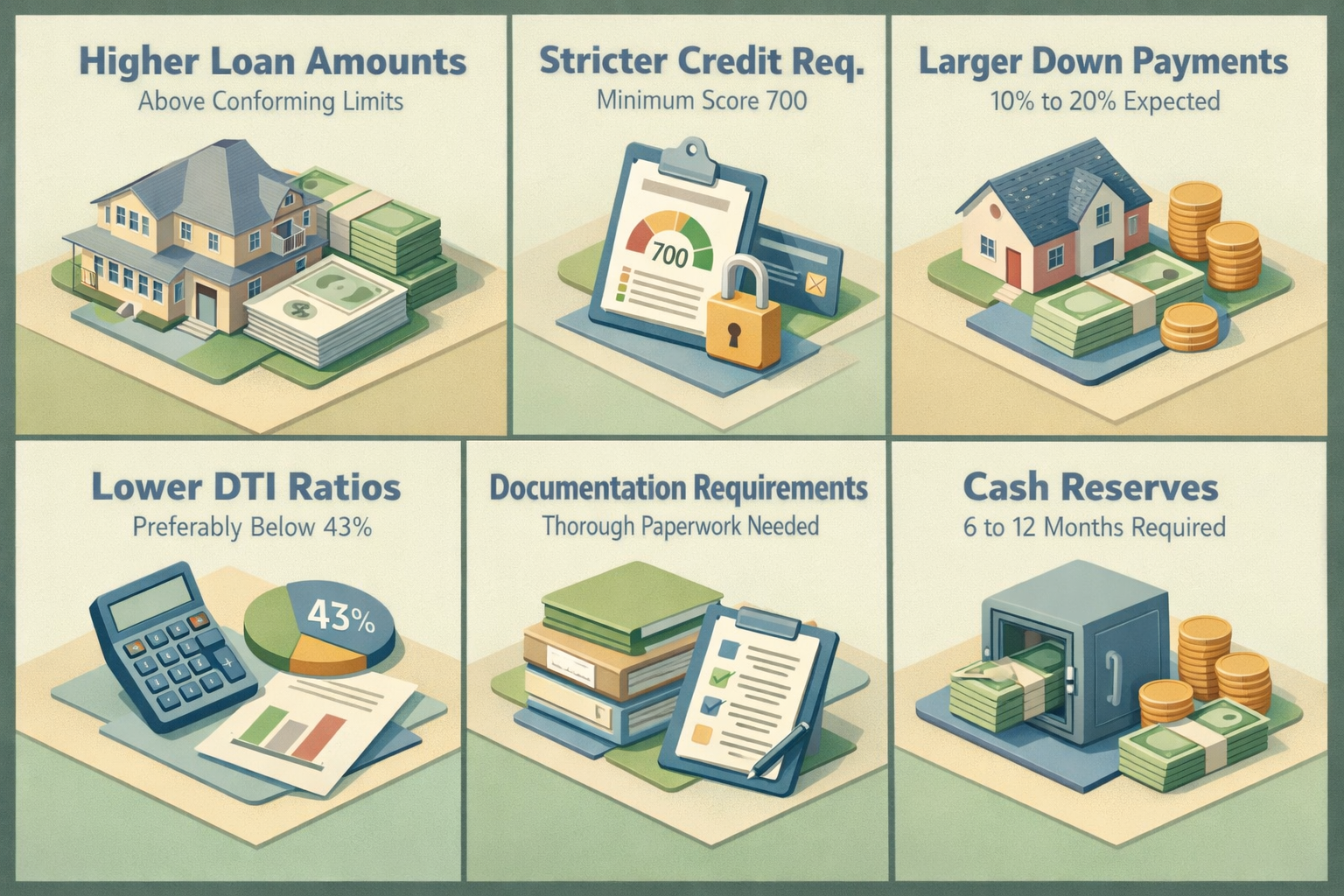
Understanding these baseline expectations helps set the stage for what you'll face when foreign rental income enters the picture.
How Lenders View Foreign Rental Income for Jumbo Qualification
Foreign rental income refers to money earned from properties located outside the United States. This might include an apartment in Mexico City, a villa in Spain, or a multi-unit building in the Philippines. While this income is real and verifiable, lenders treat it with a higher level of scrutiny than domestic rental income.
The core challenge is that lenders cannot easily verify foreign rental agreements, tax records, or property management histories through the same channels they use for US properties. Currency risk adds another variable — rental income from overseas property earned in a foreign currency may fluctuate when converted to US dollars, which complicates income stability calculations.
That said, many jumbo lenders can and do consider foreign rental income, particularly portfolio lenders and private banks that specialize in high-net-worth borrowers. Here's what they typically look for:
- Consistency: Lenders want to see that the foreign rental income has been received for at least one to two years with no significant gaps.
- Convertibility: The income must be readily convertible to US dollars and transferable to a US bank account without legal or regulatory barriers.
- Documentation: Thorough paperwork is non-negotiable. Lenders may require foreign tax returns, lease agreements, bank statements showing deposits, and sometimes a certified translation of documents.
- Exchange rate stability: Some lenders may apply a conservative conversion rate or discount the income to account for currency volatility.
It's worth noting that not all jumbo lenders will accept foreign rental income at all. Shopping around and working with a mortgage broker experienced in non-QM or specialty lending can significantly improve your chances of finding a lender that fits your situation.
Documentation Requirements You Should Prepare in Advance
One of the most important steps in meeting the requirements for jumbo loan with foreign rental property income and US property is assembling a thorough and well-organized documentation package. Incomplete paperwork is one of the most common reasons foreign income gets excluded from a borrower's qualifying income — which could push you below the threshold needed to secure the loan.
Here is a breakdown of the documents lenders commonly request:
For the Foreign Rental Property
- Signed lease agreements, preferably in English or with a certified translation
- Two years of foreign tax returns reporting rental income
- Bank statements from a foreign account showing rental deposits
- Proof of property ownership, such as a title deed or equivalent document
- Property management statements if a third-party manager handles the unit
- Evidence of currency conversion and wire transfer history to a US account
For the US Property Being Financed
- Purchase agreement or listing details for the subject property
- US tax returns for the past two years
- Recent pay stubs or proof of US-based income, if applicable
- US bank statements for the past two to three months
- Letter of explanation for any large deposits or income irregularities
General Financial Documents
- Passport and visa documentation if you are a foreign national or non-permanent resident
- Credit report authorization (lenders will typically pull this themselves)
- Asset statements covering retirement accounts, investment portfolios, and other holdings
Having these documents ready before you begin the application process can reduce delays and demonstrate to the lender that you're a well-prepared, organized borrower — which can only work in your favor.
Credit Score and Reserve Requirements That Lenders Commonly Expect
Beyond income documentation, jumbo lenders pay close attention to two other critical areas: your credit score and your cash reserves. Both serve as signals of financial reliability, and for borrowers with complex income profiles, they can make the difference between approval and denial.
Credit Score Expectations
Most jumbo lenders look for a minimum credit score in the range of 700 to 720, though some portfolio lenders may work with scores as low as 680 depending on other compensating factors. If your credit history is primarily built outside the United States, some lenders may accept an international credit report or use alternative credit assessment methods. However, this varies significantly from lender to lender, so it's worth asking upfront.
Cash Reserve Requirements
Cash reserves refer to liquid assets you'll have remaining after your down payment and closing costs. For jumbo loans, lenders commonly require anywhere from six to twelve months of mortgage payments held in reserve, and some may ask for more when foreign income is part of the qualifying picture. These reserves reassure lenders that you can continue making payments even if rental income experiences a temporary disruption.
Acceptable reserve sources typically include:
- US checking or savings accounts
- Investment and brokerage accounts
- Retirement accounts, often at a discounted percentage of their value
- Foreign bank accounts, though some lenders may require additional verification
Building strong reserves before applying is one of the most practical strategies you can pursue if you're concerned about meeting jumbo loan qualification thresholds.
Debt-to-Income Ratio Considerations When Foreign Rental Income Is Included
Your debt-to-income ratio — or DTI — is a simple but powerful metric. It compares your total monthly debt payments to your gross monthly income. For jumbo loans, most lenders prefer a DTI at or below 43%, though some may stretch to 45% or even 50% with significant compensating factors such as large reserves or an exceptional credit score.
When foreign rental income is in the mix, calculating DTI becomes more nuanced. Lenders may only count a percentage of your foreign rental income — sometimes as low as 75% — to account for vacancies, property expenses, and currency risk. This conservative approach can reduce your qualifying income and raise your apparent DTI, even if your actual cash flow is strong.
Here's a simplified example of how this might work:
- Gross monthly US income: $8,000
- Foreign rental income (full amount): $3,000 per month
- Lender applies 75% credit: $2,250 counted toward qualifying income
- Total qualifying income: $10,250 per month
- Total monthly debts (including new mortgage): $4,500
- Resulting DTI: approximately 43.9%
In this scenario, whether the lender accepts or rejects the application may hinge entirely on how much of the foreign rental income they're willing to count and what DTI ceiling they've set for jumbo products. Working with a lender who is experienced in jumbo loan foreign rental income requirements can help you understand exactly how your numbers will be interpreted before you formally apply.
Tips to Strengthen Your Application as a Borrower With Overseas Income
If you're navigating the key documentation, credit, and income requirements for jumbo loan with foreign rental property income and US property, a few proactive steps can meaningfully improve your chances of approval.
Work With a Specialist Lender or Mortgage Broker
Not all lenders are equipped to handle foreign income. Portfolio lenders, private banks, and non-QM (non-qualified mortgage) lenders are often more experienced with these scenarios. A mortgage broker who specializes in jumbo or international borrower profiles can match you with lenders who are genuinely well-suited to your situation.
Establish a Strong US Banking History
If your foreign rental income has been flowing into a US bank account for at least 12 to 24 months, lenders can see a clear domestic paper trail. This makes it far easier to document and validate that income during underwriting.
Reduce Outstanding Debt Before Applying
Paying down credit cards, auto loans, or other liabilities before applying can lower your DTI and offset any reductions the lender applies to your foreign rental income. Even a modest reduction in monthly debt obligations can push your application into a more favorable range.
Offer a Larger Down Payment
A larger down payment reduces the lender's exposure and may prompt them to be more flexible with income documentation or DTI thresholds. If you're able to put down 25% to 30% on a jumbo purchase, it signals financial strength and lowers the overall risk profile of the loan.
Prepare a Detailed Letter of Explanation
A well-written letter of explanation — covering the source, stability, and history of your foreign rental income — can go a long way in giving underwriters the context they need to make a confident decision. Think of it as your opportunity to tell your financial story in plain terms.
●Conclusion
Qualifying for a jumbo mortgage when part of your income comes from overseas rental properties is undoubtedly more complex than a standard application — but it's far from impossible. Lenders who specialize in high-value and non-traditional income scenarios do exist, and with the right preparation, you can make a compelling case for your financial strength. The key is to start early, gather thorough documentation, and work with professionals who genuinely understand the nuances of your borrowing profile. At LoanWise, we're here to help you connect with lenders experienced in jumbo financing for borrowers with unique income situations. Reach out today to explore your options and take the next step toward securing the home you're looking for.