
Navigating the home buying process after a divorce can feel overwhelming, but it's entirely possible to qualify for a mortgage even when your financial picture has changed significantly. One of the most important things to understand is how to calculate mortgage affordability with divorce decree and alimony payments. Whether you're receiving alimony or paying it, lenders will look closely at how these obligations affect your income, your debts, and your overall borrowing capacity. The good news is that with the right documentation and a clear understanding of the rules, you can approach the process with confidence.
Why Divorce Changes the Mortgage Qualification Equation
A divorce typically reshapes your entire financial profile. You may be going from a dual-income household to a single-income one, taking on new monthly obligations like alimony or child support, and working with a different credit history than before. All of these shifts directly influence how a mortgage lender evaluates your application.
Lenders assess mortgage affordability based on several key factors, including your gross monthly income, your monthly debt obligations, and the loan amount you're requesting. When a divorce decree is involved, it introduces legally binding financial terms that lenders must account for — both as income sources and as liabilities. Understanding how these pieces interact is the foundation for knowing what you can realistically borrow.
It's worth noting that not all divorce situations are treated the same way by lenders. The specifics of your decree, the stability of your alimony arrangement, and your overall credit profile will all play a role in how your application is reviewed. That's why it helps to have a clear picture of how the process works before you start shopping for a home.
How Alimony Counts as Income for Mortgage Purposes
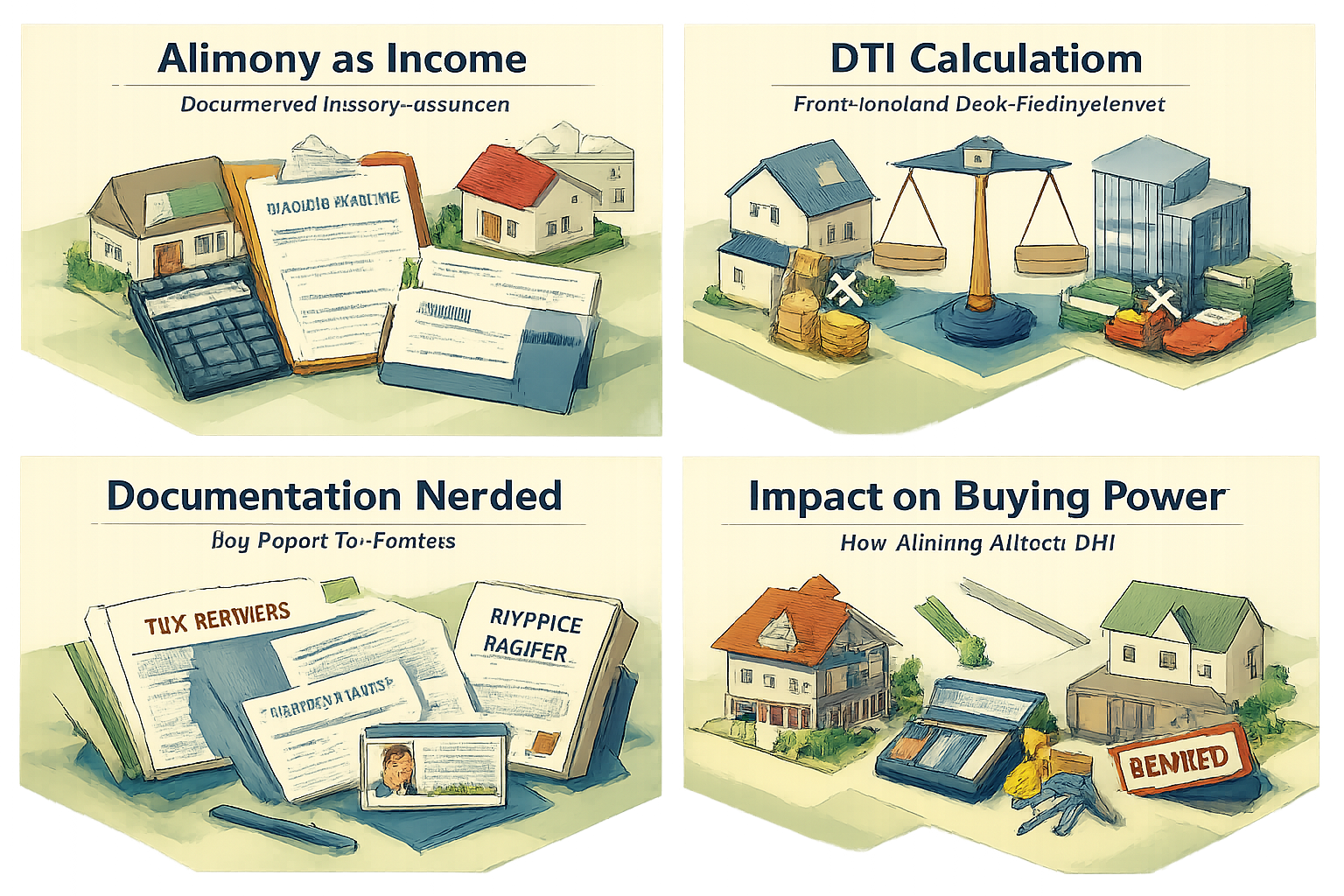
If you're the spouse receiving alimony — also called spousal support or maintenance — you may be able to use those payments as qualifying income when applying for a mortgage. However, lenders typically apply specific criteria before counting alimony as reliable income.
Most conventional loan guidelines, including those from Fannie Mae and Freddie Mac, require that alimony payments have a documented history and are expected to continue for a meaningful period — often at least three years from the date of the mortgage application. You'll generally need to provide a copy of your divorce decree or separation agreement showing the terms of the payments, along with bank statements or tax returns that confirm you've been receiving the funds consistently.
Here are some of the common documentation requirements lenders may request:
- Signed divorce decree or court order detailing the alimony amount and duration
- Twelve months of bank statements showing consistent receipt of payments
- Most recent tax returns reflecting the alimony as reported income
- Written verification from your attorney or the paying party in some cases
If the alimony payments are irregular or set to end within a short timeframe, a lender may choose not to count them as qualifying income, or may count only a portion. It's always a good idea to speak with a loan officer early in the process so you understand exactly what documentation will be needed in your situation.
DTI Calculation After Divorce with Alimony: What the Numbers Mean
Your DTI ratio, is one of the most critical numbers in the mortgage approval process. It measures how much of your gross monthly income goes toward paying debts each month. When you're going through a DTI calculation after divorce with alimony, you need to account for both sides of the equation — income and obligations.
There are two types of DTI that lenders evaluate:
- Front-end DTI: This is the percentage of your gross monthly income that covers housing costs alone — including your principal, interest, taxes, and insurance (PITI).
- Back-end DTI: This is the percentage that covers all monthly debt payments, including housing costs, car loans, credit cards, student loans, alimony paid, and child support paid.
For conventional loans, lenders typically prefer a back-end DTI of 43% or lower, though some programs may allow higher ratios with compensating factors like a strong credit score or substantial reserves. FHA loans may permit slightly higher DTI ratios depending on the lender and your overall file strength.
Here's a simplified example of how this works in practice. Suppose your gross monthly income — including qualifying alimony received — is $6,000. If you're applying for a mortgage with a monthly payment of $1,500 and you have $500 in other monthly debt obligations, your back-end DTI would be calculated as follows:
($1,500 + $500) ÷ $6,000 = 33.3% back-end DTI
That's generally within an acceptable range for most lenders. However, if you're also paying alimony rather than receiving it, that monthly obligation gets added to your debt side of the equation, which could push your DTI higher and reduce the loan amount you qualify for.
When You're the One Paying Alimony: How Obligations Reduce Buying Power
If your divorce decree requires you to make alimony payments to your former spouse, lenders will count those payments as a monthly debt obligation. This means they'll be included in your back-end DTI calculation and could meaningfully reduce the mortgage amount you're able to qualify for.
For example, if you earn $8,000 per month in gross income and pay $1,200 per month in alimony, that $1,200 is treated similarly to a car payment or student loan balance in the lender's eyes. When combined with your proposed housing payment and other debts, it directly affects how much room remains in your DTI budget.
This is why understanding how to calculate mortgage affordability with divorce decree and alimony payments from the paying side is just as important as from the receiving side. Some strategies that might help improve your position include:
- Paying down or eliminating other revolving debts before applying
- Increasing your income through documented side work or a second job
- Choosing a less expensive home to bring the proposed payment down
- Making a larger down payment to reduce the loan amount and monthly obligation
It's also worth knowing that child support obligations are typically treated the same way as alimony when it comes to DTI calculations. If you have both, they'll both be factored in as monthly debts on your application.
The Role of Your Divorce Decree in the Underwriting Process
Your divorce decree is a legally binding court document, and lenders take it very seriously during the underwriting process. Underwriters will review it carefully to understand your financial obligations, any property settlements, and whether any existing mortgage debt was transferred to your former spouse.
One important area to watch is if your name is still on an existing mortgage from the marital home. Even if the divorce decree assigns the mortgage responsibility to your ex-spouse, most lenders will still count that payment as part of your debt load unless the loan has been refinanced entirely into the other person's name. A decree alone does not remove you from mortgage liability in the eyes of a lender or credit bureau.
This is a common and sometimes surprising obstacle for divorced homebuyers. If you're planning to purchase a new home, it's a good idea to verify the status of any joint mortgages well before you apply. Working with a knowledgeable mortgage professional can help you identify and address these issues early, rather than discovering them mid-process.
Additionally, underwriters may look at the decree to understand how assets were divided, whether any lump-sum settlements were received, and how long the alimony arrangement is expected to last. All of this information helps build a fuller picture of your financial stability as a borrower.
Building a Stronger Application After Divorce
Divorce can temporarily disrupt your credit profile, especially if joint accounts were mismanaged during the process or if financial responsibilities shifted unexpectedly. The good news is that your credit standing is something you can actively improve over time, and lenders understand that life changes happen.
Here are some practical steps that may help strengthen your mortgage application after a divorce:
- Check your credit reports: Review all three bureaus for any accounts that may have been affected by the divorce. Dispute inaccuracies and work to resolve any negative marks.
- Build individual credit: If most of your credit history was tied to joint accounts, open individual accounts and use them responsibly to establish your own credit track record.
- Save for a larger down payment: A higher down payment reduces your loan-to-value ratio, which can make lenders more comfortable extending credit even in complex financial situations.
- Maintain stable employment: Lenders look for at least two years of employment history. If you recently returned to work after a divorce, be prepared to explain any gaps.
- Avoid large new debts: Taking on new car loans or credit card balances before applying for a mortgage can raise your DTI and reduce the amount you qualify for.
Working with a mortgage advisor who has experience with post-divorce financing can make a meaningful difference. They can help you identify the right loan program for your situation and guide you through the documentation process efficiently.
Choosing the Right Loan Program for Your Post-Divorce Goals
Not all mortgage programs are created equal, and the right choice will depend on your credit score, income type, down payment, and the property you're purchasing. After a divorce, some borrowers find that certain programs are more accommodating than others.
Conventional loans typically require stronger credit and lower DTI ratios, but they offer competitive rates and flexible terms for those who qualify. If your credit and income are in solid shape post-divorce, this may be a great fit.
FHA loans can be a helpful option for borrowers who are rebuilding credit or working with a smaller down payment. They tend to have more flexible qualification standards, though they do come with mortgage insurance premiums that add to your monthly cost.
VA loans are available to eligible veterans and active-duty service members, offering no down payment requirements and no private mortgage insurance. If you served in the military and your divorce has complicated your finances, a VA loan could offer significant advantages.
USDA loans may be an option if you're purchasing in an eligible rural or suburban area and meet income limits. Like VA loans, they offer no down payment options for qualifying borrowers.
Speaking with a knowledgeable loan officer who understands the nuances of post-divorce mortgage financing is one of the best investments you can make at the start of this journey. They can help you understand your true buying power and match you with a program that fits your needs today and your goals for the future.
●Conclusion
Going through a divorce is one of life's most significant transitions, but it doesn't have to put homeownership out of reach. By learning how to calculate mortgage affordability with divorce decree and alimony payments, you gain the clarity to approach lenders with confidence and a realistic sense of what you can qualify for. Whether you're receiving alimony that strengthens your income picture or managing alimony payments that affect your DTI, understanding how these factors interact gives you a real advantage. With the right preparation, documentation, and guidance from an experienced mortgage professional, your next chapter as a homeowner is absolutely within reach. Reach out to a LoanWise mortgage advisor today to explore your options and get a personalized assessment of your borrowing power.