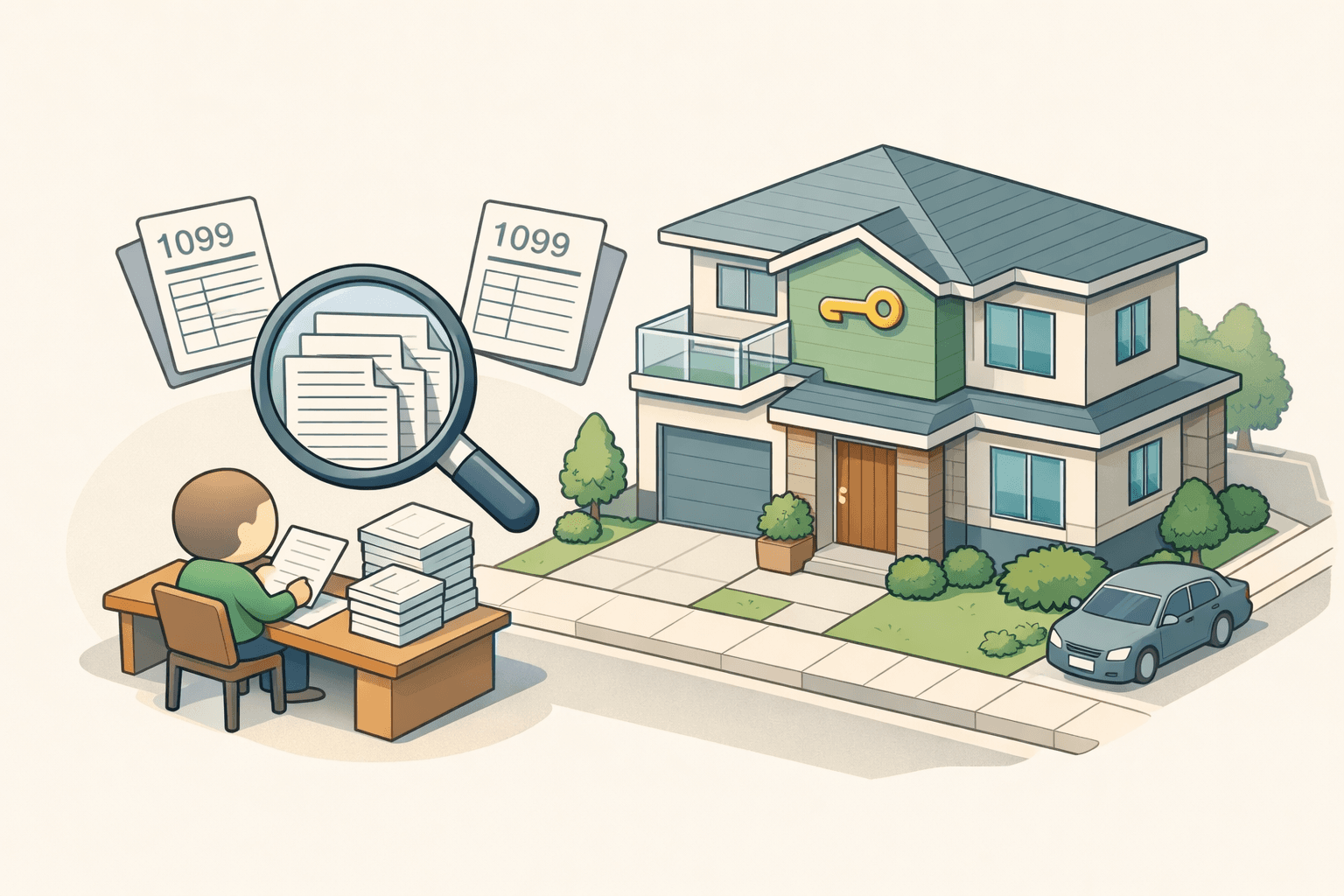
Landing a jumbo loan as a freelancer is a goal that's well within reach — but it does require a clear understanding of what lenders expect. If you're earning income through two separate 1099 contracts and you don't have a US-based co-signer to lean on, the path forward may look a bit different from a traditional mortgage application. That said, many lenders today have developed flexible programs designed specifically for self-employed borrowers. Understanding the requirements for jumbo loan with 1099 income from two freelance jobs and no US co-signer can make the difference between a confident application and a frustrating denial. This guide breaks down each key qualification area so you know exactly what to prepare.
What Makes a Jumbo Loan Different From a Conventional Mortgage
A jumbo loan is a type of mortgage that exceeds the conforming loan limits set by the Federal Housing Finance Agency (FHFA). In most US markets, the conforming loan limit for a single-family home is around $766,550 for 2024, though it may be higher in designated high-cost areas. Any loan amount above that threshold is considered a jumbo loan.
Because jumbo loans aren't eligible for purchase by Fannie Mae or Freddie Mac, lenders take on more risk when issuing them. To manage that risk, they typically apply stricter qualification standards. This means that income documentation, credit history, and financial reserves are all examined more closely than they would be for a standard conventional loan.
For freelancers and independent contractors receiving 1099 income, this added scrutiny can feel intimidating. But it's important to know that lenders aren't trying to exclude self-employed borrowers — they're simply verifying that income is stable, consistent, and sufficient to support a high-value mortgage payment over time.
How Lenders Evaluate 1099 Income From Two Freelance Sources
When you earn income through 1099 forms rather than W-2 pay stubs, lenders need to reconstruct your earnings picture using tax returns and supporting financial documents. For most jumbo loan programs, underwriters will average your net income over 24 months of self-employment history. This two-year average helps smooth out fluctuations that are common in freelance work.
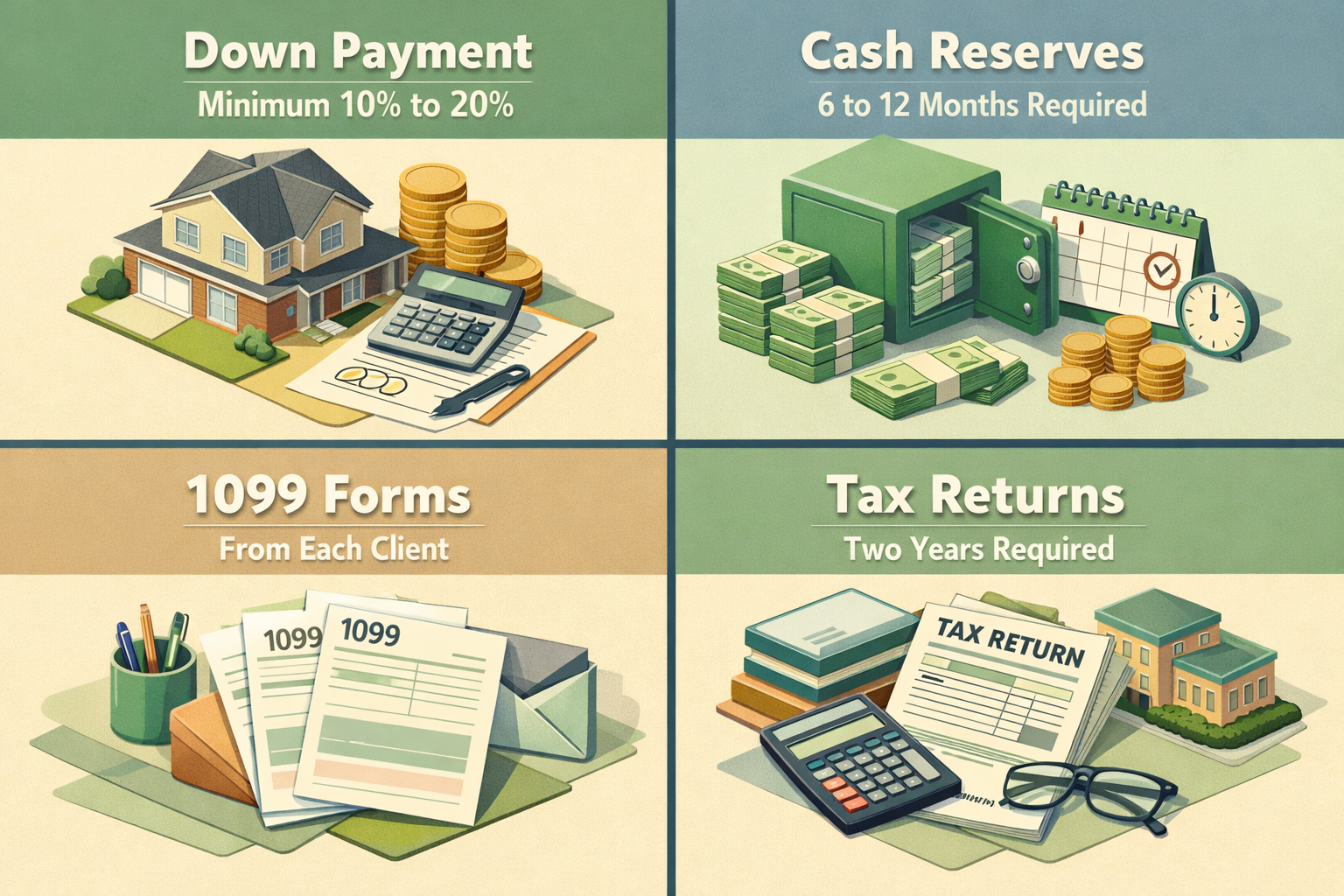
If you're drawing income from two separate freelance clients or contracts, lenders will typically want to see 1099 forms from each source for both years. They'll also review your full federal tax returns — both personal returns (Form 1040) and any relevant schedules, such as Schedule C for sole proprietors. Be aware that lenders generally use your net income after business deductions, not your gross 1099 earnings. If you've claimed significant deductions, your qualifying income could be lower than you expect.
Some lenders may also accept bank statement programs as an alternative for self-employed borrowers. These non-QM (non-qualified mortgage) options allow underwriters to average 12 to 24 months of personal or business bank deposits to estimate income, bypassing the traditional tax return review. This can be especially helpful if your tax deductions have significantly reduced your reported net income.
- 24 months of tax returns: Standard documentation requirement for most jumbo lenders
- 1099 forms from each client: Required for each freelance income source, both years
- Schedule C or business profit/loss statements: Used to verify self-employment income calculations
- Bank statement programs: A non-QM alternative that averages 12–24 months of deposits
- Year-to-date profit and loss statement: May be required by some lenders, prepared by a licensed CPA
Credit Score and Debt-to-Income Benchmarks for Jumbo Loan Self-Employed Borrowers
Credit score requirements for jumbo loans are generally higher than those for conventional or government-backed mortgages. Most jumbo lenders look for a minimum credit score of 700 or higher, though many portfolio lenders and non-QM programs may work with scores starting around 680. The stronger your credit profile, the more favorable the loan terms you're likely to receive — including a lower interest rate and greater flexibility on other qualification factors.
Your debt-to-income (DTI) ratio is equally important. This ratio compares your total monthly debt obligations to your gross monthly qualifying income. For jumbo loans, lenders often prefer a DTI of 43% or lower, though some programs may allow up to 50% with strong compensating factors such as high reserves or a large down payment. As a 1099 borrower, managing your DTI is especially critical because your qualifying income may be lower than your actual deposits due to tax deductions.
If your DTI is on the higher side, consider paying down existing debt before applying. Eliminating a car payment or reducing credit card balances can meaningfully shift your ratio in a positive direction. It's also worth noting that strong credit history — including a long track record of on-time payments and low credit utilization — can help offset concerns lenders may have about the variable nature of freelance income.
Down Payment Expectations and Cash Reserve Requirements Without a US Co-Signer
One of the most significant areas where the requirements for jumbo loan with 1099 income from two freelance jobs and no US co-signer differ from standard lending involves down payment and reserve expectations. Without a co-signer to help share the borrowing risk, lenders will place a heavier emphasis on your individual financial strength — and your down payment is one of the clearest signals of that strength.
Most jumbo loans require a minimum down payment of 10% to 20% of the purchase price, depending on the lender and loan amount. For self-employed borrowers without a co-signer, many lenders lean toward the higher end of that range — often preferring 20% or more. A larger down payment reduces the loan-to-value (LTV) ratio, which lowers the lender's exposure and can also help you avoid private mortgage insurance requirements that some jumbo programs carry.
Beyond the down payment, jumbo lenders typically require borrowers to hold substantial cash reserves — often 6 to 12 months of mortgage payments — in liquid or semi-liquid accounts after closing. For a high-value jumbo loan, this reserve requirement could mean keeping tens of thousands of dollars in accessible savings, investment, or retirement accounts. These reserves demonstrate that you can continue making payments even if your freelance income slows temporarily.
- Minimum down payment: Typically 10%–20%, with higher amounts often preferred for self-employed applicants
- Post-closing reserves: Usually 6–12 months of PITI (principal, interest, taxes, and insurance) payments
- Acceptable reserve sources: Checking, savings, investment accounts, and sometimes vested retirement funds
- Gift funds: May or may not be allowed depending on the lender's guidelines — confirm this early
Navigating the Application Without a US-Based Co-Signer
Many freelancers assume that not having a no US co-signer will automatically disqualify them from a jumbo loan. That's not necessarily true. While a co-signer can certainly strengthen an application by adding income and credit history, lenders are ultimately focused on whether the primary borrower presents an acceptable risk profile on their own. If your credit, income documentation, reserves, and down payment all meet or exceed the lender's thresholds, the absence of a co-signer may not be a barrier at all.
That said, the process does require more thorough preparation. Here are several strategies that may help you qualify for a jumbo loan independently:
- Maximize your documented income: Work with a CPA to ensure your tax returns reflect the strongest possible income picture without sacrificing legitimate deductions
- Choose the right loan product: Non-QM jumbo programs offered by portfolio lenders often have more flexible underwriting guidelines than traditional jumbo loans
- Increase your down payment: A down payment of 25% or more can significantly reduce lender risk and may open doors to programs with less stringent income documentation
- Build your reserves: Demonstrating 12 or more months of reserves signals financial stability and reduces the weight lenders place on income variability
- Maintain a strong credit profile: Aim for a score above 720 and keep credit utilization low across all accounts
If you're a foreign national or non-permanent resident without a US co-signer, you may also want to explore foreign national jumbo loan programs, which some specialty lenders offer. These programs typically have their own documentation requirements, including valid visa status, foreign credit history, and international asset verification, so working with a lender experienced in cross-border financing is especially helpful in that case.
Documentation Checklist for Jumbo Loan Self-Employed 1099 Income Applications
Organization is one of your greatest assets when applying for a jumbo loan with self-employment income. Because the documentation requirements for jumbo loan applications are more extensive than a standard mortgage, assembling your file early can speed up the process and reduce back-and-forth with your lender. Below is a practical checklist of documents you'll likely need to gather.
- Two years of personal federal tax returns (Form 1040) with all schedules, including Schedule C
- 1099 forms from each freelance client for both years of self-employment history
- Year-to-date profit and loss statement prepared or signed by a licensed CPA
- 12–24 months of personal and/or business bank statements (especially important for bank statement programs)
- Documentation of all assets including checking, savings, investment, and retirement accounts
- Proof of business existence such as a business license, DBA registration, or client contracts
- Valid government-issued ID and Social Security number or ITIN
- Letters of explanation for any income fluctuations, gaps, or unusual deposits
- Purchase agreement for the property you intend to buy
Having all of this ready before you submit your application demonstrates professionalism and gives your loan officer the tools to advocate for your file effectively. It also helps underwriters move through the review process more quickly, reducing the chances of delays close to your closing date.
Finding the Right Lender for Jumbo Loan Requirements No Co-Signer Scenarios
Not every lender is equipped to handle the nuances of a self-employed jumbo application without a co-signer. Traditional banks with rigid underwriting guidelines may struggle to accommodate non-traditional income structures. That's why working with lenders who specialize in jumbo loan self-employed 1099 income scenarios — such as portfolio lenders, non-QM mortgage companies, or mortgage brokers with access to specialty products — can make a meaningful difference in your experience and outcome.
Portfolio lenders, in particular, are worth seeking out. Because they hold loans on their own books rather than selling them to the secondary market, they can apply their own underwriting criteria. This flexibility often translates into more creative solutions for self-employed borrowers — whether that means accepting bank statements in place of tax returns, allowing higher DTI ratios, or offering competitive rates to well-qualified borrowers with strong reserves.
A mortgage broker can be especially valuable in this situation because they have access to multiple lenders and can match your specific profile to the program most likely to approve it. Rather than applying to several lenders individually — which could create multiple hard inquiries on your credit report — a broker can shop your file internally and identify the best fit before a formal application is submitted.
When evaluating lenders, ask these key questions upfront:
- Do you offer non-QM or bank statement jumbo loan programs?
- What is your minimum credit score requirement for self-employed jumbo applicants?
- How do you calculate qualifying income for dual 1099 sources?
- What are your reserve requirements for loans in my target price range?
- Do you require a US-based co-signer, or can a strong solo application qualify?
●Conclusion
Meeting the requirements for jumbo loan with 1099 income from two freelance jobs and no US co-signer is absolutely achievable — but it calls for preparation, strategic documentation, and the right lending partner. Lenders want to see that your income is consistent, your credit is solid, and your financial cushion is deep enough to weather the ups and downs that often come with self-employment. By understanding how underwriters view 1099 earnings, assembling thorough documentation, and seeking out lenders experienced with non-traditional income structures, you can position yourself as a compelling borrower even without a co-signer. At LoanWise, we work with self-employed homebuyers every day and understand that your income story deserves to be told completely. Reach out to explore jumbo loan options tailored to your unique financial profile.