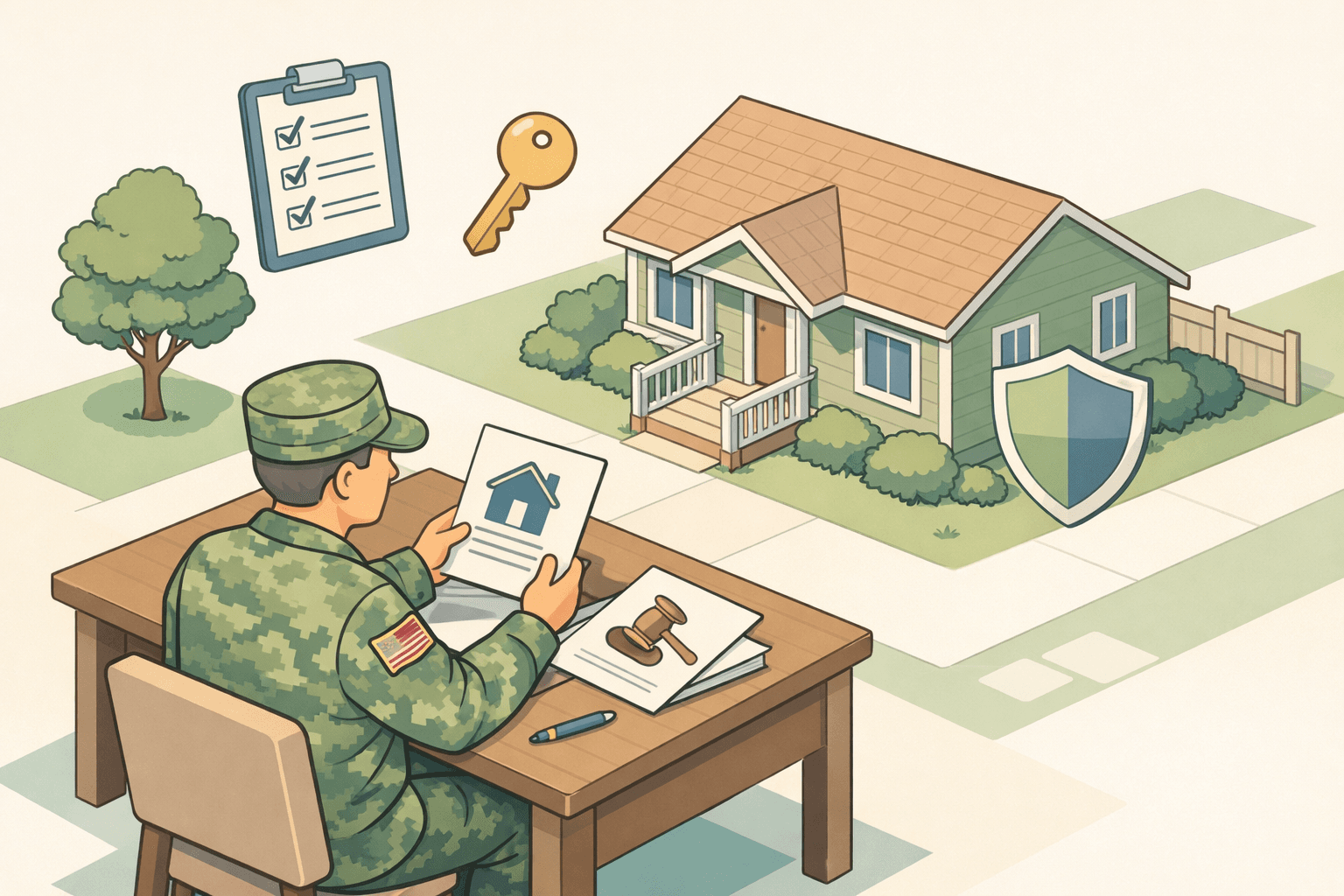
Life after divorce brings many changes — and for veterans and active-duty service members, buying a new home may be one of the most important next steps. If you're wondering how to qualify for a VA loan with a recent divorce decree and child support, you're not alone. Many veterans find themselves navigating this exact situation, and the good news is that VA loans remain one of the most flexible and borrower-friendly mortgage options available. Understanding how lenders view your divorce-related financial obligations is key to positioning yourself for approval. This guide walks you through everything you need to know, from income documentation to debt-to-income calculations, so you can move forward with clarity and confidence.
Understanding VA Loan Eligibility After a Divorce
A divorce doesn't disqualify you from using your VA home loan benefit. Your eligibility is tied to your military service record — not your marital status. As long as you meet the Department of Veterans Affairs' service requirements, you may still access VA loan eligibility after a divorce, including the possibility of no down payment and competitive interest rates.
That said, a recent divorce does introduce new financial variables that lenders must evaluate carefully. Your divorce decree becomes a critical document in this process. Lenders will want to review it to understand any ongoing financial obligations — such as child support or alimony — that could affect your ability to repay a mortgage.
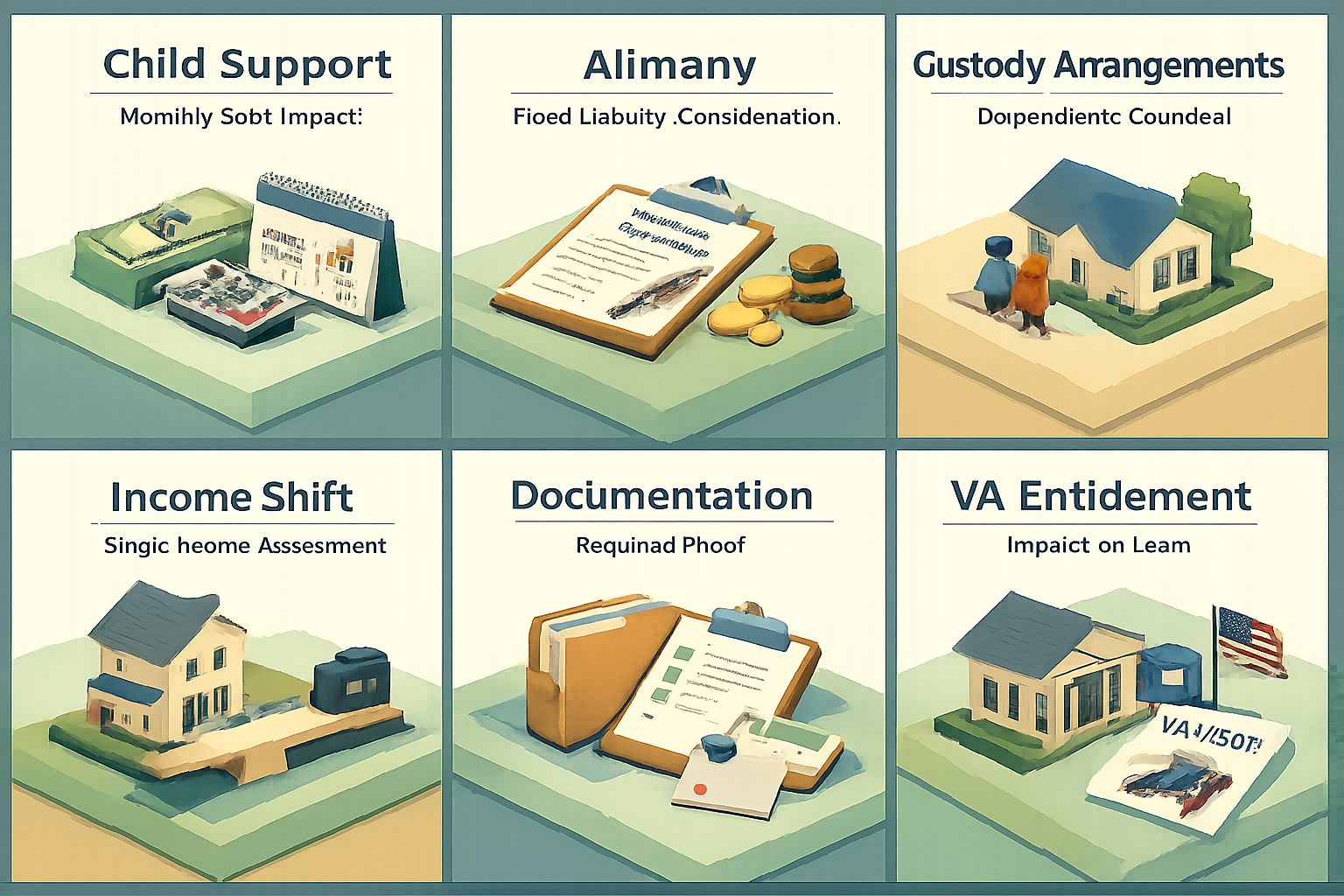
Here's what typically changes after a divorce that can influence your VA loan application:
- Income may shift: If you were previously a dual-income household, your qualifying income is now based solely on your own earnings.
- New financial obligations appear: Child support and spousal support payments are counted as monthly debts by lenders.
- Assets may be divided: Savings, investments, or other liquid assets may be split, affecting your financial reserves.
- Credit accounts may change: Joint accounts and their payment histories can influence your credit profile.
Understanding these factors upfront helps you set realistic expectations and take targeted steps before you apply.
How Child Support and Alimony Are Treated as Monthly Debt
One of the most important things to understand when learning how to qualify for a VA loan with a recent divorce decree and child support is how lenders classify these payments. Child support and alimony are treated as fixed monthly liabilities — meaning they are included in your debt-to-income (DTI) ratio calculation, just like a car payment or credit card minimum.
The VA doesn't set a hard maximum DTI ratio, but most lenders look for a DTI at or below 41%. This figure compares your total monthly debt payments — including the proposed mortgage payment — to your gross monthly income. The higher your child support obligation, the more it reduces the loan amount you may qualify for VA loan.
For example, if you earn $5,000 per month and pay $600 in child support, that $600 is subtracted from your available debt capacity before a mortgage payment is even factored in. Lenders will also check whether child support payments are court-ordered through your divorce decree, which is typically required for the obligation to be counted.
Key points lenders typically consider:
- Child support payments must usually have at least 10 months remaining on the obligation to be counted against your DTI. If fewer than 10 months remain, some lenders may exclude it.
- Alimony or spousal support is handled similarly and must be documented with the divorce decree or court order.
- Voluntary support payments that are not court-ordered may be treated differently depending on the lender.
It's always a good idea to speak with a VA-approved lender who can walk you through exactly how your specific obligations will be assessed.
Using Child Support Income to Strengthen Your Application
If you're on the receiving end of child support or alimony payments, these can actually work in your favor as qualifying income — as long as certain conditions are met. This is an important distinction: child support can either be a debt or an income source depending on which side of the payment you're on.
To count child support or alimony as qualifying income for a VA loan, lenders generally require:
- Proof that payments have been received consistently — typically for the past 12 months
- Documentation showing the payments are likely to continue for at least 36 months after the loan closes
- A copy of the divorce decree, separation agreement, or court order confirming the payment terms
- Bank statements or payment records verifying actual receipt of funds
When these conditions are satisfied, child support income may be included in your gross monthly income figure, which can increase the loan amount you're eligible for. This is particularly valuable for veterans who may be managing household expenses on a single income after a divorce.
It's worth noting that lenders may apply their own overlays — additional requirements beyond the VA's baseline guidelines — so the specific documentation threshold can vary. Working with a lender experienced in VA loans and post-divorce situations will help ensure your income is properly calculated and presented.
The Role of Your Divorce Decree in the VA Loan Process
Your divorce decree is more than a legal document — it's a foundational piece of your loan file when applying for a VA mortgage after a marital separation. Lenders will request a complete, signed copy of the decree to verify several important details.
Here's what the lender is typically looking for within the decree:
- Custody arrangements: These may affect how dependents are counted in the residual income calculation, which is a unique VA requirement that measures whether you have enough money left over after all expenses to support your household.
- Child support amounts: The exact monthly obligation must match what appears on credit reports and bank records.
- Property division: If you were awarded or gave up real estate, this affects your assets and any existing mortgage liabilities.
- VA entitlement status: If a prior home purchased with a VA loan was awarded to your ex-spouse in the divorce, it may affect your remaining entitlement. A lender can help you determine your current entitlement level.
If you had a joint VA loan on a previous home and that property is now in your ex-spouse's name, your entitlement may be tied up unless the loan has been paid off or assumed by a qualified veteran. This is a nuanced area, and speaking with a VA-approved lender early in the process can help you understand your options before you begin house hunting.
Residual Income Requirements and Family Size After Divorce
Unlike conventional loans, VA loans use a residual income standard as a secondary measure of affordability. Residual income is the amount of money left over each month after all major expenses — including your mortgage, taxes, utilities, and recurring debts — have been paid. The VA sets minimum residual income thresholds based on family size and geographic region.
After a divorce, your family size may look different on paper than it does in daily life. Lenders will typically count the number of dependents you are financially responsible for, including children for whom you pay support. If you have primary custody, your children may be counted as part of your household, which increases the residual income threshold you must meet but also reflects your true financial situation.
Here's why residual income matters so much in post-divorce VA loan applications:
- A higher residual income requirement means you need more money left over each month, which can limit borrowing capacity if child support obligations are significant.
- Meeting or exceeding the residual income threshold can actually help offset a DTI ratio above 41%, giving lenders more confidence in your ability to manage housing costs.
- Veterans who fall short of the residual income threshold may need to look at lower loan amounts or work on reducing monthly obligations before applying.
Residual income analysis is one area where a knowledgeable VA loan specialist can make a meaningful difference in helping you understand your realistic borrowing range.
Practical Steps to Improve Your VA Loan Approval Odds After Divorce
Qualifying for a VA loan after a divorce is very achievable with the right preparation. There are several proactive steps you can take to strengthen your application before you ever speak with a lender.
- Gather your documentation early: Collect your divorce decree, child support orders, recent pay stubs, tax returns for the past two years, and bank statements showing consistent income and support payment history.
- Check your credit report: Divorce often leads to changes in joint account statuses. Review your credit report for any errors, late payments tied to joint accounts, or accounts that need to be properly closed or transferred.
- Separate joint financial accounts: Close or refinance joint credit accounts in your name only, or remove yourself from accounts you're no longer responsible for. This helps clarify your individual credit profile.
- Reduce existing debt where possible: Paying down credit card balances before applying can improve your DTI ratio and potentially increase your qualifying loan amount.
- Confirm your VA entitlement: Request a Certificate of Eligibility (COE) through the VA or with the help of a lender. This will confirm how much entitlement you have available for a new purchase.
- Work with a VA-experienced lender: Not all lenders handle post-divorce VA scenarios the same way. A lender familiar with VA loan qualification divorce child support guidelines will be better equipped to advocate for your application.
Taking these steps before you apply can significantly reduce delays and improve your chances of a smooth approval process, helping you move forward with confidence.
●Conclusion
Navigating the mortgage process after a divorce isn't always simple, but it's far from impossible — especially for veterans who have access to one of the most powerful home loan programs available. Understanding how to qualify for a VA loan with a recent divorce decree and child support comes down to knowing how your financial obligations are evaluated, how your income is documented, and how your entitlement status may have changed. With the right preparation and the support of an experienced VA loan specialist, you could be well on your way to securing a home that fits your new chapter in life. At LoanWise, we're here to help you understand your options and take the next step with confidence. Reach out today to speak with a mortgage professional who understands your unique situation.