
Buying a home is one of the most exciting milestones in life, but coming up with a down payment can feel like a major hurdle. Fortunately, many homebuyers don't have to do it alone. Family members — including siblings — may be able to help by contributing gift funds toward the down payment. If you're considering a conventional loan with a 5% down payment sourced from a sibling, it's important to understand exactly what lenders require before you apply. The requirements for conventional loan with 5% down from sibling gift funds involve specific documentation, eligibility conditions, and guidelines set by loan programs backed by Fannie Mae and Freddie Mac. This article walks you through everything you need to know so you can approach the process with confidence.
What Is a Conventional Loan and How Does the 5% Down Option Work
A conventional loan is a mortgage that isn't backed by a government agency like the FHA, VA, or USDA. Instead, these loans typically conform to guidelines set by Fannie Mae or Freddie Mac, the two government-sponsored enterprises that purchase most mortgages from lenders in the secondary market.
One of the appealing features of conventional financing is flexibility in the down payment. While a 20% down payment eliminates private mortgage insurance (PMI), many conventional loan programs allow qualified buyers to put down as little as 3% to 5%. The 5% down option is particularly popular because it strikes a balance — it's accessible for many buyers while keeping the loan amount and monthly PMI costs manageable.
When a borrower puts down less than 20%, lenders typically require PMI, which protects the lender if the borrower defaults. PMI costs can vary based on the loan amount, credit score, and down payment size, but it's often cancelable once the borrower builds sufficient equity — typically reaching 20% of the home's value.
For homebuyers who don't have 5% of the purchase price saved up on their own, gift funds from a family member can be a practical solution. However, not all sources of gift funds are treated equally under conventional loan guidelines.
Can a Sibling Gift Funds for a Conventional Loan Down Payment
Yes — under Fannie Mae and Freddie Mac guidelines, siblings are generally considered acceptable gift donors for conventional loans. Both agencies allow gift funds from family members, and siblings typically fall within the approved list of eligible donors.
According to Fannie Mae guidelines, acceptable donors include relatives such as parents, siblings, grandparents, aunts, uncles, and other family members. Freddie Mac follows a similar framework. This means that a conventional loan sibling gift down payment arrangement is a legitimate and recognized financing strategy — provided it's properly documented and verified.
It's worth noting that the definition of "family member" can vary slightly between lenders, so it's always a good idea to confirm with your specific lender that a sibling qualifies as an acceptable donor under their individual policies. Most lenders who originate Fannie Mae or Freddie Mac loans will follow the standard agency guidelines, but overlays — additional lender-specific requirements — can sometimes apply.
One critical rule: the gift must truly be a gift, not a loan. If the funds are expected to be repaid, they cannot be counted as gift funds. Lenders take this seriously and require documentation confirming the funds are given without any expectation of repayment.
Key Requirements for Conventional Loan with 5% Down from Sibling Gift Funds
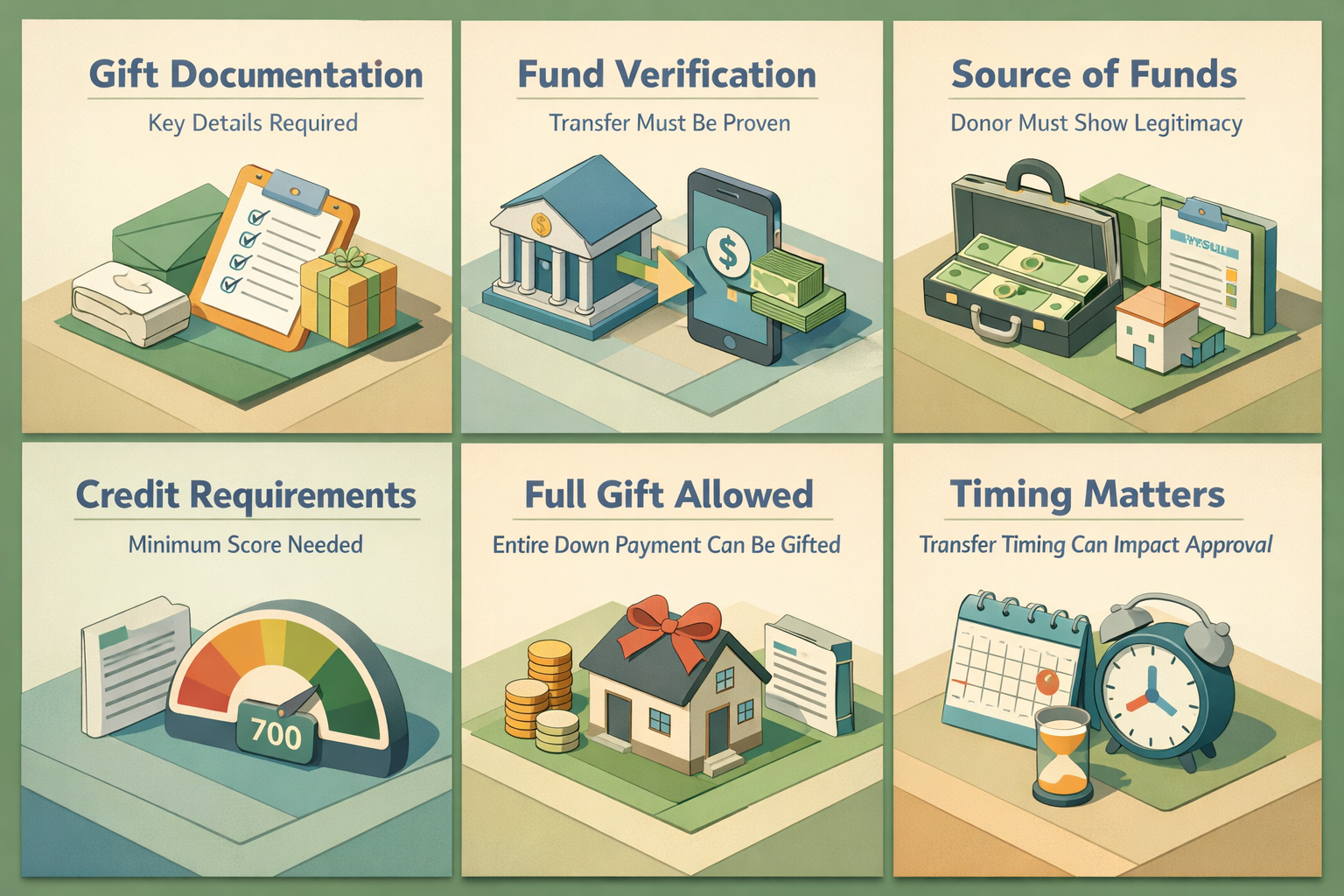
Meeting the requirements for conventional loan with 5% down from sibling gift funds involves several important conditions. Here's a breakdown of what lenders and agencies typically look for:
1. The Gift Must Be Fully Documented
Lenders require a gift letter signed by the donor — in this case, your sibling. This letter must typically include the donor's name, address, and relationship to the borrower, the exact dollar amount of the gift, the property address, and a clear statement that the funds are a gift and do not need to be repaid. Some lenders may also request the donor's phone number and signature date.
2. The Gift Funds Must Be Verified
Simply having a gift letter isn't enough. Lenders will also verify that the funds have actually been transferred. This typically involves providing bank statements showing the withdrawal from the donor's account and the deposit into the borrower's account. If the funds are wired directly to the closing agent, a wire transfer record may suffice.
3. The Donor Must Be Able to Show the Source of Funds
Lenders may ask the donor to provide bank statements or other documentation showing that the gifted funds were legitimately sourced. This helps prevent money laundering and ensures the gift wasn't itself borrowed from another party. If the source of the sibling's funds isn't clear, it could raise red flags during underwriting.
4. The Borrower Must Meet Standard Conventional Loan Credit Requirements
Gift funds don't replace the need to qualify on your own merits. Borrowers typically need a credit score of at least 620 to qualify for a requirements for conventional loan, though some lenders may require higher scores depending on the loan-to-value ratio and other risk factors. A stronger credit score could also lead to better interest rates and lower PMI costs.
5. The Entire Down Payment May Be Gifted
For a primary residence with a 5% down payment on a conventional loan, Fannie Mae guidelines generally allow the entire down payment to come from gift funds — including from a sibling. This is an important distinction from investment property or second home purchases, where gift funds may be restricted or prohibited. If you're buying a primary home, your sibling's gift could cover the full 5% without requiring you to contribute your own funds toward the down payment.
Understanding the Gift Letter in Detail
The gift letter is arguably the most important piece of documentation in a sibling gift down payment arrangement. Lenders rely on it to confirm that the money was freely given and won't need to be repaid. A poorly written or incomplete gift letter could delay or even derail your loan approval.
Most lenders provide a template or specific format for gift letters, so it's a good idea to ask your loan officer for the exact requirements before your sibling drafts the letter. Key elements that should be included are:
- Full legal names of both the donor (your sibling) and the borrower (you)
- Relationship clearly stated — for example, "sibling" or "brother/sister"
- Dollar amount of the gift, written out in full
- Property address of the home being purchased
- Statement that no repayment is expected or required
- Date and signature of the donor
Some lenders may also require the borrower to sign the gift letter as an acknowledgment. Once the letter is in order, you'll also need to provide the supporting bank statements or transfer records that show the money actually moved from your sibling's account to yours (or directly to closing).
It's also worth knowing that the timing of the gift transfer can matter. Some lenders prefer to see the funds "seasoned" in the borrower's account — meaning sitting there for 60 days or more — before the application is submitted. If the funds are already seasoned, lenders may not require as much documentation from the donor. However, if the transfer is recent, full documentation will likely be required.
How Gift Funds Affect Your Overall Loan Application
Using sibling gift funds can be a smart way to reach your down payment goal, but it's important to understand how they fit into the broader picture of your loan application. Lenders evaluate multiple factors when deciding whether to approve a conventional mortgage, and gift funds are just one piece of the puzzle.
Your debt-to-income ratio (DTI) remains one of the most important qualification factors. This ratio compares your monthly debt payments to your gross monthly income. For conventional loans, lenders typically look for a DTI below 45%, though some automated underwriting systems may approve loans at slightly higher ratios depending on other compensating factors.
Your employment history and income stability also play a significant role. Lenders generally want to see at least two years of steady employment in the same field. If you're self-employed or have variable income, additional documentation — such as two years of tax returns — may be required.
Reserves are another consideration. Even after the down payment and closing costs are covered, some lenders may want to see that you have additional savings — often referred to as "reserves" — in your account. Having reserves demonstrates financial resilience and may strengthen an application that includes gift funds.
Finally, the property itself must meet conventional loan standards. An appraisal will be required to confirm the home's market value, and the property must meet Fannie Mae or Freddie Mac's condition and eligibility requirements.
Common Mistakes to Avoid When Using Sibling Gift Funds
Even well-intentioned buyers can run into problems when using gift funds if they're not careful about the process. Here are some common pitfalls to watch out for:
- Depositing gift funds without documentation: If a large deposit appears in your bank account without explanation, underwriters will ask questions. Always document the transfer before or at the time it occurs.
- Treating gift funds as a loan: If there's any written or verbal agreement that the money will be paid back, it cannot be classified as a gift. This includes informal arrangements between siblings.
- Incomplete gift letters: Missing information in the gift letter — such as the property address or relationship to the borrower — can cause delays. Use a lender-provided template whenever possible.
- Waiting too long to transfer funds: Timing matters. Coordinate with your loan officer about when to transfer the gift so it aligns with the documentation requirements of your specific lender.
- Assuming all lenders have the same rules: While Fannie Mae and Freddie Mac set the baseline guidelines, individual lenders may have additional overlays. Always confirm the specific requirements with your loan officer early in the process.
Avoiding these mistakes can help keep your loan on track and prevent unnecessary delays during underwriting. The key is communication — with both your sibling and your lender — so everyone understands what's needed and why.
●Conclusion
Using a sibling's generosity to help fund your home purchase is a meaningful and often practical option for many homebuyers. The requirements for conventional loan with 5% down from sibling gift funds are specific but manageable when you're prepared. From drafting a proper gift letter to verifying the source of funds, each step in the process is designed to ensure the transaction is transparent and compliant with conventional loan guidelines.
If you're considering this path, start by speaking with a knowledgeable mortgage professional who can walk you through the documentation process and confirm that your situation meets all current guidelines. At LoanWise, we're here to help you navigate every step of the homebuying journey — from understanding your loan options to getting to the closing table with confidence. Reach out today to explore your mortgage options and find out how gift funds could help make your homeownership dream a reality.