
Inheriting a home can feel like both a blessing and a financial puzzle. When the property comes with an existing mortgage still attached, the situation becomes even more complex. Whether you plan to keep the home, refinance it, or convert it into a rental, you'll likely need to understand the requirements for conventional loan with inherited property with existing mortgage before making any decisions. This guide walks you through what lenders typically look for, how inheritance affects your financing options, and what steps you may need to take to protect your interests as the new owner.
How Inherited Property Ownership Works in Lending
When a homeowner passes away and leaves a property to an heir, the transfer of ownership typically happens through probate or a living trust. Once the title is legally transferred to you, you become the new owner — but that doesn't automatically mean the mortgage disappears. The existing mortgage generally stays attached to the property and remains the responsibility of whoever holds title.
From a lender's perspective, inherited property is treated somewhat differently than a standard home purchase. You didn't negotiate a sale price, and you may not have made a down payment in the traditional sense. These factors can influence how a conventional loan lender evaluates your application and what documentation they'll require to proceed.
It's worth noting that federal law — specifically the Garn-St. Germain Depository Institutions Act — may offer some protection to heirs. Under this law, a lender generally cannot enforce a due-on-sale clause when a borrower inherits a primary residence from a relative. This means the lender may not be able to demand immediate full repayment simply because ownership changed hands. However, the specifics can vary, so it's a good idea to consult with a housing attorney or HUD-approved housing counselor before assuming this protection fully applies to your situation.
Taking Over Existing Mortgage Inheritance: What Are Your Options
One of the first decisions you'll face is whether to continue making payments on the existing mortgage, formally assume the loan, or refinance into a new conventional loan. Each path carries different requirements and risks, so it's important to evaluate them carefully.
Continuing Payments Without Formal Assumption
Some heirs simply begin making monthly payments on the inherited mortgage without formally assuming the loan. While this may keep the lender from initiating foreclosure in the short term, it doesn't transfer the legal responsibility for the debt to you. This approach could create complications if you later want to refinance or sell the property, since the loan is still technically in the deceased borrower's name.
Formally Assuming the Mortgage
Loan assumption means you take legal responsibility for the existing mortgage. Not all mortgages are assumable, and even those that are may require lender approval. Conventional loans backed by Fannie Mae or Freddie Mac are generally not freely assumable in the way that FHA or VA loans might be. When taking over existing mortgage inheritance, you'd typically need to qualify under the lender's current credit and income standards — similar to applying for a new loan.
Refinancing Into a New Conventional Loan
Refinancing is often the most straightforward path for heirs who want full legal clarity. By refinancing, you pay off the inherited mortgage and replace it with a new loan in your name. This is where understanding the requirements for conventional loan with inherited property with existing mortgage becomes especially important, since you'll be evaluated as a brand-new borrower.
Core Credit and Income Standards for Conventional Financing
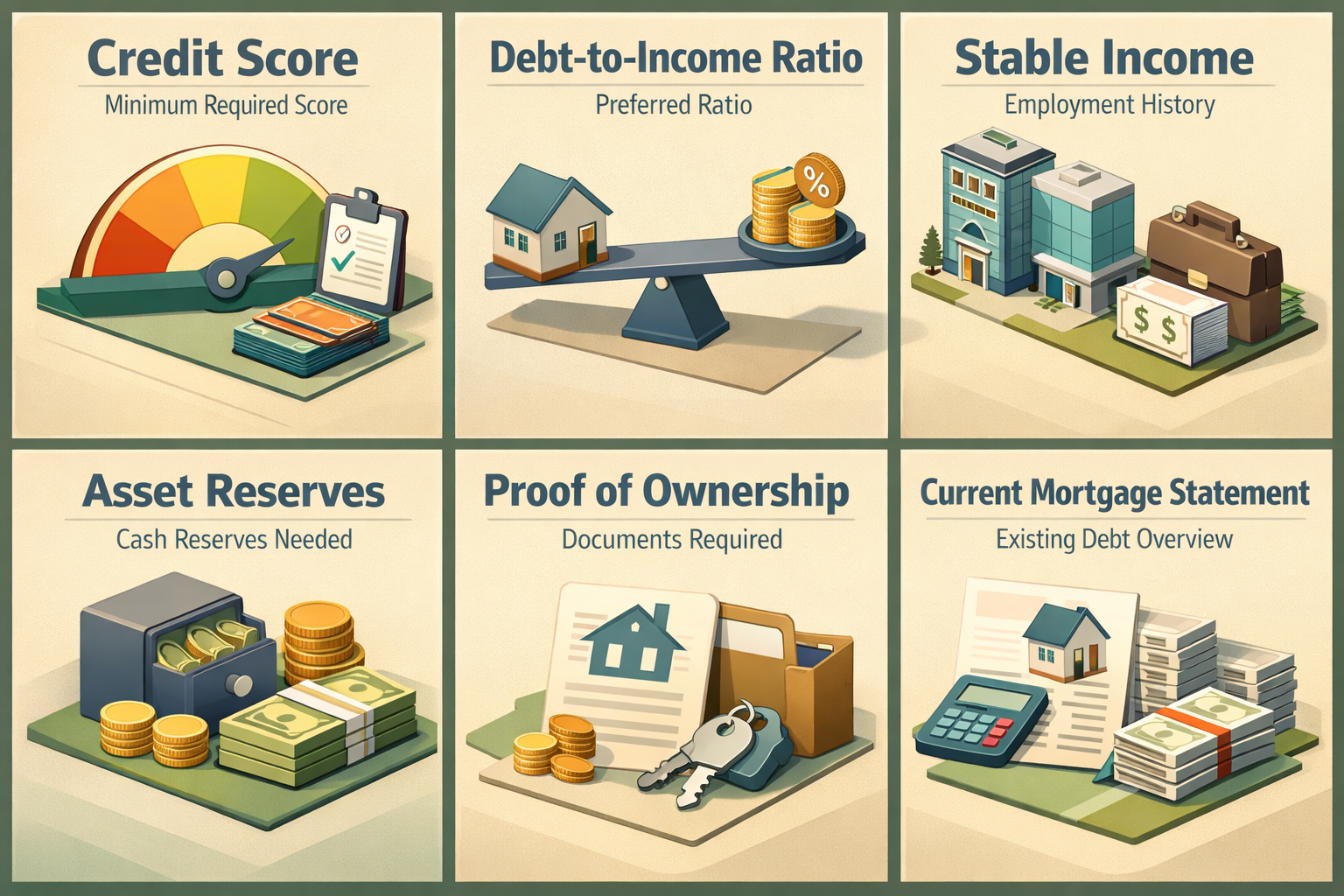
Whether you're assuming the loan or refinancing, conventional lenders will typically apply a standard set of qualification criteria. Meeting these benchmarks is usually necessary before a loan can be approved or a formal assumption can be processed.
- Credit Score: Most conventional loans require a minimum credit score, often cited around 620 or higher, though lenders may set their own overlays that are stricter. A higher score may help you qualify for better rates.
- Debt-to-Income Ratio (DTI): Lenders will review your total monthly debt obligations compared to your gross monthly income. Conventional guidelines typically prefer a DTI at or below 43–45%, though some loan programs may allow slightly higher ratios with compensating factors.
- Stable Income and Employment: Lenders generally want to see at least two years of consistent employment or self-employment history. If your income has gaps or varies significantly, it could complicate the approval process.
- Asset Reserves: Some lenders may require you to demonstrate cash reserves — typically enough to cover a few months of mortgage payments — especially if you're refinancing a non-owner-occupied inherited property.
It's also important to understand that if co-heirs are involved — meaning multiple family members inherited the property — lenders will want clarity on who holds title and whether all parties have agreed to the financing plan. Title issues must typically be resolved before a new requirements for conventional loan can close.
Property Appraisal and Valuation Considerations for Inherited Homes
Conventional lenders require an independent appraisal to confirm the property's current market value. For inherited homes, this step is especially important because the value may have changed significantly since the original mortgage was issued — particularly if the home has been in the family for many years.
The appraised value determines how much equity you may have in the property, which directly affects your loan-to-value ratio (LTV). Conventional loans typically require an LTV of 80% or lower to avoid private mortgage insurance (PMI). If the home has appreciated substantially, you may find that you have significant equity to work with, making the refinance process more manageable.
On the other hand, if the property has deferred maintenance or has declined in value, the appraised amount could come in lower than expected. This might affect how much you can borrow and whether the refinance makes financial sense at all. In some cases, heirs choose to make repairs or improvements before refinancing to help support a stronger appraisal outcome.
It's also worth knowing that lenders will typically review the property's condition during the appraisal. Conventional loans generally require the home to meet basic habitability and safety standards. If the property has significant structural issues, the lender may require repairs before approving the loan.
Documentation You'll Likely Need to Provide
The documentation requirements for an inherited property loan can be more involved than a standard home purchase. Lenders need to verify both your personal financial profile and the legal status of the property transfer. Here's what you may typically be asked to provide:
- Proof of Ownership Transfer: This may include a copy of the probated will, trust documents, letters testamentary, or a deed showing the transfer of title into your name.
- Current Mortgage Statement: The lender will want to review the existing mortgage balance, interest rate, payment history, and remaining term to understand the full picture of the existing debt.
- Title Report: A clean title is usually required before a new conventional loan can be issued. The title report will confirm there are no additional liens, unpaid taxes, or legal disputes attached to the property.
- Death Certificate: Lenders often require this to verify that ownership was legitimately transferred through inheritance.
- Personal Financial Documents: These typically include recent pay stubs, W-2s or tax returns, bank statements, and a list of your current monthly debts and assets.
Being organized and proactive about gathering these documents can help move the process along more efficiently. Delays in title resolution or missing paperwork are among the most common reasons inherited property financing takes longer than expected.
Investment Property and Rental Use: Additional Requirements to Know
Not every heir intends to live in the inherited home. Some may want to rent it out and use it as an income-generating property. If that's your plan, lenders will classify the home as an investment property rather than a primary residence, and different qualification standards may apply.
For conventional investment property loans, lenders often require a larger down payment — or in this case, more existing equity — and may charge a higher interest rate compared to owner-occupied financing. DTI requirements may also be stricter, and lenders could require additional reserves. That said, if you can document rental income from the property — or projected income based on comparable rentals in the area — lenders may be able to use a portion of that income to help qualify you.
If you're considering converting the inherited home into a rental, it may be wise to speak with a mortgage advisor early in the process. Understanding how the property's intended use affects your loan options could save you time and money down the line.
●Conclusion
Navigating the requirements for conventional loan with inherited property with existing mortgage can feel overwhelming, especially when you're also dealing with the emotional weight of losing a loved one. But understanding your options — from taking over existing mortgage inheritance responsibilities to refinancing into a new conventional loan — gives you a clearer path forward. The key is to act thoughtfully, gather your documentation early, resolve any title issues promptly, and work with a lender who has experience handling inherited property financing. At LoanWise, our team is ready to help you evaluate your situation and find a loan solution that fits your goals. Reach out today to get started with a personalized consultation.