
Going through a divorce is one of life's most stressful transitions, and the financial side of it can feel just as overwhelming as the emotional side. If you're trying to buy a home, refinance, or remove a name from an existing mortgage, you'll quickly discover that lenders have specific rules to follow. Understanding the requirements for conventional loan with divorce decree and shared property can help you move forward with confidence rather than confusion. Whether you're keeping the family home, buying a new one, or simply trying to untangle your finances, this guide walks you through what lenders look for and what you can do to put yourself in the best position possible.
How a Divorce Decree Affects Your Mortgage Eligibility
A divorce decree is a legally binding court document that outlines how assets, debts, and responsibilities are divided between two parties. When it comes to mortgage lending, this document carries significant weight. Lenders will typically request a copy of your divorce decree to verify the terms of any property division, financial obligations, and support payments.
For conventional loans — those backed by Fannie Mae or Freddie Mac guidelines — the divorce decree can influence your application in several key ways. First, it may establish whether you're responsible for a shared property, even if you no longer live in the property. Second, it may document alimony or child support income that you receive, which could actually strengthen your loan application if it meets certain duration and consistency requirements. Third, it may clarify whether you've been awarded full ownership of a shared property, which matters greatly if you plan to refinance.
Lenders aren't just looking at the document itself — they're looking at what it means for your debt-to-income ratio, your credit profile, and your legal ownership status. If there's any ambiguity in the decree, lenders may ask for additional documentation or legal clarification before moving forward.
Shared Property and Joint Mortgage Liability: What Lenders Need to Know
One of the most common complications in divorce-related mortgage situations involves shared property. If you and your former spouse co-own a home with an existing mortgage, that debt doesn't simply disappear because a judge signed a divorce decree. Mortgage lenders are not bound by divorce court orders — they still hold both borrowers legally responsible for the loan unless a formal refinance or assumption removes one party from the note.
This is a critical point that many people overlook. Even if your divorce decree states that your ex-spouse is responsible for paying the mortgage, that loan may still appear on your credit report. If payments are missed, your credit score could suffer. Lenders evaluating your new conventional loan application will often count that existing joint mortgage as part of your debt load unless you can prove you are no longer liable.
So what proof do lenders typically accept? Most conventional loan guidelines allow lenders to exclude a joint mortgage from your debt-to-income ratio if you can provide:
- A copy of the divorce decree stating that the other party is responsible for the payment
- Evidence of 12 months of consistent on-time payments made by the other party, typically shown through bank statements or mortgage statements
- Documentation that the property has been legally transferred or is in the process of being transferred
Without this evidence, underwriters will likely include that joint mortgage payment in your qualifying ratios, which could reduce the loan amount you're eligible for or even cause a denial.
Requirements for Conventional Loan with Divorce Decree and Shared Property: A Closer Look
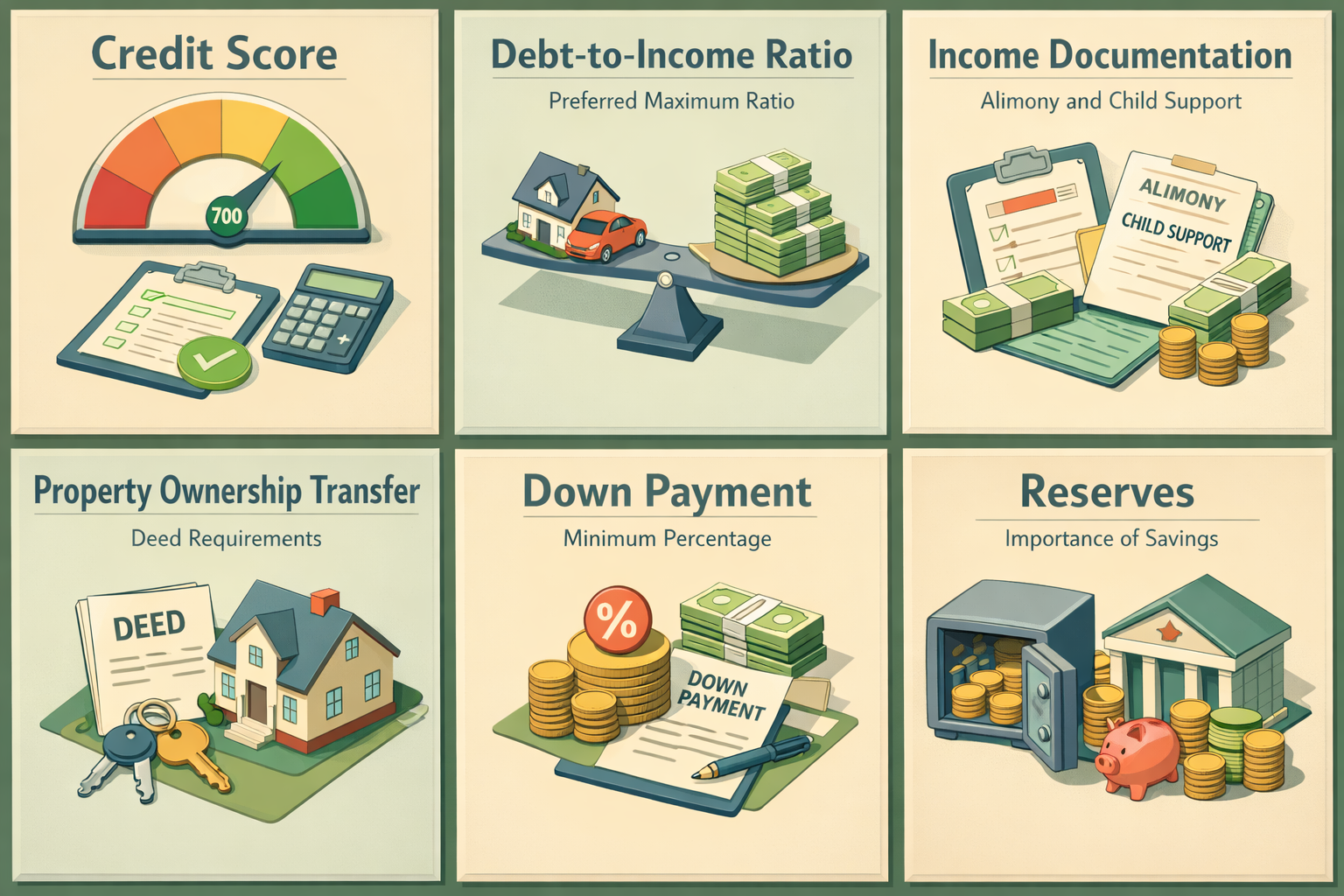
When you apply for a conventional loan in a post-divorce scenario, lenders follow Fannie Mae and Freddie Mac guidelines closely. Understanding the requirements for conventional loan with divorce decree and shared property helps you prepare the right paperwork and avoid delays. Here's what you should generally expect:
Credit Score and History
Conventional loans typically require a minimum credit score of 620, though a higher score often leads to better interest rates and terms. Divorce proceedings can sometimes strain your credit, especially if joint accounts were mismanaged or if there were late payments during the separation period. It may be worth reviewing your credit report before applying to identify any issues that need addressing.
Debt-to-Income Ratio
Your debt-to-income (DTI) ratio compares your monthly debt obligations to your gross monthly income. Most conventional loans prefer a DTI at or below 45%, though some exceptions may be made with strong compensating factors. Joint debts assigned to your former spouse in the divorce decree may still count against you unless you meet the exclusion criteria mentioned above.
Income Documentation
If you're receiving alimony or child support, lenders may count it as qualifying income provided it has been received consistently and is expected to continue for at least three years. You'll need to provide your divorce decree and bank statements showing regular deposits. If you're paying support, those obligations will be counted as monthly debts in your DTI calculation.
Property Ownership Transfer
If the shared property is being awarded to you, lenders will want to see the executed deed or a quitclaim deed transferring full ownership. If you're refinancing to remove your ex-spouse's name, you'll typically need a new appraisal and must qualify for the loan entirely on your own financial profile.
Down Payment and Reserves
Conventional loans generally require a minimum down payment of 3% to 5% for primary residences, though putting down 20% eliminates the need for private mortgage insurance. After a divorce, liquid assets can sometimes be limited, so documenting your savings carefully is important. Lenders will want to see where your down payment funds are coming from, and gift funds from a family member may be allowed under certain guidelines.
Divorce Property Division Mortgage Options: Choosing the Right Path Forward
When it comes to divorce property division mortgage options, there's rarely a one-size-fits-all solution. The right strategy depends on your financial goals, your credit health, and how the shared property situation is being resolved. Here are several common paths divorcing homeowners and buyers tend to consider:
Refinancing to Remove a Co-Borrower
If you're keeping the family home, refinancing is typically the most straightforward way to remove your ex-spouse from the mortgage. This gives you sole ownership and responsibility for the loan. You'll need to qualify based on your own income, credit, and debt load. Many lenders may allow a cash-out refinance at the same time, which could help you buy out your ex-spouse's equity share if that's part of the divorce settlement.
Selling the Home and Splitting Proceeds
In many divorces, selling the shared property and dividing the equity is the cleanest solution. Once the home is sold, both parties walk away with their share and can apply for new mortgages independently. This option may also reset the clock on certain tax considerations, so consulting a financial advisor could be beneficial.
Assuming the Existing Mortgage
Some conventional loans may allow one spouse to assume the existing mortgage, effectively taking over the loan under the original terms. However, not all conventional loans are assumable, and lender approval is typically required. This option may be worth exploring if the existing loan carries a favorable interest rate.
Buying a New Home After Divorce
If neither party is keeping the home, both individuals may be ready to purchase independently after the divorce is finalized. In this case, having a clean divorce decree that outlines debt responsibilities can actually simplify the application process. Lenders will want to see that all shared obligations are clearly addressed before approving a new loan.
Common Mistakes to Avoid When Applying After Divorce
Even with the best intentions, there are a few missteps that can slow down or derail a conventional loan after divorce. Being aware of these pitfalls ahead of time can save you a great deal of stress and time.
- Not disclosing the divorce: Lenders ask about your marital and property ownership status as part of the application process. Failing to disclose a divorce or shared property could be considered misrepresentation, which carries serious consequences.
- Assuming the divorce decree protects your credit: As mentioned earlier, your credit is still tied to any joint mortgage even after a court order. Monitor your credit closely and communicate with your lender if you see unexpected activity.
- Failing to update legal ownership records: If a property has been awarded to you but the deed hasn't been updated, lenders may have difficulty confirming your ownership. Work with a real estate attorney to ensure all transfers are properly recorded.
- Overlooking alimony and child support in income calculations: These payments can either help or hurt your application depending on whether you're receiving or paying them. Make sure your loan officer understands your full picture.
- Applying too soon after the divorce: If your credit took a hit or your income is still stabilizing, it may be worth waiting a few months before applying. Building a stronger financial profile before submitting your application could lead to better terms.
Working with a Lender Who Understands Post-Divorce Financing
Post-divorce mortgage situations can be more complex than a standard application, which is why working with a knowledgeable lender makes a real difference. Not all loan officers are equally experienced with the nuances of divorce-related documentation, shared property complications, and income changes.
When you're evaluating lenders, it's worth asking upfront whether they have experience with divorce-related loan scenarios. A seasoned mortgage professional can help you understand how your specific decree terms will be interpreted under conventional guidelines, what documentation you'll need to gather, and which loan product might best fit your situation.
It's also a good idea to get pre-approved before you start shopping for a home or committing to a refinance. Pre-approval gives you a clear picture of your borrowing power and helps identify any potential roadblocks early — before they become urgent problems. Lenders who specialize in post-divorce scenarios may also be able to suggest alternative loan programs if conventional financing doesn't fully align with your current situation.
Remember, your financial situation after a divorce is not permanent. With the right planning and guidance, most people are able to move forward toward stable homeownership in a reasonable timeframe.
●Conclusion
Navigating the requirements for conventional loan with divorce decree and shared property may feel daunting at first, but it becomes much more manageable once you understand what lenders are looking for. The key is preparation: gather your documentation early, understand how shared debts and income will be treated, and work with a mortgage professional who knows how to guide you through the process. Whether you're keeping the family home, refinancing, or starting fresh with a new purchase, there are real and practical paths forward. LoanWise is here to help you explore your options and take the next step toward financial stability and homeownership with clarity and confidence.