
If you earn income through 1099 contracts and regularly pick up overtime work, you might be wondering whether a conventional mortgage is within reach. The good news is that it absolutely can be — but the path to approval looks a little different than it does for a traditional W-2 salaried employee. Lenders tend to evaluate 1099 earners and overtime income through a more detailed lens, focusing heavily on consistency, documentation, and a two-year earnings history. Understanding how to qualify for a conventional loan with 1099 overtime income starts with knowing what underwriters are looking for and how to present your financial picture as clearly and compellingly as possible.
What Makes 1099 Overtime Income Different from Regular Employment Income
When a borrower earns income as a W-2 employee, lenders can easily verify a steady paycheck from a single employer. With 1099 income, the dynamic shifts. You're typically working as an independent contractor, freelancer, or gig worker — and your overtime earnings may fluctuate from month to month or season to season.
Conventional loans backed by Fannie Mae and Freddie Mac have specific guidelines about how non-traditional income is evaluated. Unlike regular salary, 1099 overtime income may not be predictable or guaranteed in the eyes of an underwriter. That doesn't mean it can't be counted — it means it must be documented carefully and shown to be likely to continue.
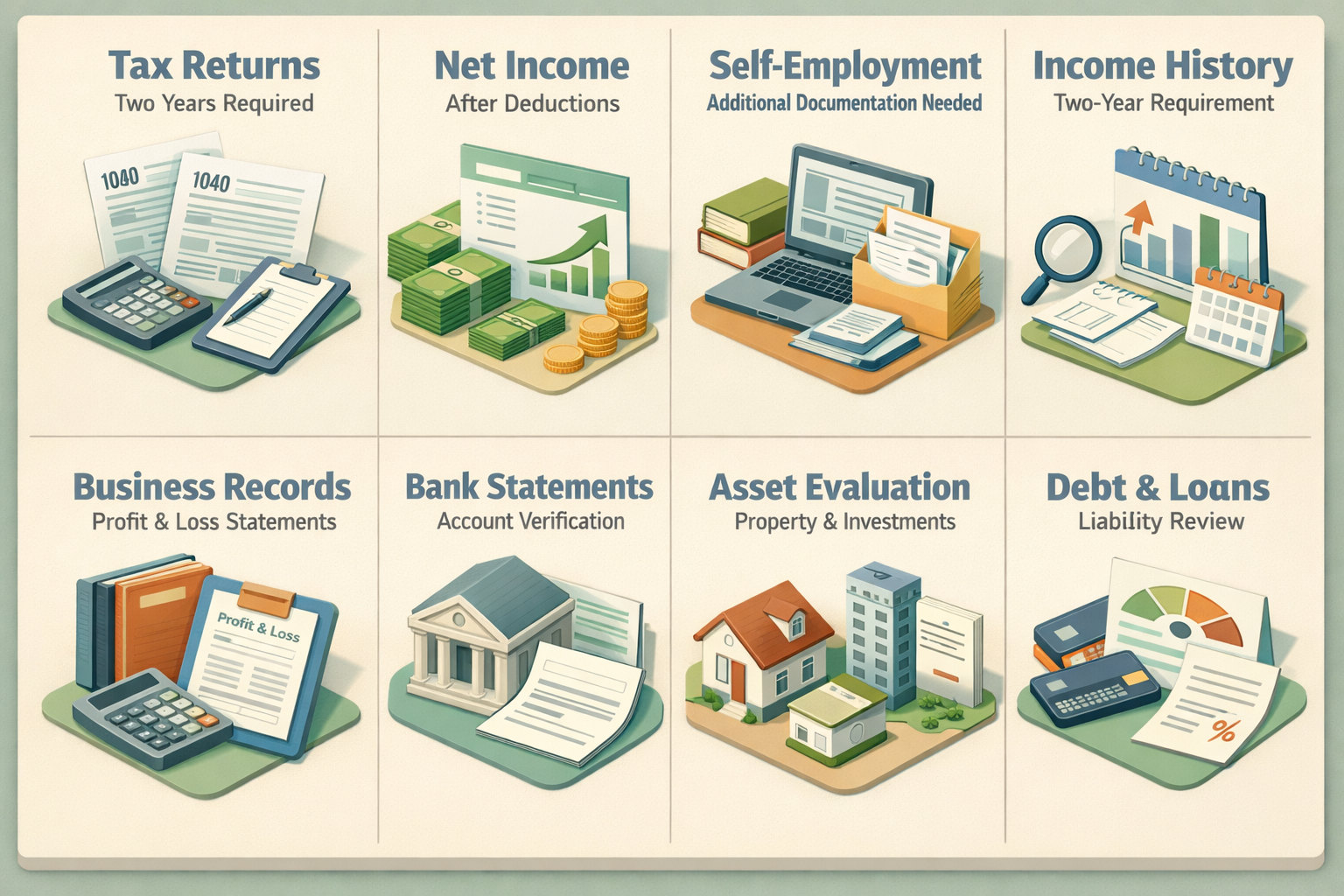
Some of the key distinctions lenders typically consider include:
- Tax returns over pay stubs: Since 1099 workers don't receive traditional pay stubs, lenders usually rely on two years of federal tax returns to verify earnings.
- Net income after deductions: 1099 contractors often write off business expenses, which reduces their taxable income. Lenders generally use the net income shown on your tax returns — not your gross earnings.
- Self-employment classification: In some cases, lenders may classify 1099 workers as self-employed, which triggers additional documentation requirements under conventional loan guidelines.
Being aware of these differences upfront allows you to plan your documentation strategy well before you submit a conventional loan application.
The Two-Year History Rule and Why It Matters for Overtime Earners
One of the most important benchmarks in conventional lending is the two-year income history requirement. For borrowers asking how to qualify for a conventional loan with 1099 overtime income, this rule is especially significant. Lenders want to see that your overtime earnings are consistent and have been part of your income stream for at least 24 months.
If you've only recently started picking up overtime work — or if your 1099 contracts are relatively new — you may face a more challenging approval process. Underwriters typically need evidence that the income will continue, and a short earnings history makes that harder to demonstrate.
Here's what the two-year history typically involves for 1099 overtime earners:
- Two years of complete federal income tax returns (including all schedules)
- Year-to-date profit and loss statements, especially if you operate as a sole proprietor
- Bank statements showing consistent deposits that align with your reported income
- Contracts or letters from clients confirming ongoing work, where available
Lenders may average your income over the two-year period. If your earnings fluctuated significantly — say, much higher one year and lower the next — underwriters might use the lower figure or the average, depending on their internal guidelines. Planning ahead by maintaining stable or growing income across both years can strengthen your position considerably.
How Lenders Calculate Qualifying Income for 1099 Contractors
Understanding how lenders actually calculate your qualifying income is one of the most practical steps you can take before applying. For 1099 earners, the process is different from simply presenting a salary figure.
Conventional lenders typically follow Fannie Mae or Freddie Mac guidelines when evaluating self-employed or 1099 borrowers. The general approach involves:
- Adding back certain deductions: Some non-cash expenses — like depreciation — may be added back to your net income when calculating your qualifying amount.
- Averaging annual income: Lenders often add the net income from both tax years and divide by 24 months to arrive at a monthly qualifying figure.
- Reviewing Schedule C (or other applicable schedules): If you file as a sole proprietor, Schedule C shows your business income and expenses. Underwriters scrutinize this closely.
It's also worth knowing that if your income has been declining year over year, some lenders may use the more recent, lower figure rather than the average. This is why a consistent or upward earnings trend tends to support a stronger application.
Additionally, overtime income specifically — whether earned through 1099 contracts or supplemental work — may need to be documented as a regular and expected part of your compensation. If overtime is sporadic or tied to a single project, it may receive less weight during underwriting.
Navigating a Conventional Loan with Seasonal Overtime as a 1099 Worker
Seasonal workers present a unique challenge in the mortgage world. If your overtime income peaks during certain months — like a contractor who earns most of their income in warmer months, or a tax professional who takes on extra 1099 work in early spring — lenders will want to understand the seasonal nature of your earnings.
Qualifying for a conventional loan with seasonal overtime is possible, but it requires showing that the income recurs reliably each season. Lenders generally look for a pattern across at least two years that suggests the seasonal income is not a one-time event but a predictable and repeating cycle.
Some practical strategies for seasonal overtime earners include:
- Documenting all income seasons: Make sure your tax returns reflect all seasonal earnings clearly. Gaps or irregularities can raise questions during underwriting.
- Providing a written explanation: A brief letter of explanation describing the nature of your seasonal work — when it occurs, why it varies, and why it's expected to continue — can help provide context to the underwriter.
- Using bank statements to reinforce patterns: Bank deposit histories that align with your seasonal income cycles can serve as supporting evidence alongside your tax returns.
- Working with an experienced lender: Not all lenders handle seasonal 1099 income the same way. Working with a mortgage professional who has experience underwriting non-traditional income types can make a meaningful difference in how your file is reviewed.
It's worth noting that some lenders may be more flexible in how they interpret seasonal patterns, while others apply stricter standards. Shopping your application with multiple lenders — or working with a mortgage broker — could help you identify the most favorable terms available for your situation.
Credit, Debt-to-Income Ratio, and Down Payment Expectations
Beyond income documentation, conventional loans carry standard qualification benchmarks that all borrowers — including 1099 overtime earners — need to meet. These include credit score minimums, debt-to-income (DTI) ratio limits, and down payment requirements.
Credit Score: Conventional loans typically require a minimum credit score of 620, though some lenders may set higher thresholds depending on the loan size and other risk factors. A stronger credit score — generally 740 or above — often unlocks better interest rates and reduces the cost of private mortgage insurance (PMI), if applicable.
Debt-to-Income Ratio: For 1099 borrowers, DTI can be a sensitive area because your qualifying income may already be reduced after deductions. Conventional loan guidelines generally allow a DTI of up to 45%, though some automated underwriting systems may approve borrowers at slightly higher ratios with compensating factors. Keeping your monthly debt obligations manageable relative to your income is especially important when you're earning 1099 income with variable overtime.
Down Payment: Conventional loans can allow down payments as low as 3% for certain borrowers, though putting down 20% eliminates the need for PMI. For 1099 overtime earners whose qualifying income may be lower due to deductions, a larger down payment can help reduce the loan amount and improve approval odds.
Addressing these three pillars proactively — credit, DTI, and down payment — alongside strong income documentation gives your mortgage application the best chance of moving smoothly through underwriting.
Documentation Checklist for 1099 Overtime Borrowers Applying for a Conventional Loan
Preparation is one of the most powerful tools you have as a 1099 borrower. Lenders appreciate organized, complete files — and submitting a thorough documentation package upfront can prevent delays and reduce the back-and-forth that often slows down non-traditional income applications.
Here's a practical checklist of documents that 1099 overtime earners typically need when applying for a conventional loan:
- Two years of personal federal tax returns (all pages, all schedules)
- Two years of 1099 forms from all income sources
- Year-to-date profit and loss statement (especially for sole proprietors)
- Two to three months of recent bank statements (personal and business, if applicable)
- Copies of current contracts or client agreements showing ongoing work
- A written explanation of seasonal income patterns, if relevant
- Business license or registration documents (if self-employed as a business entity)
- Most recent two years of business tax returns (if you operate as an LLC, S-Corp, or partnership)
Having these documents ready before you begin the application process can speed things up significantly. It also demonstrates to the lender that you're organized and serious — qualities that can build confidence in your file even before underwriting begins.
Working with the Right Lender Makes All the Difference
Not every lender approaches 1099 overtime income the same way. While Fannie Mae and Freddie Mac set baseline guidelines, individual lenders have their own overlays — additional requirements layered on top of agency standards. This means that one lender might be more comfortable with seasonal 1099 overtime income than another, even for the same loan product.
If you've been turned down or discouraged by one lender, it may be worth exploring other options. Mortgage brokers, for instance, can access multiple wholesale lenders and may be able to match your specific income profile with a lender whose guidelines are a better fit. Some lenders specialize in self-employed and non-traditional income borrowers and have streamlined processes for handling 1099 documentation.
Before applying, it can help to have a candid conversation with your mortgage professional about your income structure. Share your tax returns, explain your overtime situation, and ask directly how your income would be calculated under their guidelines. This kind of upfront transparency can save time and help you find the right lending partner for your path to homeownership goals.
Remember, learning how to qualify for a conventional loan with 1099 overtime income isn't just about meeting a checklist — it's about telling your financial story clearly and finding a lender who understands it.
●Conclusion
Qualifying for a conventional loan as a 1099 overtime earner is a realistic goal — it just requires more preparation and documentation than a standard W-2 application. By maintaining a consistent two-year income history, understanding how lenders calculate your qualifying income, addressing your credit and DTI profile, and working with an experienced mortgage professional, you can put together a compelling application that stands up to underwriting scrutiny. Whether your overtime work is year-round or follows a seasonal rhythm, the right lender and the right strategy can help you cross the threshold into homeownership with confidence. At LoanWise, we're here to help you navigate every step of that journey.