
Buying a home is one of the biggest financial steps you'll ever take, and coming up with a down payment can feel like the hardest part. Fortunately, conventional mortgage guidelines may allow you to use gift funds from a family member — including a sibling — to help cover some or all of your down payment. However, there are specific requirements for conventional loan with 10% down from sibling gift funds that you'll need to understand before counting on that money. Whether you're a first-time homebuyer or a repeat purchaser, knowing the rules upfront could save you a great deal of stress during the loan approval process.
What a Conventional Loan with 10% Down Actually Means
A conventional loan is a mortgage that's not backed by a government agency like the FHA, VA, or USDA. Instead, it typically follows guidelines set by Fannie Mae or Freddie Mac, the two government-sponsored enterprises that purchase most conventional mortgages on the secondary market. These guidelines govern everything from credit score minimums to how your down payment can be sourced.
When you put down 10% on a conventional loan, you're financing 90% of the home's purchase price. This is known as a 90% loan-to-value (LTV) ratio. At this LTV level, private mortgage insurance (PMI) is typically required, which adds a monthly cost to your payment until you've built enough equity. However, a 10% down payment is often more achievable than the traditional 20%, making it a popular option for many homebuyers.
It's worth noting that conventional loans with less than 20% down come with slightly stricter scrutiny, particularly around how the down payment was sourced. That's where sibling gift funds can become a topic worth understanding thoroughly.
Are Siblings Considered Eligible Gift Donors Under Conventional Guidelines?
Under Fannie Mae and Freddie Mac guidelines, gift funds for a conventional loan must come from an eligible donor. Both agencies define eligible donors as relatives of the borrower, and siblings are generally included in that definition. This typically covers biological siblings, step-siblings, and in some cases half-siblings, though lenders may interpret specific family relationships slightly differently.
It's important to understand that not everyone can give you gift money for a conventional loan. Gifts from friends, coworkers, or distant acquaintances are generally not permitted under standard conventional loan guidelines. The relationship between the donor and borrower must be clearly established and documented. A sibling gift, when properly verified, can be a legitimate and fully acceptable source of down payment funds.
Lenders will want to confirm the relationship, so be prepared to provide documentation that establishes you and your sibling as family members. This could include shared last names, family records, or a signed gift letter that clearly states the relationship.
The Gift Letter: A Non-Negotiable Part of the Documentation Process
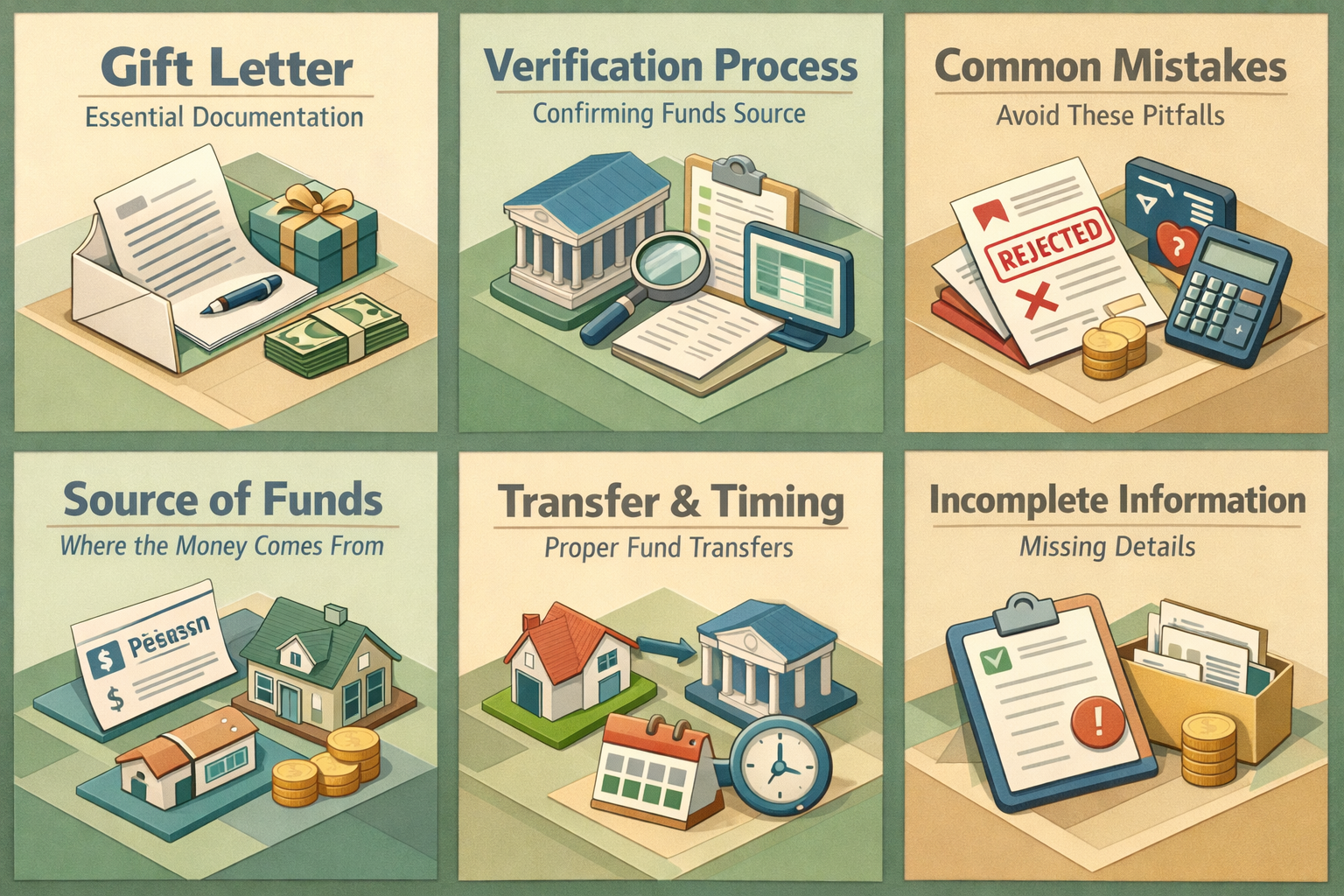
One of the most critical requirements for conventional loan with 10% down from sibling gift funds is the gift letter. This is a written statement from your sibling — the donor — that clearly outlines the nature of the funds. Without it, the lender may not be able to approve the use of the gift for your down payment.
A properly formatted gift letter typically includes the following:
- The donor's name, address, and relationship to the borrower — your sibling must clearly identify themselves and confirm their family connection to you.
- The exact dollar amount of the gift — the letter must specify precisely how much money is being given.
- The property address — the gift should be tied to the specific home being purchased.
- A statement that the funds are a gift, not a loan — this is arguably the most important element. The letter must explicitly state that no repayment is expected or required.
- The donor's signature and date — the gift letter must be signed to be valid.
Lenders take this statement seriously because they need to confirm that the gift won't create a hidden liability for you. If the funds were actually a loan in disguise, it could affect your debt-to-income ratio and your overall ability to repay the mortgage.
How Lenders Verify and Source the Gift Funds
Submitting a gift letter is usually just the beginning. Most lenders will also require documentation that proves the funds actually came from your sibling and were deposited into your account. This process, often called sourcing and seasoning, is designed to ensure the money wasn't borrowed from another party or came from an undisclosed source.
Here's what lenders commonly ask for when verifying a sibling's gift funds:
- Bank statements from the donor — your sibling may need to provide recent bank statements showing the funds were available in their account before the transfer.
- Evidence of the transfer — this could be a wire transfer confirmation, a canceled check, or a transaction record showing the money moved from your sibling's account to yours.
- Your own bank statements — lenders will review your account history to confirm the deposit and trace the source of the funds.
If the gift funds have been sitting in your bank account for at least 60 days — a period often referred to as seasoning — lenders may not require as much documentation. Seasoned funds are generally viewed as more straightforward because they've become part of your established financial history. However, if the funds were recently transferred, expect more thorough verification.
Credit Score and Income Requirements That Still Apply
Using sibling gift funds for your down payment doesn't change the other qualification standards for a conventional loan. You'll still need to meet the lender's credit, income, and debt-to-income requirements regardless of where your down payment comes from.
For a conventional loan with a 10% down payment, lenders typically look for:
- A minimum credit score of around 620 — though some lenders may prefer higher scores, especially at 90% LTV. A stronger credit score could help you secure a better interest rate.
- A debt-to-income (DTI) ratio generally at or below 45% — this measures how much of your monthly gross income goes toward debt payments, including the new mortgage.
- Stable employment and income history — lenders typically want to see at least two years of consistent income, whether from a W-2 job, self-employment, or other verifiable sources.
- Sufficient reserves — some lenders may require you to have additional savings beyond the down payment to cover a few months of mortgage payments.
It's also worth knowing that at 90% LTV, private mortgage insurance will likely be required. PMI costs vary but are typically added to your monthly mortgage payment until your loan balance drops below 80% of the home's value. This is an important factor to include in your conventional loan affordability calculations.
Common Mistakes to Avoid When Using a Sibling Gift for Your Down Payment
Even when a sibling is a fully eligible gift donor, mistakes in how the gift is handled can delay or derail your loan approval. Being aware of these common pitfalls can help you stay on track.
- Failing to get the gift letter early — waiting until the last minute to request a gift letter can create unnecessary urgency and errors. Ask your sibling to prepare the letter as soon as you know you'll be using the funds.
- Accepting cash gifts — cash is very difficult to trace, and lenders generally won't accept cash as a verifiable gift. Always use a traceable transfer method such as a wire transfer or check.
- Treating the gift like a loan — even informal agreements to repay the money can cause serious problems. If your lender discovers any indication of a repayment arrangement, they may disqualify the funds entirely.
- Depositing the gift into multiple accounts — moving gift funds through several accounts makes it harder to trace and may raise red flags during underwriting. Keep the transfer as straightforward as possible.
- Not communicating with your lender early — let your lender know upfront that you'll be using gift funds. This gives them time to outline exactly what documentation they'll need.
How to Prepare for a Smooth Approval Using a Conventional Loan Sibling Gift Down Payment
A conventional loan sibling gift down payment arrangement can work very well when it's planned carefully. Here are some steps to help make the process go as smoothly as possible:
- Talk to your lender before you shop for a home — getting pre-approved early gives you a chance to confirm that your specific situation qualifies and to gather all required documents in advance.
- Coordinate timing with your sibling — make sure the gift funds are transferred in a way that aligns with your lender's documentation requirements. If seasoning is possible, transferring funds well in advance may simplify the process.
- Keep all records organized — save every document related to the gift transfer, including bank statements, transaction confirmations, and the signed gift letter.
- Work with an experienced mortgage professional — a knowledgeable loan officer can guide you through the specific paperwork required by your lender and the agency guidelines (Fannie Mae or Freddie Mac) that govern your loan.
Understanding the 10% down conventional mortgage process from start to finish — and knowing exactly how gift funds fit into it — puts you in a much stronger position as a borrower. With the right preparation, using a sibling's generosity to help you reach homeownership is not only possible, it can be a smooth and rewarding experience.
●Conclusion
Navigating the requirements for conventional loan with 10% down from sibling gift funds doesn't have to be overwhelming. The key is understanding what lenders expect: a proper gift letter, documented proof of the transfer, and confirmation that the funds are truly a gift with no repayment obligation. Combined with solid credit, stable income, and a debt-to-income ratio within acceptable limits, a sibling's gift can serve as a legitimate and powerful tool in your homebuying journey. If you're ready to take the next step, speak with a LoanWise mortgage expert today to review your options and get pre-approved with confidence.