Purchasing a condominium with an FHA loan can be a smart move for first-time homebuyers and budget-conscious buyers alike. FHA loans are known for their flexible credit requirements and lower down payment options, making homeownership more accessible. But when you add a condominium purchase into the mix — particularly one with special assessments — the process becomes a little more layered. If you've been asking, what are closing costs for FHA loan on condo with special assessments, you're not alone. This guide breaks down the key fees involved, how special assessments factor in, and what homebuyers should know before reaching the closing table.
Understanding FHA Condo Loan Eligibility Requirements
Before diving into closing costs, it's important to understand that not every condominium qualifies for FHA financing. The Federal Housing Administration maintains a list of approved condo projects, and the unit you're purchasing must meet specific project-level requirements before your loan can move forward.
To qualify, the condo development typically needs to meet standards related to owner-occupancy ratios, insurance coverage, reserve fund levels, and delinquency rates among HOA dues. In 2019, FHA expanded its Single Unit Approval (SUA) process, which allows individual condo units in non-approved projects to be considered for FHA financing under certain conditions — a helpful option for buyers eyeing properties outside of fully approved complexes.
Why does this matter for closing costs? Because the approval process itself can generate additional fees. If a project requires SUA review or spot approval, your lender may charge a processing fee to complete that review. These fees are typically modest but should be factored into your overall budget.
- FHA-approved condo projects are searchable through HUD's online condo database
- Single Unit Approval may allow financing in non-approved buildings under specific criteria
- HOA financial health — including reserve fund adequacy — plays a role in FHA eligibility
What Are Closing Costs for FHA Loan on Condo with Special Assessments
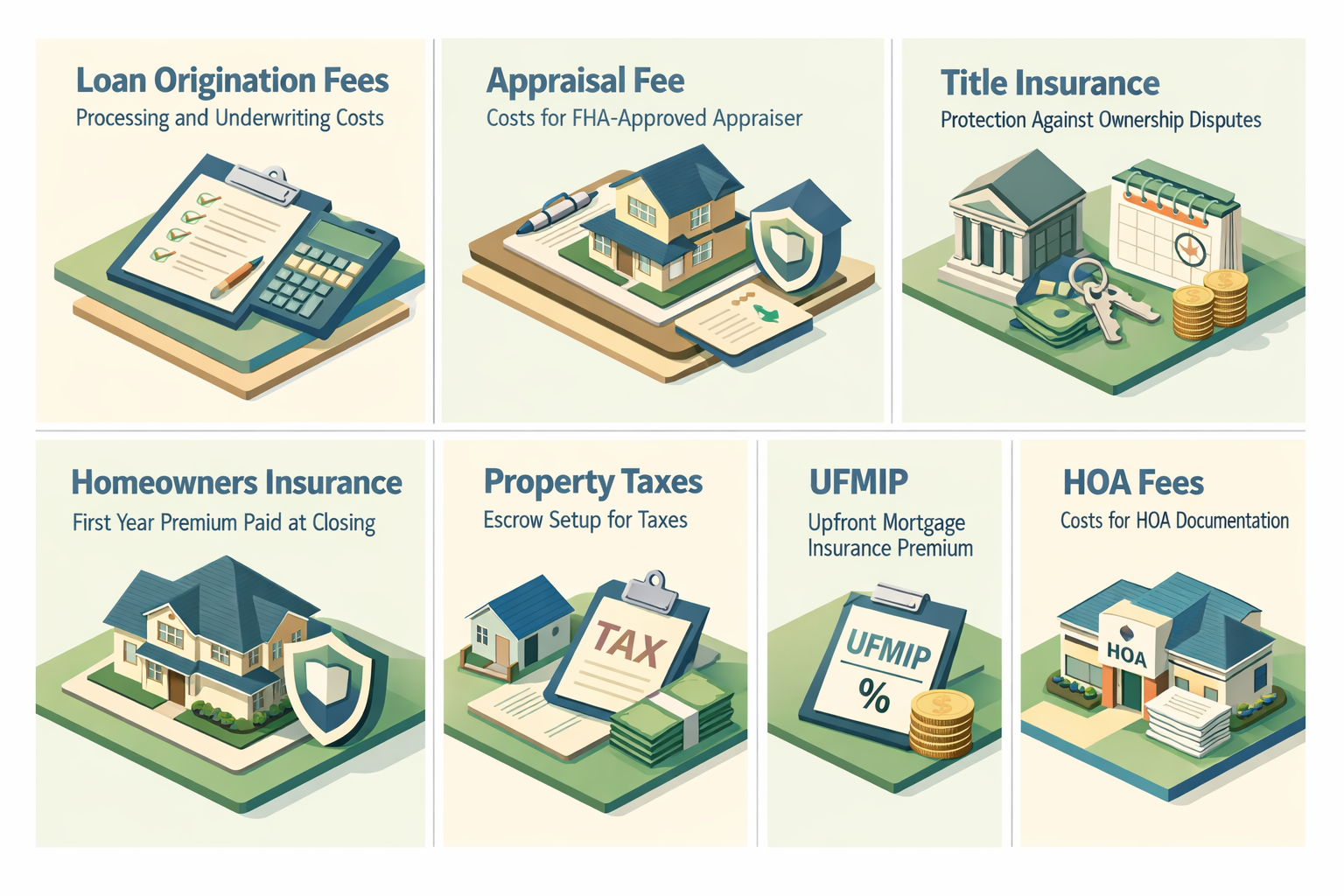
So, what are closing costs for FHA loan on condo with special assessments? In general, FHA condo loan closing costs are similar to those of a standard FHA home purchase, but special assessments can introduce additional considerations that affect your out-of-pocket expenses and even your loan eligibility.
Standard FHA closing costs typically include the following categories:
- Loan origination fees: Charged by the lender for processing and underwriting your loan, often ranging from a fraction of a percent to around 1% of the loan amount
- Appraisal fee: FHA requires an FHA-approved appraiser, and condo appraisals may cost slightly more due to the complexity of evaluating shared-space properties
- Title insurance and title search: Protects the buyer and lender from ownership disputes or liens on the property
- Prepaid interest: Interest that accrues between your closing date and the end of the month
- Homeowners insurance: The first year's premium is typically paid at closing
- Property taxes (escrow setup): Lenders often collect several months of property taxes upfront to establish your escrow account
- FHA Upfront Mortgage Insurance Premium (UFMIP): FHA loans require an upfront MIP, which is currently set at 1.75% of the base loan amount and is typically rolled into the loan rather than paid at closing
- HOA-related documentation fees: Condo purchases often require HOA resale packages, questionnaires, or condo cert fees that can range from modest to several hundred dollars depending on the HOA
When special assessments are present, the picture changes. A special assessment is a one-time or periodic charge levied by the homeowners association to fund major repairs or capital improvements — such as roof replacement, elevator upgrades, or structural remediation. These charges can be significant, and they raise important questions at the underwriting stage.
How Special Assessments Can Affect Your FHA Condo Loan Approval
Special assessments don't always prevent an FHA loan from being approved, but they do require careful review. Underwriters and FHA guidelines are concerned with the financial health of the condo association. A large, unresolved special assessment may signal that the building has deferred maintenance or inadequate reserve funds — both of which are red flags under FHA's project approval criteria.
Here's what lenders typically examine when a special assessment is disclosed:
- Reason for the assessment: Routine capital improvements are generally viewed more favorably than assessments stemming from structural deficiencies or code violations
- Assessment amount and duration: A modest short-term assessment is often less concerning than a large multi-year levy
- HOA reserve fund status: FHA guidelines generally expect that at least 10% of the HOA's budget is allocated to reserves. If an assessment suggests the reserve fund has been depleted, this could jeopardize project approval
- Payment responsibility: Whether the seller is paying the outstanding assessment balance at closing or passing it to the buyer matters significantly
If the seller agrees to pay off the special assessment at or before closing, the risk to the buyer and lender is reduced. However, if the assessment transfers to the new owner, lenders will want to understand the monthly payment obligation and how it affects your debt-to-income ratio. This added monthly cost could influence how much you qualify to borrow.
Budgeting for FHA Condo Loan Closing Costs When Assessments Are Involved
Planning your budget carefully is essential when buying a condo with an FHA loan — and even more so when special assessments are part of the equation. Here are some practical steps to help you stay financially prepared.
Request the HOA's Financial Documents Early
Ask the seller or listing agent for the HOA's financial statements, budget, meeting minutes, and any pending or approved special assessment disclosures. Most states require sellers to disclose known assessments, but getting these documents early helps you avoid surprises during underwriting.
Factor Assessment Costs Into Your Closing Budget
If you're responsible for any portion of a special assessment at closing — for example, the seller's prorated share — this cost will appear on your Closing Disclosure. Make sure you've confirmed with your real estate agent and attorney who is responsible for what portion of any outstanding balance.
Understand Seller Concessions
FHA guidelines allow sellers to contribute up to 6% of the home's purchase price toward the buyer's closing costs. In condo transactions with special assessments, negotiating seller concessions can be a smart strategy to offset higher closing expenses. If the assessment is being paid by the seller, this may already represent significant savings for you.
Get a Detailed Loan Estimate
Your lender is required to provide a Loan Estimate within three business days of your application. Review this document carefully. It itemizes all anticipated closing costs, including lender fees, third-party fees, and prepaid items. Use it to compare lenders and identify areas where costs may be negotiable.
The Role of the FHA Appraisal in Condo Transactions with Assessments
The FHA appraisal serves two purposes: it establishes the market value of the property and assesses whether the property meets HUD's minimum property standards. In a condo setting, this includes evaluating the physical condition of the unit and any common areas that may be visible or accessible during the inspection.
If a special assessment was triggered by a known physical deficiency — such as a failing roof, crumbling balconies, or water intrusion — the FHA appraiser may note these conditions as required repairs. In some cases, the appraisal may come in conditional, meaning the loan cannot close until the deficiencies are addressed or adequately explained.
This is worth knowing because repair requirements can delay closing and may generate additional costs. You might need a second appraisal or follow-up inspection to confirm that repairs have been completed, each of which carries its own fee. Staying in close communication with your lender and real estate agent throughout this process is essential to keeping your timeline on track.
It's also worth noting that FHA appraisals for condominiums may be slightly more expensive than those for single-family homes, given the additional complexity of evaluating common elements and project documents. This cost is typically paid upfront before closing, though it may appear on your Loan Estimate as part of your overall closing cost picture.
Strategies to Reduce Your FHA Condo Loan Closing Costs
Even with special assessments in the picture, there are several approaches that may help reduce what you pay at closing on an FHA condo loan.
- Negotiate seller-paid closing costs: As mentioned, FHA allows up to 6% in seller concessions. In a buyer-friendly market, sellers may be willing to contribute toward your closing costs to get the deal done
- Shop multiple lenders: Origination fees and lender charges can vary considerably from one institution to another. Getting at least two or three Loan Estimates lets you compare and identify the most competitive offer
- Roll the UFMIP into your loan: Rather than paying the 1.75% upfront mortgage insurance premium out of pocket at closing, most borrowers choose to finance it into the loan balance — reducing your cash needed at closing
- Ask about lender credits: Some lenders offer lender credits in exchange for a slightly higher interest rate. This can reduce your upfront costs, though it typically means higher monthly payments over time
- Time your closing date strategically: Closing later in the month reduces the amount of prepaid interest you owe, since you're paying interest only through the end of the closing month
Each of these strategies involves trade-offs, so it's worth discussing your priorities with a licensed mortgage professional who can help you evaluate what makes the most sense for your specific situation.
Working with the Right Lender for an FHA Condo Purchase
Not every lender has deep experience with FHA condo financing, and fewer still have worked extensively with transactions that involve special assessments. Choosing a knowledgeable lender can make a meaningful difference in how smoothly your transaction proceeds.
Look for a lender who is familiar with HUD's condo approval guidelines, understands how to evaluate HOA financial documents, and can guide you through the Single Unit Approval process if needed. Experience with FHA condo loan closing costs and their nuances — particularly around special assessments — means fewer surprises and faster resolutions when questions arise during underwriting.
It's also a good idea to work alongside a real estate agent who has experience with condo transactions. They can help you interpret HOA documents, identify red flags in the financials, and negotiate terms that protect your interests. In complex transactions involving special assessments, having a knowledgeable team around you is one of the best investments you can make.
At LoanWise, our lending specialists understand the unique demands of FHA condo financing. Whether you're navigating HOA requirements, special assessments, or FHA condo loan closing costs for the first time, we're here to provide clear guidance every step of the way.
●Conclusion
Understanding what are closing costs for FHA loan on condo with special assessments is an important step in preparing for a successful purchase. From standard lender fees and appraisal costs to the added complexity of HOA assessments and project eligibility, there's a lot to consider — but none of it is insurmountable. With the right planning, the right team, and a clear picture of what to expect, you can approach your condo purchase with confidence. Start by requesting a detailed Loan Estimate, reviewing HOA financial documents thoroughly, and working with a lender who truly understands FHA condo financing. Your path to homeownership may have a few extra steps, but with the right guidance, it's absolutely within reach.