
Working as a freelance veterinary technician offers real freedom — you set your schedule, choose your clients, and build a practice on your own terms. But when it comes to financing, that independence can feel like a double-edged scalpel. Lenders tend to favor predictable, salaried income, which means gig-based professionals often face extra scrutiny when applying for credit. If you've been wondering about the requirements for business line of credit for a freelance veterinary technician, you're not alone. Thousands of independent veterinary professionals across the country are navigating the same questions. This guide breaks down what lenders typically want to see, how you can prepare your application, and what options may be available to you as a self-employed healthcare professional in the gig economy.
What a Business Line of Credit Actually Is
Before diving into eligibility, it helps to understand exactly what you're applying for. A business line of credit is a flexible financing tool that works similarly to a credit card. A lender approves you for a maximum credit limit, and you draw from it as needed — paying interest only on what you use. Once you repay the drawn amount, the credit becomes available again.
For a freelance veterinary technician, this kind of financing could be especially useful. You might need to cover equipment costs between client payments, bridge a slow season, invest in continuing education, or stock up on supplies before a busy stretch. Unlike a term loan, which gives you a lump sum upfront, a business line of credit offers revolving access to funds, giving you more control over when and how you borrow.
Lines of credit may be secured — backed by collateral such as business assets — or unsecured, which rely more heavily on your creditworthiness. Unsecured lines are common among newer businesses but typically come with tighter approval criteria and potentially higher interest rates.
Why Freelance Veterinary Technicians Face Unique Lending Challenges
Lenders assess risk based largely on income consistency and business stability. As a freelance or contract-based veterinary technician, your income may fluctuate month to month depending on client volume, contract renewals, or seasonal demand. This variability — while completely normal in the gig economy — can make traditional lenders nervous.
Unlike a veterinary clinic that has predictable payroll and established revenue records, a solo freelance vet tech may work across multiple clinics, animal shelters, mobile practices, or private households. This diversity of income sources is actually a strength professionally, but it can complicate the documentation process when lenders ask for proof of stable earnings.
Additionally, if you're operating as a sole proprietor rather than a registered LLC or S-corp, your business and personal finances may be intertwined — another factor that some lenders scrutinize closely. This doesn't mean financing is out of reach. It simply means that understanding the requirements for business line of credit for a freelance veterinary technician ahead of time gives you a significant advantage when you sit down with a lender.
Core Eligibility Criteria Lenders Typically Review
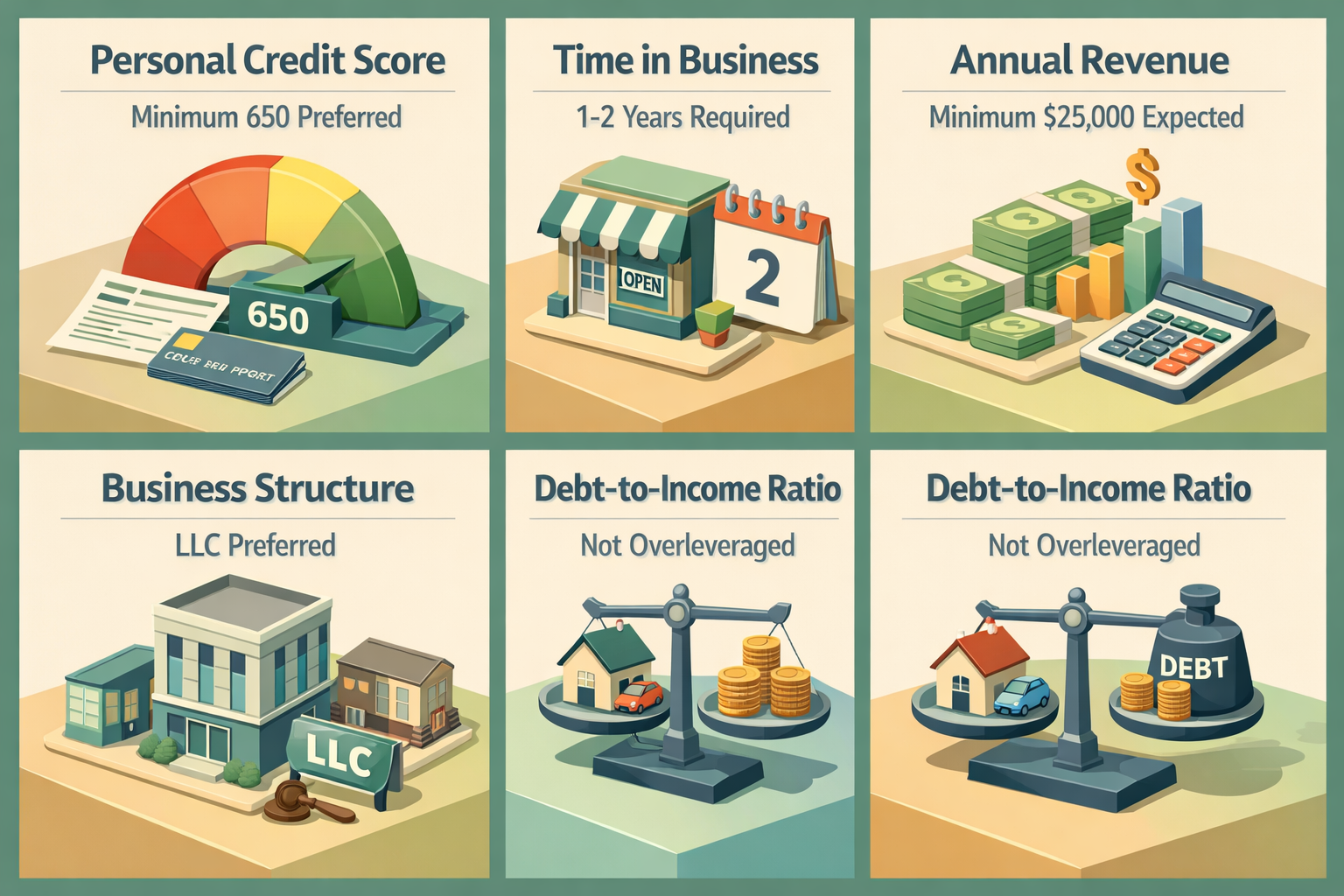
While requirements vary between lenders, most institutions look at a similar set of criteria when evaluating a business line of credit application. Here's what you should generally expect:
- Personal and Business Credit Score: Your personal credit score often plays a central role, especially if your freelance operation is relatively new. Many traditional lenders look for a score of 650 or higher, though some alternative lenders may work with scores as low as 580 or 600. If you've established a separate business credit profile, that will also be reviewed.
- Time in Business: Lenders typically want to see at least one to two years of documented business activity. If you've been freelancing for less than a year, you may face more limited options, though some online lenders and microloan programs cater to newer businesses.
- Annual Revenue: Most lenders set a minimum annual revenue threshold. This could range from as low as $25,000 with some alternative lenders to $100,000 or more with traditional banks. Your income as a freelance vet tech will need to be documented clearly.
- Business Structure: Operating as an LLC or registered business entity may strengthen your application compared to operating as an unregistered sole proprietor. It signals professionalism and separates your personal and business liabilities.
- Debt-to-Income Ratio: Lenders want to confirm you're not overleveraged. They'll look at your existing debt obligations relative to your income to determine whether you can handle additional credit responsibly.
Meeting these benchmarks doesn't guarantee approval, but it positions you as a credible applicant with a stronger chance of success.
Documentation You Should Prepare Before Applying
One of the most important steps any freelance professional can take is getting their paperwork in order before approaching a lender. For a business line of credit for gig economy workers, documentation is often the difference between approval and rejection. Here's what you'll likely need:
- Tax Returns: Most lenders request two years of personal and business tax returns. These help verify your income over time and show how your earnings have trended.
- Bank Statements: Expect to provide three to six months of business bank statements. These give lenders a real-time picture of your cash flow, which is especially important when your income isn't salaried.
- Profit and Loss Statement: A current P&L statement — ideally prepared or reviewed by an accountant — demonstrates your business's financial health in clear terms.
- Client Contracts or Invoices: Showing active contracts or a history of paid invoices helps prove that your freelance income is real, recurring, and verifiable.
- Business License or Registration: If you're registered as an LLC or have a DBA (doing business as) name, include that documentation to formalize your business identity with the lender.
- Veterinary Technician Credentials: While not always required, some lenders — particularly those familiar with healthcare professionals — may view your certifications as evidence of specialized earning potential.
The more organized and complete your documentation is, the smoother the review process tends to be. If anything is missing, lenders may delay or deny your application simply due to insufficient information.
Exploring Lender Types That May Work for Freelance Vet Techs
Not all lenders approach gig economy borrowers the same way. Knowing your options can help you find the right fit for your situation.
Traditional Banks and Credit Unions: These institutions typically offer the most competitive rates but also the most stringent requirements. If you have a strong credit score, two or more years of business history, and solid documentation, a community bank or credit union may be a great starting point. Credit unions, in particular, often have more flexible underwriting and a community-first approach that may benefit self-employed members.
Online Lenders and Fintech Platforms: Companies like Kabbage, BlueVine, and Fundbox have become popular options for gig economy workers because they often use alternative data — such as bank transaction history — to assess creditworthiness. Approval times are faster, but interest rates may be higher than traditional lenders.
SBA Microloans: The U.S. Small Business Administration's microloan program offers loans up to $50,000 through nonprofit intermediaries. These may be a viable entry point for freelance vet techs who need a modest line of working capital and are building their credit history.
CDFI Lenders: Community Development Financial Institutions are mission-driven lenders that serve underserved small business owners, including gig workers and sole proprietors. They often have more lenient requirements and may offer business counseling alongside financing.
Comparing multiple lender types is always a smart move. Different institutions weigh factors differently, and a lender that declines you isn't the only lender that exists.
Strategies to Strengthen Your Application as a Gig Economy Professional
If your application isn't quite ready yet, there are concrete steps you can take to improve your standing before you apply. Here are some strategies worth considering:
- Open a Dedicated Business Bank Account: If you haven't already, separate your personal and business finances. This makes your business income easier to document and signals to lenders that you're operating professionally.
- Build Business Credit: Apply for a business credit card, use it responsibly, and pay the balance on time each month. Over time, this builds a business credit profile that lenders can reference independently of your personal score.
- Reduce Existing Debt: Paying down personal or business debt before applying can improve your debt-to-income ratio and make you a more attractive borrower.
- Work With a Bookkeeper or Accountant: Clean, professionally prepared financial statements go a long way in demonstrating business legitimacy. Many lenders feel more confident when financial records are organized and accurate.
- Formalize Your Business Structure: Registering as an LLC is relatively affordable and can provide both legal protection and credibility when applying for credit.
- Request a Smaller Credit Limit Initially: Starting with a modest line of credit and repaying it responsibly can build your lending track record, making it easier to qualify for larger amounts in the future.
These steps may not produce overnight results, but taken together, they can meaningfully strengthen your application over the course of six to twelve months.
●Conclusion
Navigating the requirements for business line of credit for a freelance veterinary technician isn't always straightforward, but it's absolutely manageable with the right preparation. As a skilled professional in the veterinary field, your expertise has real market value — and lenders who understand the gig economy are increasingly recognizing that. The key is presenting your finances clearly, building your business credibility over time, and choosing lenders that are open to working with independent professionals like yourself. At LoanWise, we're here to help you explore your options and find financing that fits the way you actually work. Whether you're just starting out or looking to expand your freelance practice, the right business line of credit could be the tool that takes your veterinary career to the next level.