
Owning a seasonal bakery is a labor of love — but it also comes with real financial challenges. Whether your busiest weeks fall around the holidays, wedding season, or local festivals, your cash needs can spike dramatically while your slower months stretch your budget thin. That's where a seasonal business line of credit can make a meaningful difference. It gives you flexible access to funds when you need them most and lets you repay as revenue flows back in. But before you can tap into that kind of financing, you'll need to understand what lenders are looking for. This guide breaks down the requirements for a business line of credit for a seasonal bakery so you can walk into the application process with confidence.
What Is a Business Line of Credit and How Does It Work for Bakeries
A business line of credit is a flexible financing tool that allows you to borrow up to a set limit, repay what you've used, and borrow again as needed. Unlike a term loan — where you receive a lump sum upfront and repay it over a fixed schedule — a line of credit functions more like a business credit card. You only pay interest on what you actually draw, making it especially well-suited for businesses with uneven cash flow.
For a seasonal bakery, this structure can be particularly valuable. Imagine you need to order large quantities of flour, butter, sugar, and specialty packaging in October to prepare for your holiday rush. Your revenue won't peak until November and December. A line of credit lets you purchase those supplies now and repay the balance once sales come in. It can also help cover payroll when you bring on temporary staff, pay for equipment repairs between seasons, or bridge the gap during your slowest months.
There are two main types of business lines of credit: secured and unsecured. A secured line is backed by collateral — such as business equipment or inventory — and may come with lower interest rates. An unsecured line doesn't require collateral but typically demands stronger creditworthiness. Lenders may offer either option depending on your bakery's financial profile.
Core Requirements for a Business Line of Credit for a Seasonal Bakery
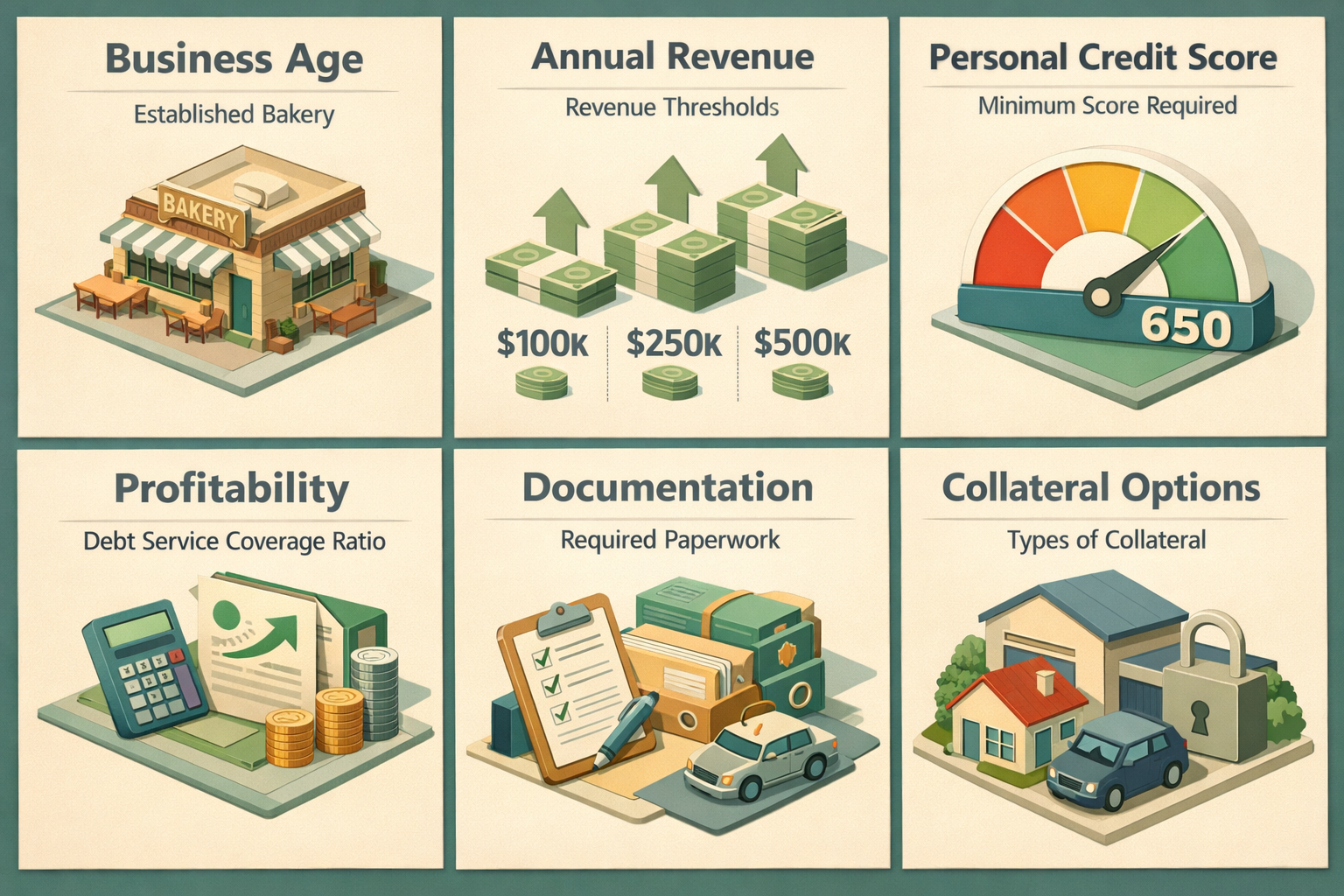
Understanding the requirements for a business line of credit for a seasonal bakery is the first step toward getting approved. While exact criteria vary by lender, most financial institutions evaluate a consistent set of factors when reviewing your application.
Business Age and Operational History
Lenders generally want to see that your bakery has been operating for at least one to two years. This gives them confidence that your business is established and has a track record they can evaluate. Startups or very new bakeries may find it harder to qualify for traditional lines of credit, though some alternative lenders may work with businesses that have been open for as little as six months.
Annual Revenue and Cash Flow
Most lenders set a minimum annual revenue threshold, which could range from as low as $50,000 to well over $100,000 depending on the lender and the credit limit you're seeking. For a seasonal bakery, lenders may look at your revenue patterns across different times of the year to understand your peak and off-peak cycles. Strong holiday sales figures can actually work in your favor here, as they demonstrate your earning capacity even if other months are slower.
Personal and Business Credit Scores
Your personal credit score often plays a significant role, especially for small bakeries operating as sole proprietorships or small LLCs. A score of 650 or higher is commonly cited as a minimum by many lenders, though some may require 680 or above for the most competitive terms. Your business credit profile — including payment history with suppliers and any existing business accounts — may also factor into the lender's decision.
Profitability and Debt-to-Income Ratio
Lenders want to see that your bakery generates enough net income to comfortably service new debt. They may calculate your debt service coverage ratio (DSCR), which compares your net operating income to your total debt obligations. A ratio above 1.25 is often considered healthy. If your bakery carries significant existing debt, this could limit the credit line amount you qualify for.
Documentation You'll Need to Prepare Before Applying
Preparing the right paperwork ahead of time can speed up the approval process considerably. Lenders typically request a combination of financial and legal documents to verify your bakery's financial health and business standing.
- Business bank statements: Most lenders ask for three to six months of recent bank statements. These help verify your actual cash flow, not just what's reported on paper.
- Business and personal tax returns: Expect to provide two years of federal tax returns for both your business and yourself personally. These give lenders a longer view of your income history.
- Profit and loss statements: An up-to-date P&L statement shows your current revenues, costs, and net income. This is especially important for seasonal businesses where year-to-date figures may not reflect your full annual potential.
- Balance sheet: A current balance sheet outlines your assets, liabilities, and equity. It helps lenders understand the overall financial health of your bakery.
- Business licenses and permits: Food service businesses are often subject to health department permits, state business registrations, and food handler certifications. Having these ready demonstrates that you're operating legally and in good standing.
- Articles of incorporation or business formation documents: If your bakery is an LLC, corporation, or partnership, lenders will want to verify the legal structure of your business.
- Employer Identification Number (EIN): This is required for all business loan applications and confirms your business identity with the IRS.
If your bookkeeping isn't current, it may be worth working with an accountant before you apply. Organized, accurate financials send a strong signal to lenders and may improve your chances of approval.
How Seasonal Revenue Patterns Affect Your Application
One of the unique challenges seasonal bakeries face is explaining their revenue cycle to lenders who may be accustomed to reviewing steady, year-round cash flow. A slow January doesn't necessarily mean your business is struggling — it may simply reflect the nature of your industry. Being proactive about this in your application can help.
Some lenders who specialize in working capital for bakeries during holidays and other seasonal industries may already understand these patterns. Community banks, credit unions, and online lenders with experience in food service businesses are often better equipped to evaluate seasonal cash flow than large national banks, which may apply more rigid criteria.
When presenting your financials, it can help to include a brief business summary or cover letter that explains your seasonal model, highlights your strongest revenue months, and outlines how you plan to use the line of credit. Providing year-over-year comparisons — especially if your holiday sales have grown over time — can further strengthen your case.
You might also consider timing your application strategically. Applying before your peak season, when your cash reserves are relatively healthy and your credit utilization is low, could put you in a stronger position than applying in the middle of a slow period.
Collateral Options and Alternative Paths to Approval
If your bakery doesn't yet meet the credit or revenue thresholds for a traditional unsecured line of credit, there are still options worth exploring. Offering collateral can increase your approval odds and may help you secure a larger credit limit or lower interest rate.
Common Collateral Types for Bakery Owners
Bakeries often have tangible assets that lenders may accept as collateral, including commercial ovens, mixers, refrigeration units, display cases, and delivery vehicles. Even your business's accounts receivable — money owed to you by wholesale clients or catering customers — could potentially be used in some lending arrangements.
SBA Lines of Credit
The Small Business Administration (SBA) offers programs that may help seasonal businesses access financing with more flexible terms. The SBA CAPLine program, for example, is specifically designed for small businesses with cyclical working capital needs. While the application process tends to be more involved, SBA-backed credit lines may offer competitive rates and repayment structures that work well for a bakery's cash flow cycle.
Online and Alternative Lenders
Online lenders and fintech platforms have expanded access to small business credit for businesses that might not qualify through traditional banks. These lenders may have faster approval timelines and less stringent requirements, though their interest rates and fees can be higher. It's important to carefully review all terms before committing to any financing arrangement.
Building Your Bakery's Credit Profile Before You Apply
If you're not quite ready to apply today, there are meaningful steps you can take to strengthen your bakery's financial profile over the coming months. Improving your creditworthiness before submitting an application could result in better terms and a higher credit limit when you do apply.
- Open a dedicated business bank account: Keeping your personal and business finances separate makes your financial history cleaner and easier for lenders to evaluate.
- Establish a business credit profile: Registering with business credit bureaus such as Dun & Bradstreet and opening a small business credit card can help you build a formal business credit history.
- Pay vendors and suppliers on time: Consistent, on-time payments to your suppliers may be reported to business credit bureaus and contribute to a stronger business credit score over time.
- Reduce existing debt: Lowering your current debt load improves your debt-to-income ratio and demonstrates responsible financial management.
- Maintain accurate, up-to-date books: Lenders value clean financial records. Working with a bookkeeper or using accounting software can help you stay organized year-round.
Even small improvements across these areas can make a noticeable difference in how lenders perceive your bakery's creditworthiness.
●Conclusion
Understanding the requirements for a business line of credit for a seasonal bakery puts you in a much stronger position to secure the financing your business needs. From maintaining solid credit scores and organized financial records to choosing the right lender for your seasonal model, preparation is everything. A seasonal business line of credit can give your bakery the flexibility to stock up before your busiest periods, manage payroll with confidence, and navigate the slower months without financial stress. Whether you're gearing up for holiday orders or planning ahead for next year's peak season, now is a great time to review your financial health and take the first steps toward building a stronger borrowing profile. At LoanWise, we're here to help small business owners like you find the right financing solutions — reach out today to explore your options.