
Running a rare coin dealership is a rewarding but financially complex venture. Inventory values can shift dramatically based on market demand, collector trends, metal spot prices, and the rarity of individual pieces. That kind of unpredictability makes traditional financing tricky. If you've ever wondered about the requirements for a business line of credit for a rare coin dealer with fluctuating inventory values, you're not alone. Many entrepreneurs in the rare goods space struggle to secure flexible funding that keeps pace with their business needs. A business line of credit could be one of the most practical solutions available — but qualifying for one requires careful preparation and a clear understanding of what lenders expect.
What Is a Business Line of Credit and Why It Suits Coin Dealers
A business line of credit is a flexible financing tool that allows a business owner to draw funds up to a set limit, repay them, and borrow again as needed. Unlike a traditional term loan, you only pay interest on the amount you actually use. This revolving structure makes it especially well-suited for businesses with irregular cash flow or unpredictable purchasing cycles — qualities that define the rare coin trade.
For a rare coin dealer, timing is everything. A valuable collection might surface at an estate sale, auction, or private deal with little advance notice. Having a business line of credit coin dealer arrangement in place means you can act quickly without draining your operating reserves. It also helps bridge gaps between purchasing inventory and converting it to sales, which can sometimes take weeks or months depending on your buyer network.
Beyond purchasing inventory, a line of credit can support day-to-day expenses like insurance, professional grading services, coin show fees, and online marketplace fees. In short, it functions as a financial safety net that gives your dealership the agility it needs to compete in a niche and sometimes volatile market.
Understanding How Lenders View Fluctuating Inventory Values
One of the most significant hurdles for rare coin dealers seeking financing is how lenders perceive inventory that doesn't have a stable, easily verifiable value. Unlike a retail clothing store with predictable SKU pricing or a manufacturer with fixed equipment costs, rare coin inventory can vary enormously in worth from one quarter to the next.
Lenders typically want to understand the liquidity and marketability of your assets. Rare coins may be appraised at high values, but if the market for a specific type of coin is narrow or seasonal, a lender may discount that value significantly when assessing collateral. This is especially true for unsecured lines of credit, where your business's financial health rather than physical assets drives the decision.
When it comes to fluctuating inventory financing, lenders may apply what's known as an advance rate — a percentage of the appraised or documented value they're willing to lend against. For standard retail inventory, advance rates might range from 50% to 80%. For specialty goods like rare coins, those rates could be lower, reflecting the perceived difficulty of reselling the assets quickly in a default scenario. Keeping detailed, up-to-date documentation of your inventory's appraised value from reputable numismatic professionals can help counter some of this skepticism.
Core Financial Requirements Lenders Will Evaluate
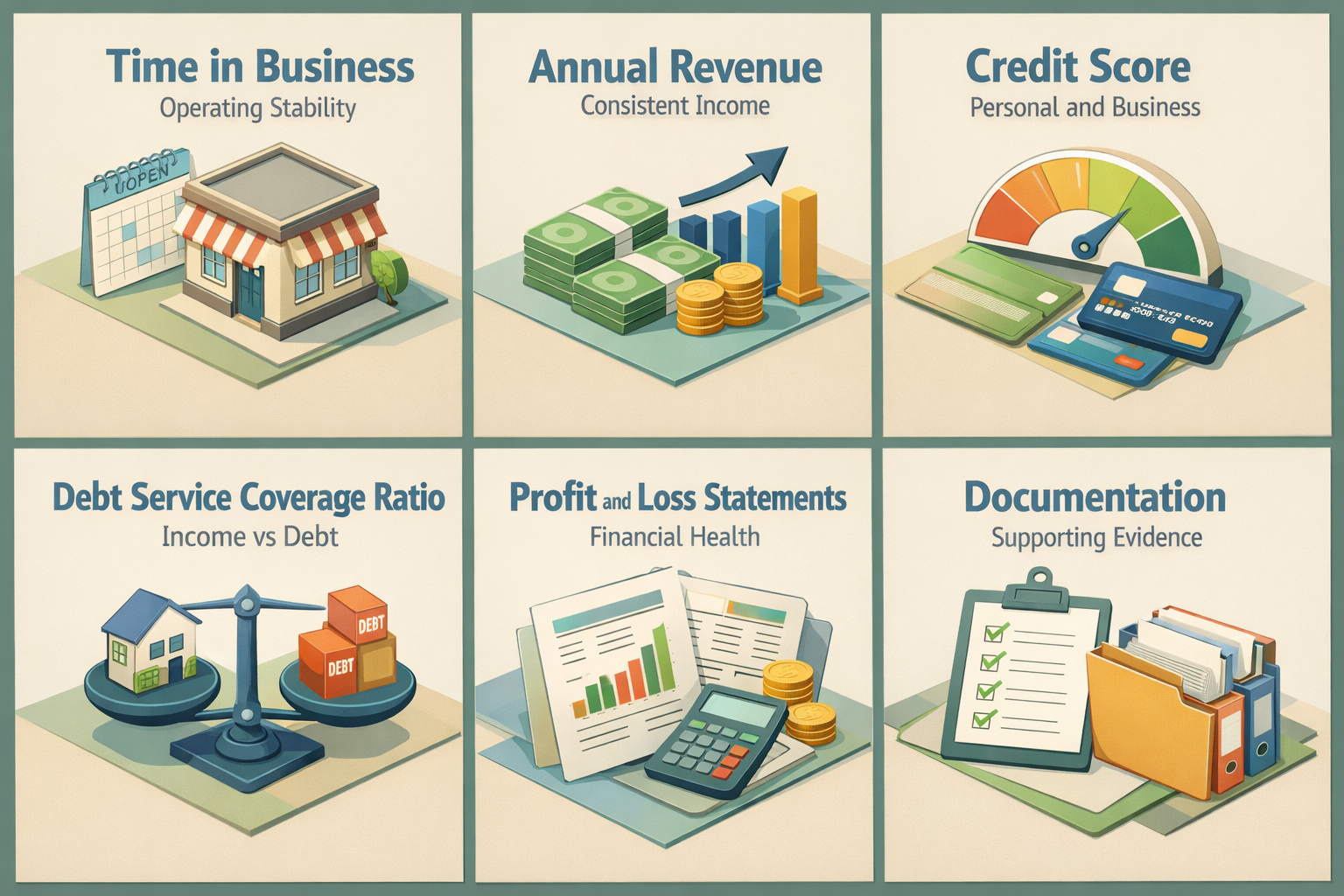
Regardless of your industry, lenders evaluate several core financial metrics before approving a business line of credit. For rare coin dealers, meeting these benchmarks is often the foundation of a successful application.
- Time in Business: Most lenders prefer businesses that have been operating for at least one to two years. A longer track record helps demonstrate stability and suggests you understand the rhythms of your market.
- Annual Revenue: Lenders typically look for a minimum annual revenue threshold, which may vary by institution. Consistent revenue — even if it fluctuates seasonally — is viewed more favorably than irregular spikes without clear explanation.
- Credit Score: Both your personal and business credit scores matter. A personal score above 650 is often considered a baseline for many lenders, though stronger scores typically unlock better terms. If your business has its own credit profile, maintaining it responsibly adds another layer of credibility.
- Debt Service Coverage Ratio (DSCR): Lenders want to see that your business generates enough income to cover its existing debt obligations plus the new credit line. A DSCR above 1.25 is commonly viewed as a reasonable minimum, though this can vary.
- Profit and Loss Statements: Providing two to three years of profit and loss statements helps lenders assess whether your business is trending in a healthy direction, even if individual quarters show volatility.
It's worth noting that alternative and online lenders may apply slightly different criteria compared to traditional banks, sometimes placing more weight on cash flow and revenue consistency than on credit scores alone. This could benefit coin dealers who have strong sales records but non-traditional financial profiles.
Documentation That Supports Your Application as a Rare Goods Business
Preparation is one of the most powerful tools a rare goods business loan applicant can bring to the table. Because rare coin dealerships operate in a niche space, you'll likely need to go beyond standard documentation to help lenders understand your business model.
Here's what you should typically have ready:
- Business Tax Returns: Two to three years of federal business tax returns give lenders a clear picture of your reported income and deductions.
- Bank Statements: Three to six months of recent business bank statements help verify cash flow and spending patterns.
- Inventory Appraisals: Professional appraisals from certified numismatists or recognized grading services like PCGS or NGC can help substantiate the value of your current holdings. Updated appraisals are more convincing than outdated ones.
- Business Plan or Executive Summary: If you're a newer business or seeking a larger line, a concise overview of your business model, customer base, revenue sources, and market positioning can be very persuasive.
- Accounts Receivable Records: If you sell on consignment or maintain dealer relationships with deferred payments, showing your receivables can strengthen your cash flow narrative.
- Licenses and Certifications: Membership in organizations such as the American Numismatic Association (ANA) or Professional Numismatists Guild (PNG) may signal credibility and professionalism to prospective lenders.
The more clearly you can explain how your business generates revenue and manages risk, the more comfortable a lender is likely to feel extending credit to you.
How to Strengthen Your Application Before You Apply
Meeting the minimum requirements for a business line of credit for a rare coin dealer with fluctuating inventory financing values is a good starting point, but positioning yourself as a low-risk borrower is even better. There are several proactive steps you can take before submitting your application.
Separate your business and personal finances. If you haven't already, open a dedicated business bank account and use it exclusively for business transactions. This makes it much easier to document cash flow and demonstrates financial discipline.
Build or repair your credit profile. Pay down existing debt where possible, avoid opening unnecessary new credit accounts in the months before applying, and review your credit report for any errors that could be dragging your score down.
Establish a relationship with your bank. Lenders are often more comfortable extending credit to businesses they already know. Maintaining a business checking or savings account with a potential lender for at least a year before applying can work in your favor.
Diversify your revenue streams. If your income relies heavily on a small number of large transactions, lenders may see that as a risk. Demonstrating multiple channels — such as retail walk-ins, online sales, auction participation, and estate buying — can suggest greater resilience.
Document your inventory management practices. Showing that you have a consistent method for appraising, cataloging, and pricing your inventory — and that you update valuations regularly — can help reassure lenders that your assets are being managed professionally.
Exploring Lender Types and Matching the Right Fit for Your Dealership
Not all lenders approach specialty businesses the same way. Understanding the landscape of available options can help you target the right institutions and improve your chances of approval.
Traditional banks and credit unions typically offer the most competitive interest rates but also apply the strictest underwriting standards. They may be less familiar with the rare coin industry and more cautious about inventory-backed collateral. That said, if you have a strong personal credit history and a well-established business, they remain worth approaching.
Online and alternative lenders have expanded significantly in recent years and often specialize in businesses with non-traditional profiles. They may approve applications faster and require less documentation, though their rates can be higher. Some fintech lenders use real-time cash flow analysis, which could benefit a coin dealer with consistent transaction volume even if individual sale amounts vary widely.
Community Development Financial Institutions (CDFIs) are mission-driven lenders that sometimes serve small businesses that fall outside conventional lending criteria. If your dealership operates in an underserved area or serves a specific community, a CDFI might be worth exploring.
SBA-backed lines of credit, such as those offered through the SBA CAPLines program, could also be an option for qualifying businesses. These programs are partially guaranteed by the Small Business Administration, which may encourage participating lenders to extend credit to businesses they might otherwise decline. Consulting with an SBA-approved lender or a business advisor familiar with the program could help you determine eligibility.
●Conclusion
Securing a business line of credit as a rare coin dealer isn't impossible — it just requires thoughtful preparation and a clear understanding of how lenders think. The requirements for a business line of credit for a rare coin dealer with fluctuating inventory values go beyond a simple credit score check. Lenders want to see financial stability, documented cash flow, credible inventory appraisals, and a business that's managed with professionalism. By assembling the right documentation, improving your financial profile, and targeting lenders who understand niche industries, you can position your dealership for financing success. At LoanWise, we're here to help small business owners like you navigate the lending landscape with confidence. Reach out today to explore your options and take the next step toward flexible, reliable business funding.